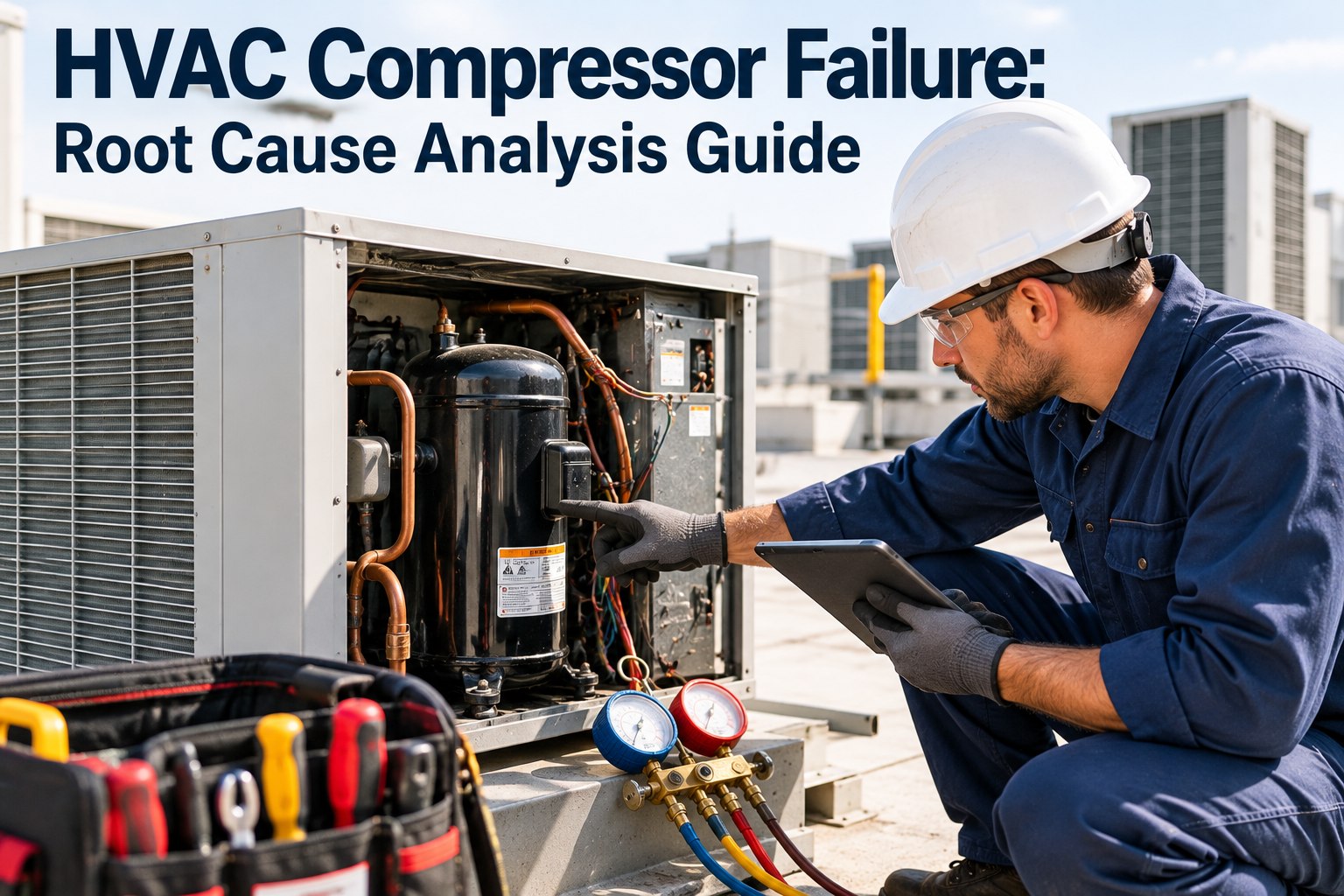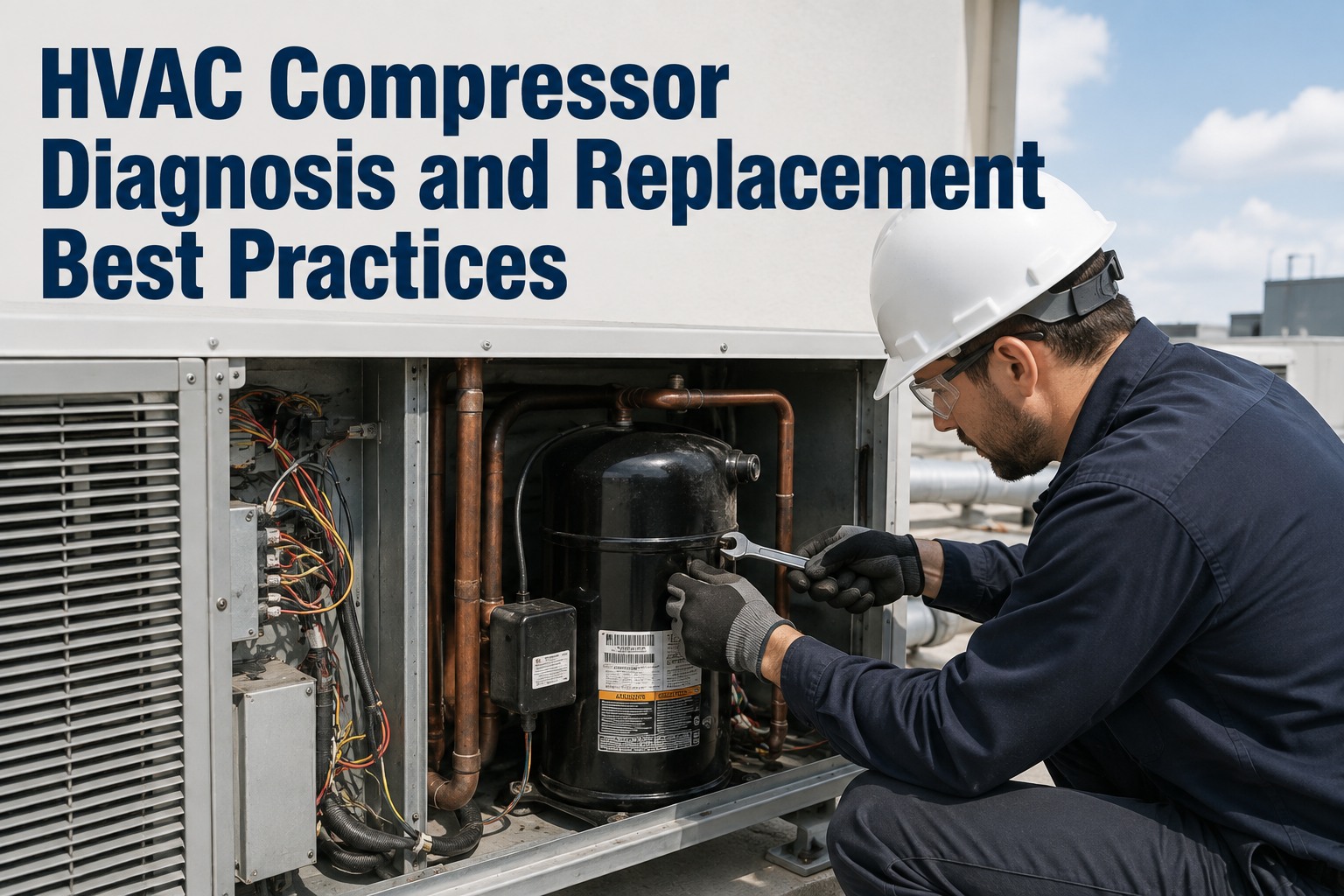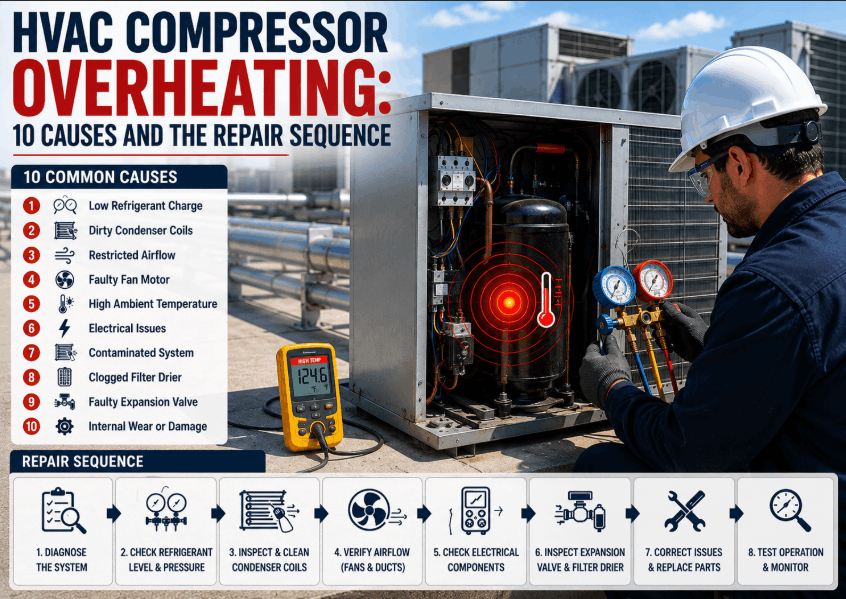
HVAC compressor overheating is one of the fastest paths to complete system failure — a thermally tripped compressor that restarts under the same fault conditions will seize within hours, not days. In commercial and industrial facilities, compressor replacement costs range from $2,000 to $15,000 per unit, making early fault identification the single highest-value maintenance skill an HVAC technician can develop. Sign Up Free to start logging compressor temperature readings, fault codes, and repair sequences in OxMaint's mobile work order platform — so every technician on your team works from the same diagnostic baseline. Whether you're managing rooftop units, chiller plants, or split systems, a structured troubleshooting approach prevents misdiagnosis and repeat failures that erode equipment lifespan.
Stop Compressor Failures Before They Happen
OxMaint gives HVAC maintenance teams mobile work orders, PM scheduling, compressor fault history, and real-time KPI dashboards — built for facilities managing multiple rooftop and chiller assets in 2026.
Why HVAC Compressor Overheating Demands a Structured Repair Sequence
A compressor thermal trip is a symptom, not a root cause — yet the most common field response is to reset the protection device and restore power. Without identifying the underlying fault, the compressor re-enters the same damaging condition and accumulates thermal stress with each restart cycle. Book a Demo to see how OxMaint's CMMS work order module captures compressor fault sequences, technician observations, and corrective action outcomes in a single asset record. Facilities that document compressor events systematically identify repeat fault patterns faster, justify capital replacement decisions with data, and reduce callbacks that damage service contracts. The repair sequence matters as much as the diagnosis — attacking causes in the wrong order wastes time and risks missing a compounding fault that drives the overheating event.
10 Root Causes of HVAC Compressor Overheating
Restricted Condenser Airflow
Blocked condenser coils, failed condenser fans, or inadequate clearance raise head pressure and force the compressor to work against elevated discharge conditions. High condensing temperature is the most common single cause of compressor overheating in rooftop equipment.
Low Refrigerant Charge
An undercharged system reduces suction pressure and superheat, reducing the volume of refrigerant available to cool compressor windings. Scroll and reciprocating compressors are especially vulnerable to overheating caused by low charge in high-ambient conditions.
Overcharged Refrigerant System
Excess refrigerant charge elevates head pressure and can introduce liquid slugging at the compressor inlet. Overcharge is frequently introduced after a service call where charge was added without measuring subcooling against actual system operating conditions.
High Discharge Superheat
Discharge superheat above 50°F–60°F indicates the compressor is generating more heat than the refrigerant circuit is removing. This is a leading indicator of both charge issues and compressor mechanical degradation — measure it first on every overheating call.
Non-Condensable Gases in the System
Air or nitrogen contamination raises head pressure and condenser saturation temperature independent of actual heat load. Non-condensables are introduced during improper evacuation procedures and appear as abnormally high head pressure relative to outdoor ambient temperature.
Electrical Supply Faults
Voltage imbalance above 2%, low voltage under peak demand, or single-phasing forces compressor motors to draw excess current — generating resistive heat in windings. Check supply voltage and phase balance before charging any refrigerant on an overheating complaint.
Failed Compressor Crankcase Heater
A failed crankcase heater allows refrigerant to migrate into compressor oil during off cycles. On startup, refrigerant-diluted oil provides inadequate lubrication — generating friction heat that trips thermal protection within minutes of startup, especially in cool ambient conditions.
Dirty Evaporator Coil
A fouled evaporator reduces heat absorption capacity, causing suction pressure to drop and superheating the returning refrigerant vapor before it reaches the compressor. Reduced suction gas cooling of compressor windings accelerates winding temperature rise under load.
Short Cycling from Oversized Equipment
Compressors that cycle on and off frequently never reach stable operating temperature and pressure equilibrium — each startup draws locked-rotor amperage and generates peak winding heat. Short cycling caused by oversized equipment or faulty controls compounds overheating risk.
Internal Mechanical Wear
Worn scroll tips, failed valve reeds, or bearing degradation reduce compressor efficiency and increase internal slip — requiring more motor work to achieve the same compression ratio. Sign Up Free to track compressor amp draw trends in OxMaint and catch efficiency degradation before thermal protection trips become seizure events.
Compressor Overheating Diagnostic KPIs: What to Measure on Every Call
Structured data collection at the point of fault is what separates a permanent repair from a callback. Book a Demo to see how OxMaint's mobile inspection checklists capture compressor diagnostic readings in the field and sync them to the asset record — creating a fault history that informs every future service visit.
| Measurement | What It Reveals | Normal Range | Fault Indicator |
|---|---|---|---|
| Discharge Superheat | Compressor heat rejection efficiency | 50°F–65°F | >70°F — charge or airflow fault |
| Suction Superheat | Evaporator load and charge adequacy | 10°F–20°F | >25°F — low charge or dirty coil |
| Head Pressure | Condenser and charge condition | Ambient + 30°F sat. temp | Elevated — non-condensables or airflow |
| Compressor Amps | Motor load and electrical health | High amps — overcharge or mechanical wear | |
| Voltage Imbalance | Supply quality and phase balance | <2% imbalance | >2% — utility or panel fault |
| Subcooling | Refrigerant charge level | 10°F–15°F (TXV systems) | <8°F — low charge; >20°F — overcharge |
| Winding Resistance | Motor insulation and winding integrity | Balanced phases ±5% | Imbalance — partial winding failure |
Compressor Overheating Repair Sequence: Phase-by-Phase
Electrical and Mechanical Safety Check
Before touching refrigerant circuits, verify supply voltage, phase balance, and compressor winding resistance. Confirm crankcase heater is functional. Clear all lockout-tagout requirements. Document baseline electrical readings in the work order before proceeding.
Airflow and Coil Assessment
Inspect condenser coil for fouling, bent fins, and blocked clearance. Verify all condenser fans are operational at correct RPM. Check evaporator coil for ice, dirt, or restricted airflow. Correct any airflow restriction before evaluating refrigerant charge.
Refrigerant Circuit Diagnosis
Measure suction pressure, discharge pressure, subcooling, and superheat under stable operating conditions. Compare to manufacturer target values. Correct charge only after airflow faults are resolved — charging against an airflow restriction produces an inaccurate charge reading.
Compressor Run Test and Monitoring
After corrections, run the compressor for 15–20 minutes under load. Monitor discharge superheat, head pressure, and amp draw at 5-minute intervals. Confirm thermal protection does not re-trip. Log all readings in OxMaint before closing the work order. Book a Demo to see how run test data feeds into asset health trending.
Reactive vs. Structured Compressor Maintenance: What the Data Shows
Document Every Compressor Fault — From Trip to Resolution
OxMaint gives HVAC teams mobile work orders, digital inspection checklists, compressor asset history, and PM scheduling — purpose-built for facilities managing high-value refrigeration and HVAC assets.
Compressor Overheating Inspection Checklist: On-Site Diagnostic Steps
A repeatable field checklist eliminates missed steps under pressure, ensures consistent data collection across technicians, and creates the audit trail needed to justify compressor replacement when repair is no longer economical. Sign Up Free to deploy OxMaint's digital HVAC inspection checklists to your technician team with zero paper and full mobile compliance tracking.
-
Record fault code and thermal protection statusNote whether compressor tripped on internal thermal or external high-pressure control — different fault paths require different first steps
-
Measure supply voltage and phase balanceCheck all three phases before energizing — voltage imbalance over 2% must be resolved before any refrigerant diagnosis begins
-
Confirm crankcase heater operationUse clamp meter to verify heater current draw — a failed heater on a recent startup explains oil foaming and immediate thermal trip
-
Inspect condenser section visuallyCheck coil fouling, fan blade condition, and clearance restrictions before starting the unit — eliminate obvious causes first
-
Check compressor winding resistanceMeasure run and start winding resistance — unbalanced windings indicate motor degradation that will cause overheating regardless of refrigerant correction
-
Log suction and discharge pressure at startupRecord pressures at 2, 5, and 10 minutes — abnormally fast head pressure rise indicates non-condensables or severe condenser restriction
-
Measure compressor amp draw under loadCompare to nameplate RLA — current above 110% of RLA during steady state indicates overcharge, mechanical wear, or electrical supply fault
-
Calculate discharge and suction superheatUse manifold gauge and probe readings — target ranges vary by refrigerant type; document against manufacturer specs in the work order
-
Verify subcooling at liquid lineSubcooling outside target range is the most reliable charge indicator on TXV systems — adjust charge only after airflow is confirmed correct
-
Confirm condenser fans cycling correctlyVerify all condenser fans energize at correct head pressure setpoints — a stuck fan contactor is one of the most common missed overheating causes
-
Run 20-minute load test and log final readingsDocument discharge superheat, head pressure, suction pressure, and amp draw at steady state — these become the asset's post-repair baseline
-
Confirm thermal protection does not re-tripA re-trip during the load test means a compounding fault remains — do not close the work order until the unit completes a full cycle without fault
-
Document root cause and corrective actionRecord primary cause (e.g. low charge, condenser fan failure) and the corrective action in the CMMS — root cause data prevents repeat callbacks
-
Schedule follow-up PM if compressor is agedCompressors over 8 years or with multiple thermal events should receive a 30-day follow-up PM work order to track early repeat degradation
-
Update asset record with all readings and photosAttach manifold gauge photos and repair documentation to the asset in OxMaint — full history supports warranty claims and capital replacement decisions
Frequently Asked Questions: HVAC Compressor Overheating
What causes HVAC compressor overheating in commercial buildings?
The most common causes are restricted condenser airflow, refrigerant charge problems, electrical supply faults, and failed crankcase heaters. A structured diagnostic sequence — electrical first, airflow second, then refrigerant — identifies the correct root cause faster than symptom-based guessing.
Can I restart an HVAC compressor after a thermal trip?
Not without diagnosing the cause first. Restarting a compressor under the same fault condition causes each successive thermal event to accumulate winding damage — typically leading to seizure within hours. Always measure discharge superheat, voltage, and condenser airflow before resetting.
How does low refrigerant charge cause compressor overheating?
Suction gas passing over compressor motor windings is the primary cooling mechanism in hermetic and semi-hermetic designs. Low charge reduces refrigerant mass flow, raising discharge superheat and starving winding cooling — leading to insulation degradation and eventual winding failure.
What is the correct discharge superheat range for a scroll compressor?
Most scroll compressor manufacturers target 50°F–65°F discharge superheat under design conditions. Values above 70°F consistently indicate a charge, airflow, or load fault. Always compare to manufacturer specs for the specific refrigerant and unit model.
How does a CMMS help prevent repeat compressor overheating?
A CMMS like OxMaint stores compressor fault history, diagnostic readings, and root cause documentation on each asset record. Technicians can review prior events before a service call, identify recurring patterns, and schedule targeted PM inspections — eliminating the tribal knowledge gap that causes repeat failures. Sign Up Free to start building your compressor asset database today.
What is the ROI of structured HVAC compressor maintenance?
Preventing a single commercial compressor replacement saves $5,000–$15,000 in parts and labor. Facilities using structured CMMS-driven HVAC PM programs typically reduce compressor-related emergency calls by 30–50% within the first year of implementation.
Ready to Build a Compressor Maintenance Program That Prevents Overheating?
OxMaint gives HVAC maintenance managers the tools to schedule compressor inspections, document fault sequences, track diagnostic trends, and close work orders with full root cause records — built for high-value HVAC assets in commercial and industrial facilities.