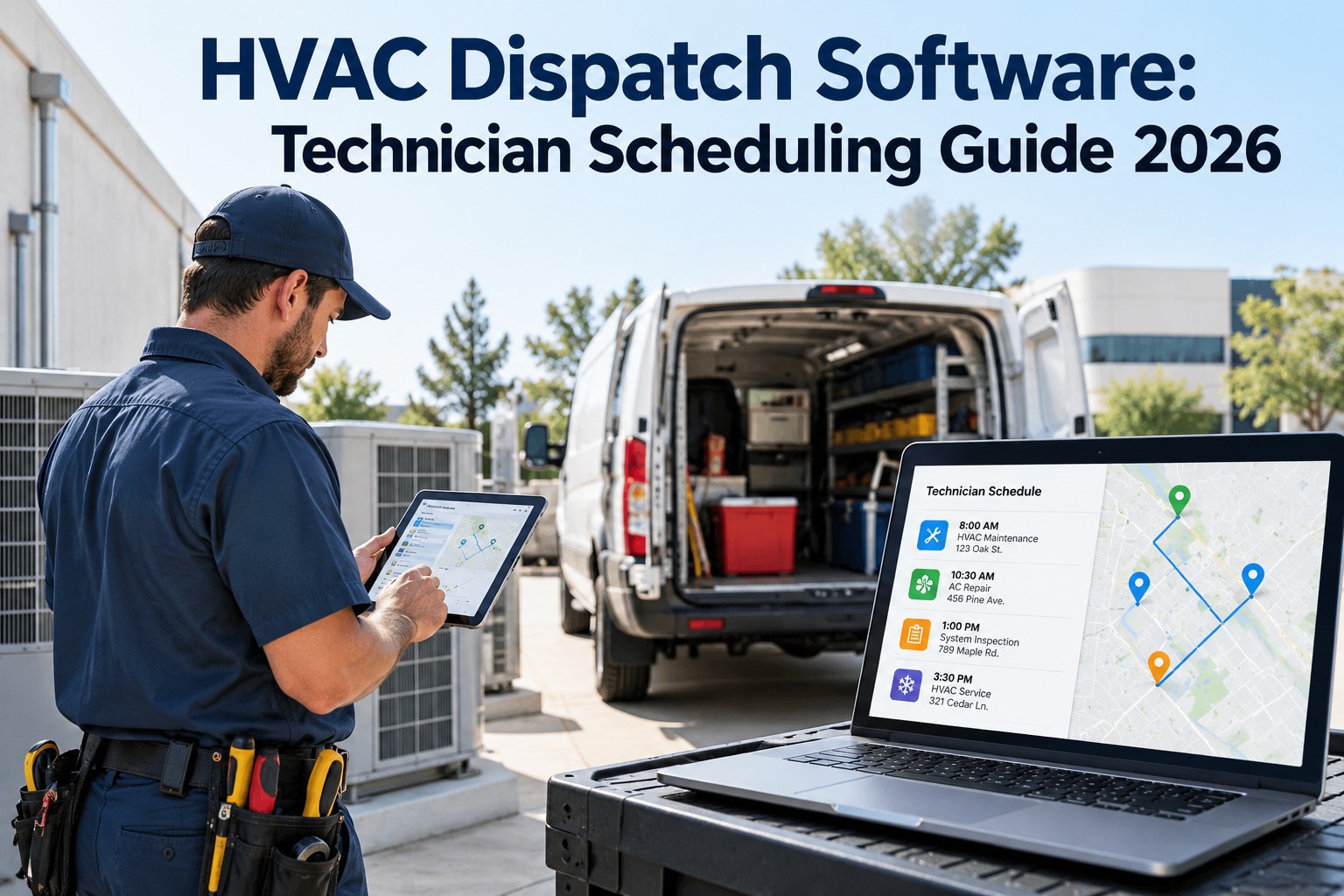
When a commercial building's HVAC system fails on a 105°F day, every minute counts. Emergency response time directly determines whether you keep or lose that customer — and with the average HVAC service call fee running $70-200 (and emergency calls at $250-300+ with premium labor), these high-margin jobs are the bread and butter of service companies. The challenge: coordinating a fleet of 5 to 50+ trucks across a service area, matching the right technician with the right skills and parts to the right emergency, while keeping scheduled maintenance on track. Companies that master emergency fleet response achieve 2-4 hour arrival times, 80%+ first-time fix rates, and booking rates that generate an extra $100,000+ in annual revenue from just one additional call booked per weekday.
The HVAC market is massive — $233.55 billion globally in 2023, growing at 7.4% CAGR — and competition is fierce with 114,000 businesses in the US alone. Annual spending on repair and maintenance exceeds $10 billion. Preventive maintenance contracts hold 39% of industry revenue, but emergency response is where reputations are built. Oxmaint CMMS gives dispatchers real-time fleet visibility, technician skill matching, parts inventory tracking, and work order management that turns emergency chaos into systematic response. Schedule a demo.
2-4 Hours. One Shot.
Win or Lose the Customer.
Your fleet is your revenue engine. Every truck dispatched to the right job, with the right tech and parts, is money earned. Every missed or slow response is a customer lost to the competitor down the road.
The Anatomy of an Emergency HVAC Dispatch
When an emergency call comes in, your response system needs to execute six steps in under five minutes. Each step has a make-or-break impact on whether the customer gets helped fast — or calls your competitor:
Call Intake & Triage
Classify the call: true emergency (no heat in freezing weather, no AC with elderly/children, gas smell, water leak from unit) vs. urgent (system underperforming) vs. routine. Emergency calls jump the queue. Average dispatch time for top performers: under 5 minutes.
Technician Matching
Match based on three factors: proximity (GPS-tracked fleet location), skill set (EPA certifications, system expertise — commercial RTU vs. residential split), and current status (available, wrapping up, en route). Wrong tech = callback. Callback rate benchmark: 2-2.75%.
Parts Verification
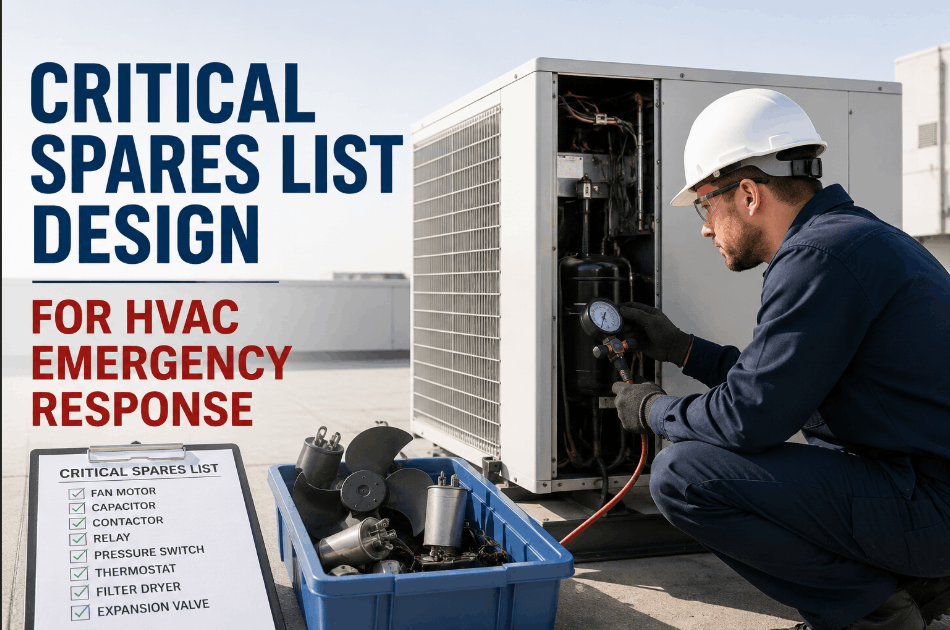
Check truck inventory before dispatch. Does the assigned van carry the likely parts for this system type? Common emergency parts (capacitors, contactors, fan motors, refrigerant) should be stocked on every truck. Specialized parts = potential second trip = customer frustration.
Route Optimization & ETA
Calculate fastest route considering real-time traffic. Send customer automated ETA notification. Transparency builds trust — customers who see their tech is 28 minutes away are far less likely to call a competitor than customers left wondering.
On-Site Diagnosis & Resolution
Tech arrives with full customer history, system details, and prior service notes on their mobile device. Digital work orders with required fields, photo documentation, and checklists ensure nothing is missed. Average job completion: 1-2 hours for common repairs.
Close-Out & Upsell
Digital invoice on-site with payment collection. Before/after photos attached to work order. Recommend maintenance agreement to prevent future emergencies — preventive maintenance shows a 545% ROI and can reduce failures by up to 95%. Convert emergency customers into recurring contract revenue.
Fleet Performance Dashboard: The KPIs That Matter
You can't manage what you don't measure. These are the metrics that separate top-performing HVAC fleets from companies bleeding money on inefficient dispatch:
Turn Emergency Chaos Into Systematic Revenue
Oxmaint puts every truck on your map, every tech's skills at your fingertips, and every part in your inventory on screen — so dispatchers send the right person with the right parts to the right job, every time.
Seasonal Demand Planning: Staff Before the Storm
HVAC emergency volume is predictable — it follows weather and seasons with remarkable consistency. The companies that win are the ones who staff up before demand hits, not after:
Heating Emergencies Surge
No-heat calls dominate. Furnace ignition failures, heat exchanger cracks, frozen pipes from HVAC failure. Staff at maximum capacity. Emergency rates apply ($250-300 service call + $150-200/hr labor). Ensure all techs carry ignition components, flame sensors, and diagnostic tools for gas furnaces.
PM Season & AC Prep
Best time for preventive maintenance blitzes. Lower emergency volume, higher PM scheduling. This is where you convert emergency customers to contracts — preventive maintenance reduces emergency calls by up to 25%. Use downtime to train techs on new A2L refrigerant systems (EPA mandate 2025).
Cooling Emergencies Surge
AC failure calls flood in. Compressor failures, refrigerant leaks, capacitor blowouts, frozen evaporator coils. Highest demand, longest wait times, most lost customers. 2024 saw 15% more extreme heat days. Companies with strong dispatch systems capture market share from overwhelmed competitors.
Heating Prep & System Changeover
Second PM window. Furnace inspections before winter. Lower emergency volume = opportunity for fleet maintenance, truck restocking, and technician training. Best deals on HVAC service — use off-peak pricing to fill schedules and build pipeline for winter contracts.
How Oxmaint Powers HVAC Fleet Response
From the dispatcher's screen to the technician's mobile device, Oxmaint connects every part of your emergency response workflow:
Real-Time Fleet Map & Dispatch Board
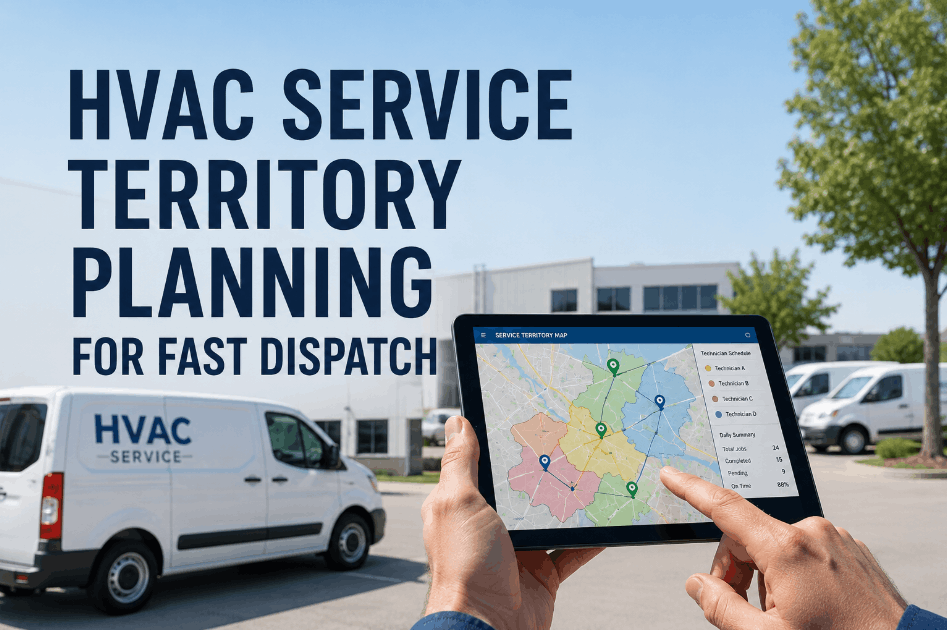
See every truck's GPS location, current job status (available / en route / on-site / wrapping up), and estimated completion time on one screen. Drag-and-drop dispatch assigns the nearest qualified tech to emergency calls in seconds — not minutes of phone tag.
Technician Skill & Certification Matrix
Tag every tech with their certifications (EPA 608, NATE, R-410A, A2L), system expertise (commercial RTU, VRF, residential split, chiller), and experience level. Dispatch matching ensures the right tech for the right system — eliminating callbacks from skill mismatches.
Truck Parts Inventory Tracking
Know what's on every van — capacitors, contactors, fan motors, refrigerant canisters, filters, thermostats. When a tech uses a part, inventory updates automatically. Low-stock alerts trigger restocking before the next emergency. Parts readiness is the #1 driver of first-time fix rate.
Mobile Work Orders with Customer History
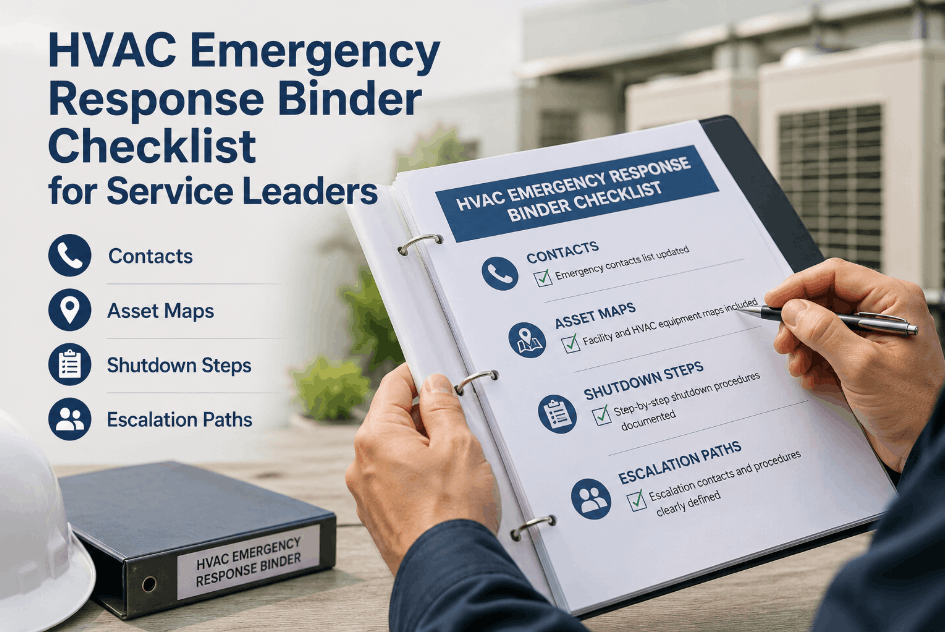
Techs arrive with full context: system make/model/serial, service history, prior issues, warranty status. Digital work orders with required fields, photo capture, and completion checklists ensure consistent documentation across your entire team — whether 5 techs or 50.
Preventive Maintenance Scheduling
Automate PM contract fulfillment — schedule seasonal tune-ups, filter changes, and inspections based on equipment runtime data, not just calendar dates. Contract uptime tracking ensures you hit SLAs. PM revenue = 39% of industry total and your most predictable income stream.
Every Minute Faster = More Revenue, More Loyalty
HVAC companies using Oxmaint reduce emergency response time, improve first-time fix rates, and convert more emergency customers into recurring maintenance contracts. Your fleet deserves a system as fast as your techs.
Frequently Asked Questions
What is a good emergency response time for HVAC service?
Top-performing HVAC companies promise 2-4 hours for emergency arrivals, with dispatch happening in under 5 minutes of the call. Non-emergency or routine calls target a 24-hour response window. The key is having GPS-tracked fleets so dispatchers can identify and route the nearest qualified technician instantly rather than making phone calls to find who's available.
What is a good first-time fix rate for HVAC?
The industry standard target is 80% or higher. The acceptable callback rate is 2-2.75% of all service calls. Achieving high first-time fix rates depends on three factors: dispatching the right-skilled technician, ensuring trucks are stocked with common emergency parts, and providing techs with full customer and equipment history on their mobile devices before arrival.
How many jobs should an HVAC technician complete per day?
The standard benchmark is 3-5 completed jobs per day, with some high-efficiency techs averaging up to 7 depending on job type and service area size. A consistently low job rate signals inefficient routing, scheduling gaps, or skill mismatches in dispatch. Route optimization and smart scheduling can add 1-2 extra jobs per tech per day.
How much does an emergency HVAC service call cost?
Average service call fees range from $70-200 for standard calls and $250-300+ for emergency/after-hours calls, with labor rates jumping from $100/hr to $150-200/hr on nights, weekends, and holidays. Emergency calls are high-margin work — the premium pricing offsets the disruption to scheduled routes and the need for on-call staffing.
How does CMMS software help HVAC fleet management?
Oxmaint provides real-time fleet GPS tracking, technician skill matching, truck parts inventory, mobile work orders, and PM scheduling in one platform. Dispatchers see every truck's location and status, match the right tech to each emergency, verify parts availability before dispatch, and track all KPIs (response time, first-time fix rate, jobs per day, booking rate). The result: faster response, fewer callbacks, higher revenue per truck.