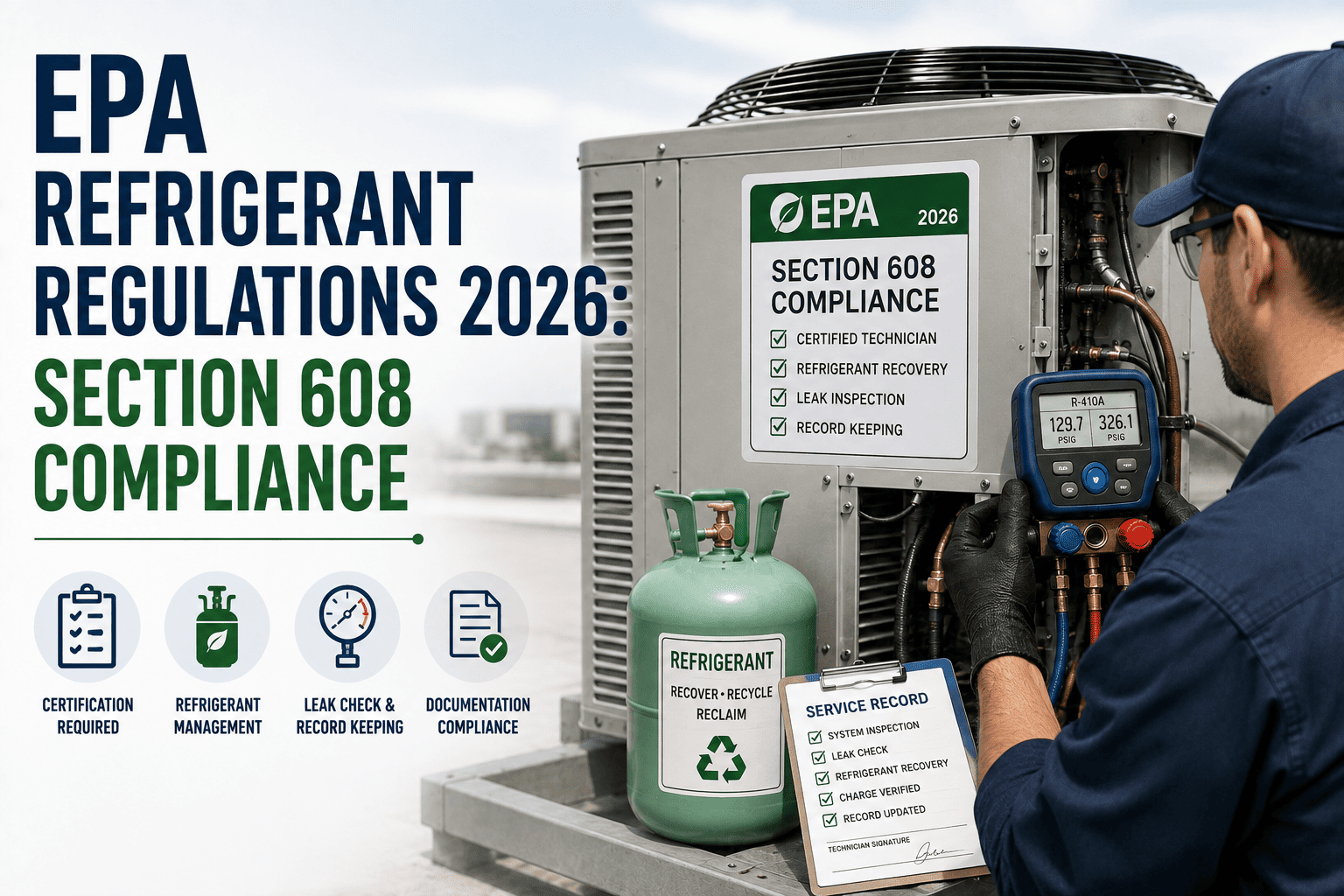
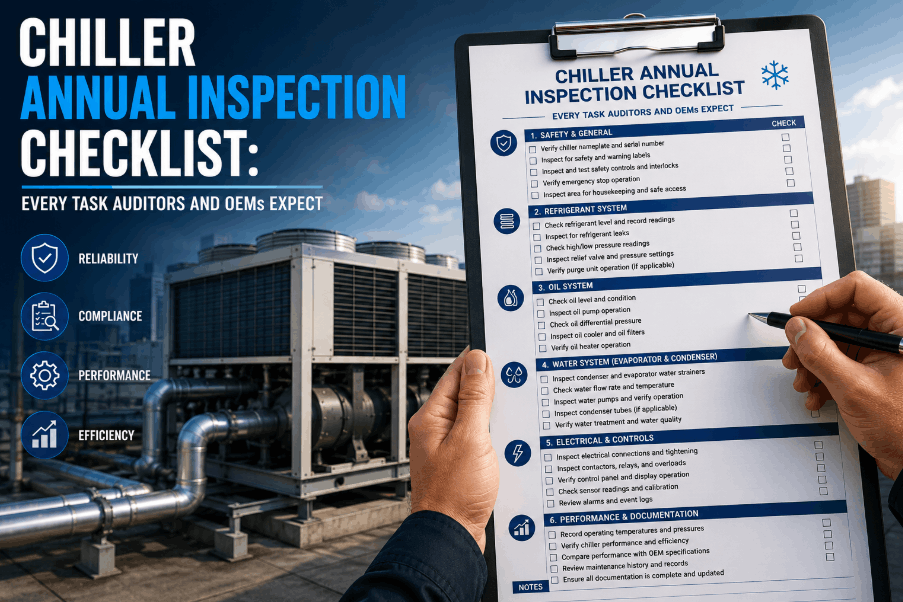
An EPA Section 608 refrigerant audit is no longer a rare compliance event — it is a routine regulatory reality for any facility managing stationary HVAC-R equipment that uses regulated refrigerants. Whether triggered by an agency complaint, a random inspection cycle, or a self-initiated review, an audit examines your refrigerant purchasing records, leak inspection logs, technician certifications, and appliance retirement documentation in detail. Facilities that rely on fragmented paper logs or disconnected spreadsheets consistently struggle to produce the evidence auditors require within short notice windows. Sign Up Free to centralize your refrigerant records and inspection logs in a compliance-ready CMMS before the next audit cycle begins. Understanding what EPA auditors look for — and building audit-ready records in advance — is the most effective way to eliminate compliance risk in 2026. Book a Demo to see how OxMaint structures HVAC compliance workflows for Section 608 audit preparedness.
Build Audit-Ready Refrigerant Records with OxMaint
OxMaint logs every refrigerant purchase, leak inspection, technician certification, and repair event — organized by appliance and instantly retrievable for EPA audit review.
What EPA Section 608 Auditors Actually Examine
Section 608 audits focus on four core compliance areas: refrigerant purchase and recovery records, appliance leak inspection histories, certified technician documentation, and retirement or disposal records for decommissioned equipment. Auditors cross-reference purchase volumes against recovery logs to identify unexplained refrigerant losses — a primary indicator of unreported leaks. Facilities without a structured CMMS-based recordkeeping system frequently cannot reconstruct this audit trail on short notice.
Refrigerant Purchase and Transfer Records
Auditors verify that all refrigerant purchases are logged with supplier details, quantities, refrigerant type, and date. Unaccounted refrigerant volumes — purchases not matched by recovery or verified use — are treated as presumptive leak evidence.
Leak Inspection Logs and Repair Documentation
Every appliance exceeding EPA leak rate thresholds must have documented inspection events, identified leak locations, and completed repair records within mandated timeframes. Missing or incomplete logs are the most cited violation category in Section 608 audits.
Certified Technician Verification
All technicians servicing regulated appliances must hold valid EPA Section 608 certifications. Auditors request certification records for every technician who performed refrigerant work during the review period — typically the prior 3 years.
Appliance Retirement and Disposal Records
Equipment retired or sold must show documented refrigerant recovery prior to disposal. Recovery records must include the recovering technician's certification number, quantity recovered, and disposal method. Gaps here are a frequent penalty trigger.
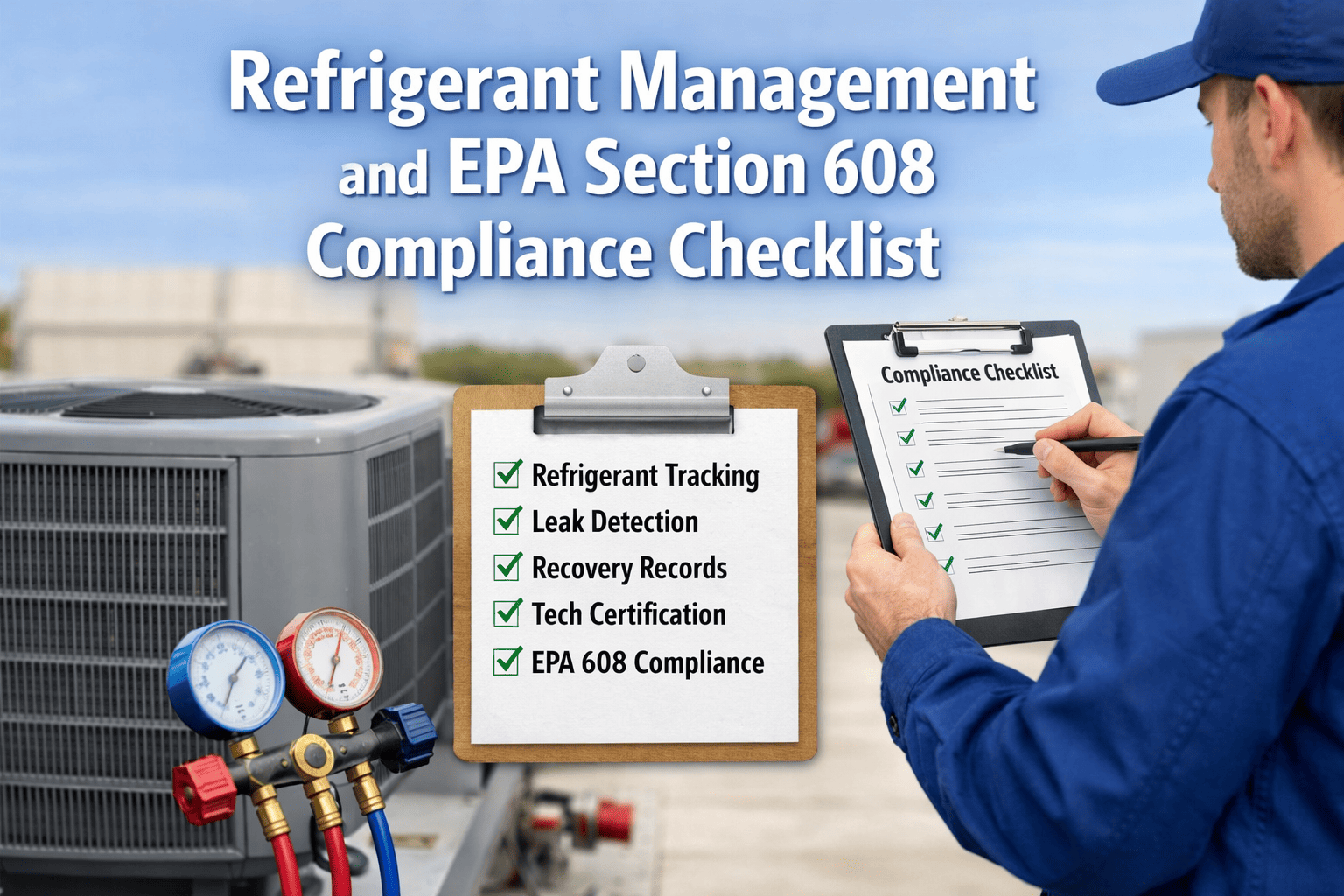
EPA Section 608 Compliance Checklist for 2026
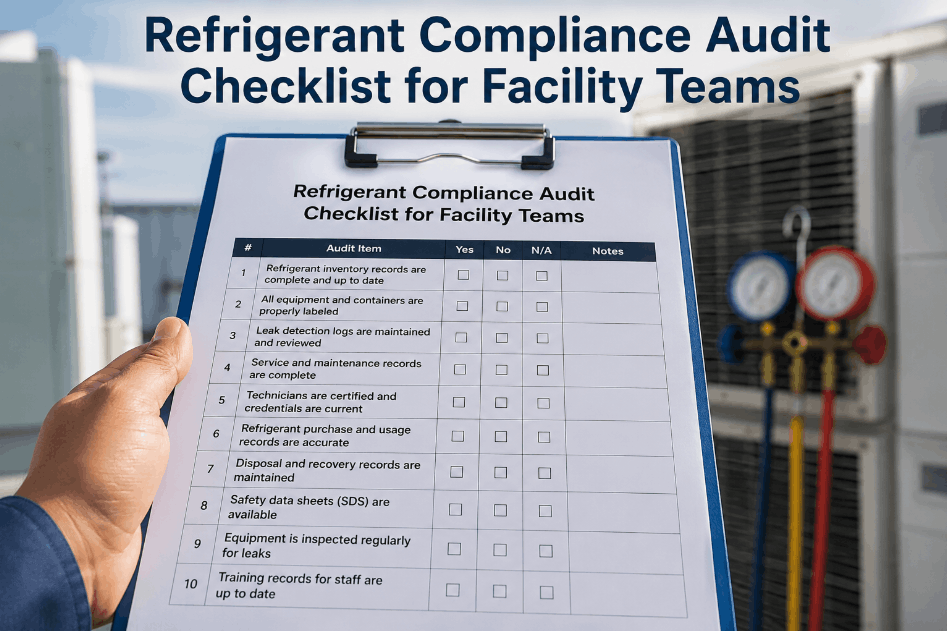
Facilities that maintain a continuous compliance posture — rather than scrambling before an audit notification — consistently avoid penalties and pass inspections with minimal disruption. The checklist below covers the three operational areas most scrutinized in 2026 EPA Section 608 inspections: recordkeeping integrity, leak management execution, and personnel qualification. Sign Up Free to run this checklist as a living compliance dashboard inside OxMaint.
- Refrigerant purchase logs complete with supplier and quantity
- Recovery records matched to each service event
- 3-year minimum retention for all appliance records
- Records accessible within 24 hours of audit request
- Appliance inventory documented with refrigerant type and charge size
- Annual leak rate calculated per appliance
- Inspections triggered when leak rate thresholds are exceeded
- Repair completion documented within 30 days
- Leak detection logs timestamped and appliance-linked
- Retrofit or retirement decision documented for high-leak assets
- Technician EPA 608 certification on file for all service personnel
- Recovery equipment certified and calibration current
- Certifications verified for the full 3-year audit window
- Contractor certifications documented for all third-party work
- Disposal records complete for all retired appliances
How Leak Rate Thresholds Work Under Section 608
EPA Section 608 defines leak rate thresholds that trigger mandatory inspection and repair timelines based on appliance category and refrigerant type. Commercial refrigeration and comfort cooling appliances carrying more than 50 pounds of regulated refrigerant face strict compliance windows once threshold leak rates are exceeded. Understanding these thresholds — and tracking them per appliance — is essential for avoiding the most common Section 608 violation categories.
Top 5 Audit Failure Points and How to Prevent Them
Most Section 608 audit failures trace to a small number of recurring documentation gaps. Facilities that proactively close these gaps through structured CMMS workflows avoid the enforcement actions that cost peer facilities thousands in penalties annually. Book a Demo to see how OxMaint's HVAC compliance workflows prevent each of these failure points before an auditor arrives.
Unreconciled Refrigerant Purchase vs. Recovery Volumes
When refrigerant purchased significantly exceeds verified recovery quantities, auditors treat the gap as undocumented release. Facilities must maintain a running reconciliation log — purchase records alone are insufficient without matching recovery documentation.
Leak Inspections Performed Without Timestamped Records
Verbal or informal inspection routines that leave no documented record are treated by auditors as inspections never performed. Every leak check must produce a dated, appliance-linked log entry — ideally captured through a mobile work order tool in the field.
Expired or Missing Technician Certifications
Auditors request certification records for every technician who performed refrigerant work during the review period. A single expired or missing certification for work already completed creates a retroactive violation — even if the technician is currently certified.
Repair Timelines Exceeded Without Documented Justification
Section 608 allows limited timeline extensions under specific conditions — but only when documented in advance. Facilities that simply miss the 30-day repair window without a filed extension request face mandatory penalty assessment.
No Retirement or Disposal Documentation for Decommissioned Equipment
Appliances removed from service without refrigerant recovery records are a direct compliance gap. Auditors cross-reference appliance inventory changes against recovery logs — missing disposal records for retired equipment are treated as illegal release events.
Close Every Section 608 Compliance Gap Before the Audit
OxMaint gives HVAC and facilities teams a single system to log refrigerant usage, track leak inspections, manage technician certifications, and produce audit-ready documentation on demand.
Frequently Asked Questions: EPA Section 608 Refrigerant Audits
What triggers an EPA Section 608 refrigerant audit?
Audits are triggered by complaint referrals, industry reporting flags, routine EPA inspection programs, or large refrigerant purchase volumes that attract agency attention. Facilities in commercial HVAC, food retail, and industrial processing face higher inspection frequency given their refrigerant charge sizes.
How far back do Section 608 auditors typically review records?
EPA auditors typically review the prior 3 years of records, which aligns with the minimum retention requirement under 40 CFR Part 82. Facilities must maintain records for at least 3 years and be able to produce them within 24 hours of an audit request.
What are the penalties for failing an EPA Section 608 audit?
Civil penalties can reach $44,539 per violation per day under current EPA enforcement guidelines. Recordkeeping violations, unreported leaks, and use of uncertified technicians each constitute separate violation categories — penalties compound quickly across multiple findings.
Can a CMMS like OxMaint help pass a Section 608 audit?
Yes. OxMaint captures every refrigerant service event through its work order system, logs leak inspection outcomes by appliance, stores technician certifications, and tracks purchase-to-recovery reconciliation — producing the complete audit trail EPA inspectors require.
Do the Section 608 rules apply to HFC and HFO refrigerants?
Yes. Under the AIM Act and updated EPA rules, Section 608-style recordkeeping and leak repair requirements now apply to HFC refrigerants in addition to legacy CFCs and HCFCs. Facilities transitioning to lower-GWP refrigerants must maintain equivalent compliance records.
How should facilities prepare if they receive an EPA audit notice?
Immediately compile refrigerant purchase logs, recovery records, leak inspection histories, technician certifications, and equipment retirement documentation for the prior 3 years. Identify and address any gaps before the auditor arrives — facilities that self-disclose minor gaps proactively receive significantly more favorable treatment.
Make Every Refrigerant Audit a Straightforward Process
OxMaint keeps your Section 608 compliance records organized, current, and retrievable — so your team is always inspection-ready, not scrambling to reconstruct documentation under deadline.