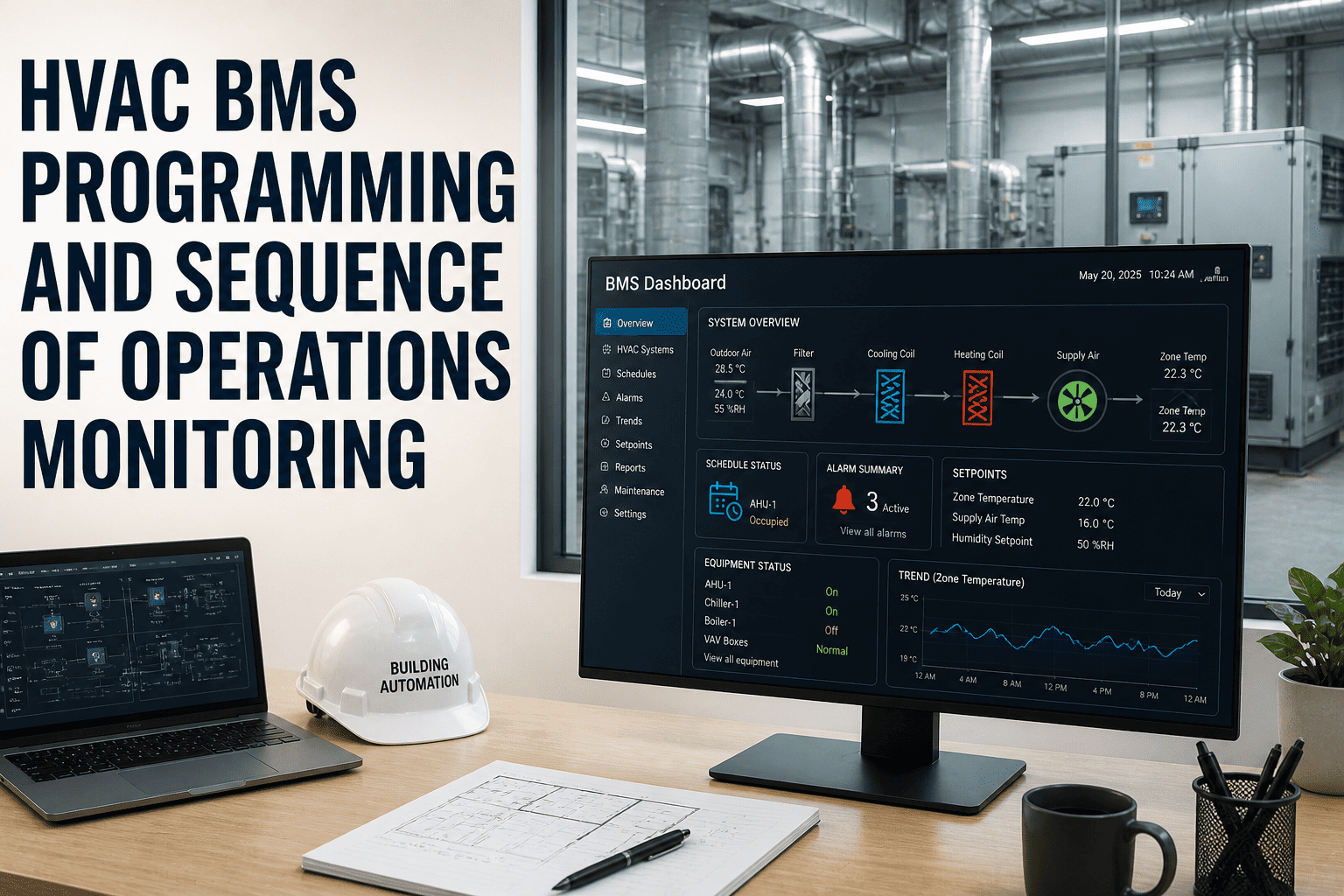
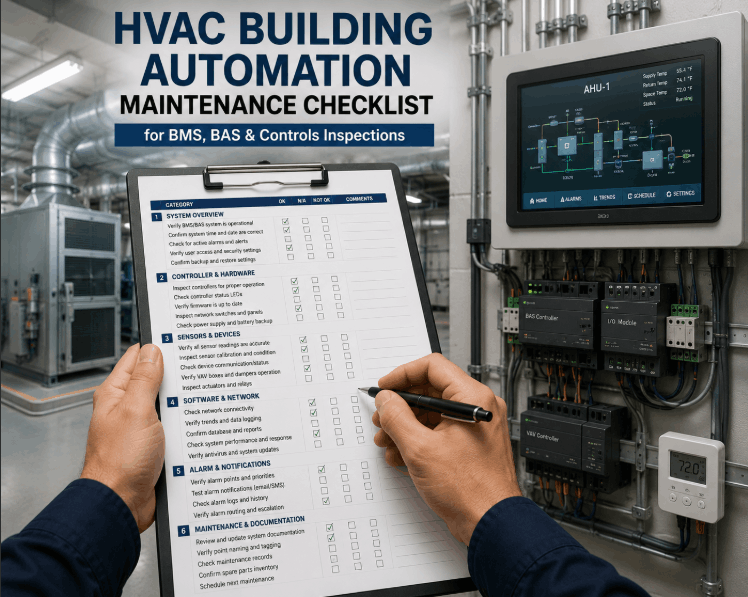
Modern buildings waste up to 30% of energy due to poorly programmed BMS sequences and unmonitored HVAC control drifts. OxMaint's IoT-integrated CMMS gives facility managers real-time visibility into every setpoint, schedule, and alarm — so your building automation system works as designed, not as assumed. Start a free trial and connect your first BMS site in under 48 hours, or book a 30-minute walkthrough with our building automation specialists.
Why It Matters
BMS Programming Failures Cost More Than You Think
A sequence of operations that was correct at commissioning slowly drifts — sensors age, setpoints get overridden, schedules stop matching occupancy. Most facilities discover the problem on an energy bill or during a tenant complaint, not from a dashboard. Monitoring BMS programming in real time closes that gap before it becomes expensive.
30%
Energy wasted by unverified BMS sequences
68%
Of BMS alarms go unactioned within SLA
4.2x
More reactive repairs in facilities without BMS monitoring
$18K
Avg annual energy savings per monitored BMS sequence
Core Capabilities
What OxMaint Monitors Across Your BMS
01
Sequence Verification
Continuously validates that AHU, chiller, and VAV sequences execute as programmed. Flags deviations from design intent within minutes, not weeks.
02
Setpoint Drift Detection
Tracks supply air temperature, chilled water, and zone setpoints over time. Alerts when values drift outside commissioning-defined tolerance bands.
03
Schedule Compliance
Compares actual BAS runtime schedules against occupancy calendars. Auto-generates work orders when equipment runs during unoccupied hours.
04
Alarm Analytics
Aggregates BMS alarm history, identifies repeat offenders, and prioritizes by energy and comfort impact — so your team acts on what matters most.
05
IoT Sensor Integration
Pulls live data from BACnet, Modbus, and MQTT endpoints directly into OxMaint. No middleware required — connect your BMS in hours, not months.
06
Predictive Fault Detection
Machine-learning fault detection on sensor streams identifies control valve failures, damper faults, and sensor bias before they impact comfort or compliance.
Performance Comparison
Before vs. After BMS Monitoring with OxMaint
| BMS Challenge |
Without Monitoring |
With OxMaint |
| Setpoint drift detection |
Discovered via complaints |
Real-time alert within minutes |
| Alarm response time |
Hours to days |
Prioritized, routed instantly |
| Schedule verification |
Manual monthly audit |
Automated daily compliance check |
| Sequence documentation |
PDF binders, often outdated |
Live digital record, version-tracked |
| Energy waste identification |
Utility bill retrospective |
Continuous anomaly detection |
| Audit preparation |
2–3 weeks manual assembly |
One-click compliance export |
Connect Your BMS to OxMaint in 48 Hours
IoT-native integration with BACnet, Modbus, and MQTT. No middleware. No month-long setup. Your building automation data starts working for you from day one.
Implementation Checklist
BMS Monitoring Readiness: 10-Point Checklist
1
All AHU, chiller, and boiler sequences documented in digital format with current version date
2
BACnet or Modbus point lists exported and mapped to asset hierarchy in CMMS
3
Baseline setpoints captured from original commissioning report and entered as tolerance targets
4
Occupancy schedules uploaded and linked to corresponding BAS runtime schedules
5
Alarm priority matrix defined — comfort, energy, safety tiers assigned per point
6
Escalation paths configured — which alarms page technicians vs. notify managers
7
IoT gateway or direct BMS API connection tested and data streaming confirmed
8
Fault detection rules activated for top 5 highest-frequency BMS alarm types
9
Energy baseline established — monthly kWh by system captured for future comparison
10
First 30-day review scheduled to validate monitoring rules against actual building behavior
Expert Review
What Building Automation Professionals Say
Most BMS problems are invisible until they're expensive. Continuous sequence monitoring closes that window — facilities that adopt it see energy waste drop by a quarter in the first year alone. The ROI on BMS analytics pays back faster than almost any other building investment.
Mark T.
Senior Controls Engineer · Commercial Real Estate, 12 yrs
The biggest issue we see is setpoint override creep — someone adjusts a temperature setpoint manually, it never gets reset, and six months later the whole sequence is fighting itself. Automated drift detection eliminates that entirely. It's not optional for any serious facility operation.
Priya S.
Facilities Director · Healthcare Network, 8 yrs
Frequently Asked Questions
BMS Monitoring: Common Questions
Your BMS Is Smarter Than You Think — Start Listening to It
OxMaint turns your existing BMS data into continuous sequence verification, proactive alarm management, and one-click compliance documentation. No rip-and-replace. No new hardware in most cases. Just the visibility your building has always had the data for.