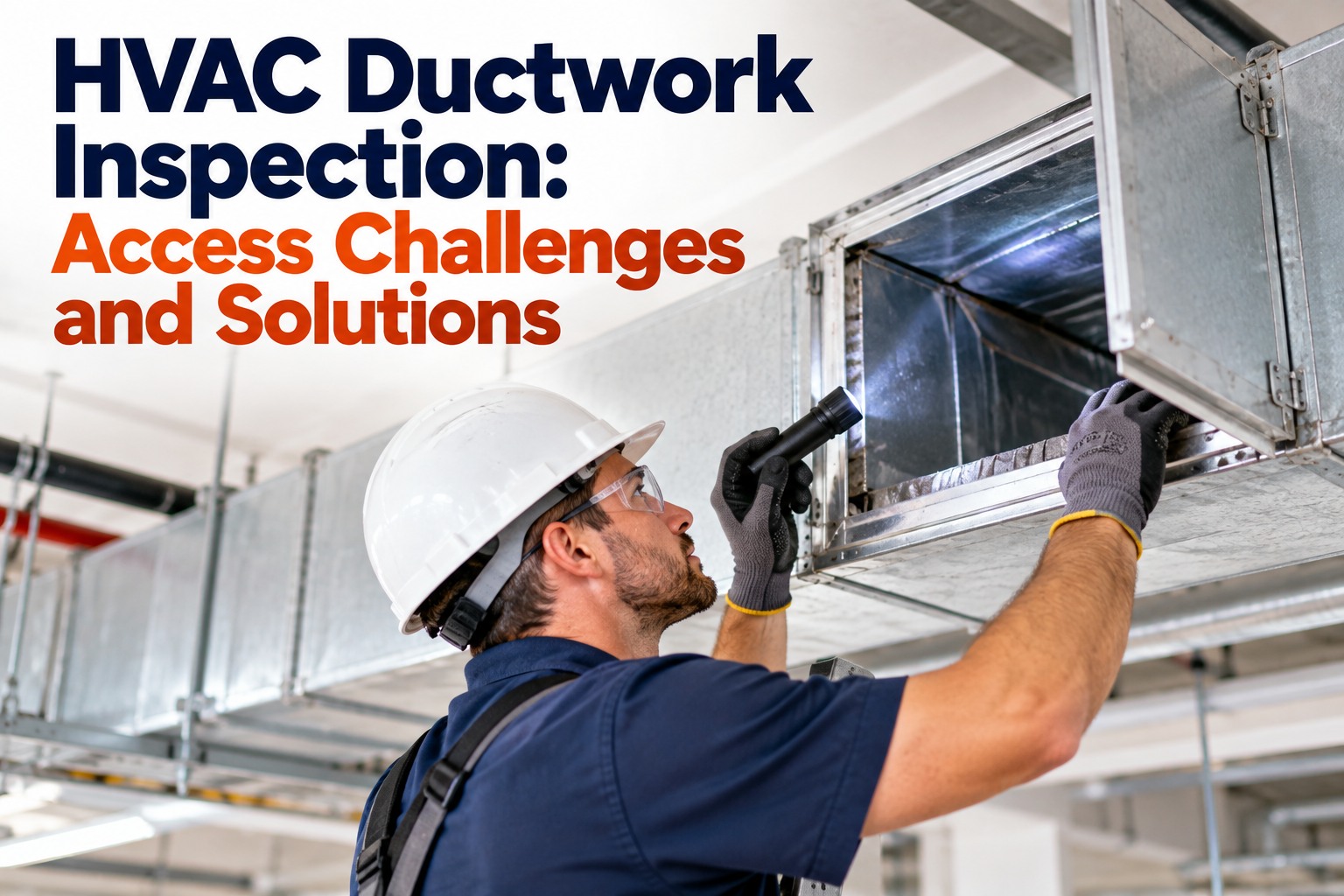
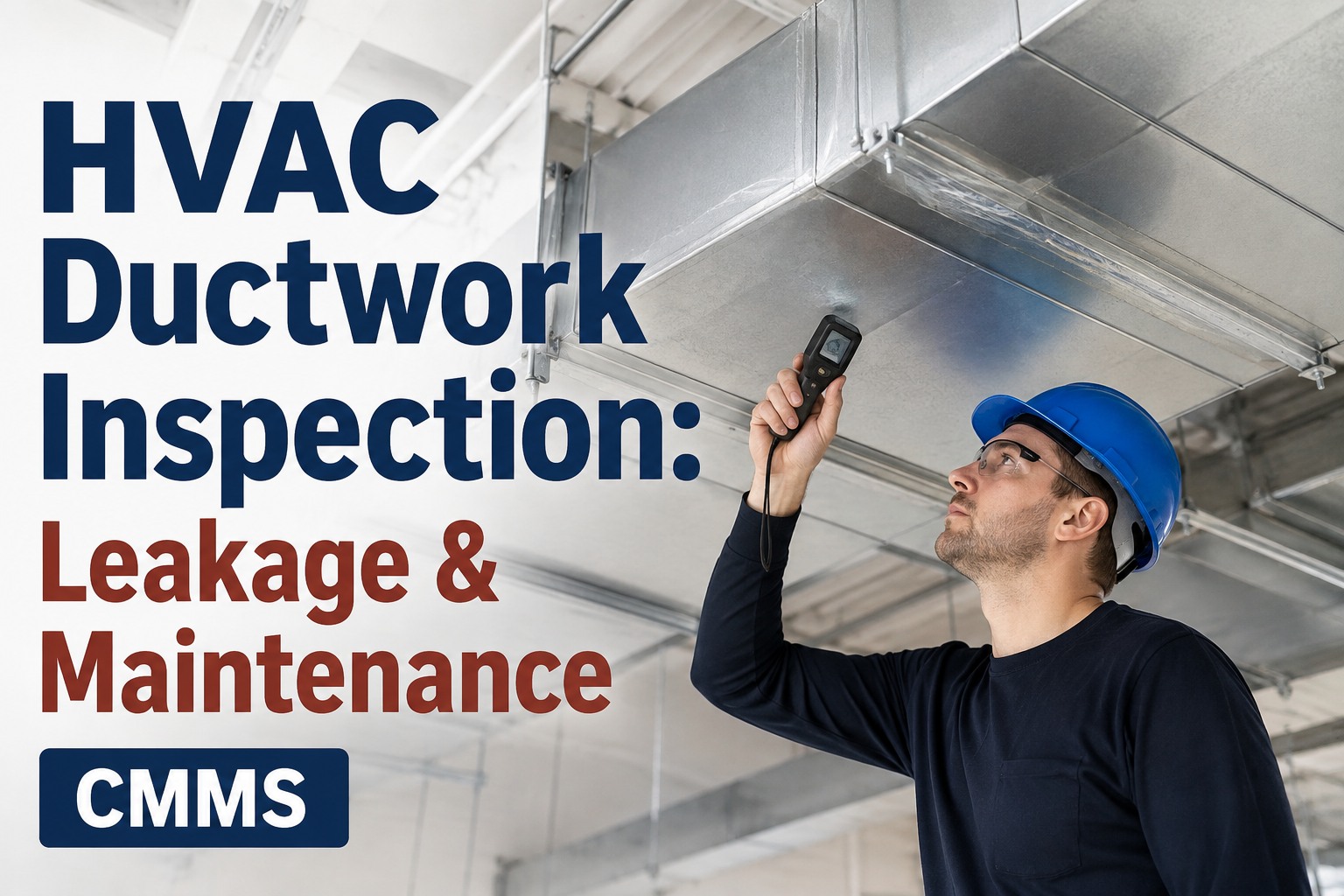
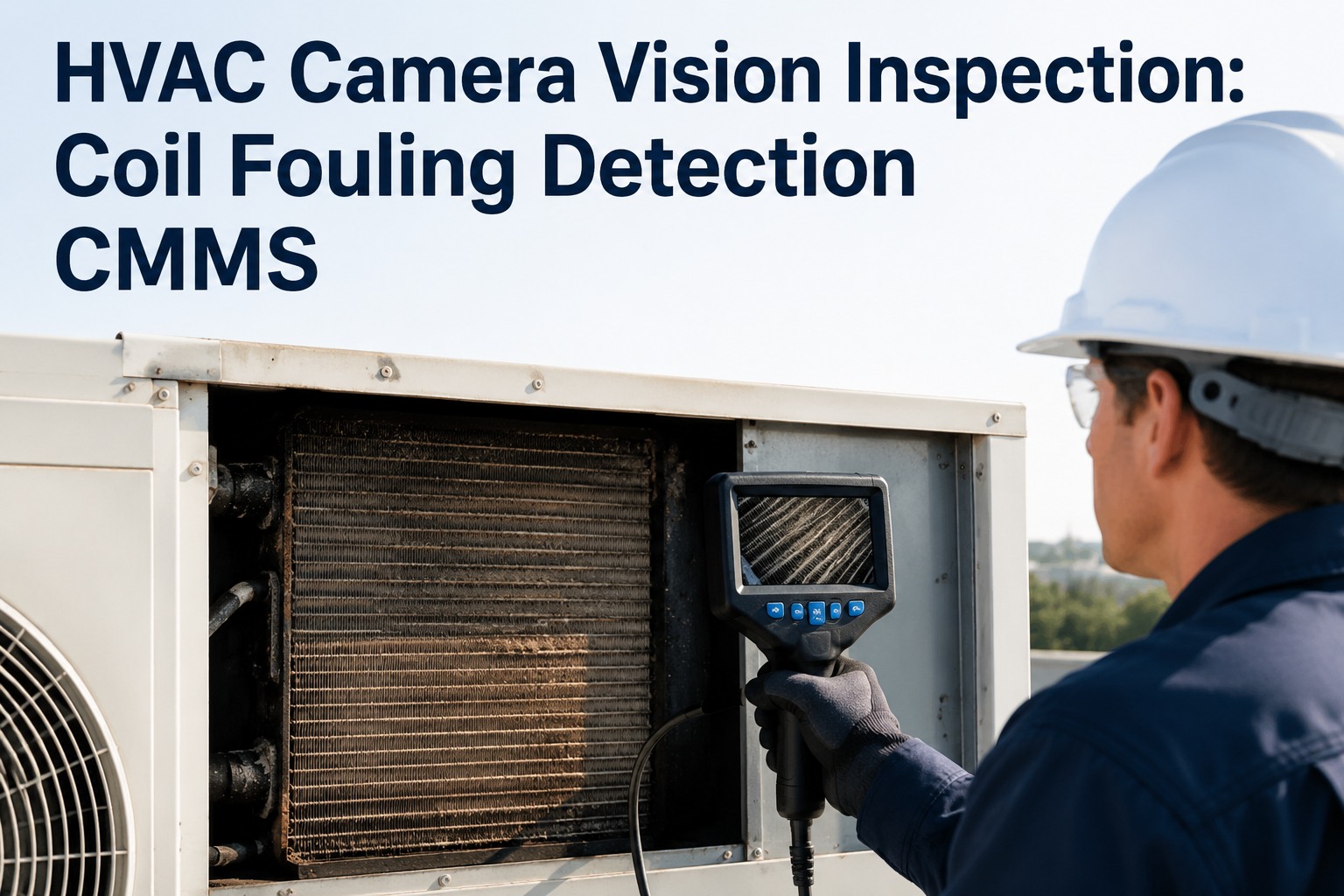
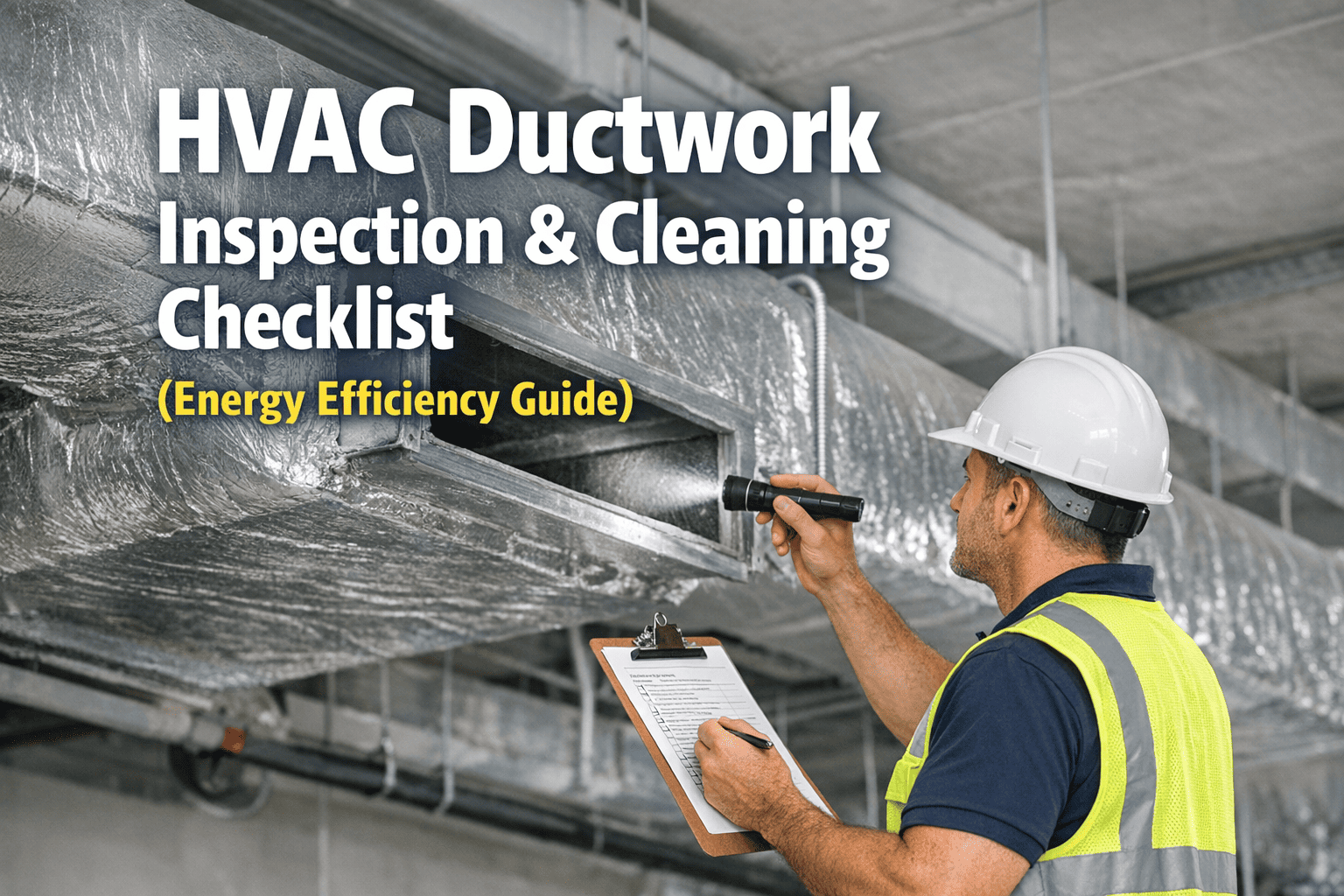
Ductwork is the system nobody inspects — not because it doesn't matter, but because it's hard to reach. It runs above hard ceilings, behind walls, through tight chases with no access panel in sight, so the inspection keeps getting deferred while leaks widen and contamination builds for years. By the time a duct problem is obvious, it's an air-quality complaint or an energy bill nobody can explain. The fix isn't more crawling — it's the right access method. OXMAINT AI, the AI-powered HVAC CMMS, schedules duct inspections, maps findings to zones, and turns each one into a tracked work order.
Commercial HVAC · Ductwork Inspection · Access Solutions · 2026
HVAC Ductwork Inspection: Access Challenges & Solutions
Ducts skipped because nobody can reach them. Leaks and IAQ issues quietly stacking up. Inspections that mean sending a tech crawling through a contaminated chase. OXMAINT AI, the AI-powered CMMS and maintenance management software, runs the program on one platform: inspections scheduled on a cycle, remote and robotic methods capturing what crawling can't, every finding mapped to its duct zone, and each one turned into a work order — so the hidden problems get found and fixed.
1Inspect
→
2Find Defect
→
3Work Order
→
4Verify & Record
DUCT INSPECTION · ZONE LOG
AHU-1 supply trunkrobotic ✓
Level 2 branch runsvideo ✓
Return plenum jointleak · WO
Roof run envelopethermal ✓
Kitchen exhaustscheduled
2–5×
how much more polluted indoor air can be than outdoor (EPA)
50m / 30 min
robotic duct coverage vs ~4 hours crawling manually
92%
of duct-related HVAC failures preventable with regular inspection
12–24 mo
typical commercial duct inspection cycle (6–12 for healthcare/food)
The Inspection That Keeps Getting Skipped
Every other asset gets a PM; ductwork gets deferred, because reaching it means opening a ceiling, entering a confined space, or crawling through contamination. So the leaks, the loose joints and the biological growth accumulate unseen, and the first real signal is a comfort complaint or an IAQ problem. The answer is to make access easy enough that inspection actually happens — and to record what's found. OXMAINT AI schedules the cycle and captures every finding by zone. Start free and put ductwork on an inspection cycle in OXMAINT AI.
Match the Barrier to the Solution
Most duct-access problems have a modern answer that doesn't involve a tech in the ceiling. Line the barrier up against the fix and the program stops being blocked. OXMAINT AI records which method was used on each zone so the coverage is provable. Book a demo to plan access on your duct runs in OXMAINT AI.
CHALLENGEDuctwork above hard ceilings and behind walls with no way in.
SOLUTIONProvision proper access panels at inspection points so future checks need no demolition.
CHALLENGERuns too long or too tight for a person to enter safely.
SOLUTIONRemote video / CCTV cameras push deep into the run and show the interior on a screen.
CHALLENGELeaks and insulation gaps you can't see from inside the duct.
SOLUTIONThermal imaging surveys reveal leakage and envelope loss from outside the duct.
CHALLENGELong, contaminated trunks that are unsafe and slow to crawl.
SOLUTIONRobotic crawlers cover the run in a fraction of the time with no one inside.
Four Ways to Get Eyes Inside the Duct
A real duct program uses the method that fits each run — there's no single tool for every situation. Here are the four that replace crawling, and where each earns its place. OXMAINT AI ties the findings from any of them back to the duct zone and the work order. Sign up free and log inspections by method in OXMAINT AI.
Access Panels
The foundation: provision panels at key inspection points during install or retrofit, so every future check is a hinge away, not a ceiling cut.
Remote Video / CCTV
Push cameras and duct scopes travel deep into runs a person can't enter, showing joints, damage and buildup live on a screen.
Thermal Imaging
Infrared surveys find leakage, insulation gaps and envelope loss from outside the duct — the problems a camera inside can't see.
Robotic Crawlers
Self-propelled HD/4K platforms cover long, contaminated trunks fast — roughly 50m in half an hour — with no one in the duct.
Duct Size & Inspection-Cycle Reference
6–14″
Residential duct range
12–35″
Commercial duct range
24″+
Industrial duct range
12–24 mo
Commercial cycle (6–12 healthcare/food)
Round and rectangular duct both inspectable across these ranges. Inspection findings feed NADCA-style before/after documentation held against each zone.
A Duct You Can’t Reach Is a Duct You’re Not Inspecting.
Deferred duct inspection isn't a decision — it's what happens when access is too hard. Solve the access and the inspection follows. OXMAINT AI schedules the cycle, captures findings from any method by zone, and turns each defect into a tracked work order so nothing stays hidden.
From Inspection to Closed Work Order
Finding a leak means nothing if it lives in a video file nobody acts on. The value is in the chain from a duct finding to a verified repair — and that's what OXMAINT AI runs, mapping each finding to its zone and carrying it to closure. Here's the loop. Book a demo to run this duct loop in OXMAINT AI.
01
Schedule by Zone & Cycle
Duct zones are mapped as assets on an inspection cycle, so runs come due on schedule instead of only after a complaint.
↓
02
Inspect With the Right Method
Panel, camera, thermal or robotic — whatever fits the run — captures the interior and the envelope without demolition.
↓
03
Map the Finding to the Zone
Video and images attach to the exact duct zone with the finding described — located, not lost in a folder of clips.
↓
04
Raise the Work Order
A leak, a loose joint or contamination becomes a ranked work order routed to the right team — the fix is tracked, not filed.
↓
05
Verify, Close & Document
Repair verified with before/after evidence and retained against the zone — NADCA-style records ready for the next review.
What the CMMS Runs for the Duct Program
The inspection tool gets eyes in the duct; the CMMS makes it a program — scheduled, located, acted on and documented. OXMAINT AI ties it all to the duct zones your team already maintains. Start free and build your duct program in OXMAINT AI.
MAP
Duct Zone Asset Mapping
Every run and zone held as an asset with its own inspection history — the map that makes findings locatable.
SCHEDULE
Cycle-Based Scheduling
Inspections come due on a 12–24-month commercial cycle (tighter for healthcare and food) automatically.
ATTACH
Video & Image by Zone
Footage from any inspection method attaches to the specific zone, not a shared drive nobody searches.
ACT
Finding-to-Work-Order
Defects generate ranked work orders automatically, so a discovered leak becomes a tracked repair.
DOCUMENT
NADCA-Style Records
Timestamped before/after documentation held per zone for compliance and the next inspection review.
TREND
Per-Zone History
A zone's inspection trail shows recurring problem areas, so chronic runs get attention before they fail.
“
Duct inspection was the line item that never happened. Half our runs were above hard ceilings, and 'inspect the ductwork' really meant 'cut a hole and send someone in,' so it got deferred every year. We started provisioning access panels on retrofits and using a camera-and-crawler service for the rest, with everything logged by zone in the system. The first full pass found two return-side leaks and mold in a run near a kitchen we'd never have caught. Now the inspections are scheduled, the findings become work orders, and I can actually show what's been checked.
Facilities Engineering Manager · Commercial Property Group
Frequently Asked Questions
Why is ductwork so often left uninspected?
Because access is hard — much of it runs above hard ceilings, behind walls or through confined, contaminated chases, so the inspection gets deferred while problems accumulate. Solving access, then scheduling the cycle, is what makes it happen. OXMAINT AI runs the schedule and records the findings.
Start free and schedule duct inspections.
How do you inspect ducts nobody can physically enter?
With remote and robotic methods: push cameras and duct scopes for tight runs, robotic crawlers for long contaminated trunks — roughly 50m in 30 minutes versus about four hours of crawling — and thermal imaging for leaks from outside. OXMAINT AI logs which method covered each zone.
Book a demo to see method logging.
What do access panels solve?
They turn a future inspection from a demolition job into opening a hinge. Provisioning panels at key inspection points during install or retrofit means every subsequent check is fast and non-destructive — the foundation of a repeatable duct program.
Start free and plan your access points.
How often should commercial ductwork be inspected?
A common commercial cycle is every 12–24 months, tightening to 6–12 months for healthcare and food service where air quality is critical. OXMAINT AI brings each zone due automatically so the cycle doesn't slip.
Book a demo to set your cycle.
What happens to what an inspection finds?
In OXMAINT AI the finding maps to its duct zone with video or images attached, a ranked work order is raised, and the repair is verified and documented with before/after records — so a leak on a screen becomes a tracked, closed fix, not a forgotten clip.
Start free and connect findings to work orders.
Inspect the Ducts You’ve Been Skipping.
Run ductwork inspection on the OXMAINT AI maintenance management software — cycle-based scheduling, access solved with panels, cameras, thermal and robotic methods, findings mapped to each zone, and every defect turned into a tracked, documented work order. Catch the leaks and IAQ problems that have been hiding for years.