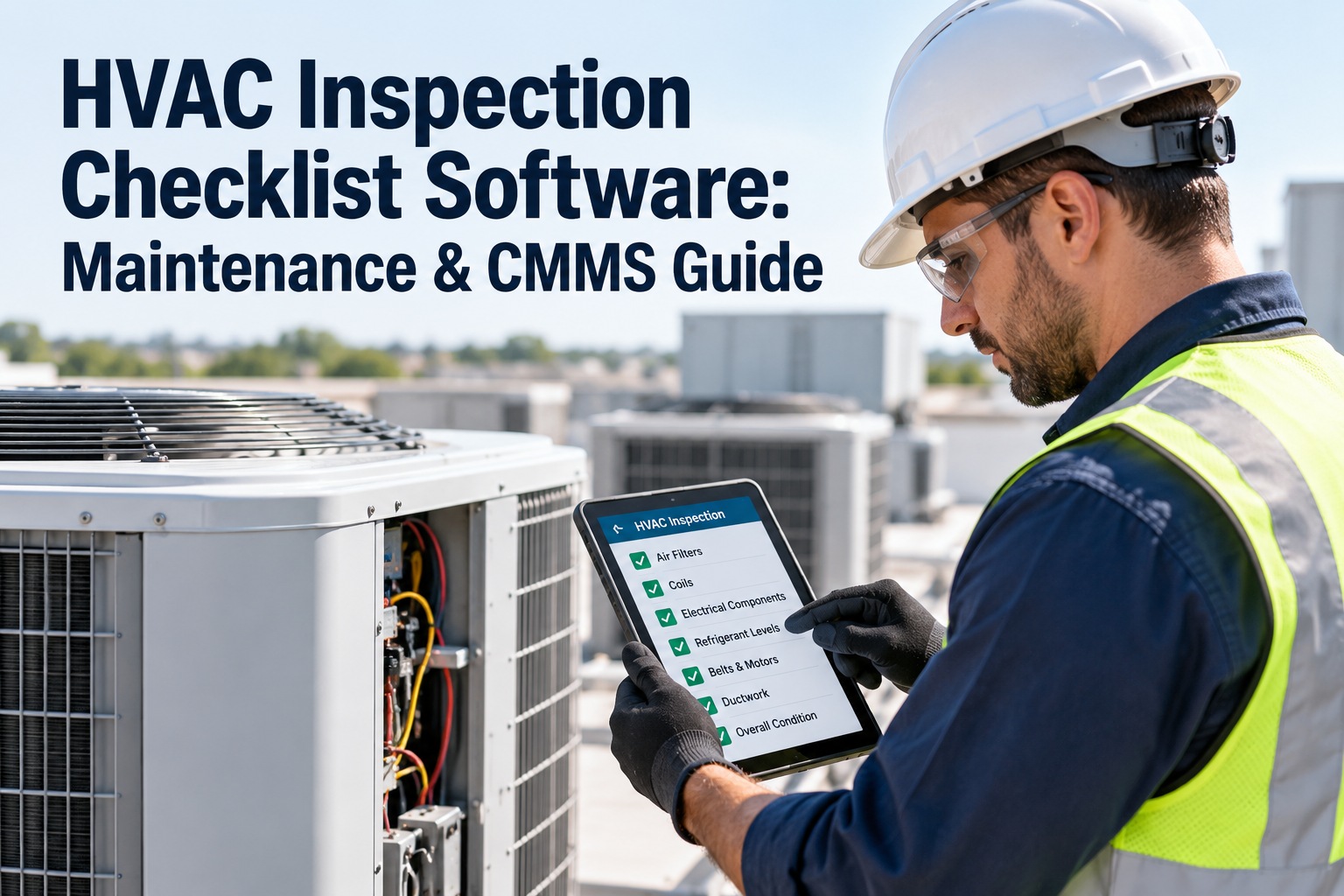
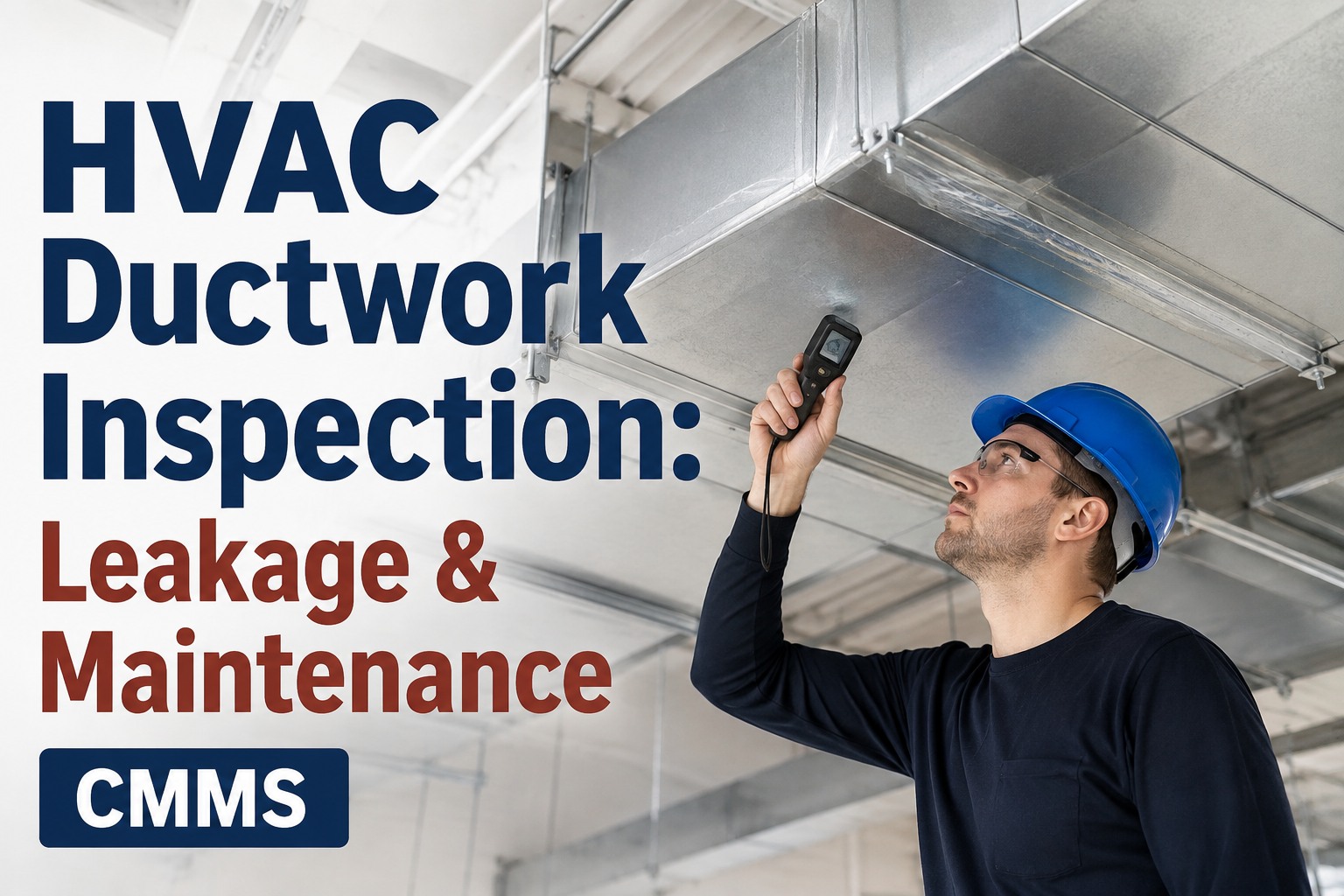
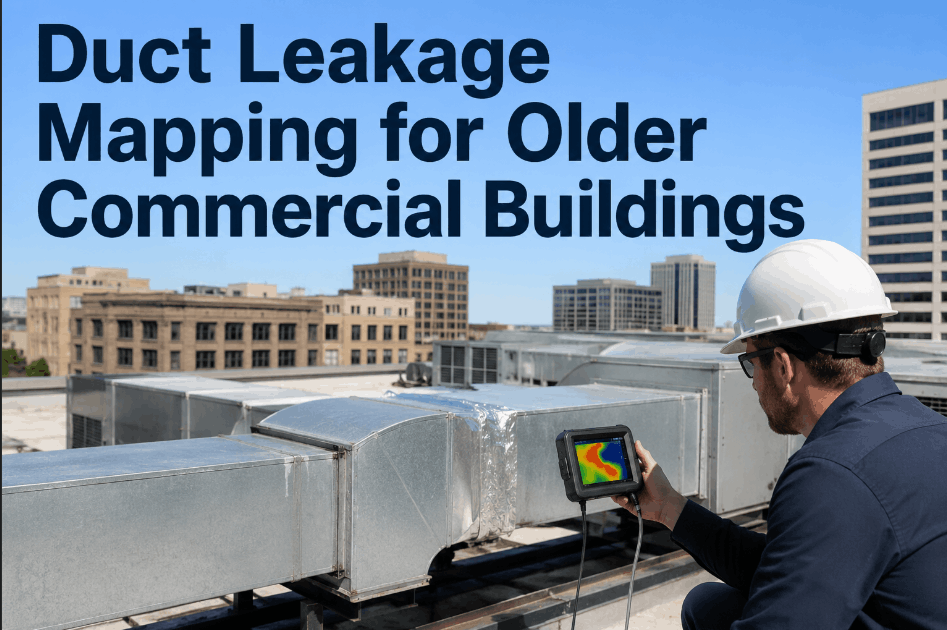
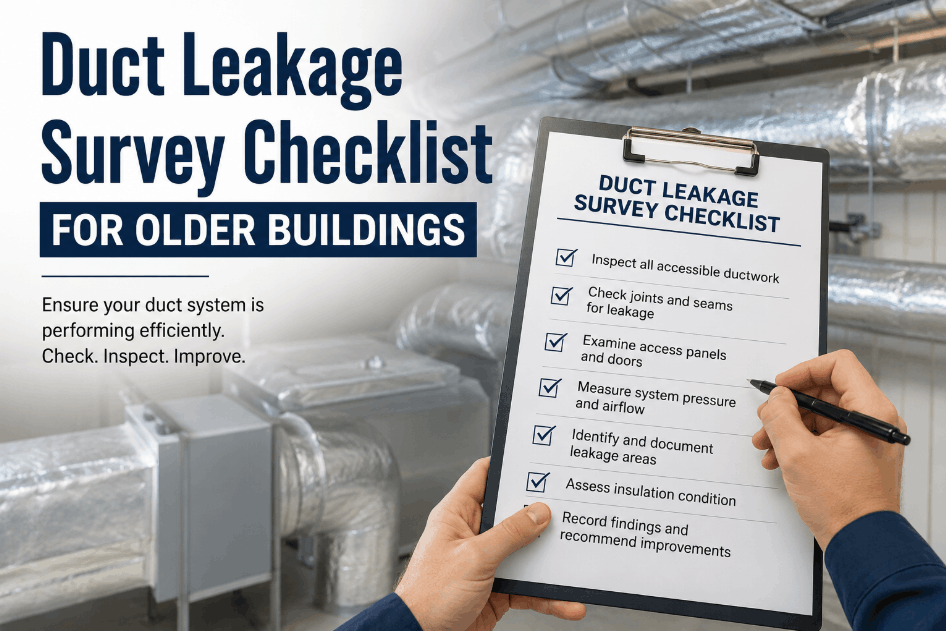
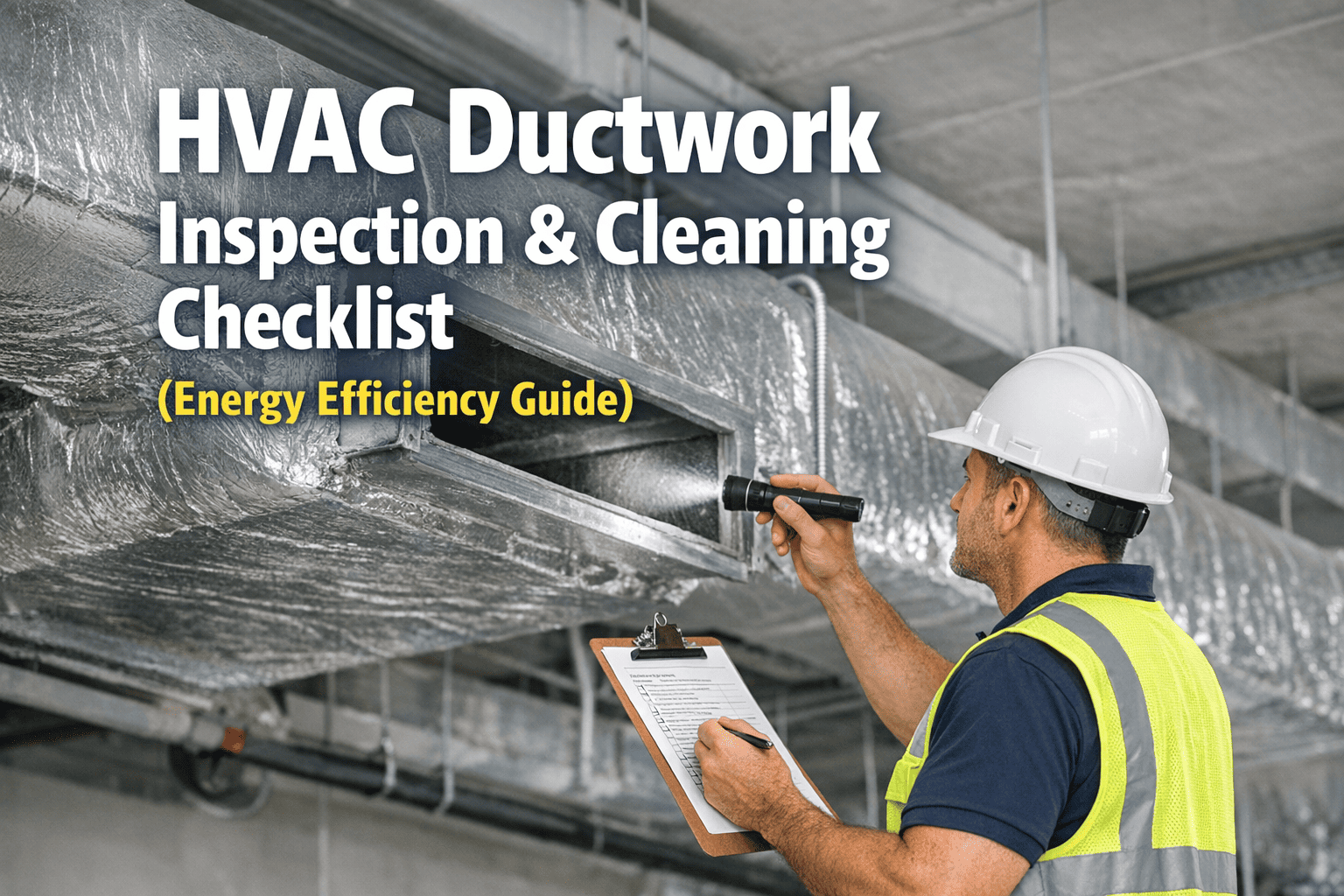
Ducts are the part of an HVAC system nobody sees, which is why they get inspected last. Yet they carry every cubic metre of conditioned air in the building. A torn joint, a crushed flex run, wet insulation or a stuck damper can leave one floor stuffy, another floor cold and the plant working harder to compensate. A duct inspection checklist gives your team a repeatable way to find these problems early, record them and turn them into work. This guide walks the air path stop by stop, then shows how to triage findings and keep the records, using OXMAINT AI, the AI-powered CMMS for facility and HVAC maintenance teams.
HVAC Ductwork · Inspection Checklist · Commercial Buildings
HVAC Duct Inspection Checklist for Commercial Buildings.
Duct problems hide above ceilings, so they only surface as complaints. OXMAINT AI connects the workflow in one CMMS: inspection rounds and occupant requests raise issues, issues become work orders on the right system, repairs are recorded in the asset history, and preventive maintenance keeps the next duct check scheduled.
1Inspection or Request
→
2Issue Logged
→
3Work Order
→
4Repair Recorded
→
5PM Scheduled
Inspection Management
Maintenance Requests
Work Order Management
Preventive Maintenance
Read the Symptom First: What Occupants Are Telling You
Most duct inspections begin with a complaint. This table links common symptoms to places in the duct system worth checking first. It points you to where to look, and it is not a diagnosis. Sign up free and log complaints against each system.
What people report
Check first
Look for
Hot or cold spots
Branch ducts, dampers, flex runs
Closed or stuck dampers, kinks, disconnected sections
Weak airflow at a vent
Terminal, branch and trunk joints
Leaks, crushed duct, blocked grille, dirty filter upstream
Dust streaks around diffusers
Filters, return path, duct joints
Filter bypass, leaky returns, debris in ducts
Rattling, whistling or booming
Trunk, transitions, dampers
Loose panels, damaged sections, high air velocity
Musty smell
Insulation, drain pans, intake
Moisture, wet insulation, standing water
Condensation or ceiling stains
Insulated supply ducts
Damaged insulation or vapour barrier, leaking joints
!
Safety first: use proper fall protection when working at height, follow lockout/tagout and use suitable PPE. If you suspect mould growth, or if old insulation or duct wrap might contain hazardous material, do not disturb it. Stop and follow your site's procedure and local guidelines.
Follow the Air: A Six-Stop Inspection Route
The easiest way to cover a duct system without missing anything is to follow the air from the outside, through the unit, down the trunk and out to the room, then back again. Book a demo to build this route as a reusable inspection.
STOP 1Outdoor Air Intake
Louvers and screens are clear of debris and leaves
No standing water or staining below the intake
Nothing nearby is feeding odours or exhaust into the intake
Dampers move freely and seal when closed
STOP 2Air Handler Connections
Filters seated properly with no air bypass gaps
Flexible connectors are intact, not torn or sagging
Access doors and gaskets seal tightly
No dust trails or leakage around the cabinet
STOP 3Main Supply Trunk
Seams, joints and sealant intact, with no visible gaps
Hangers and supports secure, with no sagging runs
Insulation is complete, dry and well attached
No dents, crushed sections or corrosion
STOP 4Branches & Dampers
Balancing dampers are in their marked positions
Flex duct is not kinked, crushed or over-long
Connections to trunk and terminals are secure
VAV boxes and actuators operate as expected
STOP 5Room Terminals
Diffusers and grilles are clean and unobstructed
Dirt streaks, staining or condensation noted
Airflow feels consistent with similar rooms
No rattles, whistles or loose fixings
STOP 6Return Path & Plenums
Return grilles and transfer paths are not blocked
Ceiling plenum is free of debris and loose material
Return ducts and plenum joints are sealed
Fire and smoke damper access is clear (testing by qualified staff)
Five Defects That Cause Most Duct Problems
When you open an access panel or lift a ceiling tile, most of what you find will fall into five groups. Photograph each one and attach it to the record. Start free and capture photos on every inspection.
1
Air leaks
Failed sealant or tape, loose joints and disconnected sections let conditioned air escape before it reaches the room.
2
Insulation damage
Torn, wet or missing insulation can cause condensation, heat gain or heat loss and visible staining.
3
Dust and debris
Heavy deposits, loose material or construction residue point to filtration, leakage or housekeeping issues.
4
Moisture
Water staining, wet insulation or odours suggest condensation, leaks or drainage problems that need a source fix.
5
Mechanical faults
Stuck dampers, kinked flex duct, sagging supports and failed actuators disturb airflow and balance.
Don't Let Findings Die in a Notebook.
Run duct inspections on a phone, attach photos and turn every defect into a tracked work order with OXMAINT AI.
Triage What You Find: Stop, Schedule or Monitor
Not every finding needs the same response. Sorting them into three levels keeps urgent items from waiting behind minor ones. Set your own definitions with your facility and safety leads. Book a demo to set up finding priorities.
Red: Act now
Suspected mould growth, wet or hazardous insulation, detached or collapsing duct, or blocked or damaged fire and smoke dampers. Isolate the area as needed and escalate to qualified people.
Amber: Schedule repair
Leaking joints, damaged insulation, kinked flex duct, stuck dampers or sagging supports. Raise a work order with a target date.
Green: Monitor
Light dust on grilles, minor sealant wear or cosmetic marks. Record, photograph and bundle into the next PM visit.
Inspection Methods: From a Quick Look to Specialist Testing
A good programme uses the lightest method that answers the question, and calls in specialists when needed. Sign up free and plan inspection levels per system.
LEVEL 1 · VISUAL
Walk and look
Access panels, ceiling spaces, grilles and exposed ducts, using a torch and a phone camera.
LEVEL 2 · MEASURED
Compare readings
Airflow, temperature and pressure readings compared with design values or similar zones.
LEVEL 3 · SPECIALIST
Test and survey
Leakage testing, camera inspection or damper testing by qualified contractors, in line with local codes.
How Often Should Ducts Be Inspected?
Frequency depends on the building, the air quality, the system type and local requirements. This is a common pattern to adapt, not a rule. Book a demo to schedule your cycle.
Ongoing
Log occupant complaints against the system and review patterns.
Quarterly
Visual check of accessible ducts, terminals, dampers and filters.
Annual
Fuller route inspection with ceiling and plenum access and photos.
As needed
After renovation, water events, odours or persistent comfort problems.
How OXMAINT AI Supports Duct Inspection and Maintenance
OXMAINT AI is a mobile-first CMMS, so inspectors work through the route on a phone while the manager sees the results across the building. Start free and add your first systems.
Digital Inspection Checklists
Run the six-stop route on a phone, with photos and notes on each item.
Maintenance Requests
Collect comfort complaints from occupants, including by QR code, linked to the right asset.
Work Order Management
Assign repairs, track status and keep every fix tied to its system.
Preventive Maintenance
Schedule recurring duct, filter and damper checks automatically.
Asset Records & History
Keep drawings, photos, repairs and past findings against each air system.
Analytics & Reporting
Spot repeat issues, aged findings and areas with recurring complaints.
Frequently Asked Questions
What should an HVAC duct inspection checklist include?
Intake, air handler connections, supply trunk, branches and dampers, terminals and return path, covering leaks, insulation, dust, moisture, supports and damper operation, with photos and notes.
Sign up free and build your checklist.
How often should commercial ductwork be inspected?
Many sites combine ongoing complaint tracking, quarterly visual checks and a fuller annual inspection. Your building, risk level and local rules set the final schedule.
Book a demo to plan yours.
Can our team do the inspection, or do we need a contractor?
Visual and accessible checks suit trained in-house staff. Leakage testing, camera surveys, fire and smoke damper testing and mould or hazardous-material concerns should go to qualified specialists.
Start free and assign tasks by skill.
What is the difference between inspection and duct cleaning?
How does a CMMS help with duct maintenance?
It holds the checklist, schedules recurring inspections, keeps photos and history per system and turns findings into work orders so nothing relies on memory.
Sign up free and try it on one system.
See Inside the Ducts Before the Complaints Start.
Bring duct inspections, requests, work orders and PM scheduling together in OXMAINT AI, and give every air system a clear next check.