The HVAC sector is undergoing its most consequential structural shift in four decades — simultaneously. Refrigerant regulatory timelines are collapsing maintenance planning horizons. Heat pump penetration is displacing gas-fired infrastructure at a pace that outstrips technician qualification pipelines. AI diagnostic platforms are moving from pilot deployments to operational standards at tier-one facility operators. And equipment manufacturers are embedding IoT connectivity into product lines that were entirely analogue three product generations ago. For facility managers, service contractors, and engineering directors who maintain large HVAC estates, each of these vectors represents not just a technology update but a direct implication for maintenance programme design, workforce capability, and capital planning. HVAC professionals building their 2026 maintenance strategy around these trends can sign up for Oxmaint's AI Dashboard to see how predictive diagnostics integrate with existing HVAC asset management, or book a demo to see how the platform is configured for large HVAC estates across commercial and industrial portfolios.
Trend 1: AI-Driven HVAC Diagnostics Move From Pilot to Standard
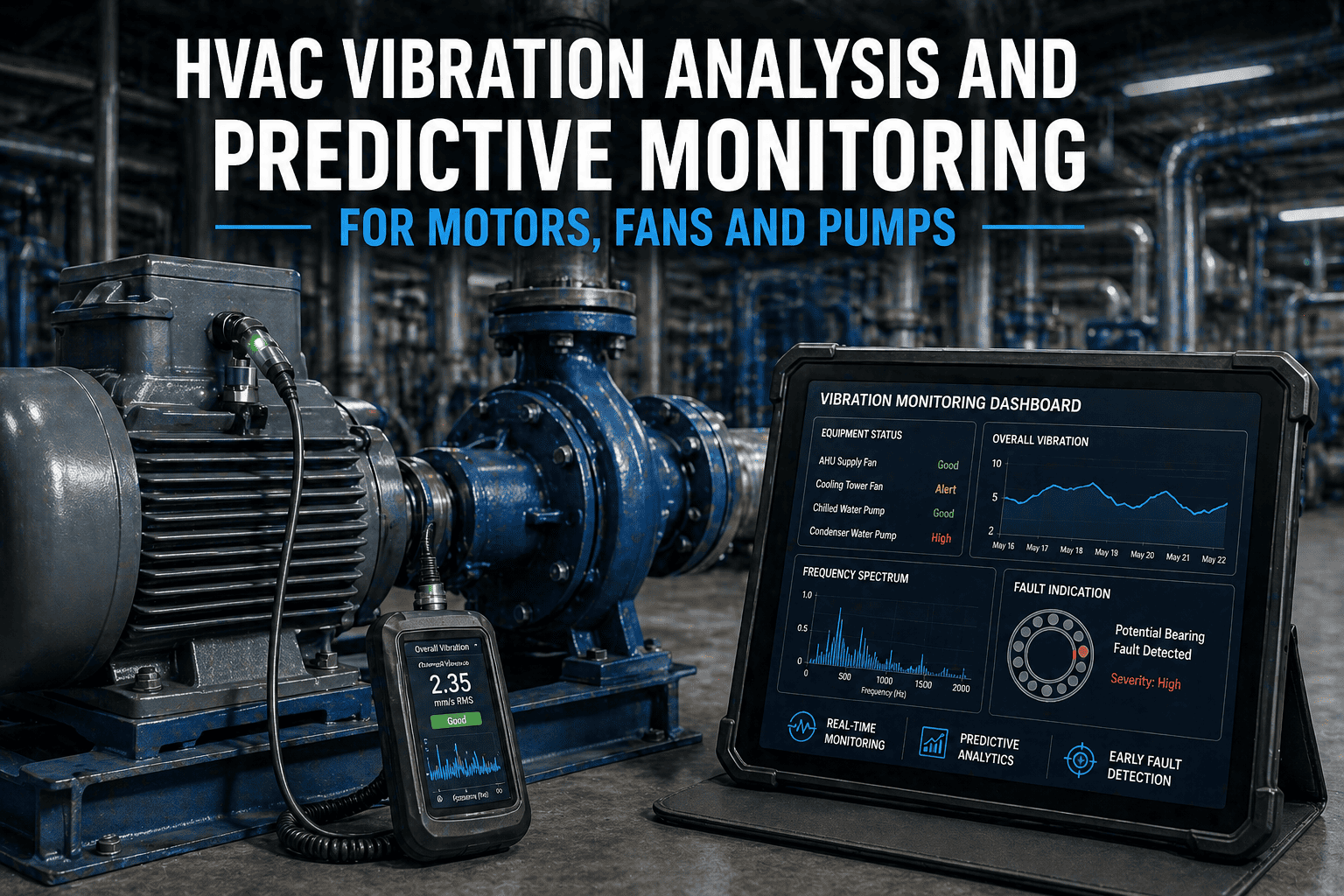
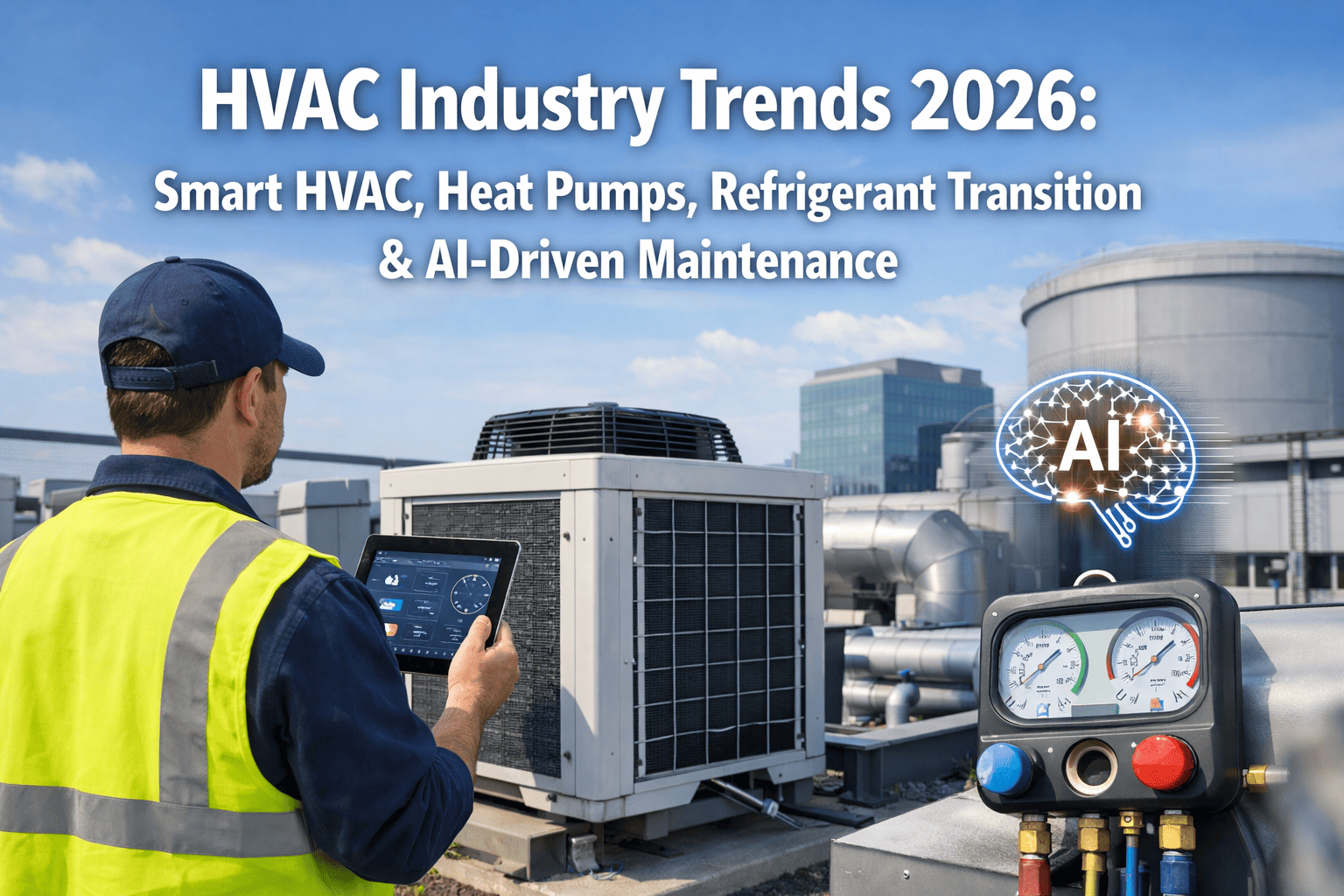
Automated fault detection and diagnostics (AFDD) systems have shifted from optional analytics layer to operational standard at tier-one building operators in 2025–26. The transition is driven not by AI novelty but by a hard economic argument: chiller and AHU fault detection at 3–8 weeks lead time replaces emergency repair events that carry 3–4x planned cost premiums. What has changed is model maturity — first-generation AFDD tools produced false positive rates that eroded technician trust. Current platforms applying multivariate anomaly detection across compressor current signatures, refrigerant pressure trends, and coil delta-T simultaneously have reduced false positives below 12% in controlled deployments, making the alert credible enough to act on without specialist validation. HVAC engineers and facility managers who want to see AI diagnostics applied to their existing chiller, AHU, and VRF asset base can sign up for Oxmaint's AI Dashboard to connect sensor data to predictive work order generation, or book a demo to walk through the anomaly detection configuration for their equipment profile.
Trend 2: Heat Pump Proliferation Is Reshaping Commercial Maintenance Programmes
Heat pump penetration in commercial and light industrial applications has accelerated beyond most 2023 forecasts — driven by gas boiler installation bans in new construction across multiple European jurisdictions, IRA tax credits accelerating US commercial heat pump adoption, and ASHRAE 90.1 updates making heat pump systems the path-of-least-resistance for code compliance in new build. For maintenance professionals, the practical implication is fleet diversification at a pace that creates new skill requirements without corresponding reduction in existing gas plant servicing obligations during the transition period. Properties with mixed heat pump and gas plant estates face a parallel skills gap: heat pump diagnostics require refrigeration competency that traditional heating engineers may not hold. Teams managing mixed-technology HVAC estates can sign up to configure Oxmaint's AI Dashboard for heat pump asset monitoring alongside legacy plant, or book a demo to see how the platform manages multi-technology HVAC maintenance programmes in a single asset register.
Trend 3: The HFC Phase-Down Is Now an Active Capital Planning Problem
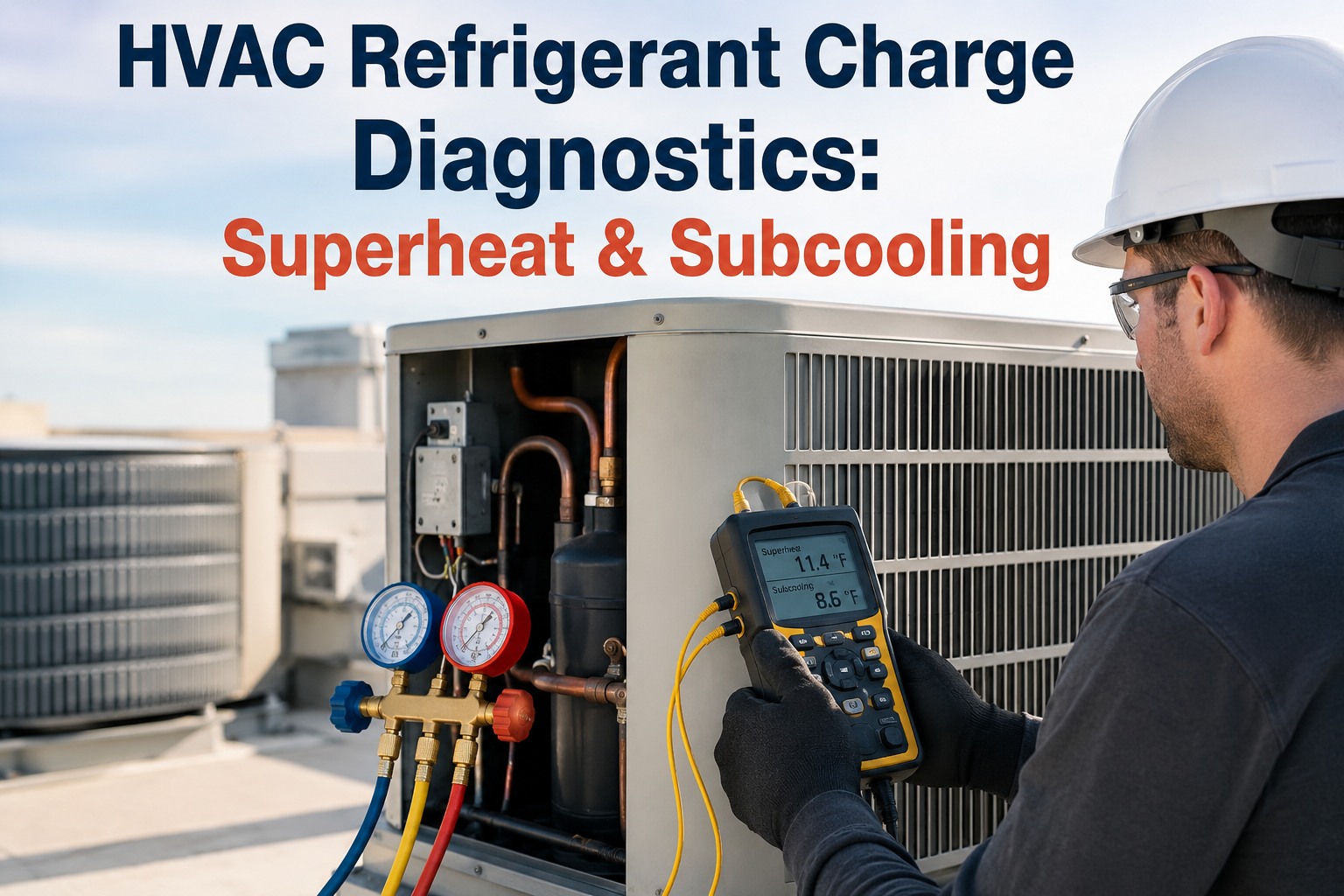
The Kigali Amendment HFC phase-down schedule, reinforced by EU F-Gas Regulation revisions and US EPA AIM Act implementation, has moved refrigerant transition from a long-term strategic consideration to an immediate capital planning decision for organisations with chiller or large DX equipment portfolios. The key issue for engineering directors is asset age: equipment installed between 2005 and 2018 running R-410A, R-134a, or R-407C faces either expensive retrofit to low-GWP alternatives or planned replacement within a narrowing window of refrigerant availability at manageable cost. Retrofit with R-454B or R-32 is technically viable on some platforms but requires manufacturer validation and typically carries capacity de-rating. The organisations most exposed are those with no centralised asset register that tracks refrigerant type, charge quantity, and equipment age across their full HVAC estate. HVAC asset managers who need to build this picture urgently can sign up for Oxmaint to build a refrigerant compliance asset register immediately, or book a demo to see how the compliance calendar tracks F-Gas leak check intervals, logbook requirements, and refrigerant phase-down timelines against each asset in the portfolio.
Build Your Refrigerant Asset Register & AI Maintenance Programme
Oxmaint's AI Dashboard connects HVAC equipment data to predictive maintenance work orders, tracks F-Gas compliance deadlines, and gives engineering teams full visibility of refrigerant type, charge quantity, and service history across every asset in the portfolio.
Trend 4: IoT Integration Is Closing the Gap Between BMS and CMMS
The operational gap between building management systems and computerised maintenance management systems has been a persistent inefficiency in commercial HVAC maintenance: the BMS knows the equipment is running abnormally but cannot generate a maintenance work order, and the CMMS has the maintenance history but cannot see the sensor data. In 2026, this gap is closing through two parallel developments — HVAC OEMs embedding native API connectivity in new equipment, and CMMS platforms building BMS integration layers that translate alarm states and sensor anomalies directly into work order triggers. The practical outcome for maintenance teams is a dramatic compression of the time between fault detection and intervention. Engineering teams currently operating BMS and CMMS as disconnected systems can book a demo to see how Oxmaint's AI Dashboard bridges this gap, or sign up to begin connecting their BMS alarm outputs to automated maintenance work order generation today.
Trend 5: Energy Efficiency Mandates Are Making HVAC Maintenance a Financial Performance Function
Energy performance legislation — UK MEES, EU Energy Performance of Buildings Directive, ASHRAE 90.1 compliance requirements, and emerging carbon budgeting frameworks for large building operators — is converting HVAC energy efficiency from an environmental metric into a financial and legal compliance obligation. For maintenance professionals, this has a direct operational implication: HVAC systems that drift from design performance due to fouled coils, miscalibrated controls, or degraded refrigerant charge create measurable energy waste that is now reportable and in some jurisdictions penalisable. The well-documented performance degradation pathway runs from deferred coil cleaning (+8–12% energy penalty) through refrigerant undercharge (+15% chiller energy penalty) to degraded controls calibration (+6–10% penalty) — a combined 29–42% energy premium on a poorly maintained HVAC estate versus a properly maintained one. Facilities managers building the business case for HVAC maintenance investment can sign up for Oxmaint to begin tracking energy-related maintenance tasks against consumption data, or book a demo to see how the AI Dashboard identifies energy waste patterns attributable to specific deferred maintenance items.
AI Maintenance vs Conventional PM: HVAC Performance Benchmarks
| Performance Metric | AI-Integrated Predictive Maintenance | Conventional Calendar-Based PM |
|---|---|---|
| Fault detection lead time | 3–8 weeks advance warning on developing faults. AI anomaly detection operates continuously against baseline performance envelope. | Detection at scheduled inspection (quarterly / bi-annual). Developing faults progress undetected between visit cycles. |
| Chiller unplanned failure rate | 72% reduction in unplanned chiller failures within 12 months. Condition-triggered interventions before failure threshold. | Baseline unplanned failure rate of 2–4 events per chiller per year at commercial operating intensity. |
| Energy performance tracking | Continuous COP and efficiency monitoring. Coil fouling, refrigerant degradation, and control drift detected as energy deviations before service call required. | Energy performance measured at annual audit. 30–48% energy premium may accumulate between scheduled service visits. |
| F-Gas compliance management | Leak check intervals tracked automatically by asset. F-Gas logbook records generated from work order completions. Compliance calendar visible to engineering and compliance teams. | Leak check scheduling managed manually or by contractor. Logbook gaps common. Compliance exposure at spot inspection. |
| Repair cost per event | 3.1x lower cost per event. Planned parts staging, scheduled window, and known fault scope versus emergency diagnosis. | Emergency premium: after-hours callout, expedited parts, extended downtime, and potential secondary component damage. |
12-Month Outcomes: AI-Integrated HVAC Maintenance Programme
Frequently Asked Questions: HVAC Industry Trends 2026
QHow mature is AI fault detection for commercial HVAC in 2026?
QWhat refrigerants will dominate commercial HVAC by 2030 and what does that mean for maintenance programmes?
QHow should large building operators prioritise HVAC asset replacement in the context of the refrigerant transition?
QWhat does heat pump proliferation mean for HVAC maintenance team capability in 2026?
QHow does HVAC IoT connectivity change the service contractor relationship?
Stay Ahead of Every 2026 HVAC Trend — With One Platform
Oxmaint's AI Dashboard connects HVAC sensor data to predictive work orders, tracks F-Gas compliance and refrigerant asset registers, and gives engineering teams the performance visibility to manage smart HVAC, heat pump, and conventional plant through a single operational system.