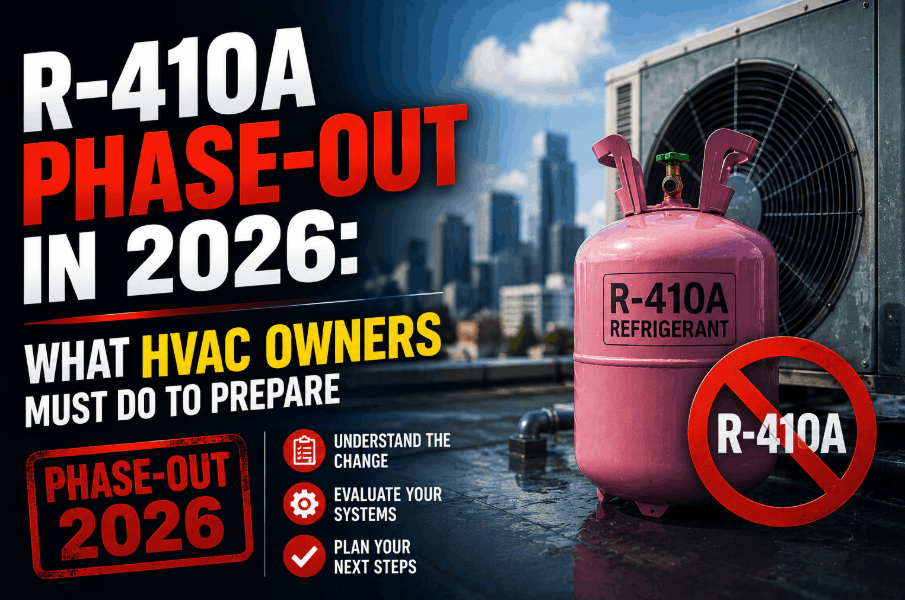
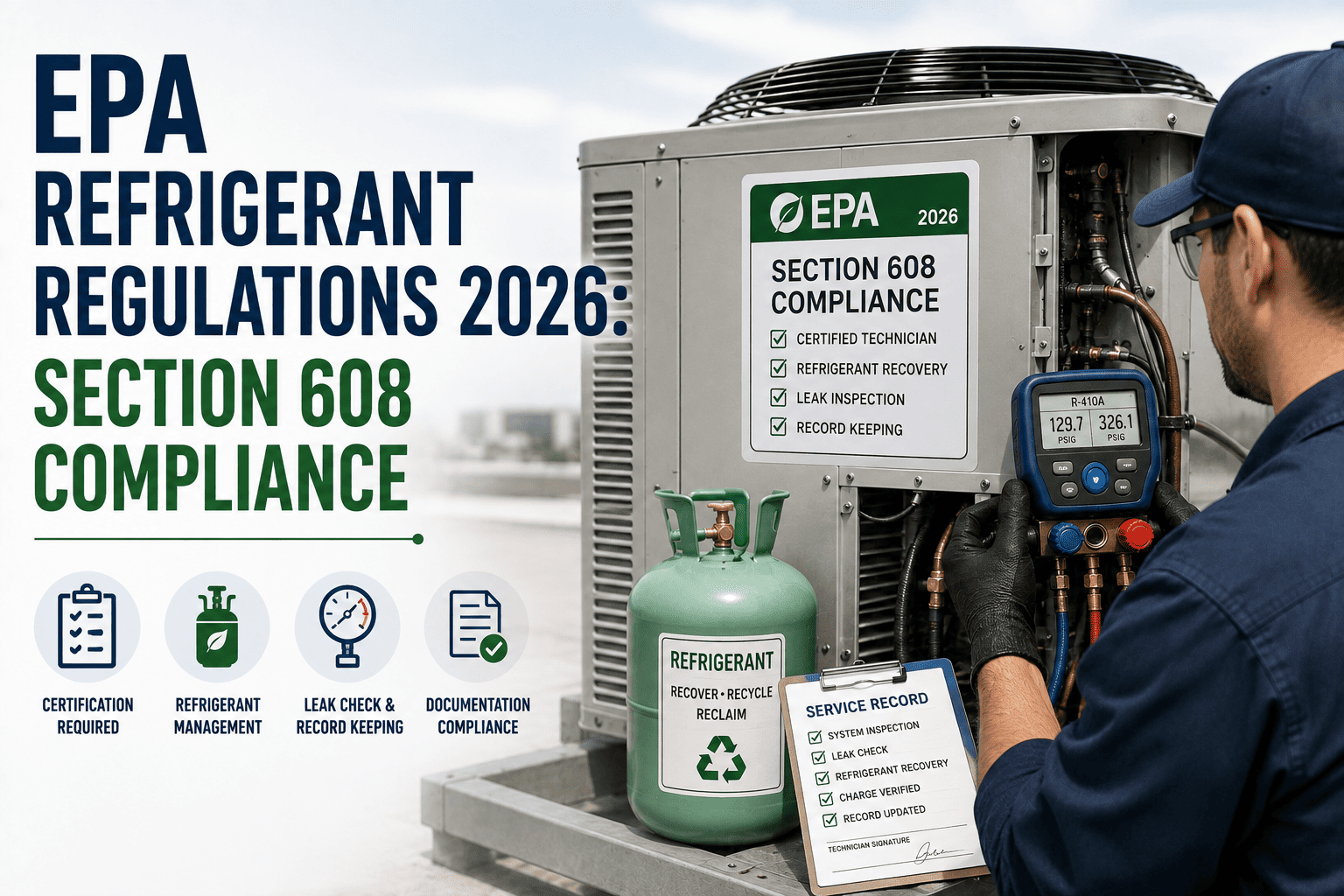
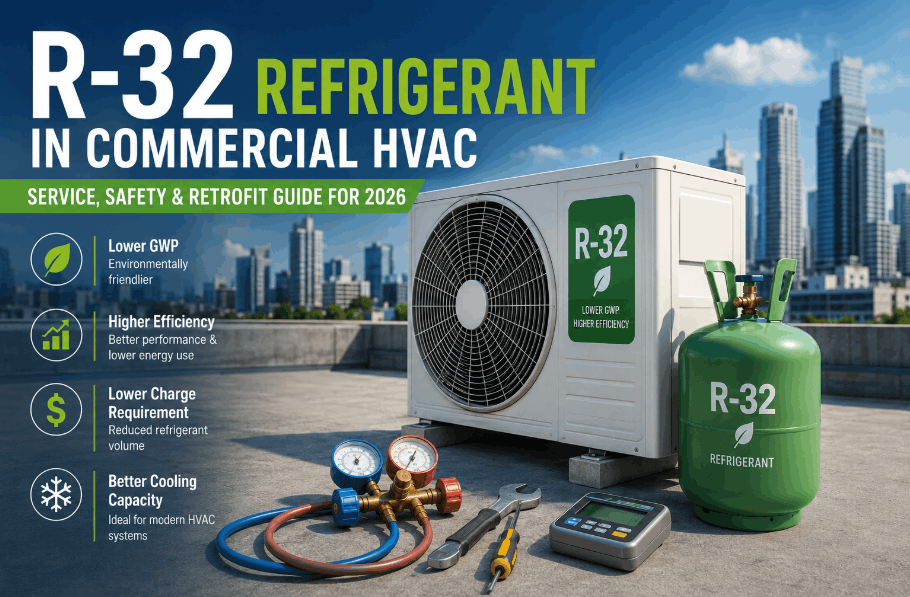
The R-410A phase-out under the AIM Act is no longer a future concern — it is a 2026 compliance reality affecting every HVAC-dependent facility. Production of R-410A refrigerant has been capped and is declining, prices are rising sharply, and service technicians are already quoting higher costs for systems that depend on it. For facility managers, building owners, and operations teams running commercial HVAC assets, the window to act before costs and lead times spike is closing fast. Delaying refrigerant compliance planning means paying 3–5x more for emergency refrigerant, facing equipment downtime during peak cooling season, and scrambling to make retrofit or replacement decisions under financial pressure. Sign Up Free to start tracking your HVAC assets, refrigerant types, and compliance deadlines in one place — before the phase-out disrupts your operations. Oxmaint gives maintenance and facilities teams a centralized platform to manage HVAC work orders, asset records, and Book a Demo to see how compliance-driven PM scheduling works in practice.
FACILITY MANAGEMENT · BLOG · 2026
R-410A Phase-Out in 2026: Track HVAC Assets and Stay Compliant
Oxmaint helps facilities teams identify every R-410A asset, flag compliance risks, and schedule retrofit or replacement work before the phase-out supply crunch hits operations.
What the R-410A Phase-Out Actually Means for Your Facility
The AIM Act (American Innovation and Manufacturing Act) set binding limits on high-GWP refrigerant production. R-410A — with a GWP of 2,088 — falls squarely in the phasedown schedule. Here is what facility operators need to understand about the timeline and impact.
2023
Production Cap Begins
EPA implemented the first HFC production and import cap under the AIM Act. R-410A supply begins tightening. Refrigerant prices start rising.
2025
New Equipment Ban Takes Effect
Manufacturers are prohibited from producing new residential and light commercial HVAC equipment using R-410A. Equipment sold after this date must use lower-GWP alternatives.
2026
Service Refrigerant Supply Constrained
R-410A availability for servicing existing equipment drops significantly. Prices peak. Facilities without retrofit or replacement plans face emergency procurement costs and technician availability gaps.
2028+
Continued Phasedown
Further production reductions under the AIM Act schedule. Maintaining legacy R-410A systems becomes progressively more expensive and operationally risky.
The Three Decisions Every HVAC Owner Must Make Now
For each R-410A asset in your facility, there are only three viable paths. The right choice depends on equipment age, condition, refrigerant charge size, and remaining useful life — and it must be made before the cost curve peaks.
01
Retrofit with a Drop-In Replacement
Convert compatible systems to R-454B, R-32, or other approved lower-GWP refrigerants. Requires equipment assessment, component verification, and certified technician work. Best for equipment under 10 years old in good condition.
Cost: Medium — Disruption: Low
02
Replace Equipment Proactively
Full replacement with new R-454B or R-32 compliant HVAC systems. Higher upfront cost but eliminates ongoing refrigerant risk, improves energy efficiency, and resets maintenance cycles. Best for equipment over 12–15 years old.
Cost: High — Disruption: Medium
03
Maintain with Reclaimed R-410A
Continue servicing existing equipment using reclaimed or recovered R-410A where supply permits. Viable short-term strategy but exposes facilities to price volatility and availability risk. Only viable for equipment approaching planned end-of-life.
Cost: Rising — Disruption: Risk
HVAC Compliance Risk by Equipment Profile
Not all R-410A assets carry equal risk. This matrix helps prioritize your retrofit and replacement schedule based on equipment age, charge size, and criticality.
| Equipment Profile |
Phase-Out Risk Level |
Recommended Action |
Timeline Priority |
| RTU / Split System >15 years old |
Critical |
Plan immediate replacement — equipment at end of useful life |
Act Now — 2026 |
| Chiller with large R-410A charge |
High |
Assess retrofit feasibility; secure supply agreement for reclaimed refrigerant |
Q1–Q2 2026 |
| Split system 8–12 years old |
Medium |
Evaluate retrofit to R-454B; plan for replacement within 3–5 years |
Plan in 2026 |
| VRF system under 8 years old |
Low–Medium |
Monitor manufacturer retrofit guidance; budget for future transition |
Budget for 2027+ |
| Portable / small room units |
Low |
Replace at natural end of life with compliant units — no emergency action needed |
Ongoing Replacement |
How Oxmaint Supports HVAC Compliance and Refrigerant Planning
Refrigerant compliance is an asset management problem before it becomes a procurement emergency. Oxmaint connects equipment records, preventive maintenance, and vendor management so facilities teams can act on phase-out risk before it impacts operations. Sign Up Free to build your HVAC asset register and start tagging refrigerant types across your facility today.
HVAC Asset Register
Tag every HVAC asset with refrigerant type, charge size, equipment age, and compliance status. Know your full R-410A exposure across every facility in one view — not scattered across spreadsheets.
Compliance-Triggered PM Scheduling
Set PM triggers based on refrigerant phase-out dates, equipment age thresholds, and compliance deadlines. Oxmaint automatically surfaces assets requiring assessment before the 2026 supply crunch.
Vendor and Parts Management
Track approved HVAC contractors, refrigerant suppliers, and equipment vendors alongside work orders. Secure reclaimed R-410A supply agreements and log them directly against the assets they cover.
Retrofit and Replacement Tracking
Log retrofit decisions, contractor quotes, and replacement schedules as work orders linked to individual assets.
Book a Demo to see how Oxmaint closes the loop from compliance planning to execution.
Cost Forecasting and Budget Planning
Use asset condition data and part history to forecast refrigerant service costs, retrofit expenditures, and replacement capital needs — before procurement emergencies force reactive decisions.
Inspection and Compliance Checklists
Deploy refrigerant leak inspection checklists, technician certification verification workflows, and compliance documentation capture directly in the Oxmaint mobile app during every HVAC service visit.
R-410A Service Cost Projections — What to Budget for 2026
Facilities that delay planning will face rapidly escalating service costs. Understanding the cost trajectory helps operations leaders justify proactive retrofit investment over reactive maintenance spending. Sign Up Free to start capturing HVAC service costs in Oxmaint and build the data needed for accurate retrofit vs. replace analysis.
R-410A Refrigerant Price
Rising Sharply
Wholesale prices have increased 3–4x from 2022 levels. Expect continued escalation through 2026–2027 as production caps tighten and reclaim supply cannot meet demand from legacy systems.
Certified Technician Availability
Tightening
Technicians with R-410A handling certification are increasingly shifting capacity to new refrigerant systems. Emergency service response times for R-410A equipment will lengthen as demand concentrates in peak season.
Retrofit Labor and Parts
Book Now
Retrofit contractors are booking ahead through 2026. Facilities that schedule retrofit work in H1 2026 will secure better pricing and contractor availability than those waiting until summer peak demand.
Replacement Equipment Lead Times
Extending
Compliant replacement HVAC equipment (R-454B, R-32 systems) is in high demand as the phase-out forces facilities off R-410A. Lead times for commercial equipment are extending — order early or face installation delays into cooling season.
Manage R-410A Compliance With Structured Asset Tracking — Automatically
Oxmaint's CMMS registers every HVAC asset with refrigerant type, tracks service history, schedules compliance inspections, and gives your team the data layer to move from reactive to planned refrigerant management. Free to start.
Frequently Asked Questions
Is R-410A banned outright in 2026, or can I still use it in existing equipment?
R-410A is not banned for servicing existing equipment — production and import are capped, not eliminated. You can continue using reclaimed or recovered R-410A in existing systems. The challenge is cost and supply availability, not an outright service prohibition.
Book a Demo to see how Oxmaint helps you plan around supply risk for your specific asset portfolio.
What refrigerant replaces R-410A in commercial HVAC systems?
R-454B (Opteon XL41) is the primary replacement for split systems and RTUs. R-32 is used in many VRF systems. R-466A is under evaluation for certain applications. Each alternative requires equipment compatibility verification before retrofit — not all R-410A systems accept drop-in alternatives.
How does a CMMS help with refrigerant compliance tracking?
A CMMS like Oxmaint lets you tag each HVAC asset with refrigerant type, log service history, schedule compliance inspections, and flag assets approaching phase-out risk thresholds. It turns a spreadsheet compliance problem into a managed maintenance workflow.
Sign Up Free to set up your HVAC asset register.
Should I retrofit or replace my R-410A HVAC equipment?
Equipment under 10 years old in good condition is generally a retrofit candidate. Equipment over 12–15 years old with high service history should be evaluated for full replacement — the economics of retrofitting aging equipment rarely justify the cost when replacement resets the maintenance cycle and delivers energy savings.
How do I build an HVAC refrigerant compliance inventory?
Start by auditing every HVAC unit in your facility: manufacturer, model, refrigerant type, charge size, installation year, and last service date. Oxmaint allows you to capture all of this as structured asset data with photos and documents attached — accessible to your maintenance team and contractors from any device.
Start R-410A Compliance Planning in Oxmaint — Before the 2026 Supply Crunch
Build your HVAC asset register, schedule refrigerant inspections, and manage retrofit work orders in one platform. Connect procurement, maintenance, and compliance in Oxmaint. Free to start.