Low suction pressure is one of the most common HVAC service calls, and one of the most misread. The gauge shows a low number, and the quick assumption is "low on refrigerant." Sometimes that is right. Often the real cause is airflow, a dirty or icing coil or a restricted metering device, and adding refrigerant only hides it until the next call. This guide treats low suction pressure as a symptom and walks through the diagnosis in order: look first, take readings, work out which side of the problem you are on, fix the cause and record what you did, using OXMAINT AI, the AI-powered CMMS for facility and HVAC maintenance teams.
HVAC Troubleshooting · Low Suction Pressure · Diagnostic Workflow
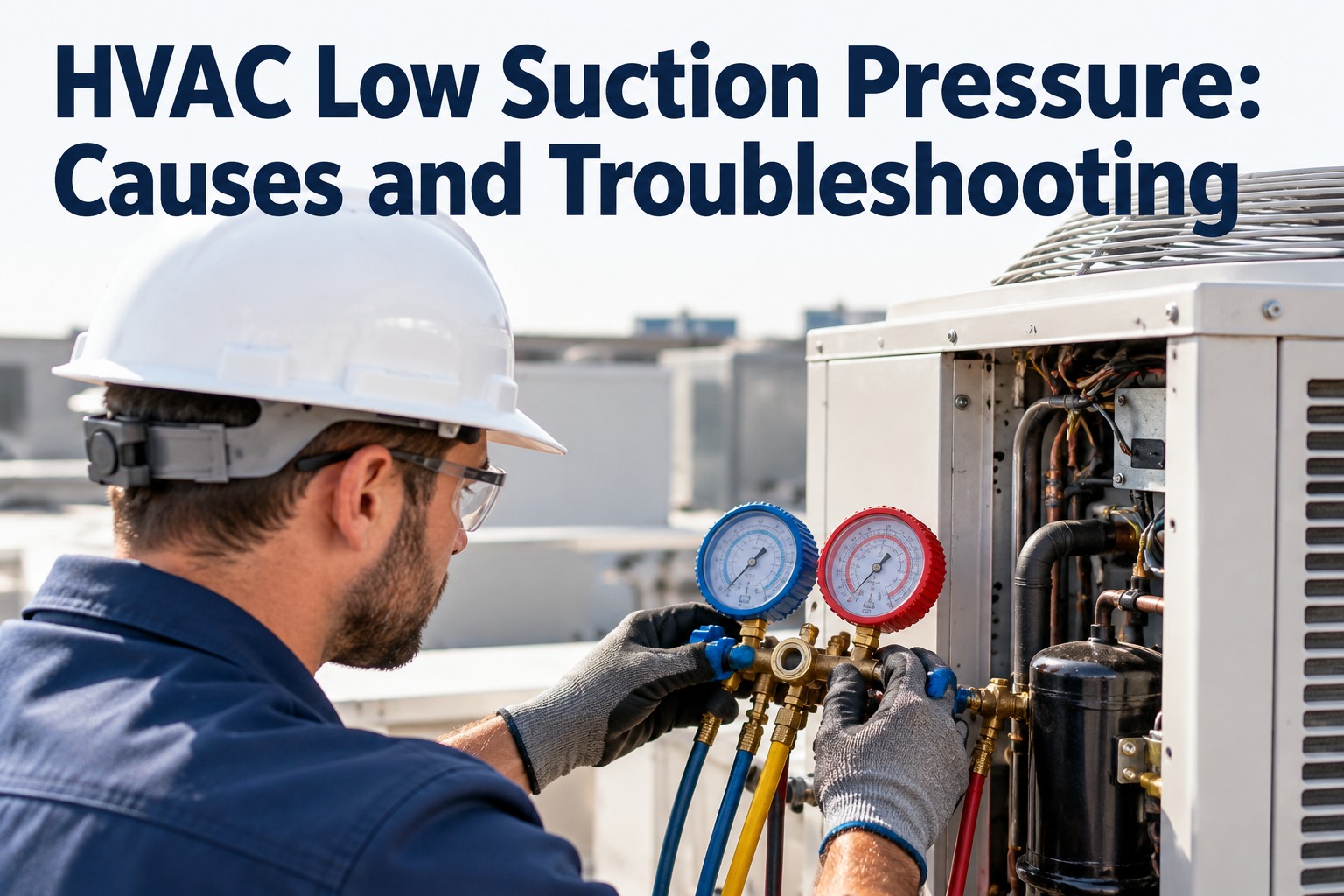
HVAC Low Suction Pressure: Causes and Troubleshootinge.
Repeat callouts happen when the history stays in a technician's head or an invoice. OXMAINT AI connects the workflow in one CMMS: comfort complaints and inspections raise issues, issues become work orders on the right unit, readings and repairs are recorded in its history, and preventive maintenance is updated so the same fault is less likely to return.
1Complaint or Inspection
→
2Issue Logged
→
3Work Order
→
4Readings & Repair Recorded
→
5PM Updated
Asset Management
Work Order Management
Inspection Management
Preventive Maintenance
!
Qualified work only: measuring pressures, handling refrigerant, leak repair and charging must be done by suitably certified technicians, following the manufacturer's instructions and local regulations. Use this guide to understand the logic and to structure records. Follow lockout/tagout and electrical safety procedures on every call.
What "Low Suction Pressure" Really Tells You
Suction pressure shows how much refrigerant vapour is arriving back at the compressor, and at what pressure. What counts as "low" depends on the refrigerant, the load, the outdoor and indoor conditions and the system design. So the number alone proves little. It starts the investigation. Sign up free and record readings against each unit.
1
A symptom, not a cause. Several different faults produce the same low reading.
2
Context matters. Compare with refrigerant type, load, ambient and manufacturer data.
3
One reading is not enough. Pair it with temperatures, superheat and airflow checks.
The First Split: Is the Evaporator Starved or Not Absorbing Heat?
A widely used way to narrow the cause is to read superheat alongside suction pressure. It points toward one of two families of problems. Treat it as a guide for investigation, and confirm with the manufacturer's data and a qualified technician. Book a demo to see how readings are logged per unit.
LOW SUCTION + HIGH SUPERHEAT
The evaporator may be starved of refrigerant
Not enough liquid is reaching the coil, so the vapour leaving it warms up too much.
Low refrigerant charge or a leak
Restricted or faulty metering device
Restriction in the liquid line or filter drier
?
LOW SUCTION + LOW SUPERHEAT
The coil may not be absorbing enough heat
Refrigerant is present, but too little heat is reaching it, so it cannot boil off as expected.
Restricted airflow (filters, blower, ducts, dampers)
Dirty or iced evaporator coil
Low load or very cold return air
Simplified diagnostic logic. Real systems can show mixed signs, so always confirm on site.
Six Common Causes, What They Look Like and What to Check
Each card shows the clues that tend to go with the cause and the check that confirms or rules it out. Start free and build these into your service checklists.
CAUSE 1 · CHARGE
Low refrigerant charge or leak
Clues: poor cooling, oil stains at joints, repeated low readings over time.
Check: leak search and repair by a certified technician before any recharge.
CAUSE 2 · METERING
Restricted or faulty metering device
Clues: low suction with signs of a starved coil, possible temperature drop across the device.
Check: compare readings with design data, inspect the expansion device and its sensing bulb or orifice.
CAUSE 3 · LIQUID LINE
Liquid line or filter-drier restriction
Clues: a temperature difference across a drier or kinked line section, starved coil.
Check: inspect lines and the drier for temperature drop or physical damage.
CAUSE 4 · AIRFLOW
Restricted airflow
Clues: dirty filters, slow or noisy blower, closed dampers, weak air at the vents.
Check: filters, belts, blower, ducts and dampers first. These are quick and low cost.
CAUSE 5 · COIL
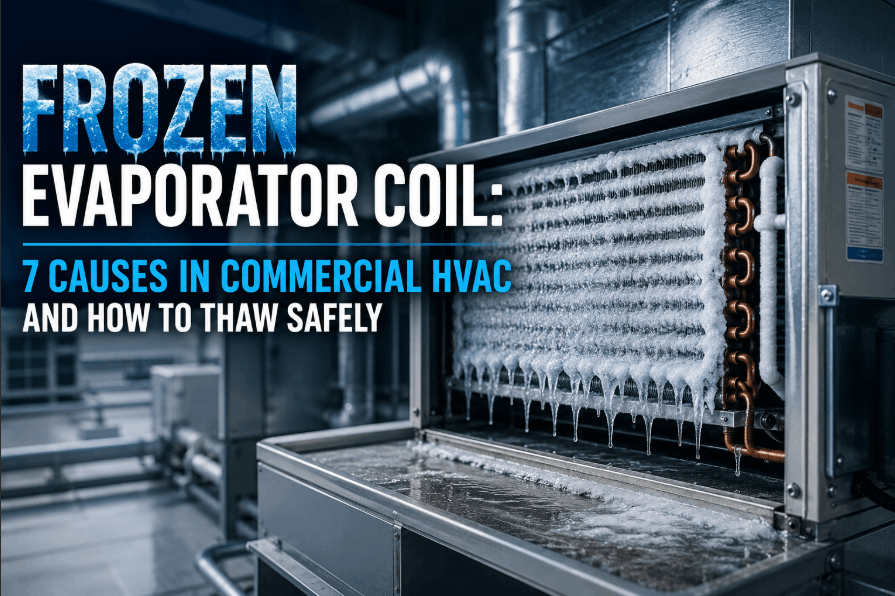
Dirty or iced evaporator coil
Clues: frost on the coil or suction line, water dripping, reduced capacity.
Check: inspect the coil, shut down and defrost if iced, then find out why it iced.
CAUSE 6 · LOAD
Low load or cold return air
Clues: cool spaces, mild weather, a unit running with little demand.
Check: confirm operating conditions before treating the reading as a fault.
Stop Solving the Same Problem Twice.
Record readings, findings and repairs against each unit in OXMAINT AI, so the next technician starts where the last one stopped.
The Check Order: Cheap and Quick First, Specialist Last
Work through the problem in order of effort. Many callouts end at step one or two. Skipping ahead to the refrigerant circuit is how teams spend hours on a dirty filter. Book a demo to turn this into a guided checklist.
1
Look at the basics
Filters, blower and belt, coil condition, dampers, drains and any obvious ice or leaks.
TRAINED STAFF
2
Confirm the operating conditions
Outdoor and return air temperatures, load and whether the symptom is really a fault.
TRAINED STAFF
3
Take readings
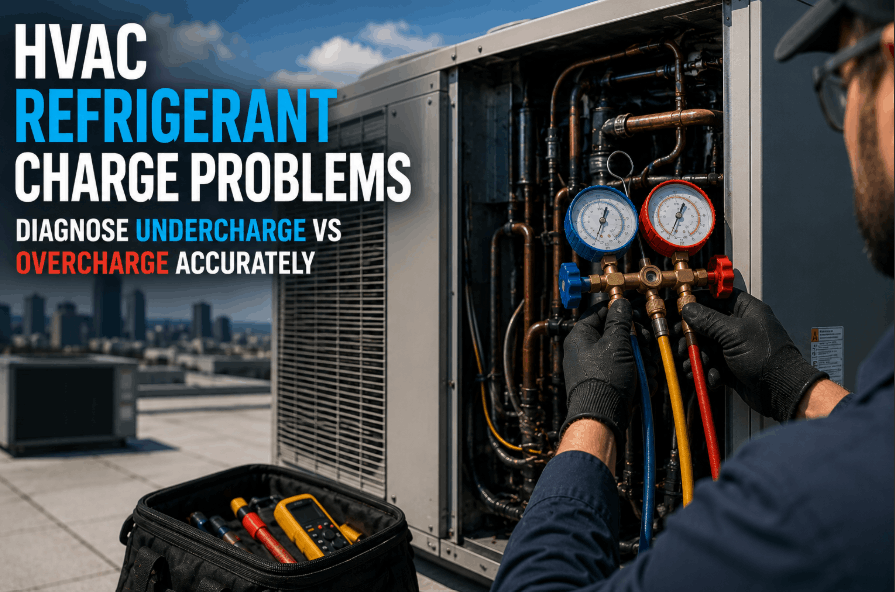
Pressures, line temperatures, superheat and subcooling, supply and return difference, amps.
CERTIFIED TECH
4
Choose the branch
Starved evaporator or poor heat absorption, then narrow to the likely cause.
CERTIFIED TECH
5
Fix the root cause
Clean, repair, replace or adjust. Find and repair leaks before charging.
CERTIFIED TECH
6
Verify and record
Confirm readings return to normal, then log findings, parts and photos on the work order.
EVERYONE
✕
Avoid the quick fix trap: adding refrigerant without finding the reason for the low reading can leave a leak, a restriction or an airflow fault in place. It also risks overcharging. Find the cause first.
Readings Worth Recording on Every Call
A record with only "low suction, fixed" teaches nobody anything. These fields make the next call faster and show patterns across units. Sign up free and add these fields to your work orders.
Conditions
Outdoor, return and supply air temperatures show whether the reading fits the load.
Pressures & temperatures
Suction and discharge readings plus line temperatures allow superheat and subcooling to be checked.
Airflow findings
Filter and coil condition, blower state and damper positions rule airflow in or out.
Electrical readings
Compressor and fan amps show whether components are working as expected.
Actions & parts
What was cleaned, repaired or replaced, with photos, so repeat faults stand out.
Refrigerant records
Keep service and leak records per unit, in line with your local requirements.
Why It Matters: What an Ignored Low Reading Can Lead To
Low suction conditions are not always urgent, but they can develop. A short escalation chain shows why early checks pay off. Book a demo to see how early issues are tracked.
Early
Weaker cooling, comfort complaints, longer run times.
→
Developing
Coil icing, water issues, rising effort on the system.
→
Serious
Compressor stress or failure, emergency repair and downtime.
Illustrative escalation. Actual outcomes depend on the cause and the equipment.
Prevent the Repeat: PM Tasks That Target Low Suction Causes
Many low suction events trace back to maintenance gaps that a schedule can close. Start free and schedule these tasks per unit.
Filter changes
Set intervals by condition and use, not just the calendar.
Coil cleaning
Inspect and clean evaporator coils before the cooling season.
Blower & belt checks
Check belt tension, wear, bearings and fan wheel condition.
Drain & damper checks
Clear drains and confirm dampers move and seal properly.
Leak checks
Have certified staff check for leaks as required by local rules.
Performance review
Compare readings over time to catch drift before it becomes a call.
How OXMAINT AI Supports HVAC Troubleshooting and PM
OXMAINT AI is a mobile-first CMMS, so technicians record readings and photos at the unit while the manager sees repeat faults across the portfolio. Where building automation data is available, OXMAINT AI can read BACnet and Modbus points to help spot developing issues. Have your controls team review access first. Start free and add your first units.
Asset Records & History
Keep each unit's details, documents, readings and past repairs in one record.
Work Order Management
Assign calls, log readings and findings and track each fix to completion.
Inspection Management
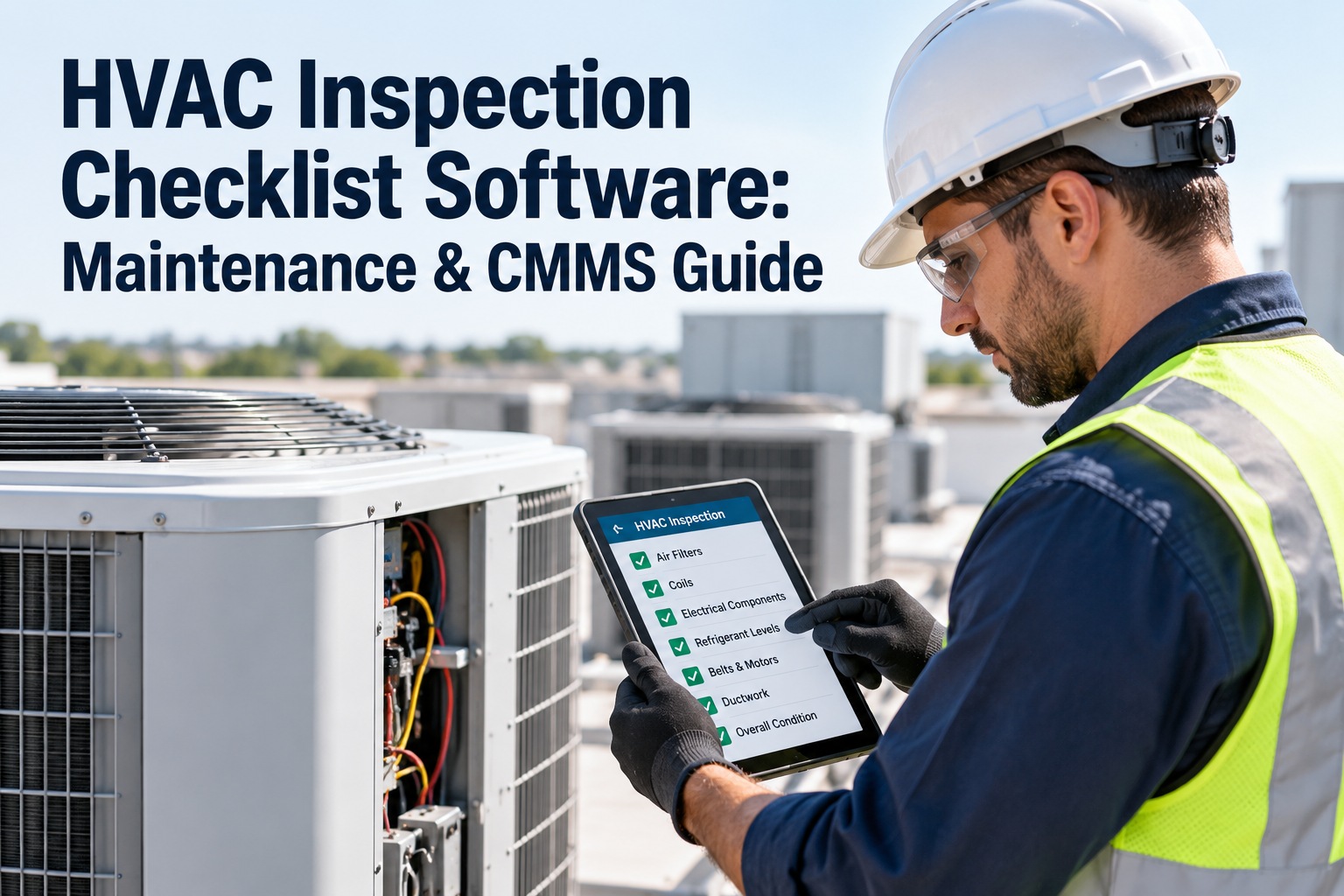
Run first-look checklists on a phone, with photos and notes attached.
Preventive Maintenance
Schedule filter, coil, blower and drain tasks so the next one is planned.
Parts & Inventory
Link filters, belts and common spares to jobs, with reorder alerts.
BAS Connectivity & Analytics
Use trend data and repair history to spot drift and repeat faults earlier.
Frequently Asked Questions
What causes low suction pressure in an HVAC system?
Common causes include low refrigerant charge, restricted airflow, a dirty or iced evaporator coil, a restricted metering device or liquid line and low load conditions. Readings such as superheat help narrow it down.
Sign up free and track each unit's history.Does low suction pressure always mean low refrigerant?
No. Airflow problems and coil issues can also lower suction pressure. Checking airflow, coil condition and superheat first helps avoid treating the wrong problem.
Book a demo to see guided checklists.Can our maintenance team troubleshoot this in-house?
Trained staff can handle visual checks such as filters, coils, blowers, dampers and drains. Pressure readings, refrigerant handling, leak repair and charging need suitably certified technicians.
Start free and assign tasks by skill.Why does the coil ice up?
Icing can follow restricted airflow, low load, low charge or a metering problem, so the fix depends on the cause. Shut the unit down, let it defrost and diagnose before restarting.
Book a demo to track icing events per unit.How does a CMMS help with repeat HVAC faults?
Diagnose Once. Record It. Stop the Repeat Call.
Bring HVAC inspections, readings, work orders and PM scheduling together in OXMAINT AI, and give every unit a history the next technician can use.


-not-cooling-18-common-causes,-diagnostics-&-troubleshooting-guide.png)

