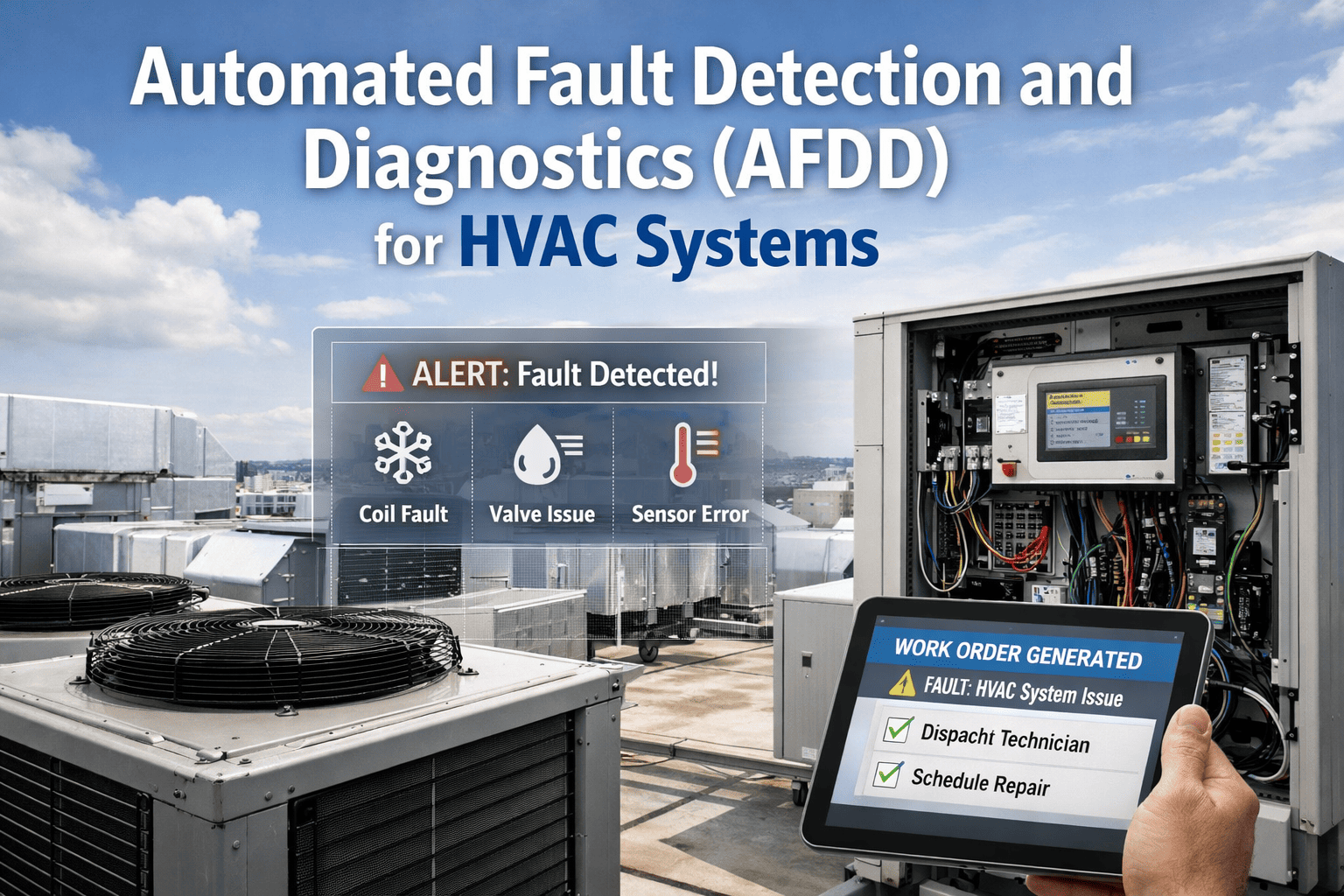
When an HVAC system fails, the wrong diagnosis costs more than the repair. A compressor misdiagnosed as a refrigerant issue, a short-cycling unit blamed on thermostat calibration when the root cause is filter restriction, a heating system that trips repeatedly because the heat exchanger crack is never found — these are the $2,000 to $45,000 mistakes that reactive troubleshooting produces. This guide walks through the eight most common HVAC problems, their verified root causes, and the right repair path for each — so your team resolves issues faster, documents them correctly, and builds the work order history that prevents the same failure from recurring. Sign up free on OxMaint to log and track every fault diagnosis as a structured work order, or book a demo to see how work order management connects troubleshooting to asset history.
Every fault diagnosis should become a documented work order — not a verbal handoff.
OxMaint Work Order Management captures the problem, root cause, parts used, and repair time on every HVAC service call — building the asset history that prevents the same failure from happening again.
Jump to Fault — 8 Common HVAC Problems
HIGH
AC Not Cooling
Warm air, insufficient cooling, no output
HIGH
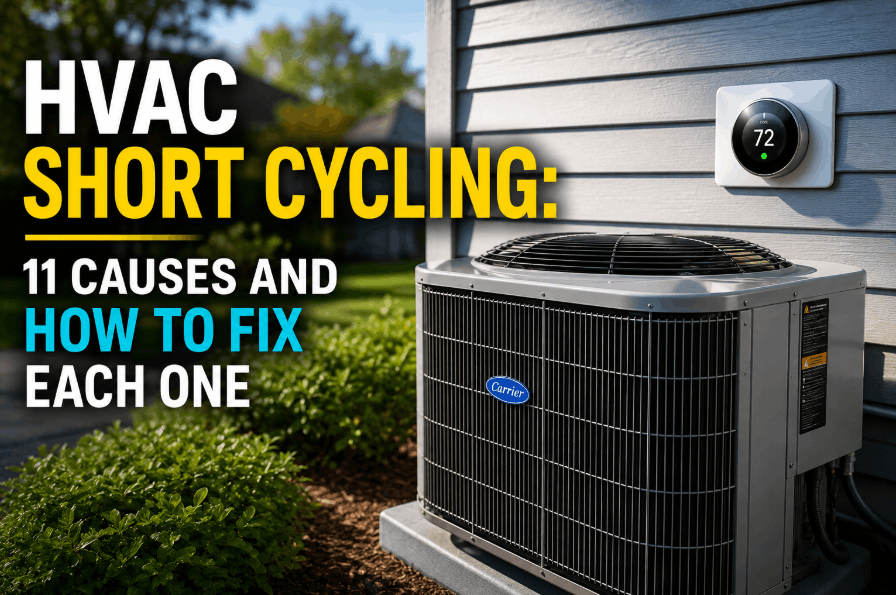
Short Cycling
Rapid on/off, never completing a full cycle
HIGH
System Not Turning On
No power, no response, unit dead
MED
Water Leaking Indoors
Condensate backup, drain pan overflow
MED
High Energy Bills
Sudden or gradual utility cost increase
MED
Unusual Noises
Banging, squealing, grinding, rattling
LOW
Uneven Heating or Cooling
Hot/cold spots, zone inconsistency
LOW
Bad Odors from Vents
Musty, burning, or chemical smells
Severity Key
HIGHRequires immediate attention — comfort and safety impact
MEDResolve within 48 hours — efficiency or damage risk
LOWSchedule for next PM visit — comfort issue
Problem 01
AC Not Cooling — Warm or Ambient Air from Vents
HIGH SEVERITY
Root Causes — Check in This Order
1
Thermostat Set Incorrectly
Fan set to ON instead of AUTO — blowing unconditioned air continuously
2
Clogged Air Filter
Restricted airflow forces system to overheat — may cause evaporator coil to freeze
3
Blocked Outdoor Condenser Unit
Debris, leaves, or inadequate clearance preventing heat rejection
4
Low Refrigerant / Leak
Hissing sound near refrigerant lines; ice on evaporator coil; rising humidity indoors
5
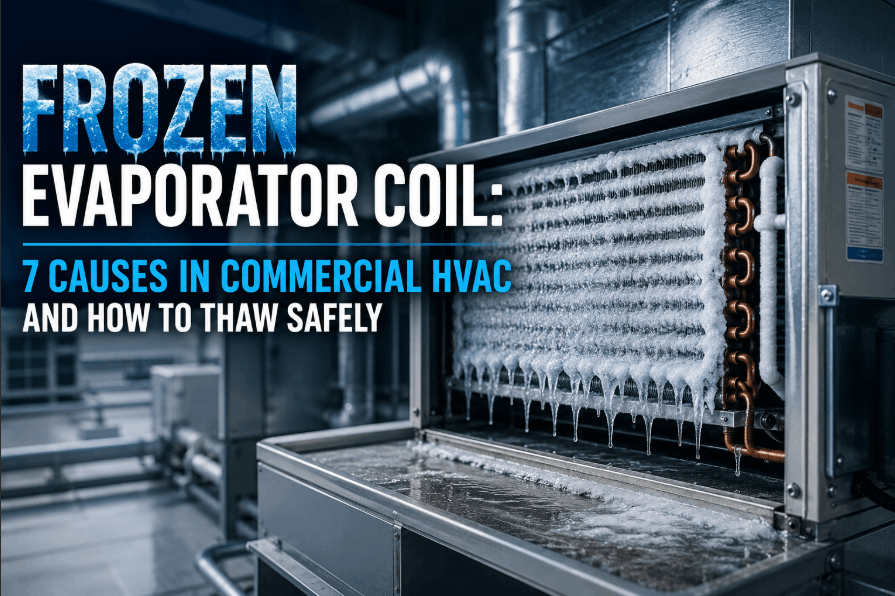
Frozen Evaporator Coil
Ice visible on indoor coil — caused by low refrigerant or severely restricted airflow
6
Failed Compressor
Oil leaks or stains near compressor; unit 10+ years old; system running but no cooling output
Diagnostic Steps and Solutions
01
Set thermostat to COOL and AUTO — confirm setpoint is below current room temperature
02
Inspect and replace filter — if filter is clogged, replace and run system for 30 min before re-evaluating
03
Clear 2-foot perimeter around outdoor unit — remove debris, wash coil face gently with garden hose
04
If coil is frozen, shut system off and run fan only for 2–4 hours to thaw — then inspect filter and refrigerant charge
05
If no DIY fix resolves the issue — log a work order with symptoms and call a certified HVAC technician for refrigerant and compressor diagnosis
Typical Repair Cost Range
Filter replacement$15–40 DIY
Refrigerant leak repair$200–$600
Compressor replacement$1,500–$4,000
Problem 02
Short Cycling — System Turns On and Off Every 2–5 Minutes
HIGH SEVERITY
Root Causes — Check in This Order
1
Clogged Filter Causing Coil Freeze
Restricted airflow freezes evaporator coil — high pressure trips safety shutoff repeatedly
2
Thermostat Placement or Calibration
Thermostat near heat source, in direct sunlight, or misreading temperature — triggers premature shutoff
3
Low Refrigerant
Low charge causes coils to freeze and pressure switches to trip — system cannot hold a stable cycle
4
Oversized System
Unit cools space too rapidly, satisfies thermostat before completing a full cycle — causes humidity problems and compressor wear
5
Faulty Compressor or Control Board
Failing compressor draws excess current, trips breaker or overload protector — rapid cycling is the symptom
Diagnostic Steps and Solutions
01
Replace filter immediately — if system short cycles due to coil freeze, this is the most common fixable cause
02
Check thermostat location — move away from lamps, windows, or exterior walls; verify calibration against a thermometer
03
Count cycles per hour — if 4 or more cycles per hour, the system is short cycling and requires diagnosis
04
If refrigerant is suspected, turn off system and log work order — do not continue to run a short-cycling unit; compressor damage compounds quickly
05
Professional diagnosis: measure system pressures, check refrigerant charge, verify equipment sizing against building load
Typical Repair Cost Range
Thermostat relocation$75–$200
Refrigerant charge correction$200–$600
Oversized unit replacement$4,000–$12,000
Problem 03
System Not Turning On — No Response, No Power
HIGH SEVERITY
Root Causes — Check in This Order
1
Thermostat Dead Batteries or Off
Blank thermostat display — replace batteries, check mode setting and setpoint
2
Tripped Circuit Breaker or Blown Fuse
Check electrical panel — breaker in tripped position or fuse blown at disconnect box near unit
3
Condensate Float Switch Tripped
Full drain pan activates float switch safety shutoff — drain pan and line must be cleared before restart
4
Failed Capacitor
Start or run capacitor failure — compressor or fan motor cannot start; unit hums but does not run
5
Faulty Control Board or Wiring
Corroded terminals, failed contactor, or damaged control board — requires electrical diagnosis
Diagnostic Steps and Solutions
01
Check thermostat — replace batteries, verify settings, confirm display is active
02
Check circuit breaker panel — reset tripped breaker once. If it trips again immediately, do not reset — call a technician
03
Inspect condensate drain pan — if full, clear blockage in drain line, allow to drain, then attempt restart
04
If unit hums but does not start — likely capacitor failure. Do not run a system with a failed capacitor; motor damage results quickly
05
Log all findings in work order — note breaker status, any error codes on thermostat, and last-known operational date
Typical Repair Cost Range
Capacitor replacement$150–$400
Contactor replacement$150–$350
Control board replacement$300–$900
Every fault diagnosis is a work order. Is yours being tracked, assigned, and closed with evidence?
OxMaint Work Order Management lets you log symptoms, assign to the right technician, track to resolution, and attach repair photos — building the fault history that prevents the next emergency. Start free and log your first HVAC fault in under 5 minutes.
Problem 04
Water Leaking Indoors — Puddles Around Indoor Unit
MEDIUM SEVERITY
Root Causes
1
Clogged Condensate Drain Line
Algae or debris blocking drain — condensate backs up into pan and overflows
2
Cracked or Rusted Drain Pan
Primary drain pan corroded or cracked — replace pan to prevent ongoing water damage
3
Frozen Evaporator Coil Thawing
Ice from coil melts faster than drain can carry — indicates low refrigerant or airflow problem beneath
4
Improper Unit Slope or Installation
Unit not level — condensate pools instead of flowing to drain; installation adjustment needed
Diagnostic Steps and Solutions
01
Flush drain line with diluted vinegar or compressed air — confirm flow exits cleanly at outdoor discharge point
02
Inspect drain pan — if cracked or rusted, replace before restarting system
03
Check for ice on coil — if present, shut down cooling, run fan only, and address root cause before restart
04
Confirm float switch is functional — test by raising float and confirming system shuts down
Typical Repair Cost Range
Drain line clearing$75–$200
Drain pan replacement$100–$350
Water damage remediation$500–$5,000+
Problem 05
Sudden Spike in Energy Bills — HVAC Running Inefficiently
MEDIUM SEVERITY
Root Causes
1
Dirty Filter Forcing Blower to Work Harder
Clogged filter increases fan energy use 15–20% per cycle
2
Dirty Condenser Coil
Fouled coil reduces heat rejection efficiency by up to 30% — compressor runs longer to achieve same output
3
Duct Leakage
Duct leaks waste 15–30% of conditioned air before it reaches occupied spaces
4
Miscalibrated BAS Controls
Simultaneous heating and cooling or stuck override schedules waste 12–18% additional energy silently
Diagnostic Steps and Solutions
01
Replace filter — track monthly energy bills for 3 months before and after filter replacement to isolate impact
02
Measure supply vs return temperature differential — value below 15°F indicates coil fouling or low refrigerant
03
Review BAS scheduling for simultaneous heating/cooling conflicts — correct override lockouts
04
Commission ductwork blower door test if leakage is suspected — seal confirmed leaks with mastic sealant
Typical Repair Cost Range
Coil cleaning$100–$400
Duct sealing$300–$1,200
BAS controls calibration$200–$600
Problem 06
Unusual Noises — Banging, Squealing, Grinding, or Rattling
MEDIUM SEVERITY
Sound → Cause Diagnosis
Banging or Clanking
Loose or broken component inside compressor or blower — shut down immediately, risk of secondary damage
Squealing or Screeching
Worn or slipping blower belt, failing blower motor bearings, or refrigerant pressure issue
Grinding
Bearing failure in blower or condenser fan motor — replace motor before complete seizure
Rattling
Loose panel, debris in outdoor unit, or loose duct connection — inspect and tighten before calling a technician
Clicking at Startup
Relay or contactor issue; failing capacitor — system attempts to start but cannot complete startup sequence
Diagnostic Steps and Solutions
01
For banging or grinding — shut down the unit immediately. Running with a mechanical failure multiplies the repair cost
02
For rattling — inspect outdoor unit for loose panels, debris inside fan guard, or loose access screws before calling a tech
03
Log noise description and timing (startup, continuous, or shutdown) in work order — this is the most useful diagnostic data for the responding technician
04
Inspect belt tension and condition quarterly — replace if glazed, cracked, or tension is outside spec
Typical Repair Cost Range
Belt replacement$100–$250
Fan motor replacement$300–$900
Compressor replacement$1,500–$4,000
Problem 07
Uneven Heating or Cooling — Hot and Cold Spots Across Zones
LOW SEVERITY
Root Causes
1
Closed or Blocked Vents
Furniture, rugs, or closed dampers blocking supply or return registers in affected rooms
2
Disconnected or Leaking Ductwork
Duct joint disconnected in unconditioned space — conditioned air lost before reaching zone
3
Undersized System for Space
System never achieves setpoint — runs continuously, especially in peak weather
4
Failing Blower Motor
Reduced airflow from worn motor — some zones adequately served, distant zones receive insufficient flow
Diagnostic Steps and Solutions
01
Confirm all vents and dampers are fully open — verify no furniture obstructing supply or return registers
02
Measure air temperature at multiple supply registers — temperature differential greater than 5°F between zones indicates duct or flow issue
03
Check accessible ductwork in basement or attic for disconnected joints — reattach and tape with mastic
04
If system runs continuously without reaching setpoint — commission a Manual J load calculation to verify sizing
Typical Repair Cost Range
Duct repair$200–$800
Blower motor replacement$450–$1,200
System replacement (sizing)$4,000–$12,000
Problem 08
Bad Odors from Vents — Musty, Burning, or Chemical Smells
LOW SEVERITY
Smell → Cause Diagnosis
Musty / Mildew Smell
Biological growth on evaporator coil, drain pan, or inside ductwork — common in high-humidity climates
Burning Smell at First Startup
Dust burning off heat exchanger or heating elements — normal on first run of season if brief. Persistent burning = wiring issue
Chemical or Sweet Smell
Refrigerant leak — immediately shut system down. Refrigerants are toxic; ventilate space and call EPA-certified technician
Rotten Egg / Sulfur Smell
Gas leak near furnace — immediately evacuate, ventilate, and call gas utility. Do not operate any electrical switches
Diagnostic Steps and Solutions
01
Musty smell — schedule professional coil cleaning with antimicrobial treatment. Run system on fan only temporarily to assess
02
Burning smell at first startup — monitor for 10 minutes. If smell clears, dust burn-off is normal. If persistent or accompanied by smoke, shut down immediately
03
Sweet or chemical smell — shut down system, open windows, and call certified HVAC technician for refrigerant leak inspection
04
Rotten egg smell — evacuate the space immediately. Call gas utility emergency line. Do not attempt to locate the leak yourself
Typical Repair Cost Range
Coil antimicrobial treatment$150–$400
Refrigerant leak repair$200–$600
Wiring inspection and repair$150–$500
Quick Reference: DIY vs Call a Pro
Rule of thumb — if the fix involves refrigerant, electrical above 50V, or opening the system beyond filter access, call a licensed technician
You Can Do These
Replace or inspect air filters
Set thermostat to correct mode and AUTO
Reset a tripped circuit breaker (once only)
Clear debris from around outdoor condenser unit
Flush condensate drain with vinegar and water
Check and open blocked supply and return vents
Inspect accessible ductwork for obvious disconnects
Tighten loose access panel screws
Always Call a Pro
Any refrigerant handling, recharge, or leak repair
Breaker that trips immediately after reset
Chemical or sweet smell from vents (refrigerant leak)
Rotten egg smell near furnace (gas leak — evacuate first)
Banging or grinding noise — shut down first, then call
Compressor inspection, diagnosis, or replacement
Heat exchanger inspection or combustion analysis
Capacitor, contactor, or wiring replacement
Logging every HVAC fault as a work order is how you stop the same problem from happening twice.
OxMaint Work Order Management captures every symptom, diagnosis, repair action, and part used — building the asset fault history that makes the next service call faster and the next failure less likely. Book a demo to see how fault-linked work orders feed into your preventive maintenance program.
What is the first thing to check when an HVAC system stops cooling?
Start with the three simplest causes before calling a technician: first, confirm the thermostat is set to COOL and AUTO (not ON); second, check and replace the air filter if clogged — a dirty filter is the most common cause of cooling failure and can be fixed in minutes; third, inspect the outdoor condenser unit for debris blocking airflow. If the system still fails to cool after these checks, the issue likely involves refrigerant charge, a frozen evaporator coil, or a compressor problem — all requiring a certified technician. Log the symptoms and the steps already taken in a work order so the technician arrives with the right information.
How do I know if my HVAC is short cycling?
A normal HVAC system runs 2–3 cycles per hour, with each cooling cycle lasting 10–20 minutes. If your system is turning on and off every 2–5 minutes without the space reaching the setpoint temperature, it is short cycling. The most immediate DIY check is the air filter — a clogged filter can cause coil freezing that trips safety shutoffs repeatedly. If the filter is clean, check thermostat placement and calibration. Short cycling causes compressor wear that escalates quickly — do not continue running a short-cycling unit once filter and thermostat checks are complete. Log the cycling frequency and symptoms as a work order for your technician.
When should I shut down my HVAC system immediately?
Shut down immediately when you detect a sweet or chemical smell from vents (refrigerant leak — toxic and requires ventilation), a rotten egg or sulfur smell near the furnace (gas leak — evacuate and call gas utility before anything else), banging or grinding sounds during operation (mechanical failure that worsens rapidly with continued running), or a circuit breaker that trips immediately after reset. Running an HVAC system through any of these conditions typically converts a $200–$600 repair into a $2,000–$10,000 one. Document the shutdown in a work order with the symptom description and timestamp.
How does logging HVAC faults in a work order system help prevent future breakdowns?
Every HVAC fault that is documented — symptom, root cause, part replaced, repair time, and technician notes — becomes data that reveals patterns over time. If a capacitor on rooftop unit 3 has failed twice in 18 months, a CMMS like OxMaint flags that as a recurring fault and can trigger a preventive replacement schedule before the third failure. Without documented work orders, the same technician may diagnose the same problem from scratch every time, the same parts may be ordered on emergency rates, and the compressor damage from repeated cycling may accumulate invisibly. Structured fault logging is the mechanism by which reactive troubleshooting becomes preventive maintenance.


-not-cooling-18-common-causes,-diagnostics-&-troubleshooting-guide.png)