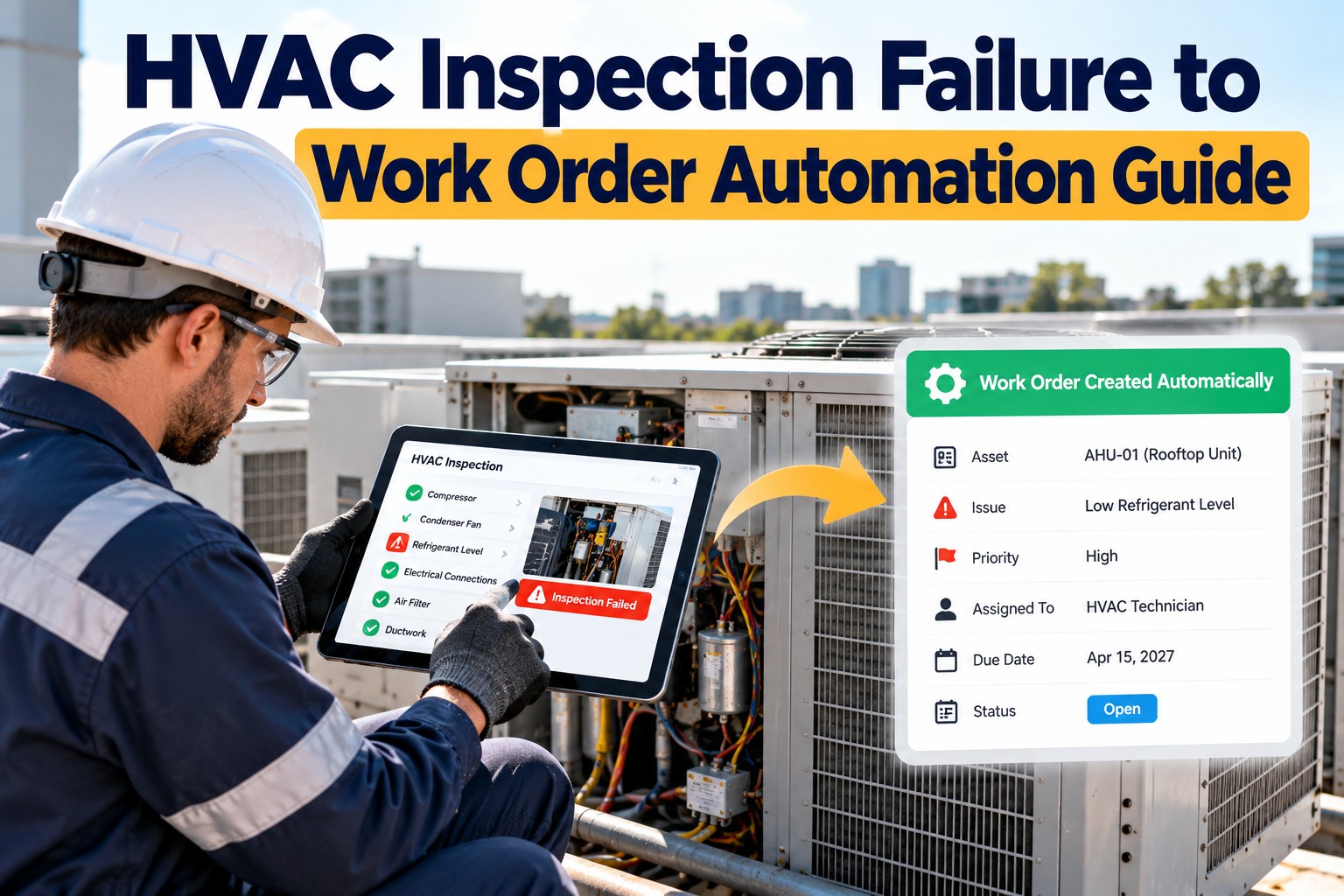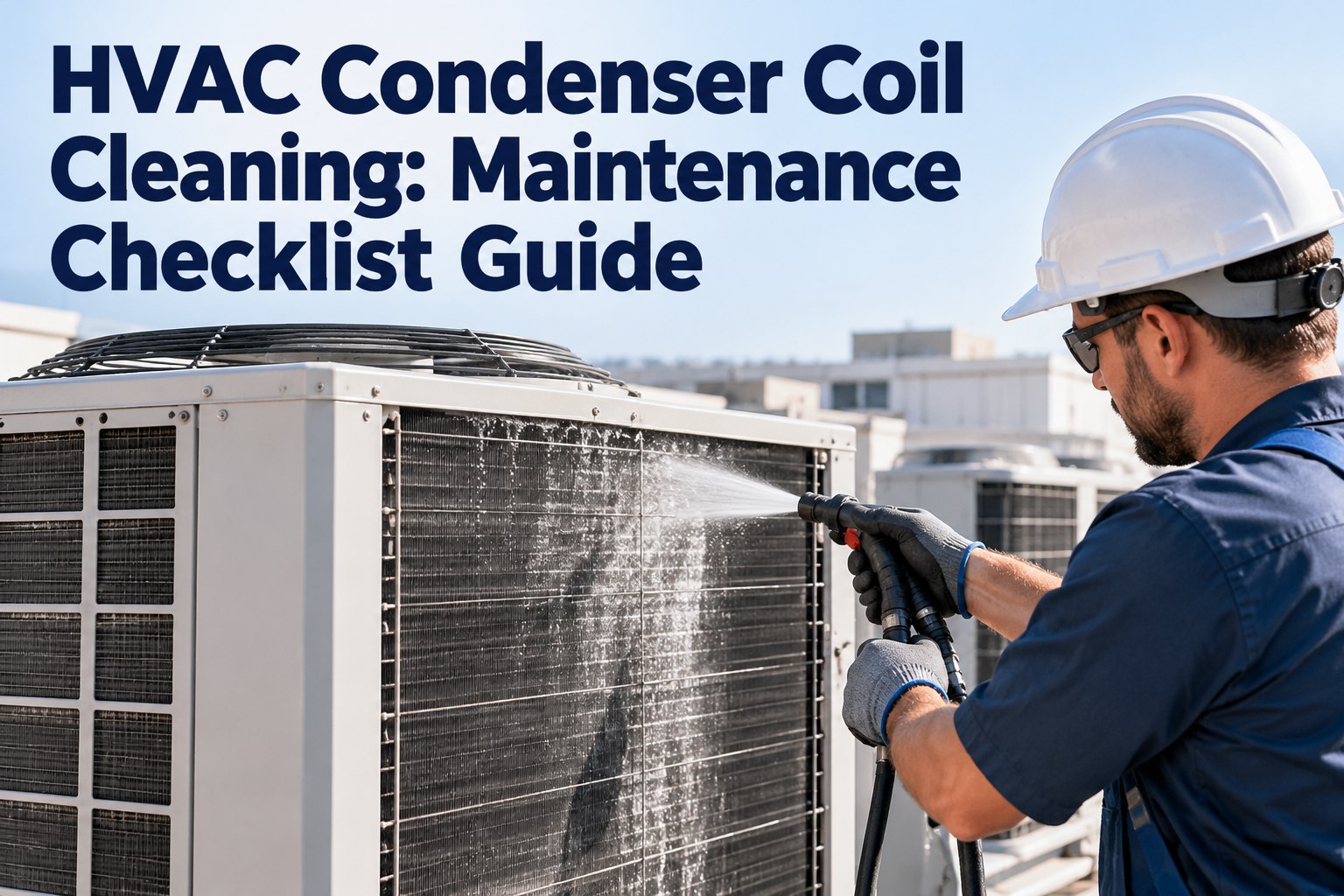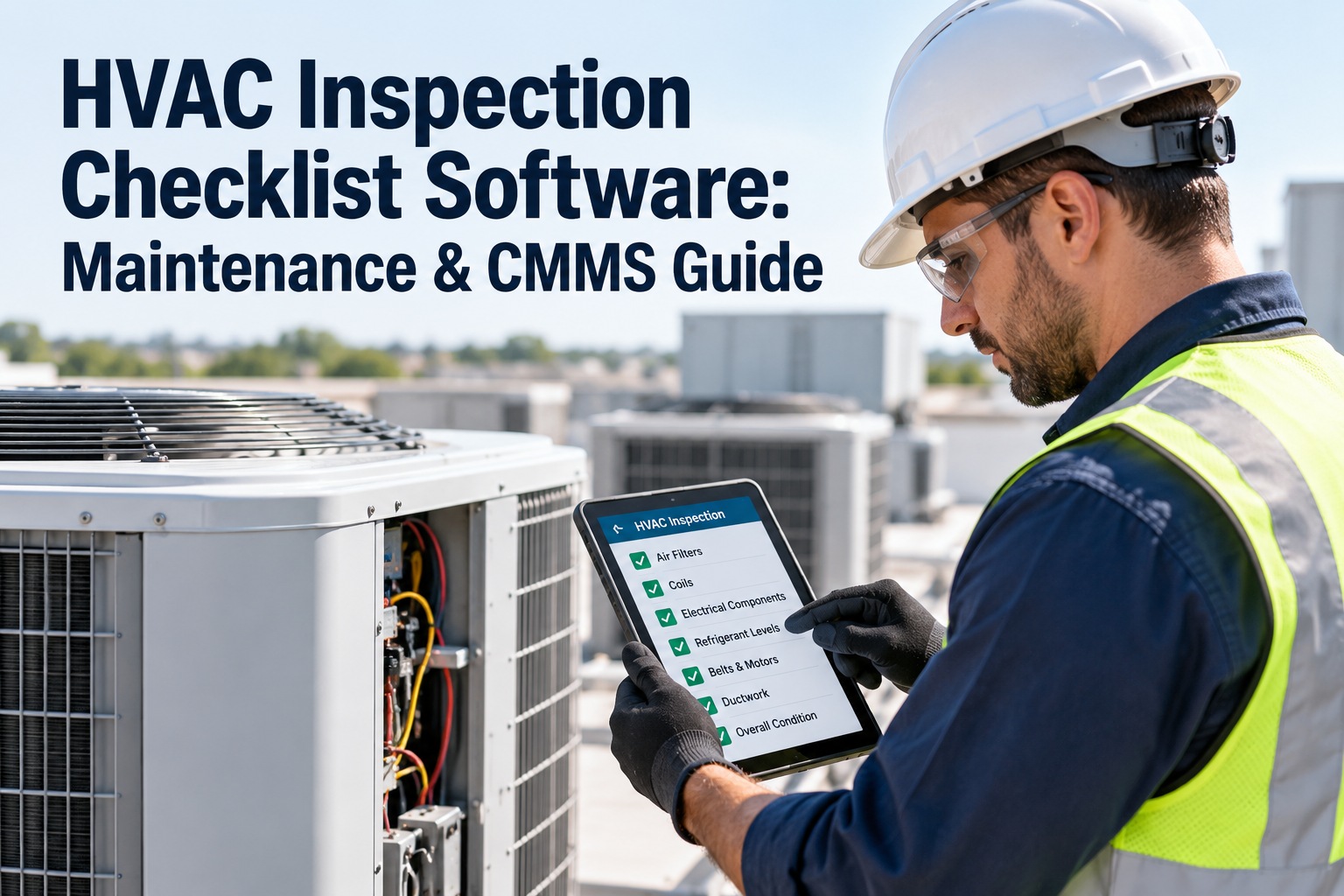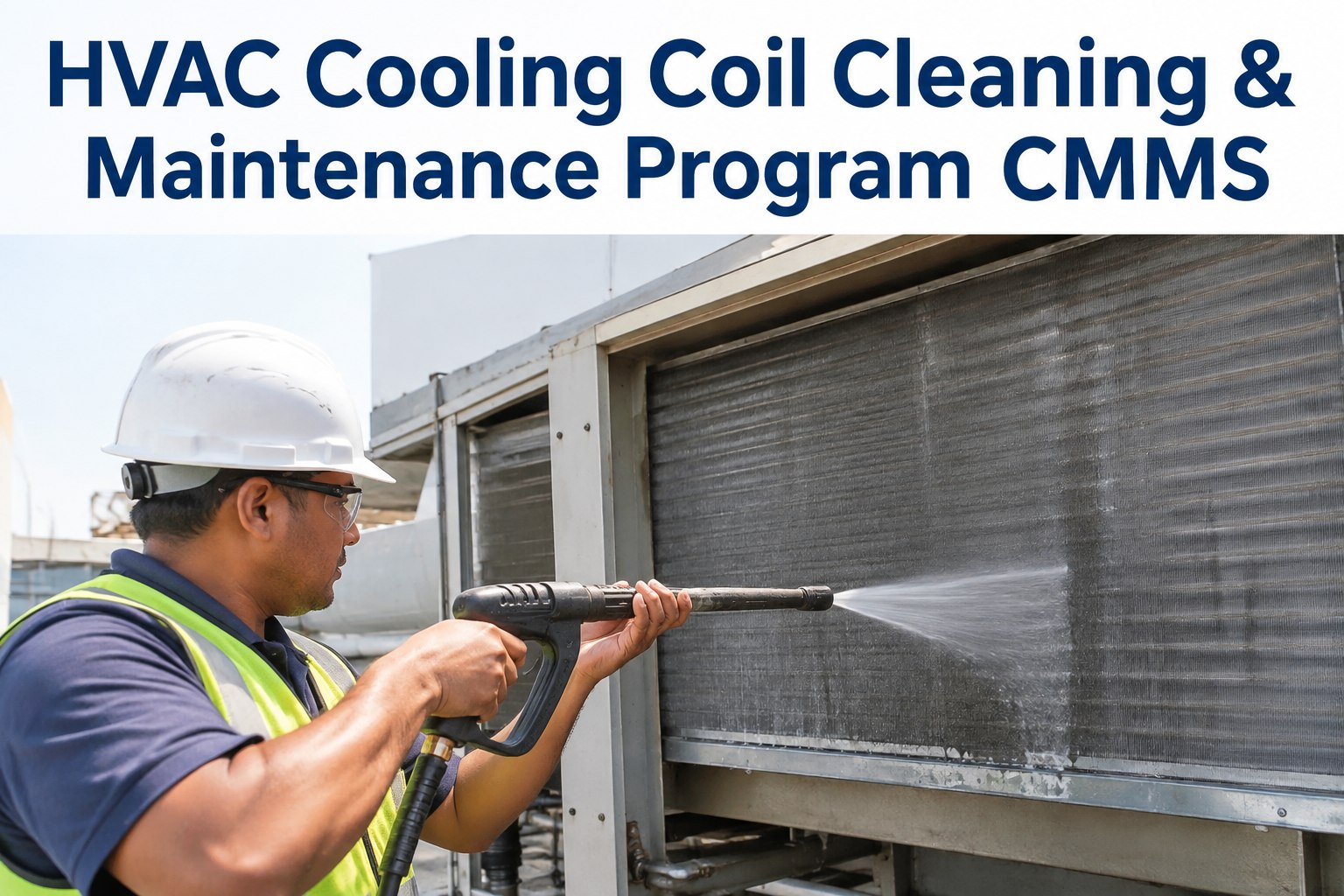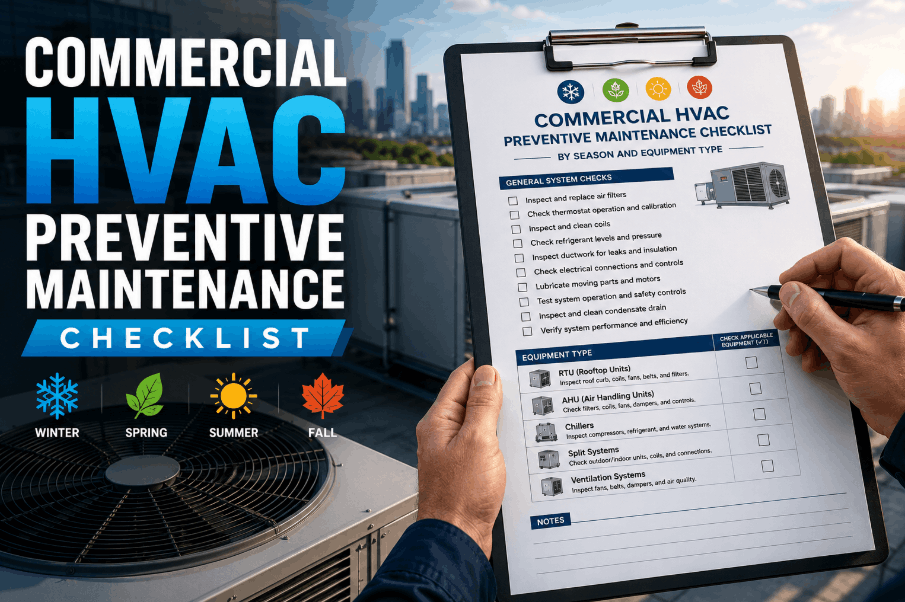
A fouled evaporator coil is one of the most common reasons a commercial HVAC system runs hard and still can't hold temperature — a film of dirt on the fins insulates the coil, chokes airflow, drops the cooling it delivers, and quietly drives the energy bill up. Cleaning it isn't complicated, but doing it right and in the right order is what separates a clean coil from a damaged one or a flooded drain pan. This is the full evaporator-coil cleaning checklist: every stage from lockout to verification, as checkable steps with the readings worth recording so you can prove the clean actually worked. Run it as a scheduled job and nothing gets skipped between cleanings. OxMaint AI schedules each coil cleaning, captures the before/after readings on the asset, and raises a work order for anything the inspection flags.
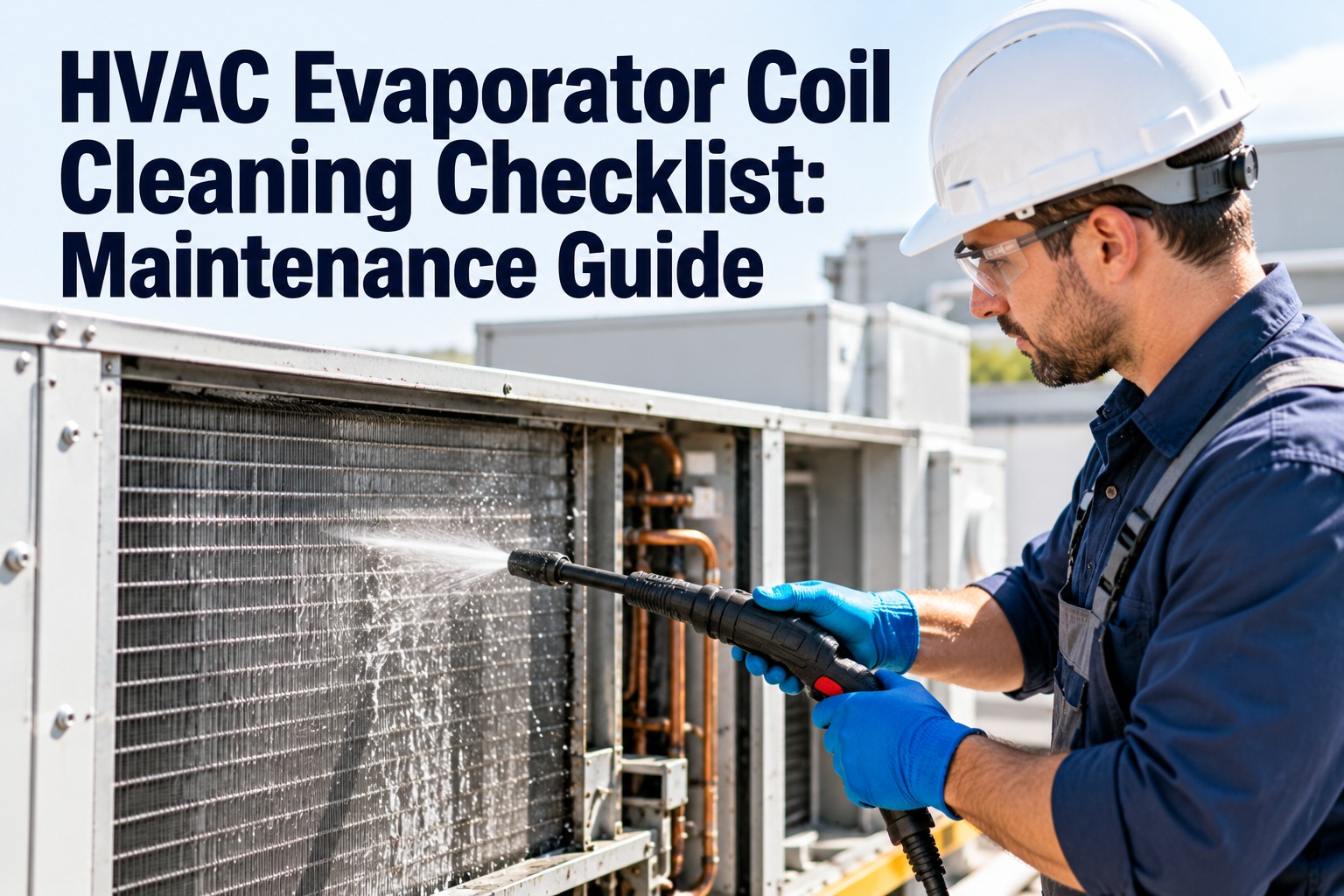
HVAC Evaporator Coil Cleaning Checklist: Maintenance Guide
A dirty evaporator coil cuts cooling, chokes airflow, and raises energy use — and cleaning it wrong bends fins, floods the drain pan, or damages the coil. This checklist walks the full job in order: lock out, access, inspect, pick the right cleaner, apply and rinse, clear the drain, reassemble, and verify with before/after readings. Each step is checkable and tagged by stage. OxMaint schedules the cleaning, keeps the readings on the asset, and turns any finding into a work order.
How to Use This Checklist
Work the stages in order — the sequence is the safety. Record the readings the checklist asks for before you start and again at the end, so the result is documented, not assumed. In software, a failed check or a flagged finding becomes a work order on its own. Start free and load the full procedure as a scheduled task in OxMaint AI.
Stage 1 — Lock Out & Prepare
Power isolation first, every time — a running blower or energized coil turns a cleaning into a hazard. Book a demo to attach lockout steps to the job in OxMaint.
Stage 2 — Access the Coil
Get to the coil without forcing panels or stressing refrigerant lines. Start free and log access notes per unit in OxMaint.
Stage 3 — Inspect & Document
Record the starting condition — it's your before shot and your early warning of damage. Book a demo of photo-on-inspection in OxMaint.
Stage 4 — Choose the Right Cleaner
The cleaner is matched to the fouling and the coil position — the wrong one is ineffective or corrosive. Start free and record the cleaner used on each job in OxMaint.
Stage 5 — Apply & Dwell
Clear loose debris first, then let the cleaner do the work — don't scrub fragile fins. Book a demo to standardize the clean step in OxMaint.
A Cleaning Nobody Recorded Is a Cleaning You Can't Prove Worked.
The before-and-after readings are what turn a coil cleaning from a chore into evidence — the temperature split that widened, the airflow that returned, the photo that shows the difference. Capture them against the asset and you've got a maintenance record that justifies the work and trends the coil's condition over time. Skip them and it's just a wet coil and a hope.
Stage 6 — Rinse
Rinse where the cleaner calls for it; let self-rinsing types clear on their own. Start free and keep the method on record in OxMaint.
Stage 7 — Clear the Drain Pan & Line
All that loosened soil and rinse water has to leave — a blocked condensate path is a water-damage event waiting to happen. Book a demo to schedule condensate checks in OxMaint.
Stage 8 — Reassemble
Close up clean, with a fresh filter so the coil you just cleaned stays clean. Start free and tie the filter change to the job in OxMaint.
Stage 9 — Restore Power & Verify
The step that proves it worked — restore power and confirm the coil is pulling its weight again. Book a demo of before/after verification in OxMaint.
How Often to Clean the Coil
Frequency follows the environment — the dirtier the air, the faster the coil fouls. These are the working cadences. Start free and set each unit's cleaning interval in OxMaint.
How OxMaint Runs Coil Cleaning
The schedule, the checklist, the before/after readings, and the findings all live in one CMMS — so a coil cleaning is a documented job, not an undated chore. Start free and turn coil cleaning into a managed program.
Frequently Asked Questions
Clean the Coil. Record the Proof.
A clean evaporator coil restores cooling and cuts energy use — but only a documented cleaning proves it happened and shows it worked. Run the stages in order, capture the before-and-after readings, and route every finding to a repair. OxMaint schedules the cleaning, keeps the record on the asset, and closes the loop on anything the inspection turns up.