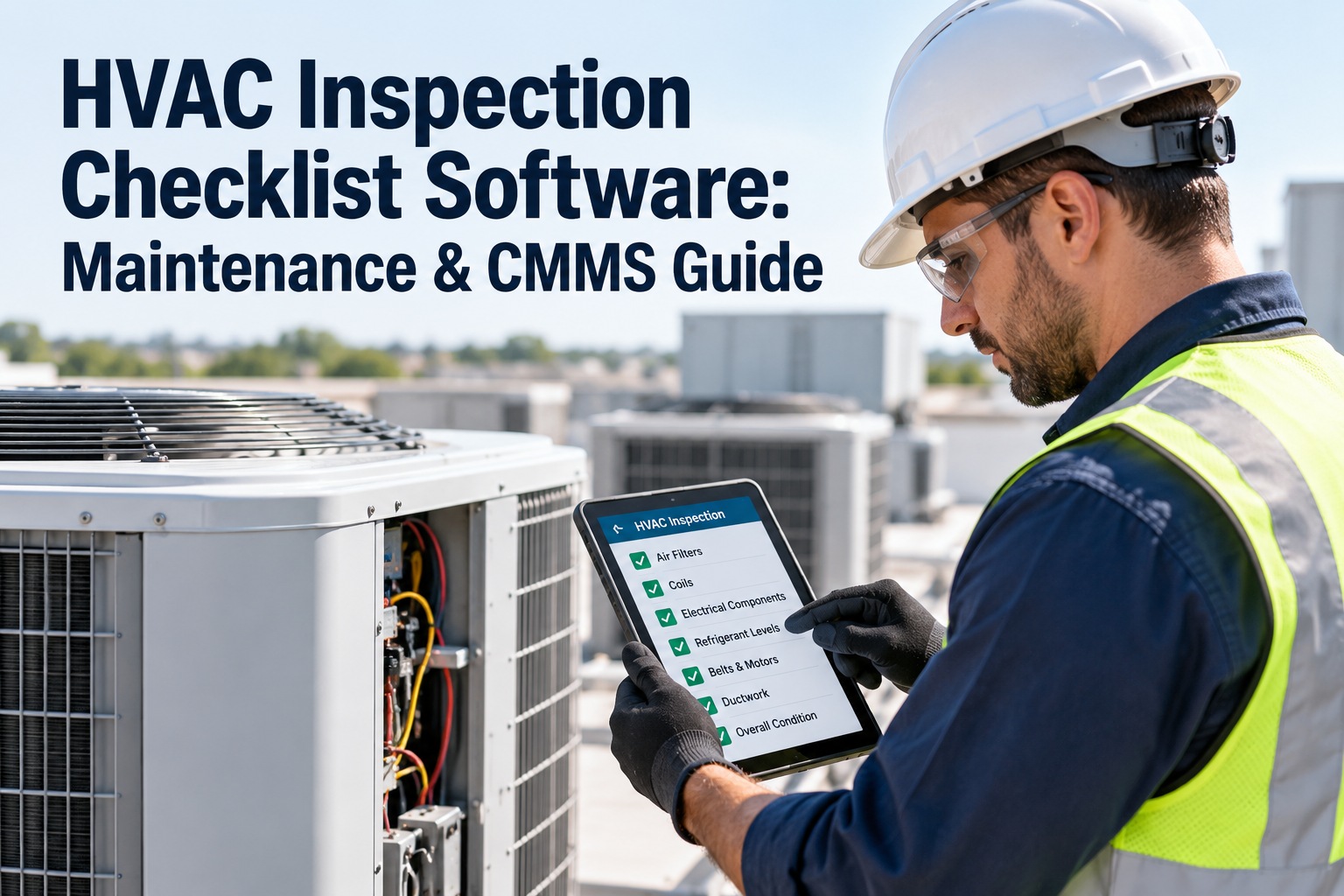
A 38-year-old technician servicing a rooftop unit reaches into an electrical panel he assumed was de-energized. It wasn't. The contactor he was replacing had residual capacitor charge. The shock threw him back, and the resulting fall from a 3-foot platform fractured his wrist. Total workers' comp claim: $47,000. Total OSHA fine for missing lockout/tagout procedures: $16,550. The investigation revealed no written LOTO procedure existed for that specific unit. The Bureau of Labor Statistics confirms HVAC technicians carry one of the highest injury rates of all occupations, with nearly 475 fatal injuries linked to maintenance and repair work in a single year. OSHA's lockout/tagout standard alone generated 2,676 citations in fiscal year 2024—a 5% increase over the prior year—with $21.6 million in total penalties. Every one of those citations represents a safety step someone skipped. Facilities that sign up for automated HVAC safety workflows eliminate the gaps that lead to these incidents.
The Real Risk Numbers for HVAC Maintenance
475
Fatal injuries linked to maintenance & repair work annually
2,676
OSHA lockout/tagout citations in fiscal year 2024
$16,550
OSHA penalty per serious violation (2025)
$165K
Max penalty per willful or repeated violation
LOTO compliance alone prevents an estimated 120 fatalities and 50,000 injuries annually — OSHA
The 8-Zone HVAC Safety Checklist
This checklist organizes HVAC safety into eight zones that cover every hazard category your team encounters during inspections, repairs, and preventive maintenance. Click any item to expand detailed verification steps. Critical items — those most commonly cited by OSHA or linked to serious injuries — are flagged for priority attention. Teams ready to digitize this process can schedule a free demo of mobile safety checklists that enforce every step in the field.
Pre-Work
Electrical
Mechanical
Refrigerant
Access
Fire
Housekeep
Post-Work
Zone 1
Pre-Work Safety Preparation
5 Items
Confirm all required work permits (hot work, confined space, electrical) are signed and posted. Complete a Job Safety Analysis identifying specific hazards for the task. OSHA requires hazard assessments before maintenance work under 29 CFR 1910.132.
Verify safety glasses, insulated gloves (rated for voltage present), hard hat, steel-toe boots, and hearing protection. Inspect all PPE for damage before use. OSHA mandates employer-provided PPE per 29 CFR 1910.132.
Review OEM manuals and site-specific procedures for the equipment being serviced. Identify all energy sources, isolation points, and known hazards documented in the asset history.
Brief all personnel on the scope of work, identified hazards, emergency procedures, and escape routes. Confirm all workers understand their roles and stop-work authority.
Confirm nearest first aid kit location, AED availability, emergency phone numbers, and nearest hospital route. Verify at least one team member is first-aid trained.
Zone 2
Electrical Safety & Lockout/Tagout
5 Items
Follow equipment-specific LOTO procedure per 29 CFR 1910.147. Notify affected employees, shut down equipment, isolate all energy sources, apply personal lock and tag, and verify zero-energy state. LOTO violations ranked 5th in OSHA citations in 2024.
Use a calibrated voltage tester to confirm zero voltage at the point of work. Test the tester on a known live source before and after. Check for residual capacitor charge. Never assume—always verify.
Check all accessible wiring for damage, discoloration, or loose connections. Verify grounding integrity and inspect conduit for physical damage. Look for signs of arcing or overheating at terminals.
Verify electrical panel directories are current and accurate. Confirm arc flash labels are posted per NFPA 70E with incident energy levels, approach boundaries, and required PPE category.
Only use tools rated and tested for the voltage level being worked on. Inspect tool insulation for cracks or damage before each use. Store insulated tools separately from standard tools.
Zone 3
Mechanical & Moving Parts Safety
4 Items
Visually confirm all rotating components (fans, belts, compressors) have fully stopped. Wait for any coasting to cease. Verify pneumatic and hydraulic pressure is released before accessing mechanical components.
Inspect belt guards, fan shrouds, and shaft covers for presence and secure mounting. Never operate equipment with guards removed. Replace any damaged guards before returning equipment to service.
Check belt tension, alignment, and wear. Listen and feel for bearing roughness. Inspect fan blades for cracks, buildup, or imbalance. Document any components approaching end of service life.
Remove rings, necklaces, lanyards, and tie back long hair before working near rotating equipment. Ensure no loose clothing can contact belts, shafts, or fan blades.
Zone 4
Refrigerant Handling Safety
4 Items
Confirm each technician handling refrigerant holds appropriate EPA Section 608 certification (Type I, II, III, or Universal). EPA penalties for violations reach $69,733 per day. Document certification status in personnel records.
Use an electronic leak detector at all fittings, joints, and service valves. Document any leaks found and repair before adding refrigerant. Record refrigerant type and quantity per EPA tracking requirements.
Refrigerant displaces oxygen in enclosed spaces. Ensure mechanical ventilation is active in mechanical rooms. Monitor oxygen levels in confined areas where refrigerant may accumulate. Never vent refrigerant intentionally.
Verify refrigerant cylinders are stored upright, secured against tipping, and away from heat sources. Check valve caps are in place. Confirm recovery cylinders are within date and weight limits.
Zone 5
Confined Space & Access Safety
4 Items
Determine if mechanical rooms, plenums, or air handlers qualify as permit-required confined spaces under 29 CFR 1910.146. Test atmosphere for oxygen, combustible gases, and toxic substances before entry. Station attendant outside.
Use harnesses, guardrails, or warning lines when working within 6 feet of unprotected roof edges. Inspect ladder condition and secure before climbing. Lack of fall protection is the #1 OSHA citation every year.
Provide task lighting in mechanical rooms, above-ceiling spaces, and rooftop units. Minimum 50 foot-candles at the point of work. Use GFCI-protected portable lights in wet or damp locations.
Before stepping on platforms, catwalks, or roof surfaces, verify structural integrity can support worker weight plus tools. Check for wet, icy, or deteriorated surfaces.
Zone 6
Fire & Heat Safety
4 Items
Obtain hot work permit before any brazing, soldering, or welding. Maintain fire watch for 30 minutes after completion. Ensure fire extinguisher is within 20 feet. Remove combustibles from the work area.
Check gas piping for corrosion, damage, and proper support. Test all accessible connections with approved leak detection solution. Verify manual shutoff valves are accessible and labeled.
Verify heat shields around exhaust flues and hot surfaces are intact. Check pipe insulation for damage that could expose burn hazards. Allow surfaces to cool before servicing combustion components.
Verify nearest fire extinguisher location, inspection tag is current, and unit is accessible. Confirm fire suppression systems in mechanical rooms are operational and not impaired.
Facilities managing multiple buildings or rooftop units can't afford to leave safety compliance to memory. Teams that sign up for digital HVAC safety checklists ensure every technician follows the same verified process on every job—with time-stamped completion records that prove compliance during audits.
Zone 7
Housekeeping & Work Area Safety
3 Items
Remove stored materials, debris, and equipment from paths around HVAC units. Maintain minimum 36-inch clearance around electrical panels. Ensure emergency exits from mechanical rooms are unblocked.
Keep tools organized and within arm's reach. Don't leave tools on top of equipment where they can fall. Secure materials on elevated surfaces. Clean up spills immediately to prevent slip hazards.
Dispose of used refrigerant oil, cleaning solvents, and replaced components per facility waste procedures. Never pour chemicals down drains. Label and segregate hazardous waste containers.
Zone 8
Post-Work Safety Verification
4 Items
Verify all belt guards, access panels, and safety covers are reinstalled and secured before energizing equipment. Missing guards are a frequently cited OSHA violation and create ongoing hazard exposure.
Only the person who applied a lock may remove it. Verify all personnel are clear of equipment before removing locks. Follow the documented LOTO removal sequence. Notify affected employees before re-energization.
Perform a tool count before closing up equipment. Tools left inside air handlers or ductwork create FOD (foreign object damage) hazards and can damage components or create electrical shorts on restart.
Record all work completed, findings, parts replaced, and any remaining concerns. Sign off the safety checklist with date, time, and technician name. Close the work order with documentation attached.
Make Every HVAC Job a Safe Job
OXmaint turns this safety checklist into a guided mobile workflow — enforced on every job, time-stamped for compliance, with digital sign-off that proves your team followed every step.
Expert Perspective: Why Paper Checklists Fail at Scale
The most dangerous moment in HVAC maintenance isn't the high-voltage work or the rooftop access — it's the moment a technician decides to skip a step because they've "done this a hundred times." Paper checklists sit in the truck. Digital checklists are on the phone in the technician's hand, enforcing the sequence, requiring photo verification, and time-stamping every item. When OSHA asks for your safety documentation, the difference between a paper trail and a digital audit log is the difference between a citation and a compliment.
Enforce the Sequence
Digital checklists can require items in order — you can't mark LOTO removal complete without first confirming guards are reinstalled. Paper can't enforce sequence.
Prove Compliance Instantly
Every checklist completion is time-stamped, GPS-tagged, and linked to the asset. When an auditor asks "show me the LOTO record for Unit 7," you pull it up in seconds.
Spot Patterns Before Incidents
If Zone 2 items are repeatedly flagged across multiple units, you have a systemic electrical safety issue — visible in data, invisible on paper. CMMS data prevents the incident paper can't predict.
OXmaint digitizes every safety checklist, links it to asset records, and creates the audit trail that protects your people and your facility. See it in action.
What are the most common HVAC safety violations cited by OSHA?
The top HVAC-related OSHA violations include failure to follow lockout/tagout procedures (29 CFR 1910.147), lack of fall protection on rooftops, missing or inadequate PPE, improper electrical safety practices, and failure to conduct confined space assessments. LOTO alone ranked 5th overall among all OSHA citations in 2024 with 2,676 violations and $21.6 million in penalties. Many citations stem from missing written procedures rather than equipment failures.
How often should HVAC safety checklists be completed?
Safety checklists should be completed before every maintenance task, not on a calendar schedule. Each service call, inspection, or repair should begin with the pre-work safety section and end with post-work verification. High-risk activities like electrical work, confined space entry, or hot work require additional task-specific permits and checklists beyond the general safety items.
What PPE is required for HVAC maintenance work?
Minimum PPE for HVAC maintenance includes safety glasses, work gloves (type depends on task), steel-toe boots, and hearing protection in high-noise areas. Electrical work requires insulated gloves rated for the voltage present, arc-rated clothing per NFPA 70E, and face shields when arc flash risk exists. Refrigerant handling requires chemical-splash goggles and cryogenic gloves. Rooftop work requires hard hats and fall protection equipment.
What are the penalties for HVAC safety violations?
OSHA penalties for 2025 include up to $16,550 per serious violation and up to $165,514 per willful or repeated violation. EPA refrigerant violations can reach $69,733 per day. Beyond fines, violations can trigger placement in OSHA's Severe Violator Enforcement Program, increased inspection frequency, and in cases involving fatalities, criminal prosecution. Workers' compensation costs for HVAC injuries average significantly higher than the prevention cost.
How does a CMMS improve HVAC safety management?
A CMMS digitizes safety checklists so every item is enforced, time-stamped, and linked to the specific asset. It creates an automatic audit trail proving compliance for OSHA inspections and insurance requirements. Aggregated data reveals patterns — like which buildings have the most safety findings or which checklist items are most frequently flagged — enabling proactive hazard correction before incidents occur.