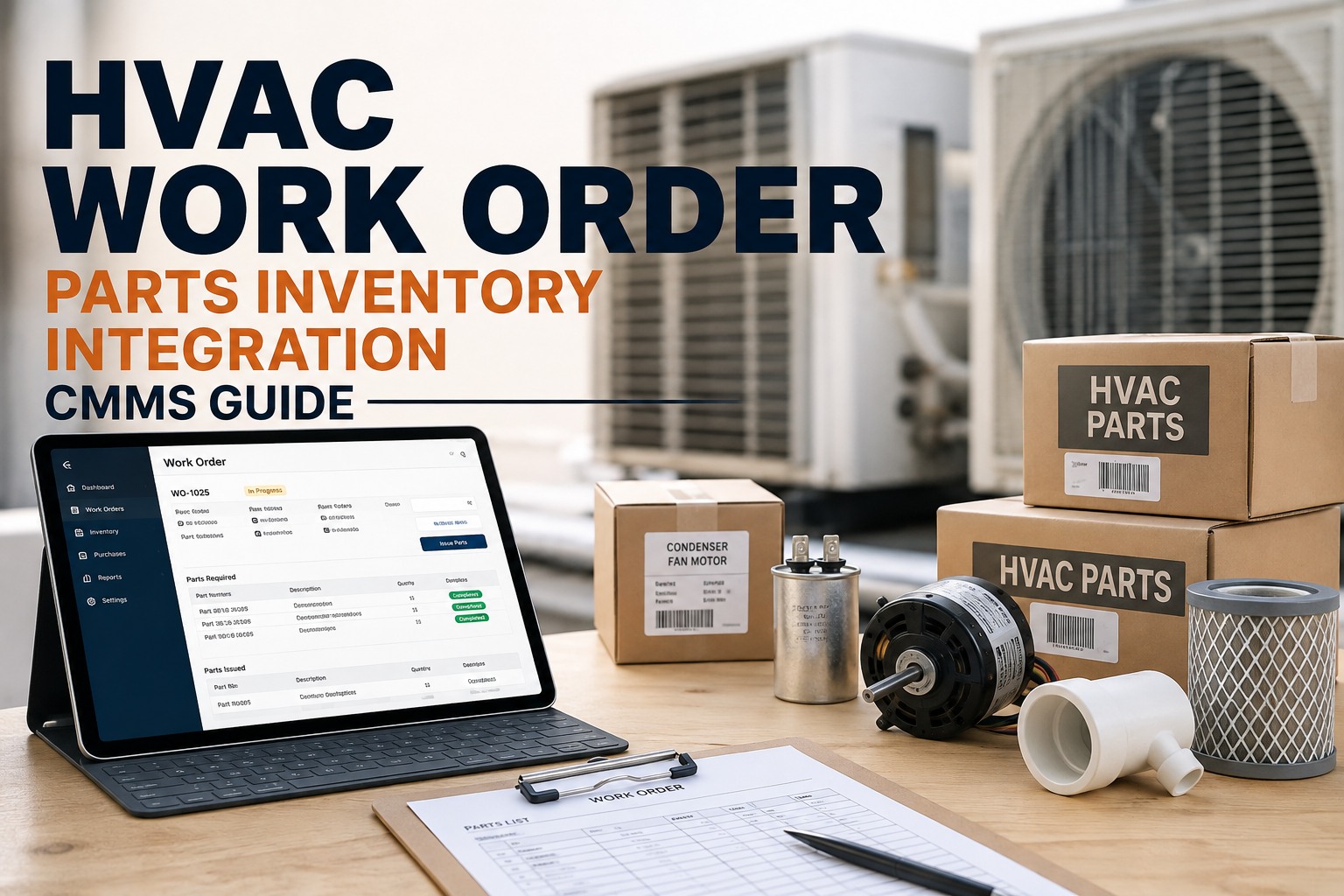
HVAC operations that track spare parts on spreadsheets, whiteboards, or technician memory lose 12–18% of total inventory value annually to carrying costs, write-offs, expediting fees, and stockout-driven downtime — without ever connecting those losses to a single root cause. A missing $35 contactor during a summer peak becomes a $300 emergency order, a second truck roll, and a technician standing idle while the part ships. OxMaint's Inventory Management module connects every part used on every work order to a live stock level, auto-generates reorder triggers, and forecasts seasonal demand before the peak season empties your shelves. Book a demo to see HVAC parts forecasting configured for your fleet and service mix.
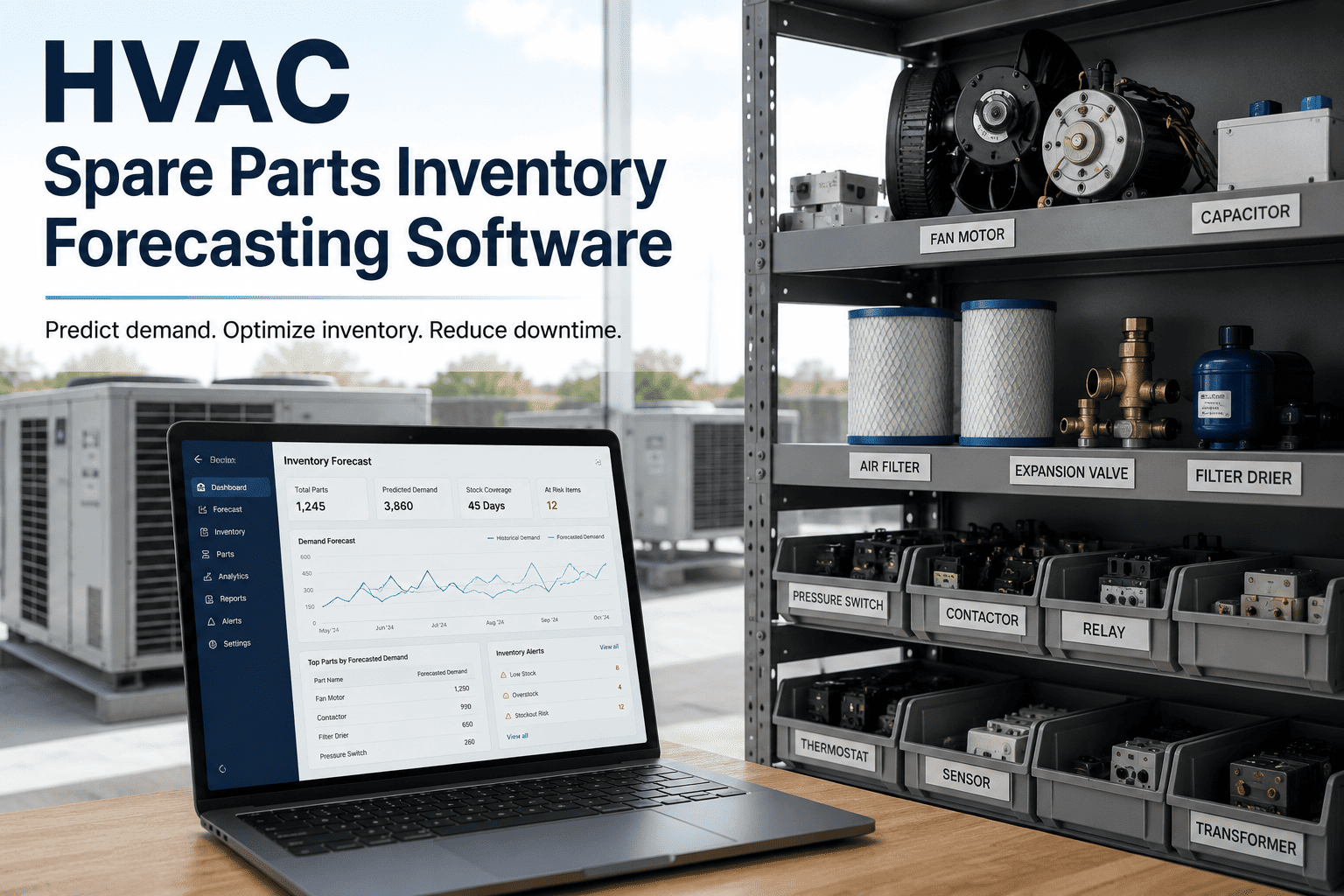
HVAC Spare Parts Inventory Forecasting Software
How OxMaint's CMMS eliminates HVAC stockouts, reduces carrying costs, and automates reordering for filters, belts, motors, compressors, valves, sensors, and refrigerant inventory.
Why HVAC Inventory Fails Without a Forecasting System
Most HVAC teams track the cost of a missing part as the part price plus expedited shipping. That calculation misses 80% of the actual damage. A single stockout event triggers a cascade: emergency procurement at 40–200% premium, a second truck roll at $150–$300 in vehicle costs alone, and a technician idle at $60–$90 per hour fully loaded. A 10-truck fleet averaging one stockout per day is burning $375,000–$750,000 annually on avoidable revisits. The root cause is not insufficient inventory — it is insufficient intelligence connecting consumption patterns, seasonal demand, PM schedules, and vendor lead times to stock levels.
Static Thresholds
Min/max levels set once and forgotten create summer stockouts on refrigerant and contactors and winter overstock on cooling components. Seasonal demand is predictable — but only with historical consumption data.
PM Blind Spot
Scheduled PM tasks consume known parts on known dates — but most inventory systems don't connect to the PM schedule. The parts needed for next quarter's overhaul are not reserved until the work order is opened.
No Vendor Tracking
A part in stock at a slow vendor is effectively out of stock. Reorder points set without accounting for actual vendor lead time create false security that collapses when a supplier is delayed during peak season.
ABC-VED Classification — The Right Stock Level for Every Part
Treating every part identically is how storerooms fill up with slow-moving consumables while running out of the compressors that matter. OxMaint's inventory module auto-assigns ABC-VED classification based on equipment criticality and historical consumption — then applies the correct stocking policy per part class without manual spreadsheet work.
| Classification | Criteria | Stocking Policy | HVAC Examples |
|---|---|---|---|
| Vital (V) — Critical | Stockout causes immediate system failure or compliance breach | Min 1 unit regardless of lead time; condition-monitored storage | Compressors, large motors, chiller components, HEPA filters |
| Essential (E) — High Use | Stockout extends downtime from hours to days | Safety stock based on lead time × demand rate + 15–20% buffer | Contactors, capacitors, control boards, refrigerant cylinders |
| Desirable (D) — Routine | Stockout causes inconvenience, no critical downtime | Min/max based on consumption; JIT procurement acceptable | Filters (standard), belts, bearings, gaskets, pressure switches |
| A — High Value | Top 20% of parts by spend (≈80% of total inventory cost) | Tightly controlled reorder points; supplier agreements preferred | Compressors, large VFDs, heat exchangers, chiller components |
| B — Medium Value | Middle 30% by spend | Standard CMMS min/max with quarterly review | Blower motors, control valves, coil assemblies |
| C — Low Value | Bottom 50% by spend — high volume, low unit cost | Bulk stocking; auto-reorder on scan; lowest management overhead | Filters, belts, fuses, contactors, capacitors, refrigerant fittings |
HVAC Inventory by Season — What to Stock and When
Refrigerant Inventory — A Compliance Requirement, Not Just a Parts Problem
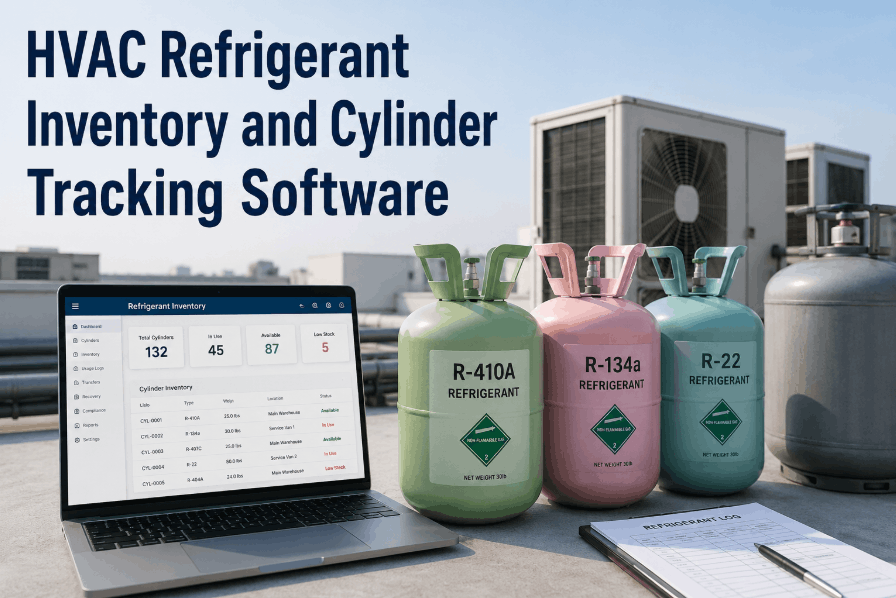
EPA Section 608 mandates detailed refrigerant purchase, use, and recovery records for systems with 50+ pounds of charge. Poor inventory visibility doesn't just disrupt service — missing documentation for 10% or more of your refrigerant charge triggers mandatory reporting requirements and potential federal penalties. OxMaint tracks refrigerant by cylinder, technician, and work order — automatically building the EPA compliance record from normal service activity, with zero additional data entry.
Cylinder Lifecycle Tracking
Every cylinder tracked by location, remaining quantity, refrigerant type, and last-used technician — eliminating the mystery cylinder problem that drives emergency re-purchases.
Leak Rate Calculation
Automatic tracking of charge amounts added per system against total system capacity. Systems losing 10% or more annually are flagged for mandatory reporting before the threshold is crossed.
Transition Planning
With R-410A availability tightening under HFC phasedown, OxMaint tracks legacy refrigerant inventory and flags high-consumption systems for early retrofit planning before availability becomes a service problem.
Stop Losing Money to HVAC Stockouts
OxMaint connects every work order to your parts inventory in real time — auto-updating stock levels, triggering reorders, and forecasting seasonal demand before it empties your shelves.
"HVAC companies without a structured inventory system lose 12–18% of their total inventory value every year to carrying costs, write-offs, expediting fees, and stockout-driven lost jobs — and most managers never connect these losses to a single root cause. The solution is not holding more stock — it's holding smarter stock. Criticality-based stocking, CMMS-driven min/max tracking, and seasonal demand forecasting reduce emergency orders by up to 85% while cutting total parts investment by 15–30%. Both simultaneously. The inventory paradox of simultaneous stockouts and overstocking is entirely preventable with the right data infrastructure."