Emergency HVAC repairs during a heatwave or deep freeze can cost 3-5x more than planned maintenance—often because a $15 belt or a cylinder of R-410A refrigerant wasn't in stock. For facility managers and maintenance teams, this isn't just an operational headache; it's a budget killer. The difference between a 2-hour fix and a 48-hour downtime nightmare often comes down to how well you manage your spare parts and refrigerant inventory. Digital inventory management with automated min-max levels, predictive reordering, and real-time refrigerant tracking transforms reactive panic into proactive control. Whether you're managing a single building or a multi-site portfolio, understanding how to optimize your HVAC spare parts strategy isn't just about saving money—it's about ensuring comfort, compliance, and continuity when it matters most.
67% of HVAC downtime is caused by missing spare parts during critical seasons
The Hidden Cost of Poor HVAC Inventory Management
When an air handler fails on the hottest day of July, every minute of downtime costs money, reputation, and tenant satisfaction. Yet many facilities still rely on spreadsheets, whiteboards, or memory to track critical HVAC components. This approach creates three critical vulnerabilities:
Reactive Procurement Premiums: Emergency shipping, after-hours vendor fees, and expedited handling can turn a $200 compressor into a $1,000 crisis. Sign up to eliminate these surprise costs with automated reorder points.
Refrigerant Compliance Risks: With EPA regulations tightening around refrigerant tracking and leak rates, poor inventory visibility doesn't just hurt your budget—it puts you at risk of federal penalties. Missing documentation for even 5% of your refrigerant charge can result in significant fines.
Seasonal Demand Surges: HVAC parts availability drops dramatically during peak seasons. That contactor or capacitor you need might have a 3-week lead time in August versus same-day availability in March. Book a demo to see how predictive stocking prevents seasonal shortages.
The True Cost of Stockouts
Average total cost of unplanned HVAC part replacement: $1,365 vs. $150 with proper inventory management
Building Your Critical Spares Strategy
Not every HVAC component deserves warehouse space. Smart inventory management starts with categorization based on criticality, lead time, and failure frequency. Here's how to prioritize:
Critical Spares (Keep in Stock): These are components with long lead times or high failure rates during peak seasons. Think compressor contactors, blower belts, filter sets, and common refrigerant types (R-410A, R-32). These should have automated reorder points set at 20% above safety stock levels. Sign up to set intelligent min-max levels automatically.
Insurance Spares (Vendor Managed): High-cost, low-probability items like compressors or heat exchangers. Instead of tying up capital, establish agreements with local suppliers for 4-hour emergency delivery. Track these relationships in your CMMS.
Consumables (Bulk Ordering): Filters, belts, and refrigerant require different strategies. Filters should be ordered seasonally in bulk (often 30-40% cheaper), while refrigerant tracking must include cylinder location, charge amounts, and leak test dates for EPA compliance.
Digital Transformation: From Spreadsheets to Smart Inventory
Manual inventory tracking fails because it relies on human consistency in chaotic environments. Digital inventory management through a CMMS creates a single source of truth that updates in real-time. Here's what modern HVAC inventory software delivers:
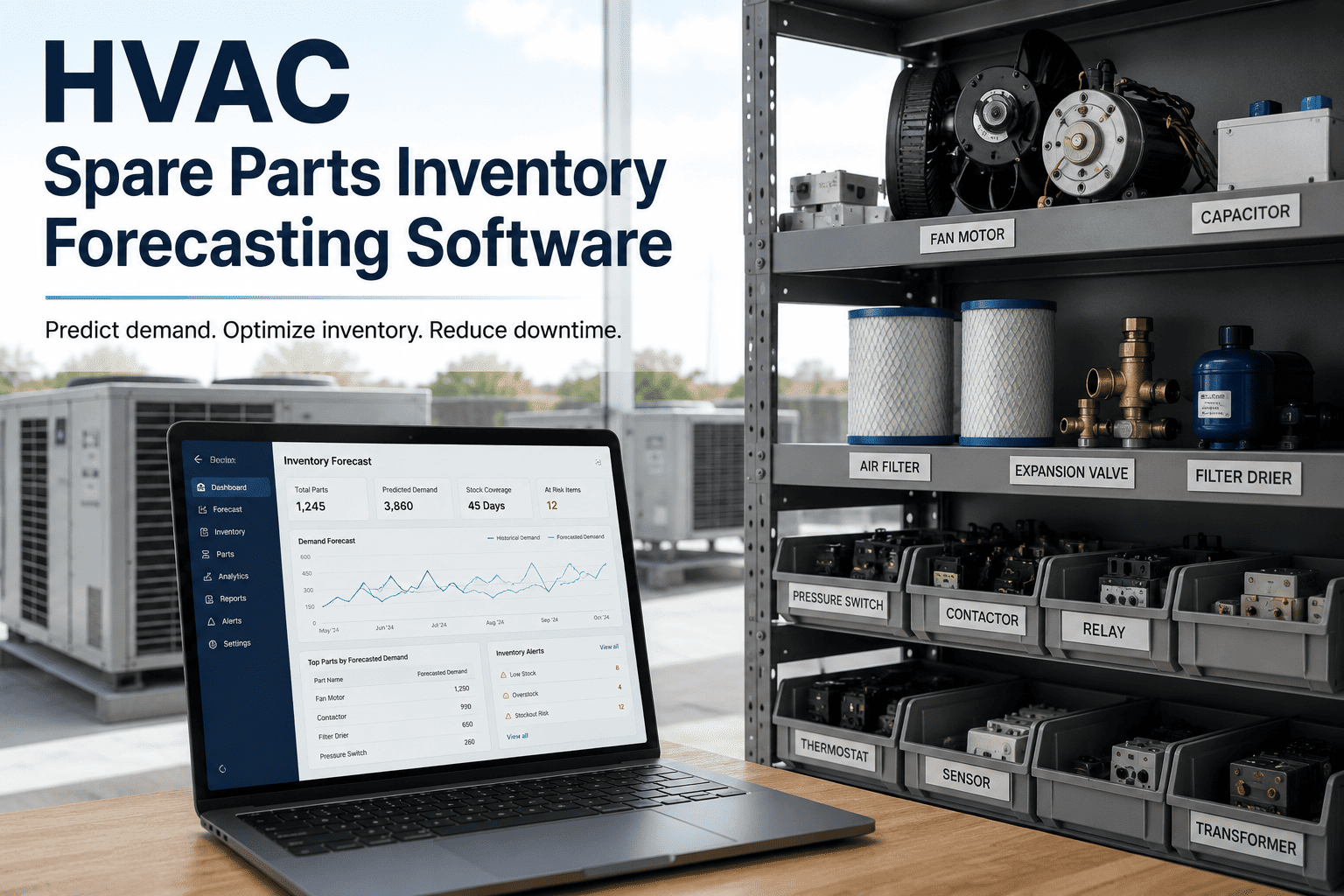
Automated Min-Max Alerts: Set minimum and maximum thresholds for every SKU. When stock hits the reorder point, the system generates purchase orders automatically. No more "I thought we had three of those" moments during emergency repairs. Book a demo to see automated reordering in action.
Refrigerant Tracking Compliance: Digital logs track every pound of refrigerant by location, equipment, and technician. Automatic leak rate calculations ensure you stay under EPA thresholds, and audit reports generate in seconds rather than days.
Usage Analytics: Identify which parts you actually use versus what sits on shelves for years. Data shows that 30% of "just in case" inventory never gets used, tying up working capital unnecessarily.
Sensor/Scan
Barcode or RFID tracking updates inventory automatically when parts are used
Analyze
System compares current stock against min-max thresholds and seasonal forecasts
Trigger
Automated purchase orders sent to approved vendors when reorder points hit
Receive
Digital confirmation updates inventory levels and maintenance schedules
Refrigerant Management: Beyond Simple Stock Counts
Refrigerant inventory requires specialized tracking beyond standard MRO items. EPA Section 608 regulations mandate detailed record-keeping for systems with 50+ pounds of refrigerant, but smart facilities track everything:
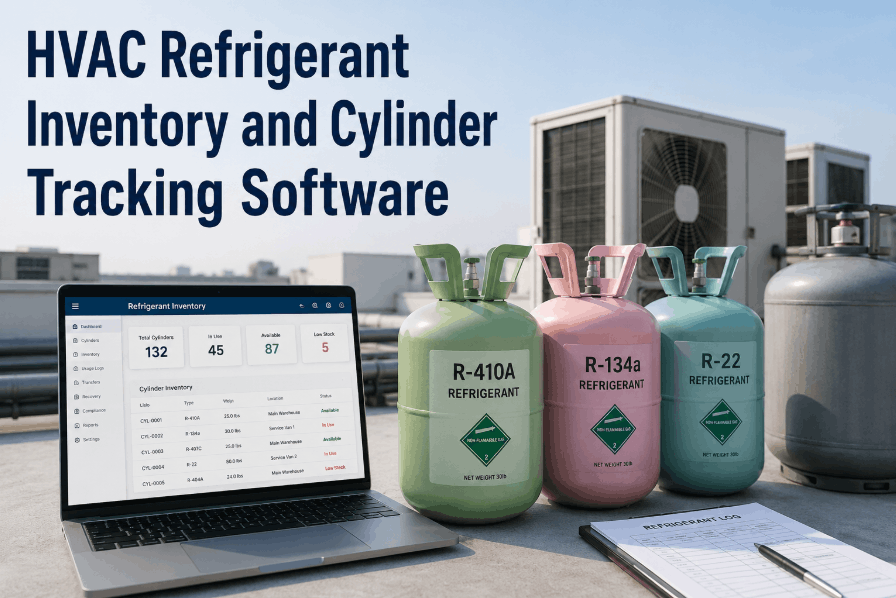
Cylinder Lifecycle Tracking: Know exactly where each refrigerant cylinder is located, how much remains, and which technician last used it. This prevents the "mystery cylinder" problem that leads to emergency purchases.
Leak Rate Calculations: Automatic tracking of charge amounts versus system capacity helps identify leaks before they trigger mandatory reporting thresholds. Systems losing more than 10% annually require immediate attention. Sign up to automate refrigerant compliance tracking.
Retrofit Planning: With R-22 phased out and R-410A being replaced by lower-GWP alternatives, inventory management must include transition planning. Track which systems use which refrigerants to avoid costly cross-contamination or emergency retrofits.
Stop Paying Emergency Procurement Premiums
Join hundreds of facilities that have eliminated 90% of emergency HVAC parts orders through intelligent inventory management.
Implementation Roadmap: From Chaos to Control
Transitioning to digital HVAC inventory management doesn't require a complete overnight overhaul. Follow this phased approach:
Audit & Categorize
Physically count current inventory and classify every item using the criticality matrix. Dispose of obsolete parts (like R-22 stock you can't legally use). Book a demo to get a free inventory assessment template.
Digital Foundation
Upload your inventory to a CMMS with location mapping, photos, and specification sheets. Set initial min-max levels based on historical usage data or industry benchmarks if history isn't available.
Automation & Integration
Connect inventory to work orders so usage automatically deducts from stock. Set up vendor integrations for automated purchasing. Train technicians on mobile scanning for real-time updates.
Optimization
Review quarterly reports to adjust min-max levels. Identify slow-moving items to reduce carrying costs. Use predictive analytics to pre-position inventory before seasonal demand spikes.
ROI: The Business Case for Smart Inventory
The financial impact of digital HVAC inventory management extends beyond avoided emergency shipping costs. Consider these annual savings for a mid-sized facility (50-100 HVAC units):
Direct Cost Reductions: Eliminating emergency procurement premiums saves $15,000-$25,000 annually. Bulk ordering consumables (filters, belts) during off-peak seasons adds another $8,000-$12,000 in savings. Sign up to calculate your specific ROI.
Labor Efficiency: Technicians spend 30% less time searching for parts or waiting for deliveries. At $75/hour fully loaded labor costs, this saves 100+ hours annually.
Downtime Prevention: Reducing average repair time from 48 hours to 4 hours prevents tenant complaints, lost productivity, and potential lease violations. The reputational value alone often justifies the investment.
Average annual savings for 75-unit facility: $52,500
Common Pitfalls to Avoid
Even with the best software, these mistakes derail HVAC inventory programs:
Over-Stocking "Just In Case": Resist the urge to stock every possible part. Carrying costs (storage, insurance, capital tie-up) typically run 20-25% of inventory value annually. Focus on high-rotation, long-lead-time items only. Book a demo to learn optimal stocking levels.
Ignoring Seasonality: Min-max levels should adjust quarterly. You need more refrigerant and contactors in summer, more ignitors and heat exchangers in winter. Static thresholds create summer stockouts and winter overstock.
Poor Technician Adoption: If technicians don't scan parts when used, the system becomes unreliable quickly. Make mobile scanning faster than manual logging, and require it for work order closure.
Neglecting Vendor Management: Your CMMS should track vendor performance—lead times, fill rates, and quality issues. A part in stock at a slow vendor is effectively out of stock.
Critical Success Factor
Inventory accuracy must stay above 95% to trust automated reordering. Cycle count high-velocity items weekly until you hit this threshold.
FAQ: HVAC Inventory Management
What are the most critical HVAC spare parts to keep in inventory?
Focus on contactors, capacitors, blower belts, air filters (in bulk), refrigerant (R-410A or your specific type), and pressure switches. These represent 80% of common failures and have the longest lead times during peak seasons. Use your CMMS failure data to identify your specific high-rotation items.
How do I determine the right min-max levels for HVAC parts?
Calculate based on lead time demand plus safety stock. If you use 5 contactors monthly and lead time is 2 weeks, set minimum at 3 (covering lead time plus buffer) and maximum at 8. Adjust seasonally— increase refrigerant and cooling components by 40% before summer. Sign up to access automated min-max calculators.
What EPA requirements apply to refrigerant inventory tracking?
Technicians must maintain records of refrigerant added or recovered, leak inspection dates, and calculations of annual leak rates for systems with 50+ pounds. Digital tracking simplifies compliance by automatically calculating leak percentages and generating audit trails. Failure to maintain records can result in fines up to $37,500 per day.
How can I reduce HVAC parts carrying costs without increasing stockout risk?
Implement vendor-managed inventory for high-cost, low-probability items like compressors. Use predictive analytics to pre-position inventory before seasonal demand spikes. Consolidate suppliers to increase purchasing power, and negotiate consignment arrangements where suppliers own the stock until you use it.
What's the best way to track HVAC filter inventory across multiple buildings?
Use a centralized CMMS with location hierarchies (Building > Floor > Mechanical Room). Barcode filters by size and MERV rating, and set up automatic reordering when any location hits minimum levels. Bulk purchasing for the entire portfolio often reduces per-filter costs by 35-50% compared to site-by-site ordering.
How does digital inventory management integrate with HVAC maintenance scheduling?
Modern CMMS platforms link inventory to preventive maintenance work orders. When a PM task requires a belt change, the system reserves the part and deducts it upon completion. This prevents "parts unavailable" delays and maintains accurate stock levels without manual entry. Book a demo to see integrated maintenance and inventory workflows.
Ready to Eliminate Emergency HVAC Procurement?
Transform your spare parts and refrigerant management from a cost center into a competitive advantage. Start your free trial today.