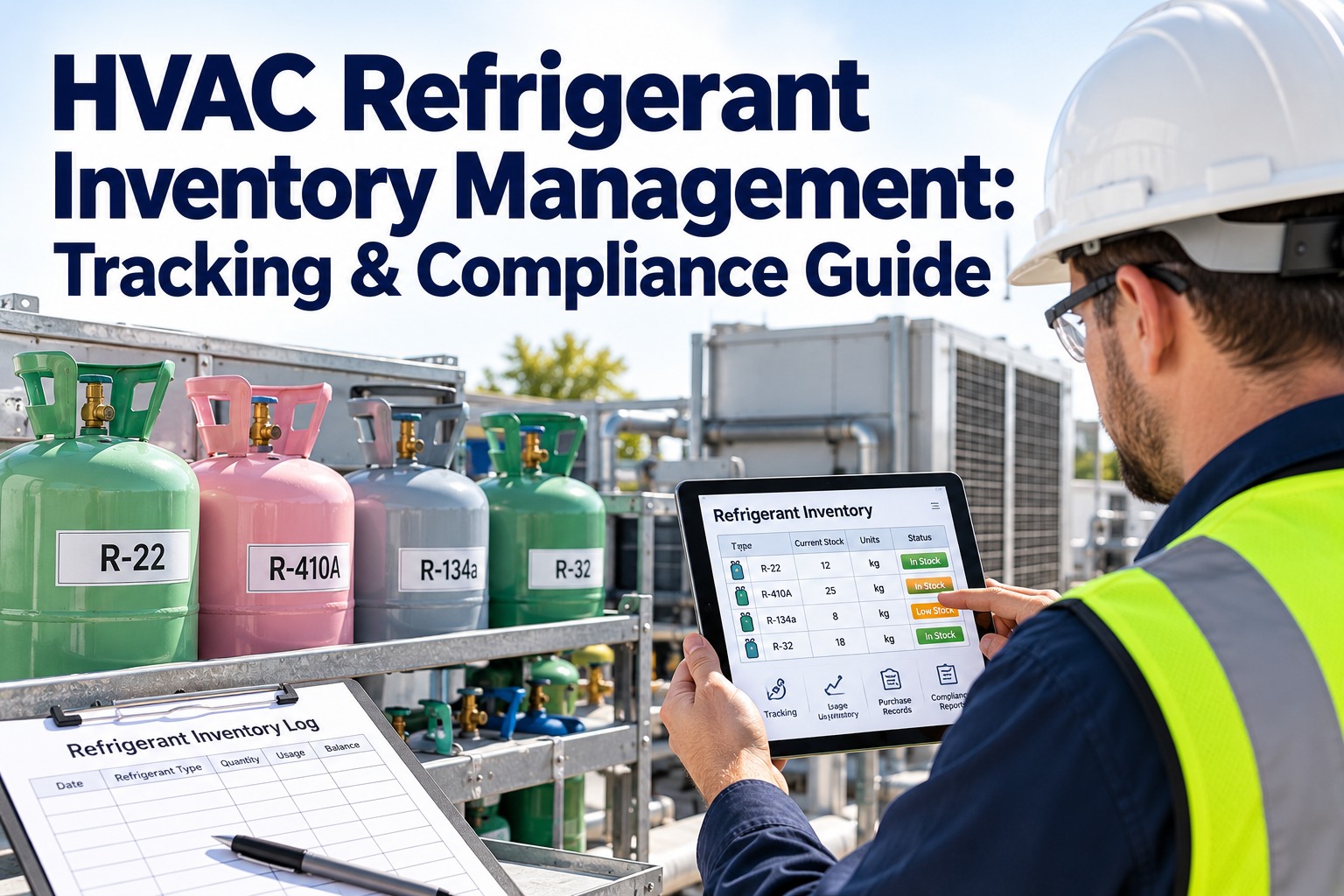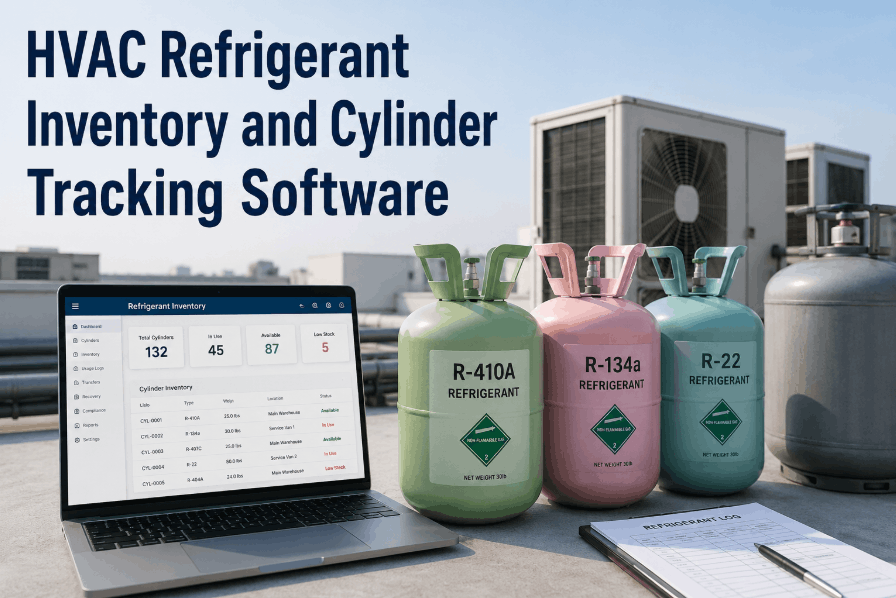
Refrigerant inventory management is no longer just a good practice—it is a financial and regulatory necessity for any facility operating HVAC equipment. With HFC refrigerants like R-410A and R-404A facing steep price hikes due to the AIM Act phase-down, and EPA fines reaching $44,539 per day per violation for improper recordkeeping, tracking every pound from purchase to disposal has become mission-critical. Yet most facilities still rely on spreadsheets, clipboard logs, or fragmented contractor invoices, leaving them exposed to soaring costs, compliance gaps, and operational inefficiencies. Sign Up Free to centralize your refrigerant records, or Book a Demo to see how Oxmaint's inventory module transforms refrigerant tracking from a liability into a competitive advantage.
Track every cylinder, every pound, and every transfer in one auditable system. Connect refrigerant usage to specific HVAC assets and work orders.
Most Facilities Can't Account for 10-25% of Their Annual Refrigerant Spend
Undetected leaks and poor tracking cause a staggering 10-25% annual refrigerant loss rate in systems without active monitoring. At $50–$150 per pound for common blends like R-410A (which has surged 30-60% since 2022), a 500-ton chiller leaking 8% annually burns through over $8,000 per year in raw refrigerant costs alone. For a portfolio of 50 rooftop units, that number skyrockets to $40,000–$80,000 annually in wasted refrigerant. Spreadsheets cannot catch these losses in real-time, nor can they automatically trace a pound of refrigerant from a purchase order to the specific asset where it was charged. Facilities ready to close this gap can Sign Up Free and begin building a complete digital chain-of-custody for every cylinder.
From Purchase to Disposal: The Complete Refrigerant Lifecycle
Effective refrigerant management requires tracking every transaction across six key stages: purchase, warehouse storage, van assignment, field usage, recovery, and disposal. Each stage introduces potential for cost leakage or compliance exposure if undocumented. Facilities using Oxmaint's inventory module connect every stage to a timestamped, attributable record, accessible from the office, the shop, or the service van. Book a Demo to see how lifecycle tracking works across a multi-site HVAC fleet.
Record supplier, quantity, lot number, and cost against a purchase order. Auto-update inventory counts upon goods receipt with barcode scanning.
Assign cylinders to specific storage locations with recorded starting weights. Set safety stock and reorder point alerts to prevent out-of-stock events.
Transfer cylinders to technician vehicles with recorded weight, tech name, and assignment date. Track mobile inventory across your fleet in real time.
Log charge amounts per job with pre/post pressures, asset ID, and work order link. Automatic consumption deduction from assigned vehicle inventory.
Capture recovered pounds by type, source asset, recovery tank ID, and technician EPA certification number. Maintain chain-of-custody for reclaimed refrigerant.
Generate manifests for shipment to EPA-certified reclaimers or destruction facilities. Retain audit-ready documentation for all disposed refrigerant.
The Real Cost of Untracked Refrigerant
Refrigerant is the second-most expensive consumable for HVAC operations after labor, averaging $18,000–$45,000 annually for mid-size contractors. Yet most organizations have no system-level visibility into actual spend. Costs are hidden in bundled service invoices, fragmented across multiple vendor POs, or buried in general HVAC maintenance budgets. A structured tracking approach not only prevents redundant purchases and emergency callouts but also provides the usage data necessary to negotiate better pricing with suppliers. Facilities ready to take control of this cost category can Sign Up Free and gain full visibility into refrigerant spend per asset, per site, and across the entire portfolio.
AIM Act phase-down pressures continue; prices projected to double again before 2029. Untracked waste today costs 2-3× more within five years.
Without real-time visibility into existing stock across vans and warehouses, teams routinely reorder refrigerant already in inventory—burning cash on duplicate purchases.
Systemic loss from poor measurement and undocumented usage. A 10-pound monthly discrepancy at $700/lb costs $84,000 annually.
Reactive leak repairs cost 3-10× more than planned detection and maintenance. Early detection prevents compressor damage and after-hours callout premiums.
A 15% refrigerant charge loss reduces cooling capacity by roughly 20% while increasing compressor runtime and energy consumption.
EPA Section 608 requires leak repair within 30 days and complete chain-of-custody records. Non-compliance carries fines up to $44,539 per day per violation.
EPA Compliance Records: What Your Refrigerant System Must Document
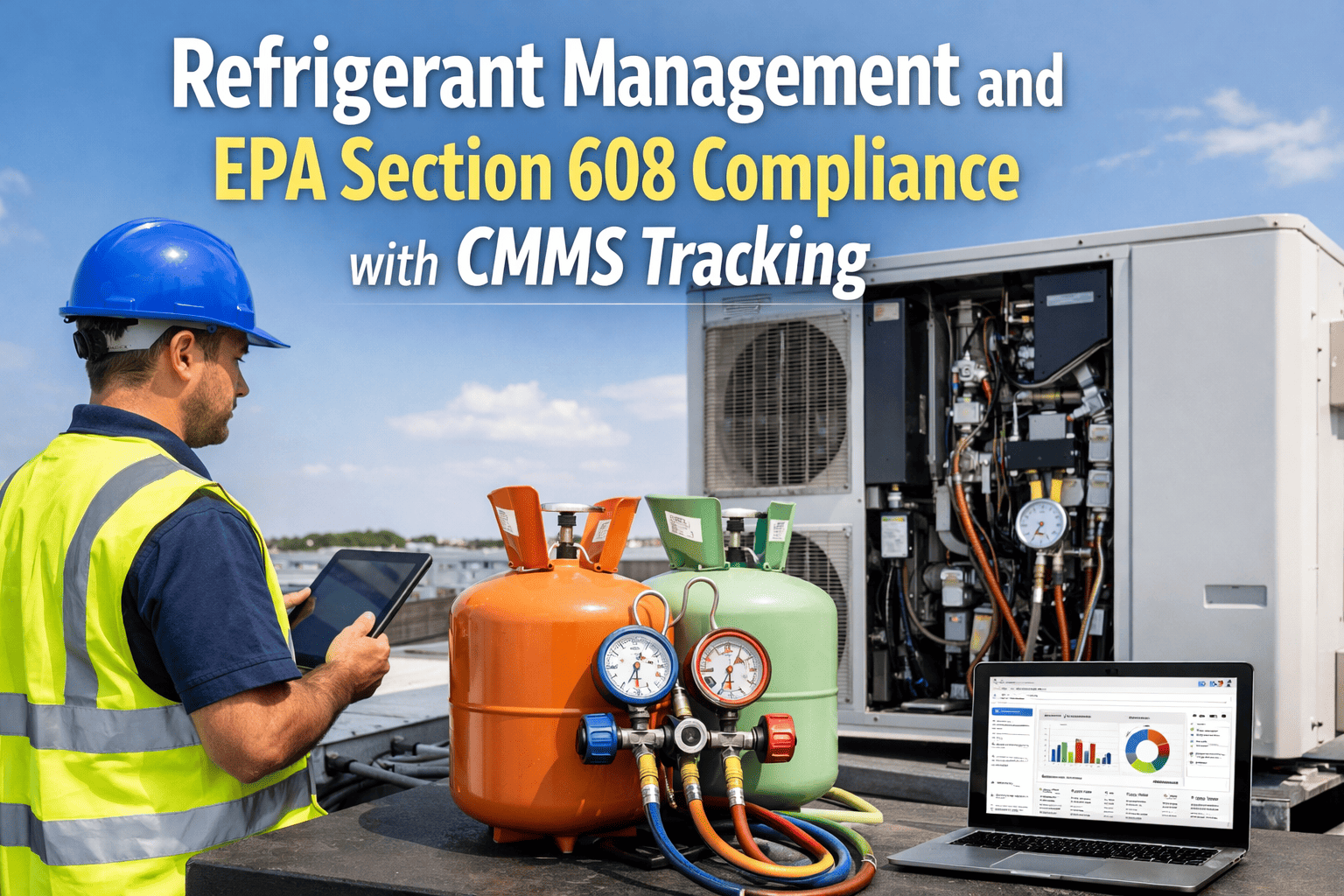
The EPA's regulations under Section 608 of the Clean Air Act require specific records for any facility with systems containing 50+ pounds of refrigerant. Oxmaint's inventory management module automatically captures every required data point, producing audit-ready documentation on demand. Book a Demo to see how Oxmaint structures EPA compliance records across your HVAC asset base.
| Required Record | What EPA Requires | Oxmaint Tracking Method | Retention Period | Priority |
|---|---|---|---|---|
| Leak Inspection Dates | Date of each leak inspection, method used, and technician name | Time-stamped inspection checklist tied to asset record | 3 years | Required |
| Leak Rate Calculation | Annual leak rate calculation within 30 days of discovery | Auto-calculation from charge added vs. system capacity | 3 years | Required |
| Repair Verification | Follow-up leak test confirming repair success within 30 days | Verification checklist with pass/fail and pressure readings | 3 years | Required |
| Refrigerant Added | Type and quantity of refrigerant added to each system | Linked to work order with pre/post charge weights and asset ID | 3 years | Required |
| Recovered Refrigerant | Type and quantity recovered, by whom, and destination | Recovery log with tank ID, EPA cert number, and reclaim manifest | 3 years | Required |
| Technician Certification | EPA Section 608 certification for anyone handling refrigerant | Technician profile with certification type, number, and expiry | 3 years | Required |
| Disposal Documentation | Manifests for refrigerant sent to reclaimer or destruction | Attached disposal records with receiving facility and date | 3 years | Required |
From Spreadsheets to Audit-Ready: How to Deploy Refrigerant Tracking
Moving from fragmented manual tracking to a digital lifecycle system does not require an IT project. Oxmaint's no-code inventory module allows facilities to configure refrigerant types, set cylinder reorder points, and map usage to assets within hours. The deployment path follows three practical phases:
- Catalog all refrigerant types with current inventory counts and storage locations
- Set safety stock and reorder thresholds per cylinder type to prevent shortages
- Link refrigerant consumption to specific HVAC work orders and asset records
- Mobile app for technicians to log charges and transfers from the field in real time
- Auto-generation of purchase orders when stock hits reorder point
- Audit-ready export of chain-of-custody records for EPA inspections
- No ERP integration? Oxmaint SAP integration maps storage locations and batch numbers seamlessly
- Field adoption? Mobile-first app with barcode scanning and offline mode drives technician usage
- Legacy tracking? One-time data import from existing spreadsheets to establish digital baseline
- Multi-site complexity? Portfolio-level dashboards consolidate inventory across all locations
- Budget scrutiny? Single prevented emergency repair or EPA fine typically covers annual subscription
- Audit anxiety? Every transaction carries timestamp, technician ID, and supporting documentation
Track every pound of refrigerant from purchase to disposal. Oxmaint gives you audit-ready records, automated reorder alerts, and full cost visibility — no spreadsheets required.
Refrigerant Tracking — Questions Facility and Maintenance Leaders Ask
EPA Section 608 requires records of leak inspections, leak rates, repair verification dates, refrigerant added by type and quantity, recovered refrigerant amounts, and technician certification. All records must be retained for three years.
Oxmaint's mobile app allows warehouse teams to assign cylinders to specific technicians with recorded starting weights. Field usage automatically deducts from vehicle inventory and links consumption to the work order asset.
Yes. The system calculates annual leak rate for each asset based on refrigerant added vs. system charge, flagging any system exceeding EPA thresholds. Reports are exportable for inspector review.
Oxmaint automatically triggers a purchase requisition or PO to your approved vendor, preventing emergency orders and ensuring you never run out of critical refrigerants during peak season.
Yes. Technicians can log refrigerant charges, recoveries, and transfers without cellular connectivity. All data syncs automatically when back online.
The inventory module distinguishes between virgin and reclaimed refrigerant types, tracking each separately with appropriate cost values and chain-of-custody records for compliance.
Connect your refrigerant cylinders to your maintenance workflow with Oxmaint. Get audit-ready records, real-time cost visibility, and automated reorder alerts — all in one platform.