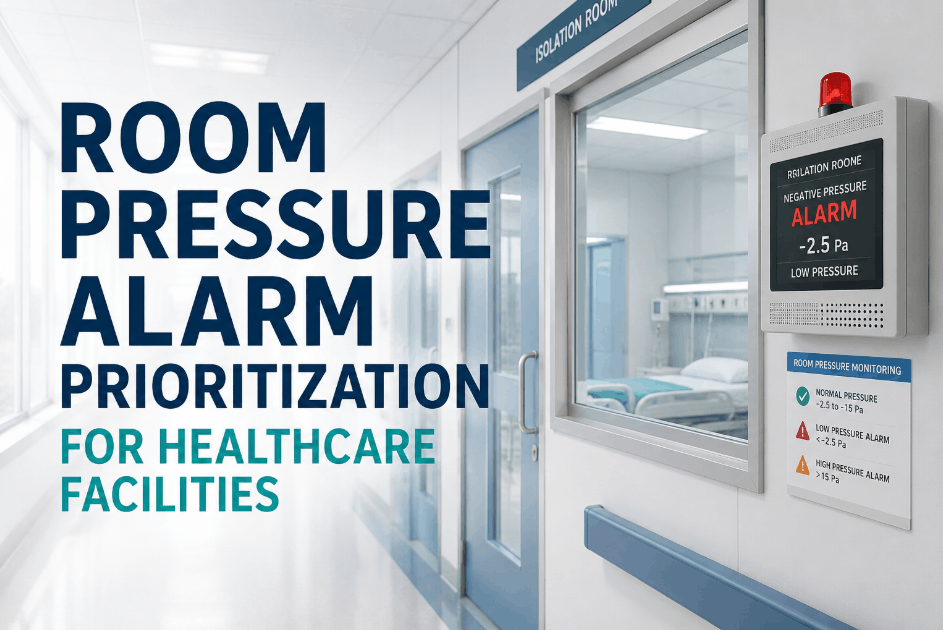
Negative and positive pressure rooms protect patients and staff by keeping contaminated or sterile air exactly where it needs to be, but a pressure alarm by itself doesn't tell a facilities team how urgently to respond. An isolation room drifting out of negative pressure carries a very different clinical risk than a storage anteroom doing the same thing, yet both alarms can look identical on a building automation dashboard. Sign Up Free on Oxmaint to start logging pressure events against the clinical function of each room instead of treating every alarm the same way, or Book a Demo to see how inspection checklists and work order escalation turn alarm response into a risk-ranked process.
Why Room Pressure Alarm Prioritization Is Hard to Get Right
Hospitals can generate dozens of pressure-related alarms in a single shift, and without a way to separate routine drift from a real clinical risk event, every alarm starts to look equally urgent. Book a Demo to see how Oxmaint helps facility and infection control teams rank pressure events instead of reacting to all of them at once.
Core Factors That Determine Alarm Priority
Ranking a pressure alarm by clinical risk takes more than the raw differential reading on a sensor. Sign Up Free on Oxmaint to begin tagging each monitored room with the clinical context that should drive how fast an alarm gets a response.
Room Clinical Function
Whether the space is an airborne infection isolation room, OR, sterile processing area, or low-acuity storage changes how urgent the same pressure reading actually is.
Pressure Differential Magnitude & Duration
A brief dip during door swing is a different event than a sustained drift outside the room's validated range.
Alarm Frequency Pattern
Rooms that alarm repeatedly in short bursts often point to a calibration or door-seal issue rather than a real containment failure.
Adjacent Space Risk
A failing isolation room next to a high-traffic corridor or nursing station raises the exposure risk beyond the room itself.
Time Since Last Validated Reading
A room overdue for its scheduled pressure validation carries more uncertainty when an alarm fires.
Alarm Priority by Room Type
Different room types carry different consequences when pressure control fails, so a single response time doesn't fit a hospital's full room inventory. Book a Demo to see how Oxmaint applies room-specific response priority across a facility's monitored spaces.
| Room Type | Clinical Function | Primary Risk if Pressure Fails | Response Priority | Oxmaint Management Lever |
|---|---|---|---|---|
| Airborne Infection Isolation Room | Negative pressure containment | Airborne pathogen escape to corridor | Immediate | Auto-escalated work order on alarm |
| Operating Room | Positive pressure sterile field | Contamination of sterile field | Immediate | Pre-case pressure validation checklist |
| Sterile Processing / Pharmacy Cleanroom | Positive or negative per process | Compromised sterile or hazardous compounding | Same-shift | Asset-linked inspection history |
| Protective Environment Room | Positive pressure, immunocompromised patients | Patient exposure to airborne contaminants | Immediate | Alarm tagged to patient-risk room class |
| General Patient Room with Anteroom | Buffer pressure zone | Localized drift, low spread risk | Next scheduled round | Routine inspection checklist cadence |
What Unprioritized Pressure Alarms Cost Facility Teams
When every pressure alarm gets the same response time, the rooms that matter most don't actually get attention any faster than the ones that don't. Sign Up Free to connect alarm history to room-level risk before a routine drift turns into a missed real event.
Running a Room Pressure Alarm Prioritization Program with Oxmaint
Turning pressure alarms into a risk-ranked workflow takes a consistent way to tag rooms, escalate failures, and document the response. Book a Demo to walk through how Oxmaint structures this across a hospital's full room inventory.
Tag Every Monitored Room by Clinical Function
Classify isolation rooms, ORs, cleanrooms, and general spaces in Oxmaint so alarm priority reflects real clinical risk.
Set Escalation Rules for Sustained Pressure Failures
Configure work order escalation for alarms that exceed a validated duration, not just a single threshold crossing.
Auto-Generate Work Orders From Failed Checks
Convert overdue validations or failed pressure rounds directly into tracked, assigned work orders.
Log Response Time Against Room Risk Class
Track how quickly each priority class of alarm gets addressed, by room and by shift.
Maintain an Audit Trail for Survey Readiness
Keep every pressure event, response, and corrective action documented in Oxmaint for Joint Commission and CMS review.
Frequently Asked Questions: Room Pressure Alarm Prioritization
What is room pressure alarm prioritization?
It's the practice of ranking pressure alarms by the clinical risk of the room involved, so isolation rooms and ORs get faster response than low-acuity spaces.
Why do hospitals experience alarm fatigue with pressure monitoring?
High volumes of short, nuisance-level pressure events can desensitize staff, making it harder to catch the rare alarm signaling a real containment failure.
How often should pressure rooms be validated?
High-risk rooms like isolation rooms and ORs typically need more frequent validation than general patient rooms with lower clinical risk.
How does Oxmaint support pressure alarm compliance documentation?
Oxmaint logs every pressure check, alarm, and corrective work order against the relevant room asset, building a traceable record for compliance reviews.
Can pressure differential readings alone determine alarm urgency?
Differential readings matter, but room clinical function, alarm duration, and adjacent space risk should be reviewed together to set true priority.