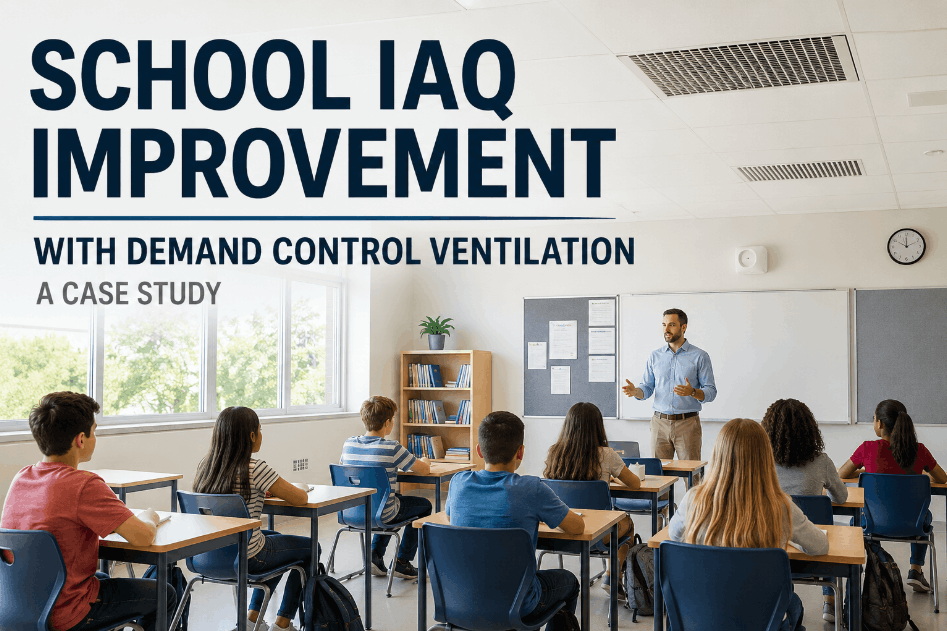
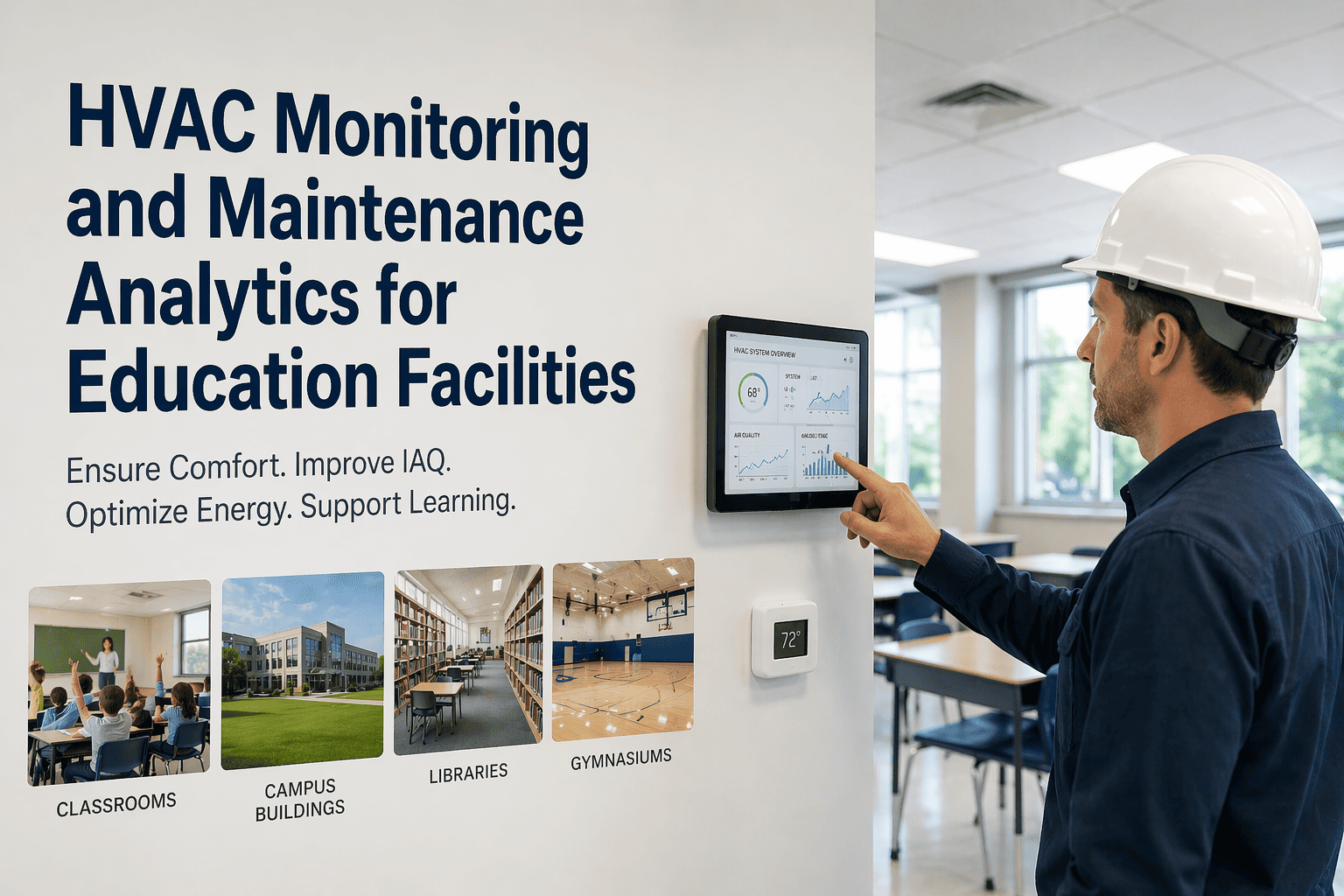
Schools present one of the most variable occupancy profiles in commercial building operations — classrooms cycling from empty to full capacity across short intervals, common areas fluctuating between passing periods and extended events, and building-wide systems that rarely adapt fast enough to match actual occupancy demand. One mid-size K-12 facility running a mixed-age campus watched indoor air quality complaints increase across three consecutive academic semesters without a corresponding change in enrollment or HVAC equipment condition. Root cause analysis traced the problem not to failing ventilation hardware but to demand control ventilation (DCV) parameters that had drifted from original design intent — CO2 sensor response thresholds were miscalibrated, airflow balancing had not been adjusted after classroom reconfigurations, and no structured inspection process existed to catch occupancy-driven ventilation gaps before they affected student comfort or air quality readings. Sign Up Free to see how Oxmaint structures facility inspection and compliance workflows for education environments — or Book a Demo with a facilities compliance specialist.
IAQ Management · DCV Optimization · Ventilation Compliance
Connect Ventilation Performance to Verifiable Occupant Outcomes
Airflow verification checklists, DCV parameter audits, occupancy-response inspection routes, and compliance-ready records — Oxmaint helps school facility teams close the gap between ventilation design and actual IAQ performance.
Facility Profile
The Operation: Multi-Building Campus, Variable Occupancy, No Structured Ventilation Verification Loop
Site Profile
Facility TypeK-12 school campus — classrooms, gymnasium, cafeteria, administrative areas
Zones55+ independently ventilated zones across 4 buildings
Team5 facilities staff, 2 HVAC technicians, 1 facilities director
ComplianceASHRAE 62.1, state IAQ standards, district health and safety requirements
Prior systemManual air quality logs, periodic vendor inspections, work order backlog via email
Oxmaint featuresFacility Inspections · DCV Audit Checklists · Airflow Verification · Work Orders · Compliance Audit Trail
Baseline Pressure Points
46%
Of CO2 sensor calibration records more than 12 months out of date — DCV response unreliable
3.1×
Higher IAQ complaint frequency in zones with no structured airflow balancing verification
34%
Of ventilation inspection tasks completed without documented evidence — compliance records incomplete
Root Cause Analysis
Why IAQ Was Declining Despite Functional HVAC Equipment
A structured review of 90 days of IAQ complaint logs, ventilation maintenance records, and DCV system parameters identified four operational gaps allowing air quality to degrade faster than any equipment replacement could address. The campus did not need new air handling units. It needed structured verification of DCV parameters, sensor calibration discipline, and an inspection process that connected ventilation system performance to real occupancy conditions. Sign Up Free to map your own IAQ performance gaps — or Book a Demo to see how Oxmaint's inspection workflows apply to education facility compliance.
42%
CO2 Sensor Calibration Drift
DCV systems depended on CO2 sensor readings to trigger ventilation adjustments, but sensor calibration had lapsed across multiple zones. Miscalibrated sensors allowed CO2 levels to exceed comfort thresholds before ventilation response was triggered.
28%
Airflow Imbalance After Space Reconfigurations
Classroom layout changes and partition modifications over two academic years had altered airflow distribution without corresponding balancing adjustments — creating over-ventilated and under-ventilated zones within the same building.
19%
Occupancy Schedule Misalignment
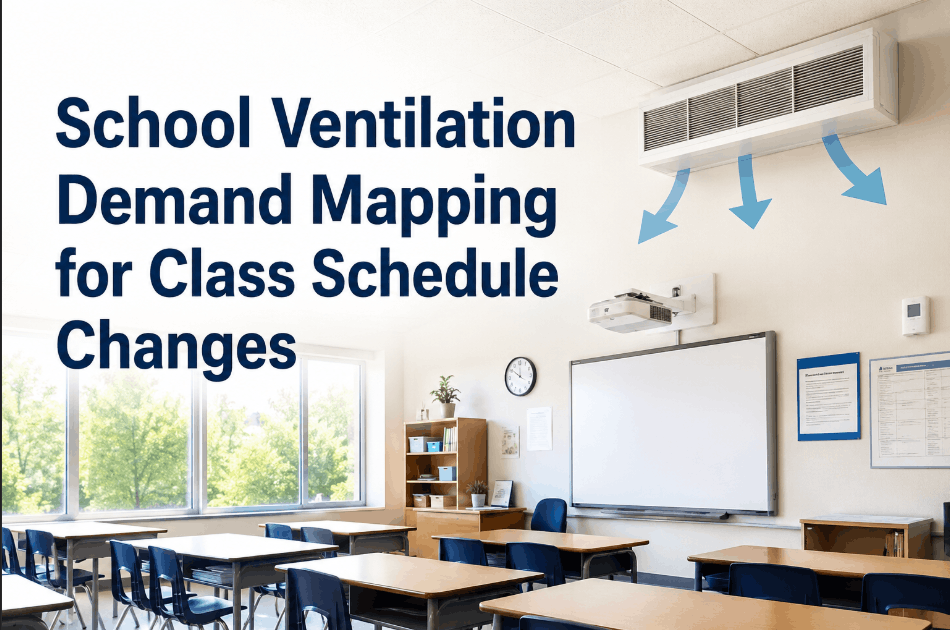
DCV occupancy schedules had not been updated to reflect current class timetables, after-school programs, or seasonal gymnasium use patterns — resulting in ventilation response that lagged actual occupancy changes by significant intervals.
11%
No Structured IAQ Verification Process
Facilities staff had no defined inspection route or checklist process to verify DCV system performance against occupancy conditions. IAQ issues were identified reactively through occupant complaints rather than proactive verification.
The Solution
How Oxmaint Replaced Reactive IAQ Management with Structured Ventilation Verification
The campus deployed Oxmaint without modifying existing HVAC controls or replacing ventilation hardware. The platform structured the facilities team's IAQ inspection and verification activities — replacing reactive complaint response with defined inspection routes, DCV parameter audit checklists, and work order workflows that closed the loop between identified ventilation gaps and confirmed corrections. Facilities directors gained a real-time compliance view across all zones each school day. Book a Demo to see how inspection workflows are configured for school IAQ environments — or Sign Up Free to explore the platform directly.
01
DCV Parameter Audit Checklists at Zone Level
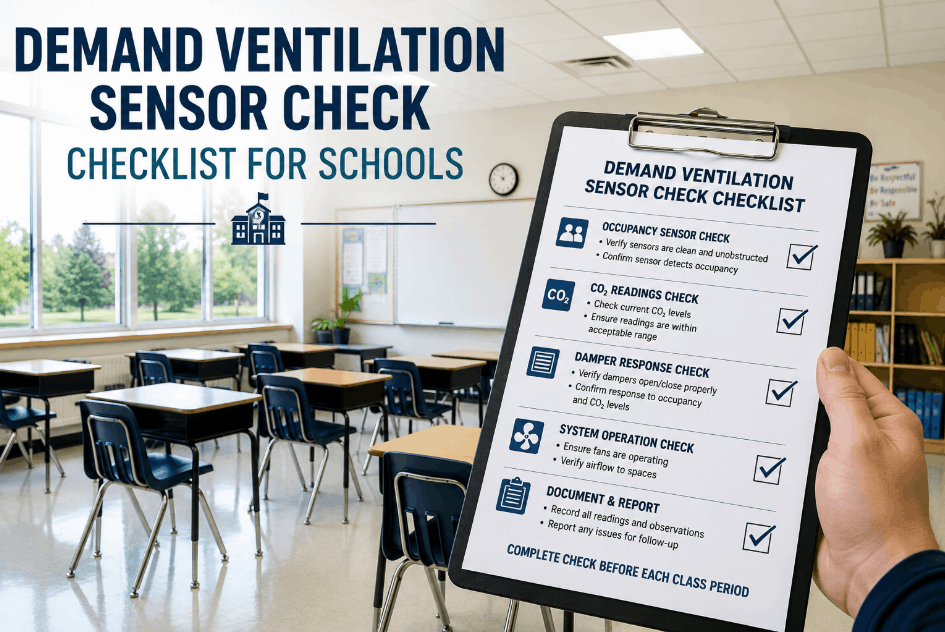
Every ventilated zone was mapped to a structured digital checklist covering CO2 sensor calibration status, DCV setpoint verification, and occupancy schedule alignment. Facilities staff complete zone audits on a mobile device — with mandatory fields and photo capture for sensor condition documentation. Calibration gaps trigger automatic work orders.
02
Airflow Balancing Verification Routes
Structured inspection routes were configured across all buildings — requiring HVAC technicians to verify airflow balance at defined points following any space reconfiguration or occupancy pattern change. Each verification step requires a timestamped digital sign-off with measurement evidence before the route is marked complete.
03
Occupancy Schedule Alignment Review Cycle
A structured quarterly occupancy schedule audit was configured in Oxmaint — requiring facilities staff to verify DCV operating parameters against current class timetables and facility use patterns. Schedule misalignments are flagged and linked to correction work orders with target resolution tracking.
04
Continuous IAQ Compliance Audit Trail
Every inspection event, sensor calibration record, airflow verification, and deviation correction is stored in a searchable compliance audit trail. Facilities directors access real-time IAQ compliance status across all zones — enabling faster response to emerging ventilation gaps and supporting district health and safety reporting requirements.
Results at 90 Days
What the Numbers Looked Like Three Months After Deployment
62%
Reduction in IAQ complaints across campus — sustained across all building zones
100%
CO2 sensor calibration compliance — all zones verified and documented within the first 45 days
47%
Reduction in ventilation-related work order backlog — structured routes replaced complaint-driven response
91%
DCV occupancy schedule alignment — updated and verified across all active zone configurations
+58%
IAQ inspection completion rate — structured routes replaced unscheduled spot checks
3.8×
Faster compliance record retrieval for district health and safety audits
| Metric |
Before Oxmaint |
90 Days After |
Change |
| IAQ complaints per semester |
74 |
28 |
-62% |
| CO2 sensor calibration compliance |
54% current |
100% current |
Full compliance |
| DCV schedule alignment |
~61% aligned |
91% aligned |
+49% |
| Open ventilation work orders |
31 avg backlog |
16 avg backlog |
-47% |
| IAQ inspection completion |
49% |
78% |
+58% |
| Compliance record retrieval time |
3.4 hrs avg |
0.9 hrs avg |
-74% |
Key Business Impact
What Closing the IAQ Verification Gap Actually Delivers for Schools
"The indoor air quality problems I see most often in school facilities aren't caused by failed equipment — they're caused by a verification gap. DCV systems are designed carefully at installation and then left to drift as sensor calibrations lapse, space configurations change, and occupancy schedules evolve without corresponding system updates. The result is a ventilation system that's technically operational but practically misaligned with actual student occupancy. What changes IAQ outcomes isn't more sophisticated controls — it's building a structured inspection and verification discipline around the systems you already have. When facilities teams are running defined inspection routes, auditing DCV parameters on a schedule, and closing every deviation with a documented work order, IAQ drift stops being a reactive complaint management problem and becomes a controlled, preventable operational variable."
Dr. Ines Walcott, School Facilities Compliance Advisor
22 years K-12 and higher education facilities management · Former director of facilities, large urban school district · Specialist in HVAC controls, IAQ compliance, and ASHRAE standards implementation
IAQ Compliance · DCV Audits · Ventilation Verification
Replace Reactive IAQ Management with Evidence-Backed Ventilation Verification
Zone-level DCV audit checklists, CO2 sensor calibration tracking, airflow balance verification routes, and real-time compliance records — Oxmaint gives school facility teams the structure to keep IAQ under control every school day.
FAQs
Frequently Asked Questions
How does Oxmaint help school facilities teams improve indoor air quality through DCV management?
Oxmaint structures DCV parameter audits as recurring digital checklists — covering sensor calibration, occupancy schedule alignment, and airflow balance verification. Deviations trigger work orders with tracked resolution timelines before IAQ issues affect occupants.
Can Oxmaint track CO2 sensor calibration compliance across multiple school buildings?
Yes. Sensor calibration tasks are mapped to structured checklists with due dates, evidence capture requirements, and automatic work order generation when calibration is overdue or out of specification.
Does Oxmaint support ASHRAE 62.1 or state IAQ compliance documentation for school districts?
Every inspection event, calibration record, and corrective action is stored in a searchable digital audit trail — enabling facilities teams to retrieve compliance documentation for district audits or regulatory reviews in minutes rather than hours.
How does Oxmaint handle airflow balancing verification after classroom reconfigurations?
Structured inspection routes include airflow balance checkpoints that can be triggered by space change events. Each verification step requires documented confirmation before the route closes — ensuring reconfiguration impacts are captured and corrected.
How quickly can a school facilities team deploy Oxmaint's IAQ inspection workflows?
Most campuses configure initial DCV audit checklists and inspection routes within the first week. Measurable improvements in complaint frequency and calibration compliance typically appear within the first 30 days of structured use.
Every Verified Zone Is Student Air Quality You Protect
Give Your Facilities Team the Verification Structure to Stop IAQ Drift
Oxmaint brings DCV audit checklists, sensor calibration tracking, airflow balance verification, and continuous IAQ compliance records to school facility teams — with no HVAC replacement or additional headcount required.