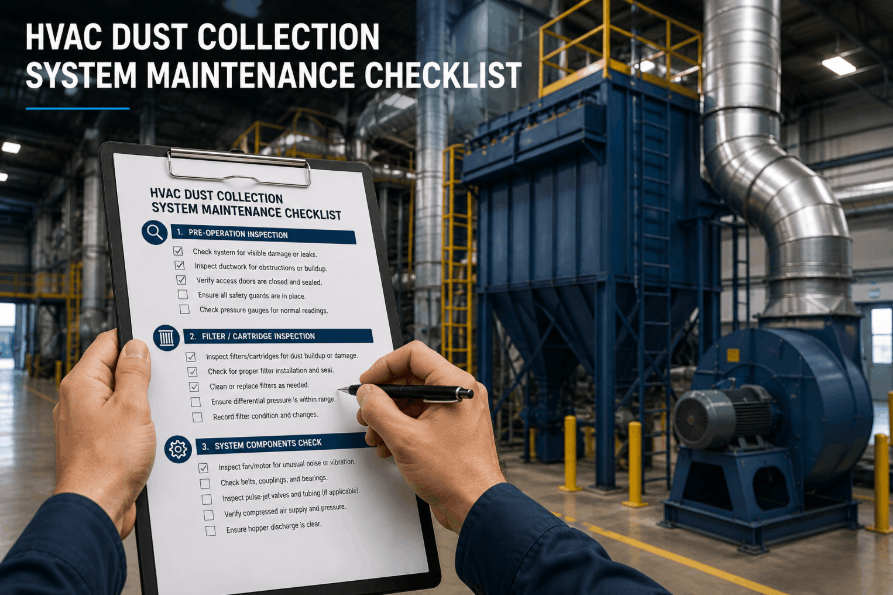
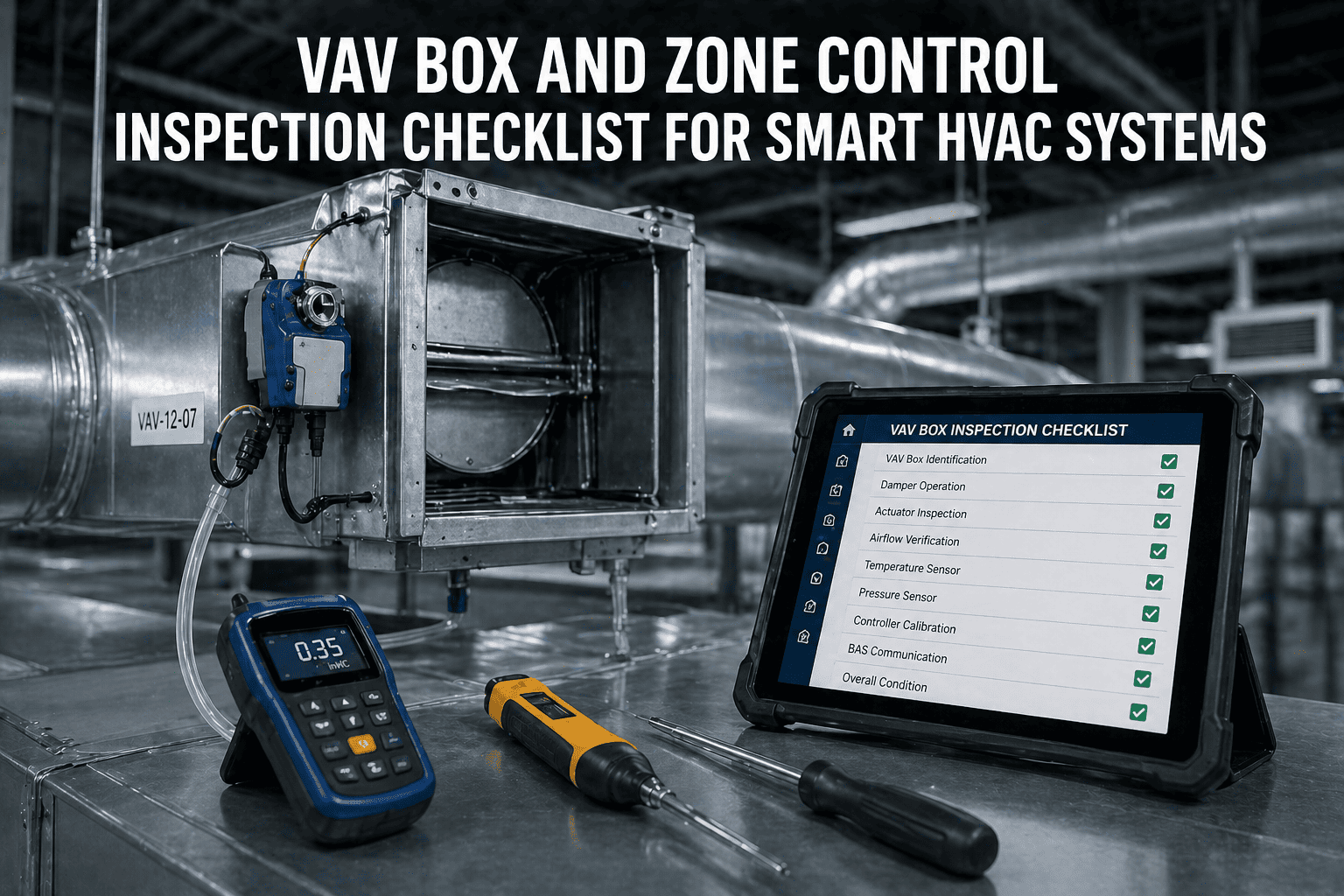
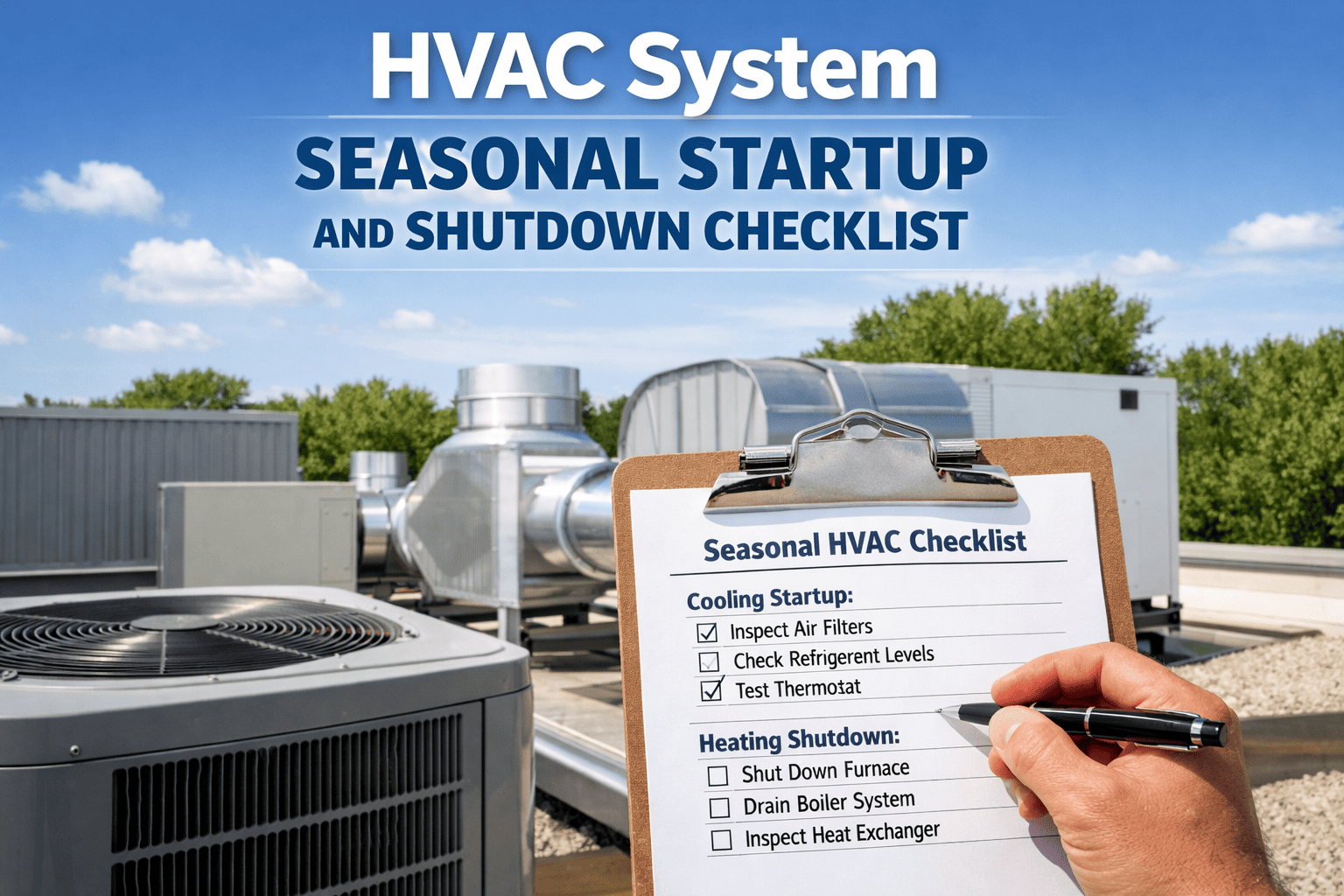
Seasonal HVAC Maintenance Checklist: Spring, Summer, Fall & Winter Guide
By Liam Neeson on March 27, 2026
Most HVAC systems don't fail overnight. They fail because the right maintenance wasn't done at the right time of year. This checklist gives facilities managers and building operators the exact tasks, timing, and acceptance criteria to keep systems running at peak efficiency across all four seasons — with zero guesswork. Sign up free to run this checklist digitally, or book a demo to see OxMaint configured for your building.
reduction in HVAC system failures achievable through structured preventive maintenance programs
$50B
lost annually by U.S. companies due to unplanned downtime, with HVAC failures among the top causes
20%
more energy consumed by HVAC systems that skip seasonal maintenance versus properly serviced units
545%
return on investment documented from strategic HVAC preventive maintenance versus reactive repair
How to Use This Checklist
1Run each season's checklist 2 to 4 weeks before the season starts — not after temperatures have already shifted.
2Record actual readings against acceptance criteria — not just pass/fail. Trend data is what prevents failures.
3Photograph every flagged item before and after corrective action. Photo records protect you during audits.
4Assign every action item a responsible technician and a due date before closing the inspection record.
Severity Classification
Critical Immediate action required before system operation
Action Schedule within current maintenance window
Monitor Log, increase frequency, escalate if trend worsens
Pass Within acceptable parameters — continue programme
Spring
Summer
Fall
Winter
Run each checklist 2–4 weeks before season start for maximum lead time on repairs
Spring
Spring Startup & AC Readiness
Mar – MayCooling System ActivationFilter & Coil Priority
Air Handling & Filtration
Replace or clean all air filters across the system — dirty filters reduce airflow, strain the blower motor, and directly raise energy consumption by 5 to 15%. Verify MERV rating matches specification.Critical
Inspect and clean evaporator coil — a dirty coil reduces cooling capacity and forces the compressor to work harder. Acceptance: no visible fouling, fin surface clean and unobstructed.Action
Check condensate drain lines for blockages, algae growth, or standing water — blocked drains cause water overflow that damages ceilings, triggers shutdowns, and creates mould risk.Action
Inspect all ductwork for visible leaks, disconnections, or compromised insulation at joints and flex connections — duct leaks waste 20 to 30% of conditioned air before it reaches occupied zones.Monitor
Outdoor Unit & Refrigerant
Remove winter debris from around outdoor condenser unit — clear a 24-inch perimeter of leaves, dirt, and vegetation. Blocked airflow reduces condenser efficiency and risks compressor overheating.Critical
Clean condenser coil fins using low-pressure rinse — acceptance: fins straight, no bent or collapsed rows, no dirt cake. Fin combing required if more than 10% of fin surface is damaged.Action
Check refrigerant charge — verify system operating pressures against manufacturer spec at rated conditions. Undercharged systems lose up to 20% efficiency per 10% refrigerant deficit. Requires certified technician.Critical
Inspect refrigerant lines for oil staining or frost at fittings — visible oil traces indicate refrigerant leakage at joints. Flag for leak detection test before first cooling season startup.Critical
Electrical & Controls
Inspect all electrical connections for corrosion, looseness, or heat discolouration at contactors and terminals — approximately 58% of HVAC failures are linked to electrical faults that visual inspection can identify.Action
Test and calibrate thermostats and BAS setpoints for cooling season schedules — verify occupied/unoccupied switchover times match current building occupancy patterns. Check sensor calibration against reference thermometer.Monitor
Lubricate all fan bearings, motor shafts, and belt-driven components per manufacturer specification — dry bearings are a leading cause of fan motor failure during first high-load summer operation.Action
Summer
Summer Peak Load Management
Jun – AugMaximum Cooling DemandCompressor & Airflow Focus
In-Season Monitoring
Inspect and replace filters monthly during peak cooling months — high-occupancy and high-humidity conditions accelerate filter loading. Systems running at partial airflow consume 10 to 25% more energy.Critical
Monitor compressor amperage draw against rated full-load amps — amperage above nameplate by more than 10% indicates refrigerant overcharge, restricted airflow, or failing compressor windings.Action
Check condensate drain pans for standing water and algae weekly in high-humidity zones — standing water over 24 hours triggers shutdown switches and accelerates drain pan corrosion.Action
Inspect pipe insulation on refrigerant suction lines for sweating, damage, or gaps — compromised suction line insulation causes energy loss and condensation drip that damages surrounding structure.Monitor
Cooling Tower & Chiller (if applicable)
Test cooling tower water chemistry weekly — pH target 7.0 to 8.0, conductivity within range, biocide levels maintained. Legionella risk management requires documented water treatment logs per regulatory requirements.Critical
Inspect chiller evaporator and condenser approach temperatures monthly — rising approach temperatures indicate fouled tubes that reduce chiller efficiency by 1 to 2% per degree of approach increase.Action
Check cooling tower fill media and drift eliminators for scaling, biological growth, or physical damage — compromised fill reduces tower thermal performance and increases water carryover.Monitor
Ventilation & IAQ
Verify outdoor air economiser dampers are functioning correctly — stuck open dampers in summer add significant latent load; stuck closed dampers compromise indoor air quality and ASHRAE 62.1 compliance.Action
Monitor supply air temperature at diffusers across occupied zones — temperature variance above 3 degrees F from design setpoint indicates zoning imbalance, duct leakage, or damper control failure.Monitor
Fall
Fall Heating Preparation & Switchover
Sep – NovHeating System ReadinessSafety Inspection Priority
Furnace & Boiler Inspection
Inspect heat exchanger for cracks, corrosion, or pitting — a cracked heat exchanger allows combustion gases including carbon monoxide to enter the airstream. This is a life-safety critical item requiring professional inspection and pressure testing.Critical
Clean and inspect burners, flame sensors, and ignition systems — dirty burners cause incomplete combustion, carbon build-up, and increased fuel consumption. Verify igniter resistance against manufacturer specification.Critical
Test all safety controls including limit switches, pressure relief valves, and gas shutoffs — verify each trips at the correct setpoint under simulated fault conditions before first heating season use.Critical
Inspect flue and venting system for blockages, corrosion, or improper pitch — birds, leaves, and debris commonly block flue terminals over summer. Blocked flues cause CO2 and CO accumulation inside the building.Critical
System Transition & Controls
Switch BAS and thermostat schedules from cooling to heating mode — update setpoints, deadbands, and changeover temperatures to reflect fall/winter occupancy patterns. Document all setpoint changes with date and technician ID.Action
Test hot water heating system — bleed air from hydronic systems, verify expansion tank pre-charge pressure, check circulating pump operation and seal condition before heating demand begins.Action
Inspect pipe insulation on heating supply lines in unconditioned spaces — damaged insulation on hot water or steam pipes increases heat loss and raises operating costs through uncontrolled distribution losses.Monitor
AC Winterisation
Shut down cooling towers following documented winterisation procedure — drain basin, clean fill, treat with biocide, and lock out to prevent freeze damage. Legionella risk management applies to stored systems.Action
Cover or winterise outdoor condenser units in freeze-prone locations — protect coil fins and fan blades from ice accumulation and physical debris impact during winter storms.Monitor
Dec – FebFreeze Risk ManagementHeating Reliability
Freeze Protection
Verify freeze stats and low-limit controls on air handling units are set at or above 38 degrees F — freeze protection controls are the last defence against coil freeze-up that can cause catastrophic coil rupture and water damage.Critical
Inspect glycol concentration in chilled water and heating water loops serving outdoor-exposed coils — verify freeze protection to at least 10 degrees F below local design winter temperature. Test with refractometer, not hydrometer.Critical
Trace heat circuits on exposed pipe runs — verify self-regulating heat tape is energised and functioning along any water line in unconditioned spaces subject to freeze risk during extreme cold events.Critical
Heating System In-Season Checks
Monitor boiler flue gas temperature and combustion efficiency monthly during peak heating season — rising flue temperature indicates scaling or fouling. Target combustion efficiency above 85% on natural gas systems.Action
Inspect and replace filters monthly during high heating demand periods — heating cycles with restricted airflow over-stress heat exchangers and reduce heat transfer efficiency across all distribution zones.Action
Test CO detectors adjacent to combustion equipment — verify sensor calibration and alarm function quarterly. Replace sensors older than 5 years regardless of status light indication. This is a life-safety requirement.Critical
Emergency Preparedness
Verify emergency heating backup capability for mission-critical spaces — document which portable heaters, zones, or fuel sources can be activated if primary heating fails during extreme cold weather events.Action
Confirm after-hours emergency call protocol is current — verify technician contact list, escalation sequence, and access key locations are updated and accessible to on-call facilities staff without office system access.Monitor
Inspect roof drains and HVAC roof penetration flashings for ice dam formation — ice damming around RTU curbs and drain sumps allows water infiltration that damages interior structure and HVAC equipment.Monitor
Why Seasonal Scheduling Matters: The Cost of Skipping
3x
Higher cost of reactive emergency repair vs scheduled preventive maintenance
15yr
Typical lifespan of a maintained system vs 10–12 years without structured maintenance
40%
Energy savings achievable by well-maintained HVAC systems vs neglected equipment
70%
Reduction in system breakdowns documented through predictive maintenance programmes
Seasonal Inspection Sign-Off Record
Inspector Name
Inspection Date
Season / Quarter
Building / Asset ID
Total Items Flagged
Supervisor Sign-Off
Critical Findings Summary
System Authorisation Decision
OxMaint’s preventive maintenance module turns this checklist into a live scheduled programme — seasonal work orders auto-generated, assigned to technicians, and tracked to completion. Every finding is logged with photo documentation and linked to the asset record.
A paper seasonal checklist tells you what to check. OxMaint tells you when, who did it, what was found, and what was done about it — with a complete audit trail linked to every asset in your building portfolio. Sign up free and load your first seasonal checklist in minutes, or book a demo to see it configured for your asset list.
SCH
Automated Seasonal Scheduling
All four seasonal checklists are pre-loaded as recurring work order templates. OxMaint auto-generates the work orders at the configured lead time before each season — no manual scheduling, no forgotten tasks.
MOB
Mobile-First Field Execution
Technicians complete checklist items on mobile at the equipment, capture photos at each flagged item, and record actual readings against acceptance criteria — all offline-capable with automatic sync on reconnection.
WO
Automatic Work Order Generation
Every Critical or Action item automatically generates a linked corrective work order with the finding, photo, asset location, and priority pre-populated. Nothing falls through the cracks between inspection and repair.
TRD
Condition Trend Analysis
Readings taken during seasonal inspections — refrigerant pressures, filter differential, approach temperatures — are plotted automatically against prior seasons. Deterioration trends surface before they become failures.
AUD
Immutable Audit Record
Every seasonal inspection produces a timestamped, inspector-attributed record that cannot be modified after sign-off. Exportable for regulatory compliance, insurance, and engineering review without manual preparation.
RPT
Portfolio-Level Reporting
Facility managers see seasonal completion rates, open action items, and critical findings across all buildings in a single dashboard — not buried in spreadsheets or separate service reports per site.
Run This Checklist Digitally Across Your Entire Building Portfolio
OxMaint deploys seasonal HVAC inspection forms with automated scheduling, mobile completion, photo documentation, and automatic corrective work orders — configured to your asset list and maintenance programme.
QHow far in advance should seasonal HVAC maintenance be scheduled?
Seasonal inspections should be completed 2 to 4 weeks before the season transition — not after temperatures have already shifted and the system is already under demand. For spring AC startup, this means inspections in late February or early March. For fall heating preparation, late August or early September. This lead time provides enough runway to order parts, schedule corrective repairs, and obtain engineering sign-off on critical findings before the system is needed at full capacity.
QHow often should HVAC filters be replaced for commercial systems?
Filter replacement frequency depends on system type, occupancy level, and local air quality. As a baseline: primary pre-filters every 1 to 3 months, final filters every 3 to 6 months. High-occupancy buildings, healthcare facilities, and buildings near construction sites require more frequent changes. The practical trigger is differential pressure across the filter bank exceeding the manufacturer's maximum — track this on the inspection record rather than using calendar intervals alone. Filter replacement is the single highest-ROI maintenance task on this checklist: a 5 to 15% reduction in energy consumption from filter changes alone is consistently documented.
QWhich seasonal inspection is the most critical — spring or fall?
Fall is generally considered the higher-stakes seasonal inspection for commercial buildings. Heating system failures during winter carry life-safety implications — particularly for healthcare, education, and residential buildings — that cooling system failures in summer typically do not. Fall inspection also requires the most comprehensive safety verification: heat exchanger inspection, combustion analysis, flue integrity, CO detector calibration, and freeze protection checks. Spring inspection is critical for energy efficiency and compressor protection, but the risk profile of a missed spring inspection is generally lower than a missed fall inspection.
QCan OxMaint manage seasonal HVAC maintenance across multiple buildings?
Yes. OxMaint's multi-site architecture is designed specifically for facility portfolios managing dozens or hundreds of assets across multiple buildings. Seasonal inspection templates are configured once and deployed across all sites — with site-specific equipment lists, assigned technicians, and local regulatory requirements. Portfolio-level dashboards show seasonal completion rates, open corrective work orders, and critical findings across all buildings in real time. Book a demo to see the multi-site configuration for your portfolio.
QWhat is the ROI of structured HVAC seasonal maintenance?
Industry research consistently documents 545% ROI from structured preventive maintenance versus reactive repair. The primary components are: reduced emergency repair costs (emergency labour runs 3 to 5 times the cost of scheduled service), extended equipment life (15 to 20 years maintained versus 10 to 12 years unmaintained), and energy savings of 5 to 20% annually from properly tuned systems. For a commercial facility spending $100,000 per year on reactive HVAC repairs, shifting to a structured preventive programme typically reduces that spend to $55,000 to $70,000 within two years while also extending asset useful life.