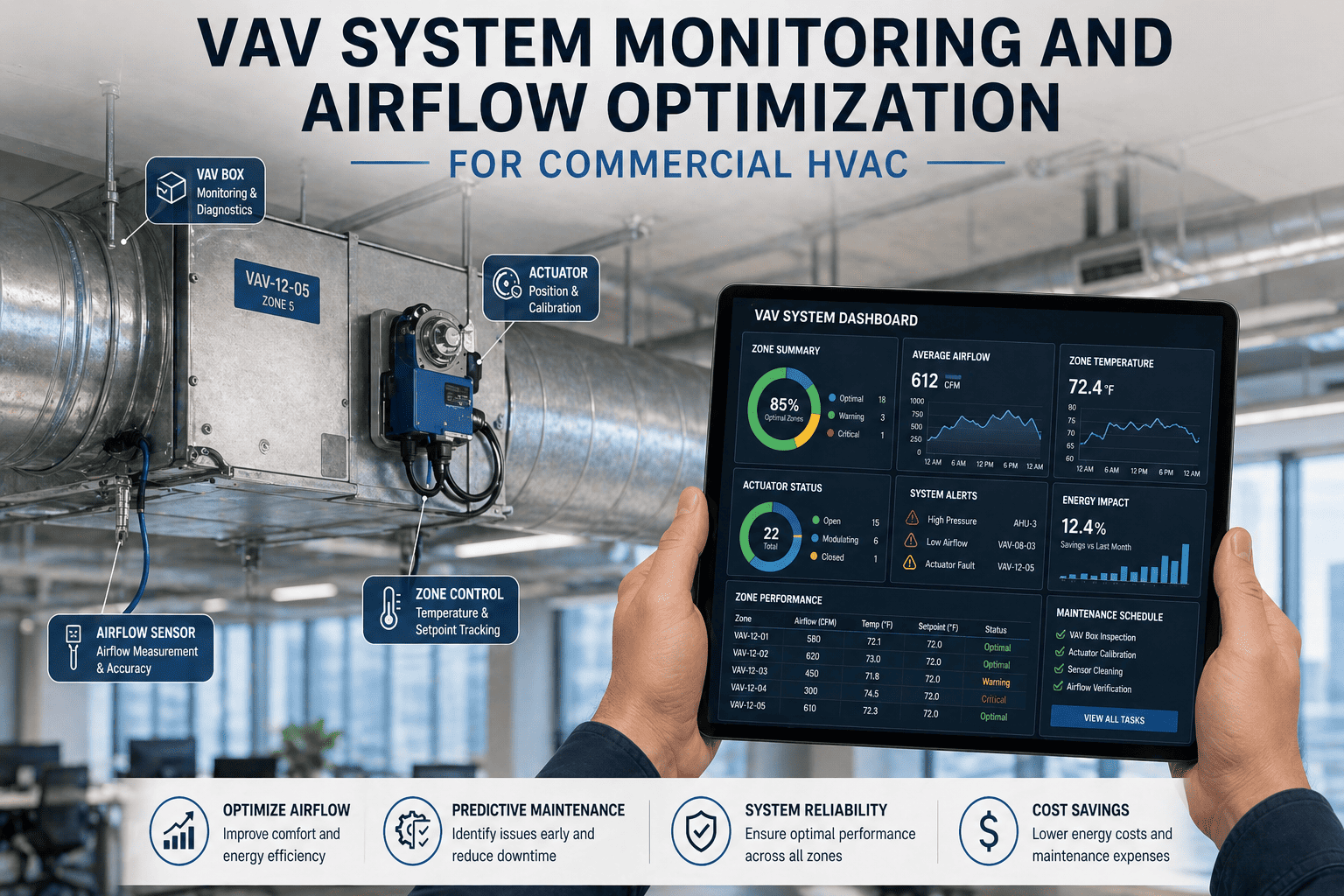
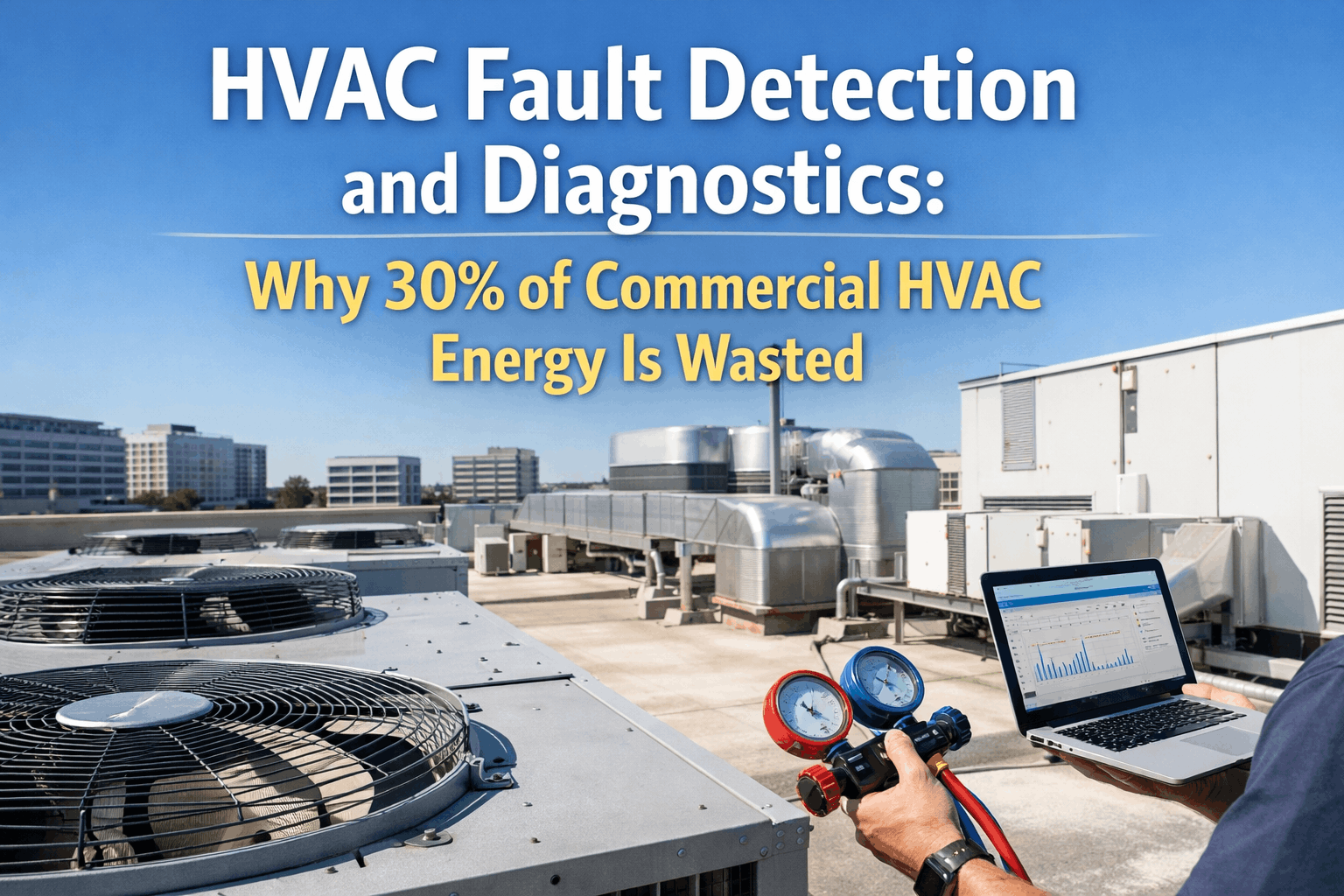
Your rooftop unit has been running almost non-stop for two weeks. Energy bills climbed 18% last month with no change in occupancy or weather patterns. The second-floor conference rooms are five degrees warmer than the thermostat setting, and last Tuesday your facilities team heard a metallic grinding from AHU-3 that went away on its own. You moved on because the system kept running. That was a mistake. Every one of those signals points to the same conclusion: your HVAC system is heading toward a major failure. The U.S. Department of Energy estimates that poor HVAC maintenance drives energy consumption up 5-20% annually. Across U.S. commercial facilities, unplanned HVAC downtime contributes to roughly $50 billion in annual losses. The warning signs are almost always there—months before the emergency call. Recognizing them is the difference between a scheduled $400 service visit and a $15,000 crisis.
The Performance and Noise Warnings You Shouldn't Ignore
When your HVAC system can't hold temperature—rooms that used to stay at 72°F now drift to 76°F or 77°F under the same load—something mechanical is deteriorating. Dirty evaporator coils, low refrigerant, failing compressor valves, or degraded fan motors all reduce heating and cooling capacity gradually. A 2-3°F thermostat inaccuracy in a large commercial building can spike energy costs by up to 10%, and comfort complaints follow quickly. The system racks up unnecessary wear trying to hit a setpoint it can no longer reach.
Noise tells you even more. A healthy HVAC system produces a consistent, low hum. When you hear grinding, that's typically a motor bearing reaching end of life. Squealing points to belt wear or tension problems. Rattling suggests loose panels, fasteners, or internal components. Banging—especially during startup—often indicates serious compressor or internal damage. Most HVAC equipment failures don't appear out of nowhere; industry experts confirm they result from neglected maintenance and gradual component wear. Facilities that sign up for a CMMS platform to track HVAC performance catch these degradation patterns before they cascade into failures.
Energy Spikes and Short Cycling: The Silent Budget Killers
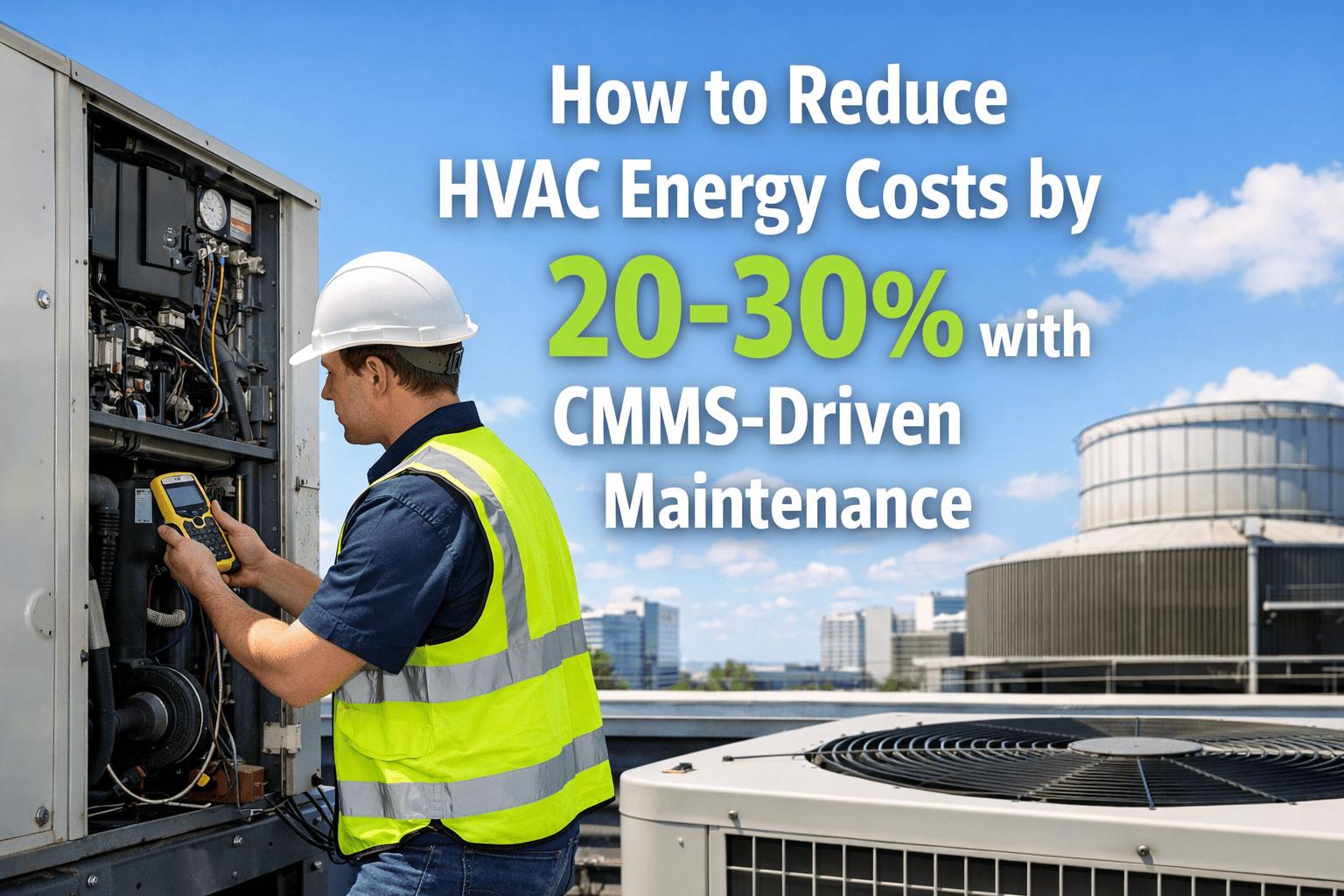
An unexplained 10-20% jump in your energy bill is one of the most reliable early indicators that HVAC maintenance is overdue. Dirty coils struggle to transfer heat. Clogged filters restrict airflow, forcing fans and compressors to work harder. Aging components create friction and inefficiency. The DOE confirms that well-maintained HVAC systems operate up to 20-30% more efficiently than neglected ones—meaning a facility spending $8,000/month on energy could be wasting $1,600 to $2,400 every month simply by deferring basic maintenance.
Short cycling is equally destructive. When your system turns on, runs for a few minutes, shuts off, then starts again—repeating this pattern continuously—it's a sign of thermostat malfunction, airflow restriction, oversized equipment, or refrigerant problems. Each startup cycle puts significant mechanical stress on compressors and motors. Over time, short cycling accelerates wear dramatically and can cut equipment life in half. Organizations using a free HVAC maintenance management signup can identify this issue early and correct it before expensive damage occurs.
Airflow Problems, Leaks, and Air Quality Red Flags
When occupants complain that some rooms feel like a freezer while others feel tropical, the problem isn't just comfort—it's a maintenance signal. Blocked vents, dirty filters, broken dampers, or failing fan motors disrupt air distribution across zones. Ductwork that has separated at joints or developed cracks leaks conditioned air into ceilings and walls, wasting energy while leaving occupied spaces underserved. Visible signs like oil stains around compressors, refrigerant residue on copper lines, condensation pooling beneath indoor units, or corrosion on coils all indicate that maintenance is overdue.
Indoor air quality complaints—increasing dust on surfaces, stale or musty smells from vents, humidity that won't stabilize—are equally significant. Musty odors often point to mold growth in drain pans or ductwork. A burning smell may signal electrical issues. The International Facility Management Association lists odor complaints among the top drivers of tenant dissatisfaction. Beyond comfort, poor IAQ creates legitimate health risks. Facilities that book a free HVAC maintenance demo can pinpoint exactly where their HVAC system is failing and prioritize repairs based on severity.
Expert Perspective: Why Reactive HVAC Maintenance Is a Losing Strategy
HVAC equipment failure doesn't just spring out of nowhere. It's usually the result of neglect or poor installation. Simple tasks like changing filters, greasing bearings, or replacing belts are often skipped until the system breaks, leading to costly downtime. The facilities that invest in predictive and preventive strategies aren't just avoiding breakdowns—they're fundamentally changing how maintenance operates, reducing unplanned downtime by up to 50% and lowering overall maintenance costs by 25-40%.
The shift from reactive to preventive maintenance isn't theoretical—it's happening across every industry. Research shows 70-75% reduction in system breakdowns and 35-45% decrease in breakdown duration when predictive approaches are applied to HVAC systems. For facility managers still relying on run-to-failure strategies, the numbers make a compelling case: organizations save up to 20% on energy bills by following operations and maintenance best practices. The first step is moving from scattered spreadsheets and memory-based scheduling to signing up for a centralized HVAC maintenance platform that keeps every asset on a documented schedule.
From Warning Signs to Preventive Action: Your Next Steps
Recognizing that your HVAC system needs maintenance is only valuable if you act on it. The most effective facilities follow a clear progression: identify which warning signs are present, prioritize by severity and operational impact, schedule corrective work during planned downtime, and establish ongoing preventive routines so the same issues don't recur. Modern CMMS platforms automate this entire cycle—from flagging overdue inspections to generating work orders to tracking repair history across every unit in your facility.
Start with your most critical systems: the units serving high-occupancy spaces, data-sensitive areas, or production environments where temperature control directly affects output quality. Document what you find. Build a maintenance calendar based on manufacturer recommendations and actual operating conditions. And if you're not sure where to begin, schedule a free demo with our maintenance team to assess your current HVAC health and build a preventive program tailored to your facility.