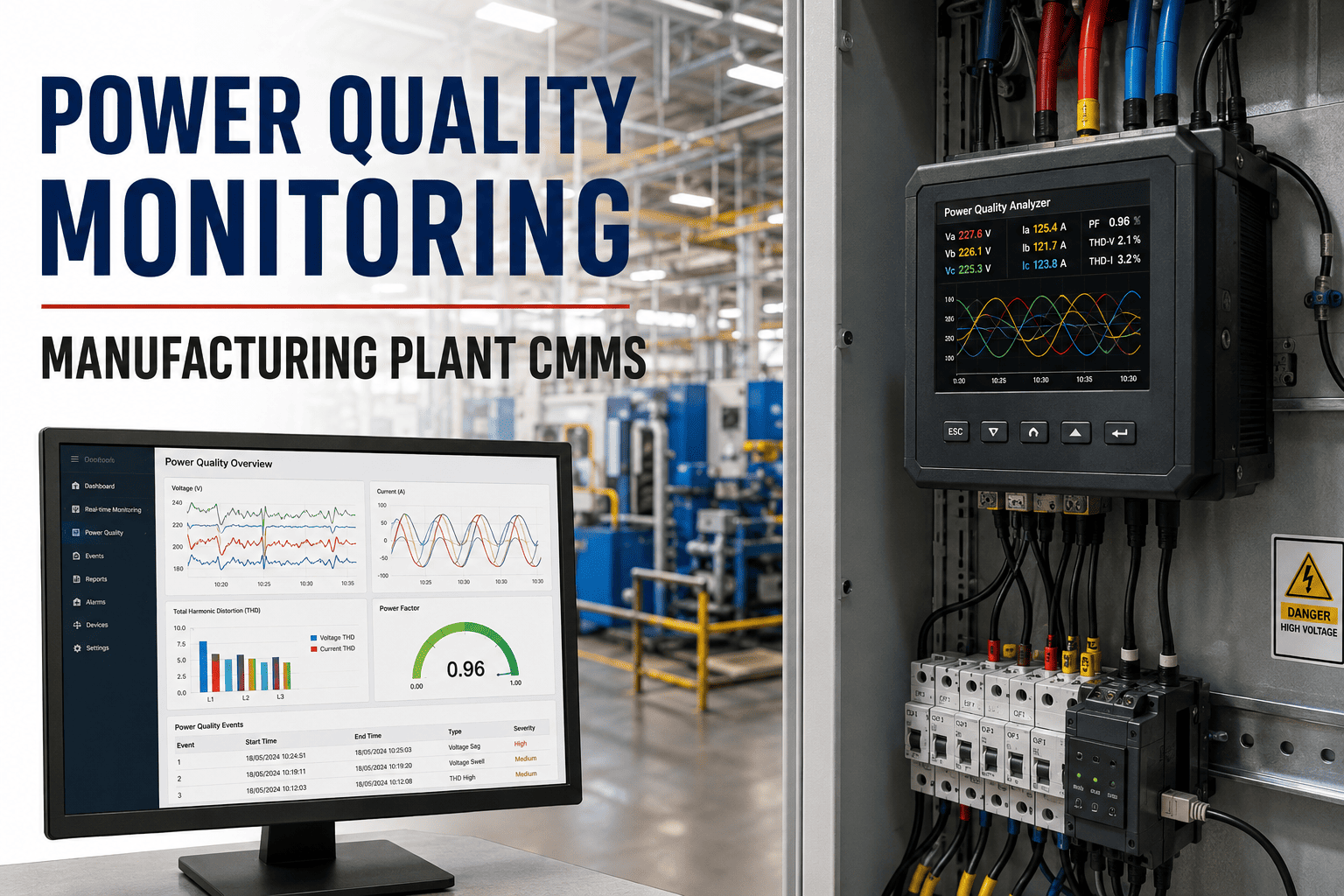
Energy typically accounts for 20–40% of total operating costs in manufacturing—yet most plants still manage it with monthly utility bills and periodic audits. That reactive approach misses the real-time inefficiencies quietly draining thousands of dollars every week from compressed air leaks, idle motors, and overworked HVAC systems. AI-powered energy management changes the equation: real-time IoT monitoring paired with machine learning analytics detects waste patterns within minutes, predicts demand spikes before they hit, and triggers maintenance actions automatically through your CMMS. Manufacturers deploying these systems are reporting 15–30% reductions in energy spend within the first year. Schedule a free 30-minute energy assessment with our engineers to find out where your plant is losing power—and money.
The Hidden Energy Crisis on Your Factory Floor
Industrial energy costs in the United States rose 6–7% in 2025, with some regions facing increases above 30%. Meanwhile, global manufacturing still wastes roughly 40% of the energy it purchases due to equipment inefficiency, poor scheduling, and invisible leaks. The gap between what factories pay and what they actually need represents one of the largest untapped savings opportunities in modern operations.
$16.4B
Global energy management software market size in 2025—projected to exceed $50B by 2035
40%
Of manufacturing energy is wasted through equipment inefficiency and operational gaps
7.5%
Average energy reduction across 87 factories using smart utility metering in a single deployment
Why does this matter now?
Rising utility rates, tightening emissions regulations (EPA, EU ETS, ISO 50001), and growing ESG reporting requirements mean energy is no longer just an operational cost—it is a strategic risk. Manufacturers who lack real-time energy visibility are flying blind into a market that increasingly penalizes waste and rewards efficiency. Start tracking your plant's energy and maintenance data in one dashboard — sign up free and take the first step toward real-time visibility.
How Smart Factories Use AI to Cut Energy Costs
AI energy management is not a single product—it is an architecture that layers IoT data collection, machine learning analytics, and automated action through CMMS and SCADA systems. Each layer builds on the previous one to transform energy from an unmanaged expense into a continuously optimized variable.
From Raw Data to Measurable Savings
Layer 1
IoT Sensor Network
Smart meters, current transformers, and environmental sensors deploy across motors, compressors, HVAC units, lighting circuits, and production lines. They capture consumption data at sub-minute intervals—giving visibility into every kilowatt flowing through your plant, not just the total on your monthly bill.
Layer 2
Edge Processing & Data Pipeline
Edge computing devices aggregate and validate sensor data locally, filtering noise and filling gaps before streaming clean signals to the cloud. Even during network interruptions, no consumption spike goes unrecorded—ensuring your AI models train on complete, reliable data sets.
Layer 3
Machine Learning Analytics Engine
AI algorithms build dynamic baselines for every monitored asset, correlating energy draw with production output, ambient temperature, shift patterns, and equipment age. When a compressor starts drawing 15% above baseline, the system flags it instantly—not at the end of the billing cycle.
Layer 4
Predictive Optimization & Scheduling
AI forecasts next-day and next-week energy demand based on production schedules and weather data. It recommends load shifting to off-peak rate windows, optimal equipment sequencing, and setpoint adjustments—turning energy procurement from a fixed cost into a variable you actively manage.
Layer 5
CMMS-Integrated Action Loop
When AI detects efficiency degradation—a motor bearing wearing, a chiller losing COP, a duct leak wasting compressed air—it automatically generates a maintenance work order in your CMMS. This closes the loop between detection and correction. Sign up free to see how Oxmaint auto-generates work orders from energy anomalies and unifies monitoring across every facility.
See AI energy management in your industry. Book a live walkthrough and we will show you real-time monitoring, anomaly alerts, and CMMS integration for your plant type.
Where Energy Waste Hides in Manufacturing Operations
Most plant managers know their total energy bill. Far fewer know which machine, which shift, or which process is responsible for the largest share of waste. AI energy monitoring reveals the specific loss points that manual audits consistently miss.
25–30%
Compressed Air Systems
Leaks, pressure drops, and over-pressurization waste up to a third of compressed air energy. AI monitors cfm/kW ratios to detect leaks as small as 1mm within hours.
15–20%
HVAC & Climate Control
Overcooling, heating during unoccupied periods, and degraded chiller performance. AI adjusts setpoints dynamically based on occupancy, weather, and production heat load.
10–15%
Idle Equipment Draw
Machines consuming power during changeovers, breaks, and weekends. AI identifies idle patterns and triggers automated shutdowns or low-power modes.
8–12%
Motor Efficiency Degradation
Aging bearings, misalignment, and winding degradation cause motors to draw excess current. AI energy signatures detect efficiency loss before vibration analysis can.
5–10%
Demand Charge Penalties
Simultaneous startup of heavy equipment creates demand spikes that inflate utility bills for the entire month. AI staggers startups and shifts loads to flatten peaks.
3–8%
Lighting & Auxiliary Loads
Lights running in empty zones, phantom loads from standby equipment, and legacy systems with no scheduling. AI automates zone-based controls and daylight harvesting.
From Reactive Bills to Predictive Control: What AI Changes
The difference between traditional energy management and AI-driven control is not just about better data—it is a fundamental shift from discovering problems on invoices to preventing them in real time.
The Management Paradigm Shift
Before: Reactive Energy Tracking
Monthly utility bill review is the primary data source
Annual energy audits catch problems months after they start
No visibility below the plant-level meter
Equipment runs until failure, wasting energy the entire time
Sustainability reports require weeks of manual data gathering
10–20%typical energy waste undetected
After: AI Predictive Energy Control
Real-time dashboards with sub-minute consumption data
AI anomaly detection flags waste within minutes of occurrence
Machine-level kWh tracking tied to production output
Automated carbon accounting with audit-ready ESG reports
<3%residual waste with continuous optimization
Connect Energy Intelligence with Maintenance Action
Oxmaint unifies asset health monitoring, automated work orders, and energy analytics into one platform—so when AI detects a motor drawing excess power, a maintenance task is created instantly, not discovered on next month's bill.
AI energy optimization delivers different value depending on your industry's dominant energy consumers, equipment mix, and production patterns. Here is what data from industrial deployments shows across key manufacturing verticals.
Savings ranges reflect documented deployments across multiple facility sizes. Actual results depend on baseline efficiency, equipment age, and optimization scope.
5 Ways AI Turns Energy Data into Maintenance Action
The real power of AI energy management is not just in dashboards—it is in the automated connection between detecting waste and fixing it. Here is how the energy-to-maintenance feedback loop works inside a connected CMMS platform.
01
Energy Signature Anomaly Detection
AI monitors the power draw fingerprint of every critical asset. When a pump's current profile shifts—indicating cavitation, impeller wear, or bearing degradation—the system flags the deviation and creates a diagnostic work order before vibration or temperature changes become detectable.
02
Efficiency-Based PM Scheduling
Instead of running preventive maintenance on fixed calendar intervals, AI shifts PM triggers to efficiency thresholds. When a chiller's coefficient of performance drops below target, the system schedules maintenance—ensuring you service equipment when it actually needs attention, not on an arbitrary date.
03
Compressed Air Leak Prioritization
AI quantifies the cost of every detected leak by multiplying flow rate against runtime hours and energy price. It then ranks leak repairs by financial impact, so your maintenance team addresses the $400/month leak before the $40/month one—maximizing ROI per labor hour. Book a demo to see how AI ranks and prioritizes your costliest compressed air leaks automatically.
04
Equipment Replacement Modeling
When an aging motor draws 20% more power than a modern equivalent, AI calculates the annual waste cost and compares it to repair and replacement scenarios. If the energy payback period falls under 2 years, the system recommends capital replacement—turning energy data into strategic asset decisions.
05
Cross-Asset Efficiency Benchmarking
AI compares identical machines operating under similar conditions. When Motor A consumes 12% more than Motor B, the system generates a comparative report and flags Motor A for inspection. This competitive benchmarking turns your equipment fleet into a self-improving system.
See the energy-maintenance connection in action. Create a free Oxmaint account and our team will help map the ROI for your specific operation.
Measuring the ROI: What AI Energy Management Actually Delivers
The financial case for AI energy management is built on multiple compounding value streams—direct consumption reduction, demand charge avoidance, extended equipment life, reduced maintenance costs, and sustainability compliance savings.
Documented Manufacturing Outcomes
Based on industrial deployment data and published research across manufacturing sectors
Energy Cost Reduction
15–30%
Anomaly Detection Speed
80% faster
CO2 Emission Reduction
20–24%
Equipment Lifespan Extension
Up to 40%
Typical Payback Period
6–12 months
System Integration: What Connects to What
AI energy platforms are not standalone tools. They plug into your existing plant infrastructure—pulling consumption data from operational systems and pushing optimization actions back to where they create real impact.
Integration Architecture Overview
System
Connection Type
What Flows Between Them
CMMS / EAM
Event-triggered
Auto-generated work orders for efficiency issues, PM scheduling tied to energy KPIs, asset-level cost tracking
SCADA / BMS
Real-time bidirectional
Equipment setpoints, HVAC zone controls, automated load shedding commands, process variable adjustments
MES / ERP
Scheduled batch
Production schedules, energy-per-unit KPIs, cost allocation by product line, budget variance tracking
IoT Platforms
Continuous streaming
Sensor telemetry, meter readings, environmental data, vibration and thermal signals for predictive models
Getting Started: From Energy Audit to Intelligent Optimization
Deploying AI energy management does not require ripping out your existing infrastructure. A phased approach delivers quick wins from Day 1 while building toward comprehensive, plant-wide optimization over 10–12 weeks.
Implementation Roadmap
Weeks 1–3
Assess & Baseline
Facility energy audit and utility data analysisExisting sensor and metering inventoryIntegration architecture and data flow mappingROI modeling and priority equipment identification
Weeks 4–6
Deploy & Connect
IoT sensor and smart meter installationEdge computing and network setupCMMS, SCADA, and BMS integrationDashboard and alert channel configuration
Weeks 7–9
Train & Calibrate
Historical data import and cleansingAI baseline consumption modeling per assetAnomaly detection threshold calibrationStaff training on dashboards and alerts
Week 10+
Optimize & Scale
Live monitoring and automated work ordersContinuous optimization recommendationsMulti-facility rollout and benchmarkingQuarterly savings reviews and model refinement
Ready to start your energy optimization journey? Our engineers will assess your facility, identify priority monitoring points, and deliver a customized deployment plan built around your equipment and production schedule.
Your Utility Bill Cannot Tell You Which Compressor Is Wasting Power
Oxmaint connects real-time energy monitoring with intelligent maintenance management—tracking every asset's health and efficiency, auto-generating work orders when performance degrades, and giving you the visibility to cut energy costs by 15–30% while extending equipment life. Stop managing energy by invoice. Start managing it by intelligence.
How much can AI energy management realistically save a manufacturing plant?
Most manufacturers achieve 15–30% energy cost reduction within the first 12 months. Quick wins come from identifying compressed air leaks, eliminating idle equipment draw, and shifting loads to off-peak rate periods. These early savings often pay for the system within 6–9 months, with ongoing optimization compounding returns over time. Schedule a free 30-minute consultation to get a custom savings projection for your plant.
Does this work with our existing meters and equipment?
Yes. AI platforms start delivering value with whatever metering infrastructure you already have—even if that is just the utility incoming meter. Additional IoT sensors expand visibility to individual machines and circuits, but even basic submetering data gives AI enough signal to detect major waste patterns. A phased sensor rollout lets you start with high-impact areas and expand based on proven ROI.
How does AI handle production variability and seasonal demand changes?
AI models automatically correlate energy consumption with production variables—throughput, product mix, batch size, shift patterns, and ambient weather. This produces energy intensity metrics (kWh per unit) that normalize for production variability, making it possible to separate true efficiency improvements from production volume changes. Sign up free and explore how Oxmaint links energy consumption to your production output in real time.
What is the connection between CMMS and AI energy management?
Your CMMS is the action engine for energy optimization. When AI detects an asset running inefficiently—such as a motor with degraded bearings drawing excess current—it automatically generates a maintenance work order in Oxmaint. This closed-loop system ensures energy waste is not just identified on a dashboard but actually fixed by your maintenance team. Book a demo to see how Oxmaint auto-creates work orders when AI detects energy waste.
Can AI energy management help with ISO 50001 and ESG compliance?
Absolutely. AI platforms automate the data collection, analysis, and reporting requirements for ISO 50001 energy management certification. They also calculate Scope 1 and Scope 2 emissions from energy consumption using standard emission factors and generate audit-ready compliance documentation—reducing reporting time by over 50% compared to manual methods.