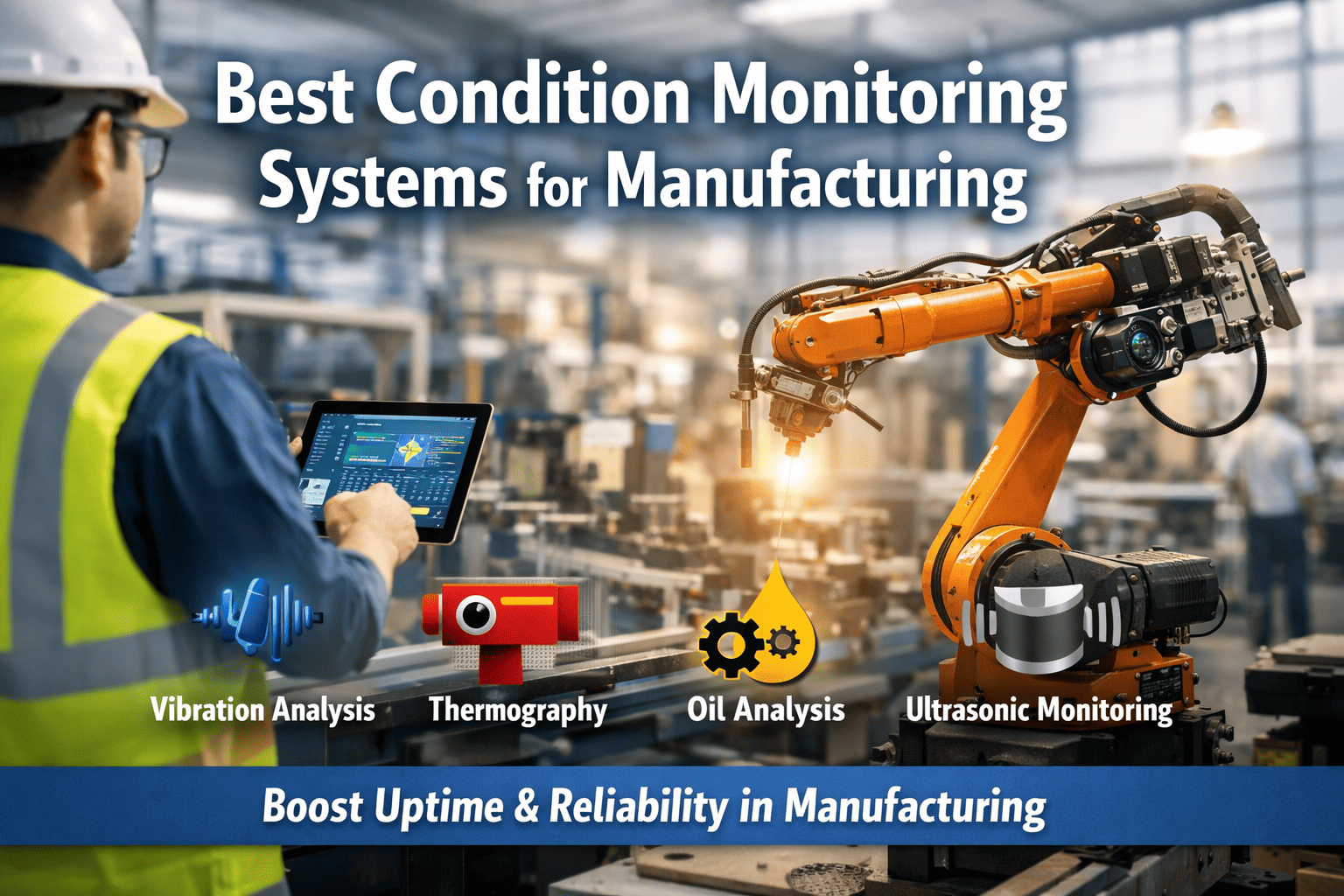
Hydraulic systems are the muscle behind modern manufacturing—powering presses, lifts, conveyors, and robotic arms with precision force. Yet these critical systems often fail without warning, causing costly downtime and production delays. AI-powered predictive maintenance changes this reality by continuously monitoring hydraulic health indicators and detecting anomalies weeks before catastrophic failure.
Schedule a consultation
to discover how predictive analytics can protect your hydraulic assets.
Why Predictive Maintenance for Hydraulic Systems
Hydraulic failures account for a significant portion of unplanned manufacturing downtime. Traditional time-based maintenance either replaces components too early—wasting money—or too late—after damage has spread. AI-driven predictive maintenance optimizes this balance by analyzing real-time sensor data to predict exactly when intervention is needed.
AI Predictive Maintenance Impact
Failure Prediction Accuracy
Of hydraulic failures can be predicted through AI monitoring
Maintenance Cost Reduction
Reduction in maintenance costs with predictive strategies
Average Cost Saved
Average cost saved per prevented hydraulic system failure
Early Warning Period
Advance warning before potential hydraulic failures
Ready to prevent hydraulic failures before they happen? Join manufacturing plants using AI to achieve near-zero unplanned downtime.
Sign Up
How AI Monitors Hydraulic System Health
AI predictive maintenance platforms integrate multiple sensor inputs—pressure, temperature, flow rate, vibration, and oil quality—to build a comprehensive picture of hydraulic system health. Machine learning algorithms identify subtle pattern changes that indicate developing problems long before they become visible to human operators.
AI Predictive Maintenance Process
01
Sensor Data Collection
IoT sensors capture pressure fluctuations, temperature variations, flow rates, and vibration signatures at millisecond intervals. Oil particle counters and moisture sensors provide fluid health data continuously.
02
Pattern Recognition
AI models trained on thousands of failure scenarios identify anomalies in sensor readings. Neural networks detect correlations between multiple parameters that indicate specific failure modes.
03
Failure Prediction
Machine learning algorithms calculate remaining useful life (RUL) for critical components. Predictions include confidence levels and recommended action timelines.
04
Automated Response
Integration with CMMS systems automatically generates work orders with priority levels, required parts, and optimal scheduling windows.
Sign up for Oxmaint to centralize predictive maintenance across all hydraulic assets.
Common Hydraulic Failures AI Can Predict
AI monitoring excels at detecting the early warning signs of hydraulic system degradation. Each failure mode has distinct signatures that machine learning algorithms can identify with high accuracy.
Pump Cavitation
Detected through characteristic high-frequency vibration patterns and pressure fluctuations. AI identifies cavitation onset 4-6 weeks before pump damage occurs.
Seal Degradation
Monitored via pressure drop patterns and temperature anomalies. Gradual seal wear creates predictable signatures that AI tracks over time.
Fluid Contamination
Particle counters and viscosity sensors feed AI models that predict filter bypass and component wear rates from contamination levels.
Valve Stiction
Response time analysis and position feedback variance reveal developing valve issues. AI predicts when valves will fail to meet performance specifications.
Cylinder Wear
Position accuracy drift and internal leakage patterns indicate cylinder rod and seal wear progression with measurable trend analysis.
Hose Degradation
Pressure pulse analysis and external temperature monitoring identify hose fatigue and pending burst conditions before catastrophic failure.
See how AI predicts hydraulic failures in real-time. Book a personalized demo for your manufacturing environment.
Book a Demo
Sensor Requirements for Hydraulic Monitoring
Effective AI-powered predictive maintenance requires strategic sensor placement throughout the hydraulic circuit. The right sensors in the right locations provide the data AI needs to make accurate predictions.
Hydraulic Monitoring Sensor Configuration
| Sensor Type |
Location |
Parameters Monitored |
Failure Detection |
| Pressure Transducers |
Pump outlet, actuator ports, return line |
System pressure, pressure spikes, drop rates |
Pump wear, valve issues, leaks |
| Temperature Sensors |
Reservoir, pump housing, cylinder bodies |
Fluid temp, component temp, ambient delta |
Overheating, friction increase, cooling issues |
| Flow Meters |
Main supply line, critical branch circuits |
Flow rate, flow consistency, volumetric efficiency |
Internal leakage, pump degradation |
| Vibration Sensors |
Pump mounts, motor couplings, valve blocks |
Frequency spectrum, amplitude, harmonics |
Cavitation, bearing wear, misalignment |
| Particle Counters |
Return line before filter, post-filter verification |
Particle size distribution, contamination level |
Component wear, filter bypass, ingress |
Reactive vs. Predictive Hydraulic Care
Hydraulic system management has evolved from waiting for breakdowns to anticipating them. Understanding this shift reveals why leading manufacturers are adopting AI-driven condition monitoring for their hydraulic assets.
Transform Your Hydraulic Maintenance Strategy
Oxmaint integrates with IoT sensors across your hydraulic systems to deliver AI-powered failure predictions, automated work orders, and comprehensive asset health dashboards—all in one platform designed for manufacturing operations.
Implementation ROI
Manufacturing plants implementing AI predictive maintenance for hydraulic systems typically see positive ROI within the first year. The financial benefits compound as AI models learn facility-specific patterns and improve prediction accuracy over time.
40-60%
Reduction in unplanned hydraulic downtime
25-35%
Decrease in hydraulic maintenance costs
20-30%
Extension of hydraulic component lifespan
6-9 Mo
Typical payback period for implementation
Calculate your potential savings. Create a free account and let our team help model ROI for your hydraulic systems.
Sign Up
Getting Started with Oxmaint
Deploying AI predictive maintenance for hydraulic systems follows a structured approach that minimizes disruption while maximizing early value capture.
1
Assessment: Identify critical hydraulic assets and existing sensor infrastructure. Prioritize systems with highest downtime costs.
2
Sensor Integration: Install additional sensors as needed and connect to Oxmaint platform. Most installations complete within 2-3 weeks.
3
Baseline Learning: AI models establish normal operating patterns over 30-60 days. Initial anomaly detection begins immediately.
4
Full Deployment: Predictive alerts, automated work orders, and maintenance optimization deliver continuous value.
Schedule a consultation to start planning your implementation.
Frequently Asked Questions
How accurate are AI predictions for hydraulic failures?
AI models achieve 85-95% accuracy for common hydraulic failure modes after sufficient training data collection. Accuracy improves continuously as the system learns your specific equipment patterns and operating conditions.
Book a demo to see prediction accuracy data from similar manufacturing environments.
What sensors are required for AI monitoring?
Basic monitoring requires pressure and temperature sensors. Enhanced prediction accuracy comes from adding vibration sensors, flow meters, and particle counters. Many plants already have some sensors installed that can integrate with AI platforms.
How long before we see meaningful predictions?
Anomaly detection begins immediately upon data collection. Meaningful failure predictions typically emerge within 60-90 days as AI models establish baseline patterns. Early wins often include detecting obvious issues that manual inspection missed.
Can AI monitoring integrate with our existing CMMS?
Yes. Oxmaint provides API integrations with major CMMS platforms and can automatically generate work orders based on AI predictions. Native CMMS functionality is also available for plants looking to consolidate systems.
Sign up for a free account to explore integration options.
What happens if the AI system goes offline?
Edge computing processes critical monitoring locally, ensuring continuous protection even during network interruptions. Historical trends and pending alerts remain accessible, and the system resynchronizes automatically when connectivity restores.