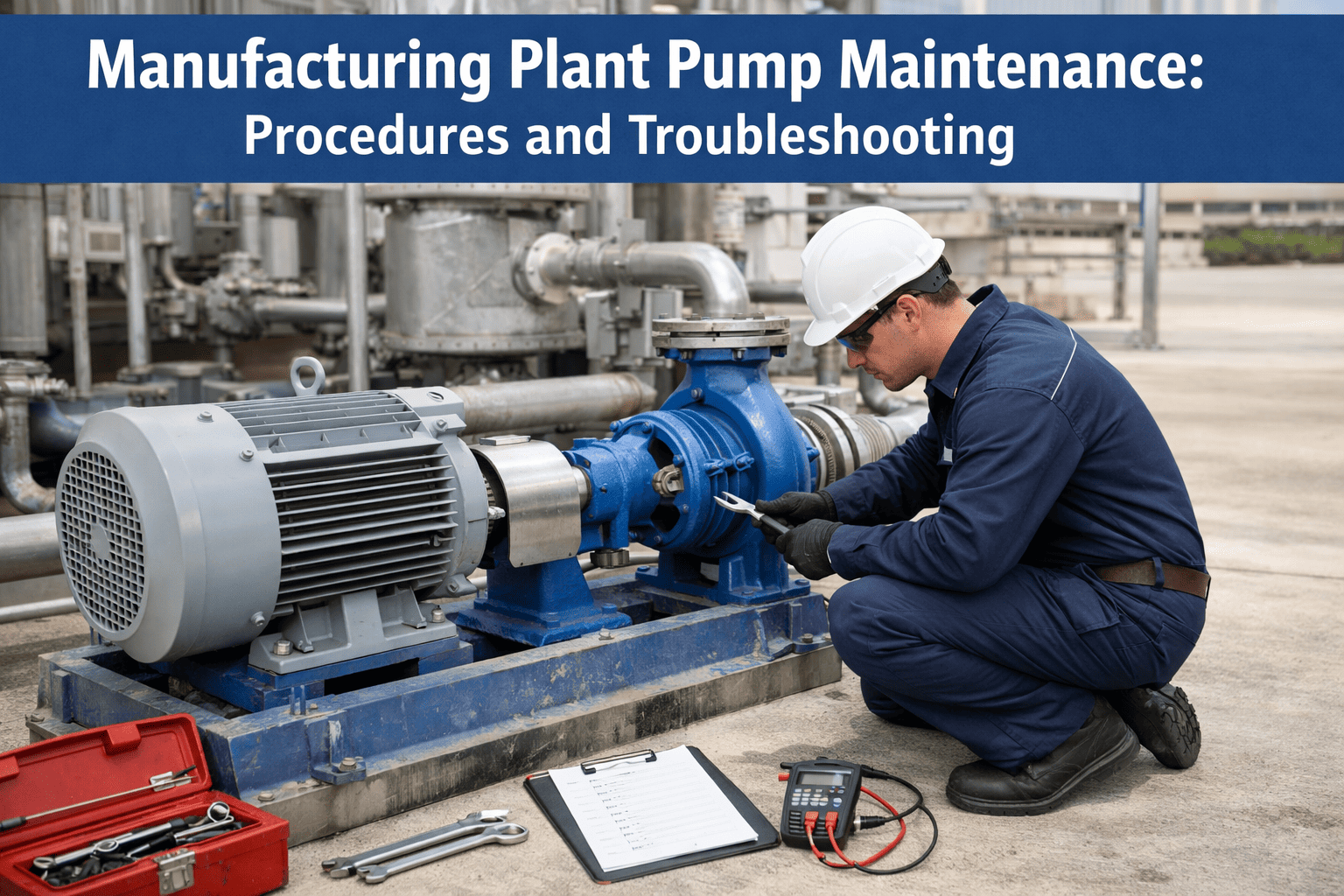
The production line went silent at 2:47 AM. Your centrifugal pump—the one moving 500 gallons per minute through your cooling system—just failed. Emergency repair costs: $8,500. Lost production while waiting for parts: $45,000. The frustrating part? That pump tried to warn you for three weeks through vibration changes, temperature spikes, and pressure fluctuations that nobody was tracking. Approximately 69% of all centrifugal pump failures originate from a single component: the mechanical seal. And nearly all of them announce themselves before catastrophic failure—if you know what symptoms to monitor.
Mechanical Seals
69%
Bearings
22%
Other Components
9%
52%
Of bearing failures from contamination & corrosion
<30%
Of bearings reach their designed fatigue life
20%
Of global energy demand comes from centrifugal pumps
The 5 Most Common Failure Modes (And How to Spot Them)
Every pump failure follows a pattern. Understanding these patterns transforms reactive firefighting into proactive prevention. Here are the failures that account for the vast majority of unplanned pump downtime in manufacturing plants.
What's Happening
Vapor bubbles form when suction pressure drops below vapor pressure, then violently collapse against impeller surfaces—eroding metal at microscopic level.
Warning Signs
Crackling/gravel noise
Vibration spikes
Erratic flow rates
Pitted impeller
Root Causes
Insufficient NPSH, clogged suction strainer, excessive suction lift, high fluid temperature, throttled suction valve
What's Happening
Mechanical seal faces separate, wear unevenly, or lose spring tension—allowing process fluid to leak along the rotating shaft.
Warning Signs
Visible leakage
Wet bearing housing
Shaft sleeve wear
High seal temperature
Root Causes
Dry running, misalignment, contamination, thermal shock, incorrect installation, bearing failure causing shaft movement
What's Happening
Rolling elements or races deteriorate from contamination, improper lubrication, or overload—allowing shaft to move and damage seals.
Warning Signs
Rising temperature
Grinding noise
Increased vibration
Discolored lubricant
Root Causes
Particle contamination (52%), corrosion, over/under lubrication, misalignment, excessive radial load, improper installation
What's Happening
Motor and pump shafts aren't properly aligned—creating cyclical stress that damages couplings, seals, and bearings simultaneously.
Warning Signs
2x running speed vibration
Coupling wear
Hot bearings
Frequent seal failures
Root Causes
Soft foot, thermal growth, pipe strain, improper installation, foundation settling, baseplate distortion
What's Happening
Pump operates without fluid—seal faces generate extreme friction heat, causing immediate damage or catastrophic seizure.
Warning Signs
Sudden temp spike
Smoke/burning smell
Zero discharge pressure
Motor overload
Root Causes
Empty suction tank, closed suction valve, air-bound pump, loss of prime, blocked suction line, operator error
Manufacturing plants that track these failure patterns digitally catch problems at the warning sign stage rather than the catastrophic failure stage—cutting repair costs by 40% or more.
Symptom-to-Cause Troubleshooting Guide
When a pump shows symptoms, you need answers fast. This diagnostic flowchart connects what you observe to what's actually wrong.
No Flow / Won't Prime
↓
Suction leak (air ingress)
Closed valve
Clogged strainer
Impeller damage
Wrong rotation
Low Flow / Pressure
↓
Worn impeller
Wear ring erosion
Partial blockage
Speed too low
Air in suction
Excessive Vibration
↓
Misalignment
Imbalanced impeller
Cavitation
Bearing failure
Loose foundation
Unusual Noise
↓
Cavitation (gravel)
Bearing wear (grinding)
Recirculation (rumble)
Coupling failure
Foreign object
Overheating
↓
Low/no flow
Dry running
Bearing failure
Over-lubrication
Blocked cooling
Seal Leakage
↓
Shaft deflection
Misalignment
Dry running damage
Contamination
Thermal shock
Complex troubleshooting scenarios benefit from structured root cause analysis. Teams ready to implement systematic failure tracking can schedule a platform walkthrough to see how digital RCA workflows connect symptoms to causes automatically.
Turn Pump Problems Into Preventable Events
See how OXmaint connects failure symptoms to root causes, builds troubleshooting history, and prevents repeat failures across your pump fleet.
Prevention: The Inspection Points That Matter
Preventing pump failures requires monitoring the right parameters at the right frequency. This matrix identifies the critical checkpoints that catch problems before they cascade into failures.
Building consistent inspection routines requires systems that remind, record, and trend. Maintenance teams can sign up for free digital checklists that automate scheduling and flag when readings trend toward action thresholds.
Expert Perspective: Why Root Cause Analysis Changes Everything
The difference between a good maintenance program and a great one isn't how fast you fix pumps—it's whether you fix the same pump twice. Every repeat failure represents a missed root cause. With 600+ potential failure modes in a single centrifugal pump, you need systematic tracking to connect today's symptom to yesterday's repair and tomorrow's prevention strategy.
69%
Of failures start at the mechanical seal—but the seal is often a victim, not the cause
3-5x
Cost multiplier for emergency repairs vs. planned maintenance interventions
40%
Reduction in repeat failures when RCA is documented and tracked digitally
Implementing structured root cause analysis doesn't require engineering degrees—it requires consistent documentation and pattern recognition. Teams ready to break the cycle of repeat failures can book a consultation to see how automated RCA workflows capture the insights that prevent recurrence.
Stop Fixing the Same Pumps Over and Over
Join manufacturing plants using OXmaint to track pump failures, identify root causes, and build the maintenance intelligence that prevents repeat breakdowns.
Frequently Asked Questions
What is the most common cause of centrifugal pump failure?
Mechanical seal failure accounts for approximately 69% of all centrifugal pump breakdowns. However, the seal is often a symptom rather than the root cause—misalignment, bearing failure, dry running, and contamination frequently damage seals as a secondary effect. Effective troubleshooting requires tracing seal failures back to their underlying causes to prevent recurrence.
How do I know if my pump is cavitating?
Cavitation produces distinctive warning signs: a crackling or gravel-like noise (as if pumping rocks), erratic flow rates, increased vibration, and eventually visible pitting on impeller surfaces. The root cause is insufficient Net Positive Suction Head (NPSH)—check for clogged strainers, closed suction valves, excessive suction lift, or high fluid temperatures that increase vapor pressure.
Why do centrifugal pump bearings fail prematurely?
Less than 30% of pump bearings reach their designed fatigue life. The primary culprits are particle contamination and corrosion (52% of premature failures), followed by improper lubrication, misalignment, and excessive loads. Bearing housing seals play a critical role—inadequate sealing allows contaminants in and lubricant out, dramatically shortening bearing life.
What vibration level indicates pump problems?
For most centrifugal pumps, vibration velocity below 4.5 mm/s RMS is acceptable. Levels between 4.5-7.1 mm/s warrant investigation and increased monitoring. Above 7.1 mm/s indicates significant problems requiring immediate attention. More important than absolute values: any sudden increase from baseline indicates developing issues regardless of the absolute reading.
How can CMMS software help prevent pump failures?
CMMS platforms transform pump maintenance by automating inspection schedules, tracking parameter trends over time, documenting failure history for root cause analysis, and connecting symptoms to causes across your entire pump fleet. The result: catching problems at the warning sign stage rather than the emergency repair stage, with 40% reduction in repeat failures and 3-5x lower repair costs.