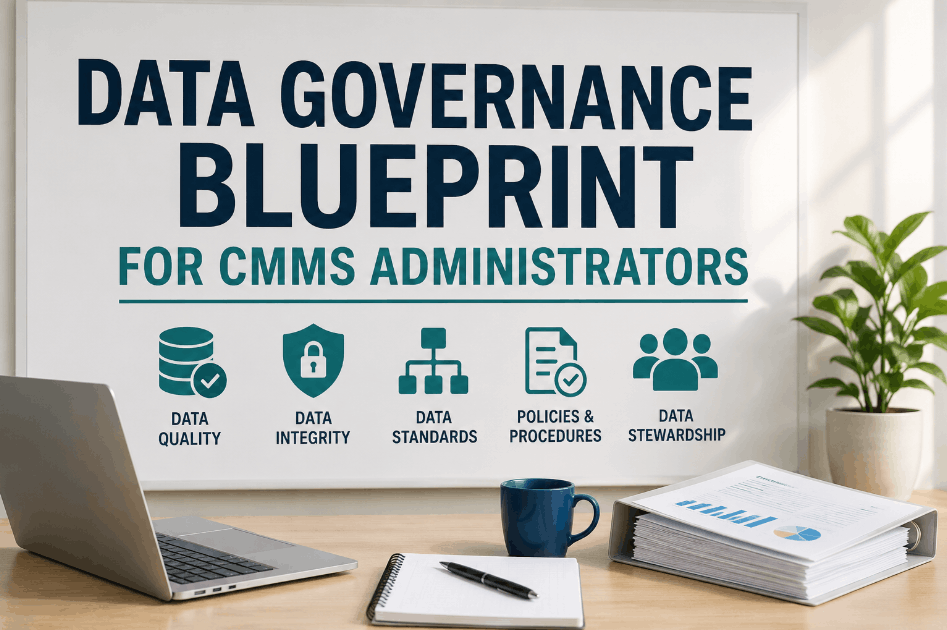
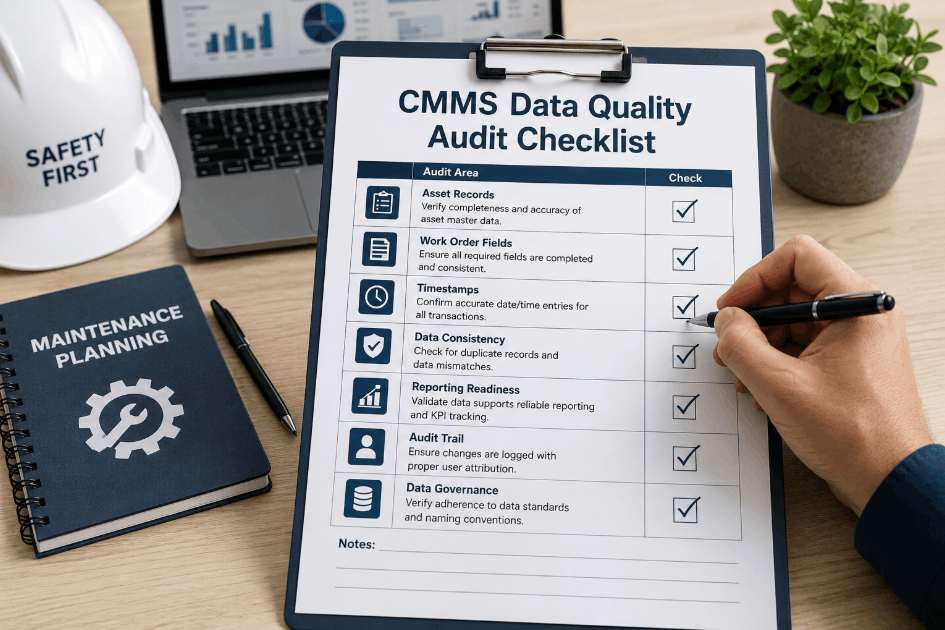
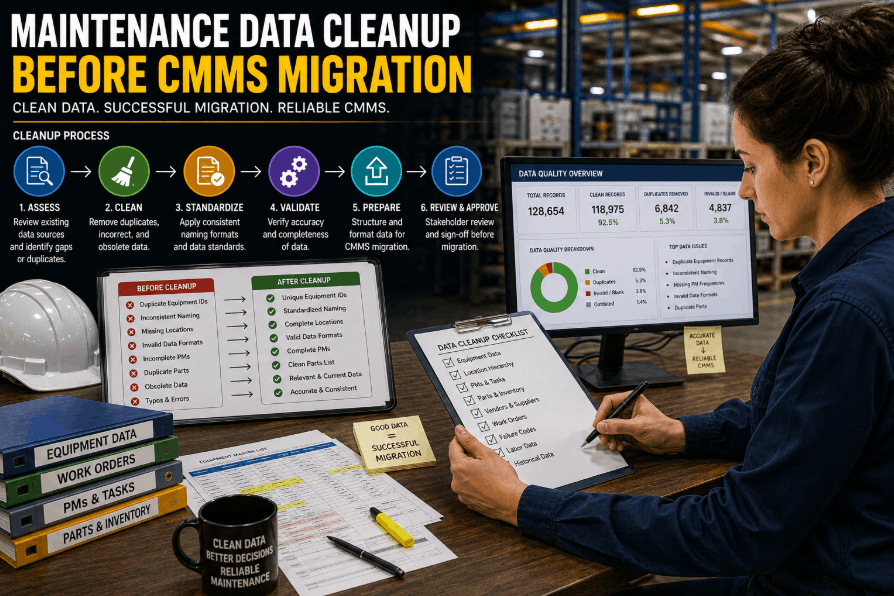
A CMMS adoption roadmap for plant operations is the structured implementation discipline that separates facilities where the system becomes the operational backbone from those where it becomes shelfware within 90 days. Getting the platform live is the easy part — the hard work is data cleanup, user training, process rollout, and field discipline that determines whether work order accuracy, record integrity, and audit trail quality actually improve. Sign Up Free to see how OxMaint supports structured CMMS adoption from master data setup through live operations. Organizations that follow a phased adoption roadmap — rather than flipping a switch — report significantly stronger work order completion rates, higher technician engagement, and faster time-to-value on their CMMS investment.
Build Your CMMS Adoption Roadmap with OxMaint
Master data setup. User onboarding. Process rollout support. Field discipline tools. OxMaint gives plant operations teams everything needed for a structured, lasting CMMS adoption.
Why CMMS Adoptions Fail in Plant Operations
Most CMMS rollouts stall not because of the software — but because the adoption approach treats implementation as an IT project rather than an operational change program. Book a Demo to see how OxMaint guides plant operations through each adoption phase with built-in tooling for data governance, mobile capture, and KPI mapping.
Dirty Master Data at Go-Live
Asset registers imported without cleanup carry duplicate records, missing replacement values, and inconsistent naming — corrupting work order accuracy and KPI reporting from day one.
Training Without Process Context
Technicians trained on button clicks without understanding the maintenance workflow behind each step revert to paper, whiteboards, and verbal handoffs within weeks of go-live.
No Field Discipline Framework
Without mobile capture standards and timestamp accountability, work orders are closed in batches rather than at job completion — destroying the time-series data that makes CMMS analytics useful.
KPI Mapping Done After Launch
When MTBF, work order cycle time, and PM compliance metrics are not defined before go-live, the system collects data that cannot answer the questions leadership actually cares about.
No Process Standard for Work Order Closure
Inconsistent closure procedures across shifts and departments create record integrity gaps — making audit trail and regulatory reporting unreliable despite full adoption of the system.
System Adoption Without Ownership
CMMS adoptions without a named plant champion and departmental accountability owners drift toward partial usage — where the system exists but does not govern actual maintenance decisions.
CMMS Adoption Roadmap — 6 Phase Framework for Plant Operations
A structured CMMS adoption roadmap moves through six sequential phases — from data hygiene through KPI governance — each building the foundation the next phase depends on. Sign Up Free to implement this roadmap with OxMaint's onboarding, configuration, and analytics modules.
| Adoption Phase |
Primary Activity |
OxMaint Feature |
Success Indicator |
| Phase 1 — Data Cleanup |
Asset register validation, duplicate removal, naming standardization |
Asset Register Import + Review |
Zero duplicate assets at go-live |
| Phase 2 — Master Data Build |
Replacement values, criticality ratings, PM schedules loaded |
Asset Configuration Module |
All critical assets have complete records |
| Phase 3 — Process Rollout |
Work order workflow, closure procedures, escalation paths defined |
Work Order Workflow Engine |
100% work orders closed within shift |
| Phase 4 — User Training |
Role-based training for technicians, supervisors, and planners |
Mobile App + Onboarding Guides |
Field team captures all jobs in-system |
| Phase 5 — Field Discipline |
Mobile capture standards, timestamp accountability, shift handoff protocols |
Mobile Work Order Capture |
Timestamp quality above 95% |
| Phase 6 — KPI Governance |
MTBF, PM compliance, work order accuracy dashboards activated |
Analytics + Reporting Module |
Weekly KPI review cadence established |
How OxMaint Supports CMMS Adoption in Plant Operations
01
Structured Asset Register Onboarding
OxMaint's guided asset import process enforces data completeness standards at entry — requiring criticality ratings, replacement values, and maintenance categories before assets are activated. This eliminates the data hygiene debt that undermines CMMS adoption in the first six months.
Book a Demo to see asset register configuration for your plant.
02
Mobile-First Field Capture
OxMaint's mobile application is built for technicians working in noisy, low-connectivity environments — enabling work order closure, parts consumption recording, and failure code entry at the point of work. This drives the timestamp quality and record integrity that makes system-generated KPIs credible.
03
PM Schedule and Work Order Workflow Engine
OxMaint automates preventive maintenance scheduling, work order generation, and escalation routing — reducing the process discipline burden on supervisors and creating a consistent workflow standard across shifts and departments.
Sign Up Free to configure PM workflows for your plant operations.
04
KPI Mapping and Adoption Analytics
OxMaint pre-maps key adoption metrics — PM compliance rate, work order backlog age, mean time to close — so leadership can monitor system adoption health alongside equipment reliability KPIs from the first week of live operations.
CMMS Adoption Results Across Plant Operations
The following examples illustrate how manufacturing and process operations teams have used OxMaint's structured adoption approach to move from reactive paper-based maintenance to data-driven operations.
Automotive Assembly
Work Order Accuracy from 54% to 93%
ChallengeWork orders closed in bulk at end of week — timestamps meaningless, failure codes inconsistent
AppliedOxMaint mobile capture with shift-close accountability; failure code mandate at closure
ResultWork order accuracy reached 93% within 60 days; MTBF reporting became reliable
Food Processing
PM Compliance from 41% to 88%
ChallengePreventive maintenance performed but not recorded — no audit trail for regulatory inspections
AppliedOxMaint PM schedule with mandatory mobile closure and supervisor sign-off workflow
ResultPM compliance reached 88%; FDA audit passed with complete maintenance record evidence
Chemical Plant
Data Governance Established at Go-Live
ChallengePrior CMMS failed because 3,200 assets were imported with incomplete records and no criticality data
AppliedOxMaint guided asset import; 6-week data cleanup phase before go-live
ResultZero duplicate records at launch; lifecycle cost analysis operational within 90 days
Pharmaceutical
KPI Governance Live in Week One
ChallengePrevious CMMS generated no useful KPIs after 18 months because metric mapping was never configured
AppliedOxMaint pre-launch KPI mapping; dashboards configured before first work order created
ResultLeadership reviewed MTBF and backlog KPIs from Day 1; adoption momentum maintained
Step-by-Step: CMMS Adoption Rollout in OxMaint
Step 1
Run Data Cleanup Before Import
Export your existing asset list and validate each record for completeness — duplicate assets, missing replacement values, and inconsistent naming conventions must be resolved before loading into OxMaint. A clean import is the single highest-leverage action in any CMMS adoption.
Book a Demo to see OxMaint's asset import validation process.
↓
Step 2
Build Master Data Standards
Define naming conventions, asset categories, failure codes, and work order types before any records are created in OxMaint. Master data standards set in month one determine data hygiene quality for the entire system lifecycle.
↓
Step 3
Configure PM Schedules and Work Order Workflows
Load preventive maintenance schedules for all critical assets and configure work order routing, escalation, and closure workflows in OxMaint before go-live. Process rollout must precede user training so that technicians learn the right workflow from day one.
Sign Up Free to begin PM schedule configuration.
↓
Step 4
Train by Role with Real Plant Scenarios
Train technicians, supervisors, and maintenance planners separately — using real work order examples from your plant rather than generic demos. Role-specific training reduces adoption resistance and builds the process fluency that sustains field discipline beyond the first month.
↓
Step 5
Activate KPI Dashboards and Review Cadence
Go live with pre-configured KPI dashboards and establish a weekly adoption review cadence — tracking PM compliance, work order accuracy, backlog age, and timestamp quality. Visible metrics accelerate adoption by showing teams the value of their data entry discipline.
Sign Up Free to activate OxMaint's adoption analytics dashboards.
Key KPIs to Track During CMMS Adoption
These metrics give plant operations leaders early visibility into adoption health — and flag where process reinforcement or retraining is needed before data quality problems compound. Book a Demo to see how OxMaint tracks adoption KPIs alongside equipment reliability metrics.
Work Order Accuracy Rate
Percentage of work orders closed with complete failure codes, accurate timestamps, and parts consumption recorded. The primary indicator of field discipline quality across technician teams.
PM Compliance Rate
Percentage of scheduled preventive maintenance tasks completed on time and recorded in-system. Reflects both scheduling effectiveness and technician adoption of the mobile capture workflow.
Timestamp Quality Score
Percentage of work orders where start, pause, resume, and close timestamps are captured at point-of-work rather than entered retrospectively. Critical for reliable MTTR and labor utilization analysis.
Work Order Backlog Age
Average age of open work orders in the backlog. Rising backlog age early in adoption indicates workflow bottlenecks or approval process friction that needs to be resolved before it becomes embedded.
Record Integrity Score
Percentage of asset records with complete master data — replacement value, criticality rating, and PM schedule assigned. Low record integrity scores signal data cleanup gaps that will compromise lifecycle analytics.
System Adoption Rate by Department
Percentage of maintenance activities recorded in OxMaint vs. estimated total activity per department. Identifies departments where shadow systems — paper, spreadsheets, verbal — are still operating alongside the CMMS.
Launch Your CMMS Adoption Roadmap with OxMaint
Data cleanup support. PM configuration. Mobile field capture. KPI governance. OxMaint gives plant operations the structured adoption framework that makes CMMS investment deliver lasting value.
Frequently Asked Questions
What is a CMMS adoption roadmap for plant operations?
It is a phased implementation plan covering data cleanup, master data build, process rollout, user training, field discipline, and KPI governance — ensuring the CMMS becomes the operational system of record rather than a parallel tracking tool.
Why does CMMS adoption fail in manufacturing plants?
Most adoptions fail because of dirty master data at go-live, training that is disconnected from real workflows, and no field discipline standard for mobile capture and work order closure accuracy.
How does OxMaint support CMMS adoption?
OxMaint provides guided asset import validation, mobile-first work order capture, PM workflow automation, and pre-mapped KPI dashboards — covering every phase of the adoption roadmap from data setup to live operations.
What is data hygiene in a CMMS context?
Data hygiene refers to the completeness and consistency of asset records — no duplicates, standardized naming, accurate replacement values, and assigned criticality ratings — before the system goes live.
How long does CMMS adoption take in plant operations?
Most plant operations reach operational adoption — consistent work order accuracy, PM compliance above 80%, and KPI governance active — within 60 to 90 days when following a structured phased roadmap.
What KPIs should track CMMS adoption health?
Core adoption KPIs include work order accuracy rate, PM compliance rate, timestamp quality score, backlog age, record integrity score, and system adoption rate by department — all trackable in OxMaint's analytics module.
Give Your Plant the CMMS Adoption Framework It Needs
OxMaint delivers data hygiene tools, mobile capture, PM automation, and KPI governance — purpose-built for plant operations teams who need CMMS adoption to stick from day one.