CMMS data quality erodes faster than most administrators recognize. Asset master records drift when naming conventions are inconsistently applied, failure codes multiply without taxonomy control, and work histories lose analytical value when technicians log completions without structured cause and action codes. Maintenance teams using Sign Up Free on OxMaint can establish governance workflows that enforce field discipline, standardize failure taxonomies, and protect record integrity across facilities and sites. When data governance is treated as a system function rather than a cleanup task, CMMS output improves across every downstream use — scheduling, reporting, procurement, and predictive analysis. Book a Demo to see how OxMaint supports CMMS data governance at the administrator level.
Why CMMS Data Governance Fails Without a Blueprint
Record inconsistency in CMMS environments rarely results from a single decision — it accumulates from thousands of small inputs made without governance standards. Book a Demo to explore how OxMaint enforces data governance through field validation, approval flows, and taxonomy management that administrators can configure without custom development.
Six Governance Pillars for CMMS Administrators
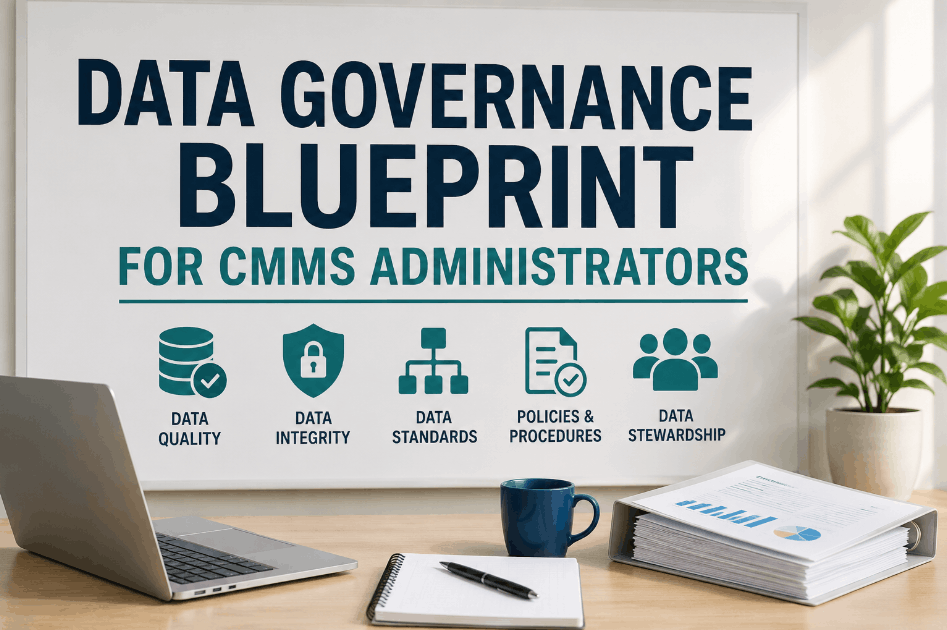
A CMMS data governance blueprint addresses record creation, classification, change control, and ongoing stewardship. Sign Up Free to configure OxMaint governance rules and start enforcing data standards across your maintenance operation.
Asset Master Data Standards and Naming Taxonomy
Asset records created without naming conventions produce duplicate entries, misclassified equipment, and reporting gaps. Defining and enforcing an asset taxonomy — by category, system, location, and criticality — at record creation prevents the inconsistency that makes multi-site reporting unreliable.
Failure Code Standardization and Code Library Control
Uncontrolled failure code libraries grow into taxonomies with hundreds of overlapping entries that cannot be aggregated for trend analysis. Locking code libraries to approved entries with administrator-only edit access preserves classification integrity and enables meaningful failure pattern reporting.
Work History Field Completion Requirements
Work orders closed without cause codes, action codes, or technician notes produce incomplete repair histories that cannot support reliability analysis. Requiring structured field completion before work order closure enforces the documentation discipline that makes work histories analytically useful.
Approval Workflows for Asset and Record Changes
Asset record modifications made without approval workflows create uncontrolled master file drift that compounds over time. Routing critical field changes — asset reclassification, retirement, location updates — through configured approval steps protects record integrity and creates a change audit trail.
Exception Handling and Record Quality Flagging
Data exceptions — duplicate assets, unresolved failure codes, incomplete records — accumulate silently without a flagging mechanism. Configuring exception detection rules in OxMaint surfaces governance violations for administrator review before they compound into systematic data quality problems.
Cross-Site Data Stewardship and Consistency Reviews
Multi-site CMMS deployments require periodic stewardship reviews to identify sites where governance standards have drifted. Comparing field completion rates, taxonomy compliance, and code usage across sites gives CMMS administrators the visibility needed to maintain enterprise-level record consistency.
CMMS Data Governance by Record Category
Book a Demo to explore how OxMaint organizes governance controls across asset records, work histories, failure codes, and inspection data to support reliable CMMS decision-making across sites.
| Record Category | Primary Governance Risk | Key Quality Metric | Control Mechanism | OxMaint Governance Lever |
|---|---|---|---|---|
| Asset Master Records | Duplicate entries, inconsistent naming | Taxonomy compliance rate by site | Naming standard enforcement at creation | Asset template with required field validation |
| Failure and Cause Codes | Uncontrolled code proliferation | Code utilization distribution by category | Locked code library, admin-only edits | Controlled code list with admin access control |
| Work Order Histories | Missing cause/action codes on closure | Closure field completion rate by team | Required fields before status change | Mandatory field rules on WO closure |
| Inspection Records | Inconsistent result classification | Pass/fail taxonomy consistency rate | Standardized response options per checklist | Fixed-response inspection templates |
| Parts and Inventory Records | Duplicate part numbers, classification gaps | Parts linked to asset records percentage | Parts catalog approval workflow | Asset-linked parts records with admin review |
How Weak CMMS Data Governance Undermines Maintenance Decisions
Sign Up Free to build data governance infrastructure in OxMaint and restore the record quality your maintenance reporting and reliability programs depend on.
Frequently Asked Questions: Data Governance Blueprint for CMMS Administrators
What is CMMS data governance?
CMMS data governance is the structured application of standards, controls, and approval workflows that keep asset records, failure codes, and work histories consistent enough to support reliable maintenance reporting and decisions.
How does OxMaint support CMMS data governance for administrators?
OxMaint provides configurable field validation, mandatory completion rules, controlled code libraries, approval workflows, and record change logging that administrators can deploy without custom development or IT involvement.
What CMMS record types carry the highest data quality risk?
Asset master records and failure codes carry the highest risk because inconsistency in these categories propagates into every downstream report, work order, and reliability analysis that depends on them.
How should CMMS data quality be measured?
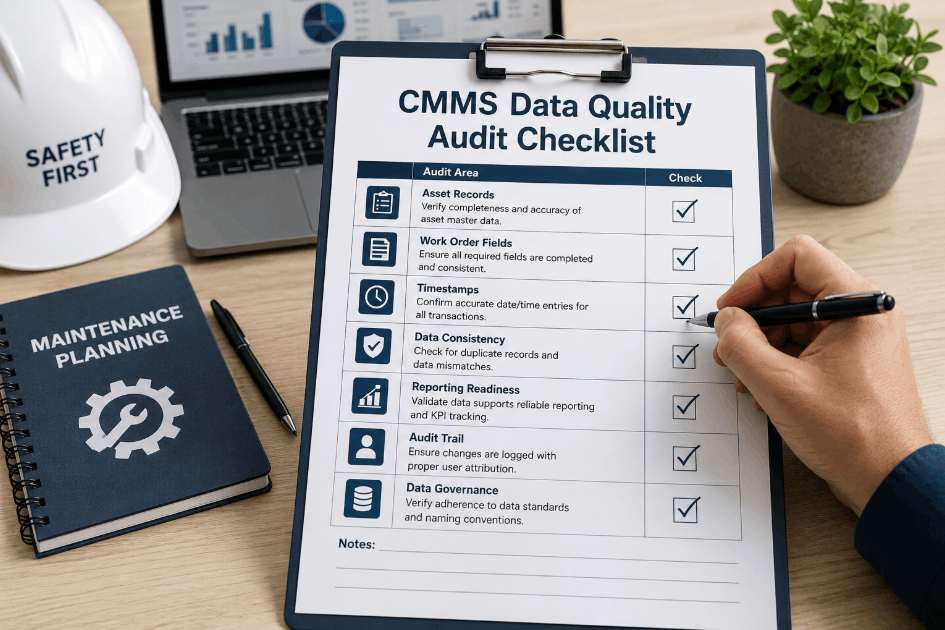
Measure field completion rates on work order closure, taxonomy compliance rates on asset records, and code utilization distribution across failure categories. These metrics identify governance gaps before they compound into systemic data quality failures.
How often should CMMS data governance be reviewed?
Quarterly governance reviews are appropriate for most facilities. Multi-site deployments benefit from monthly cross-site consistency checks to catch taxonomy drift before it affects enterprise-level reporting.