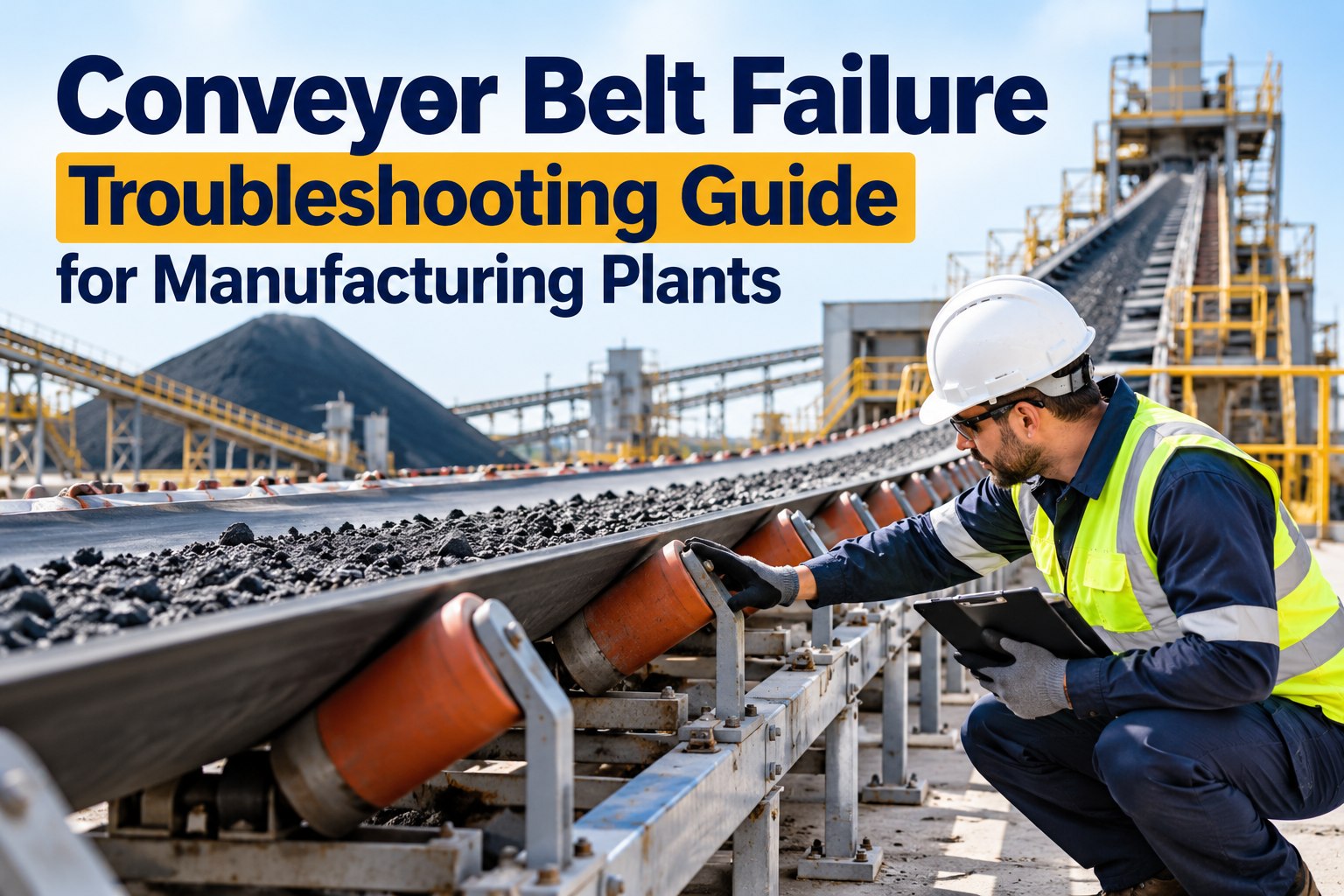
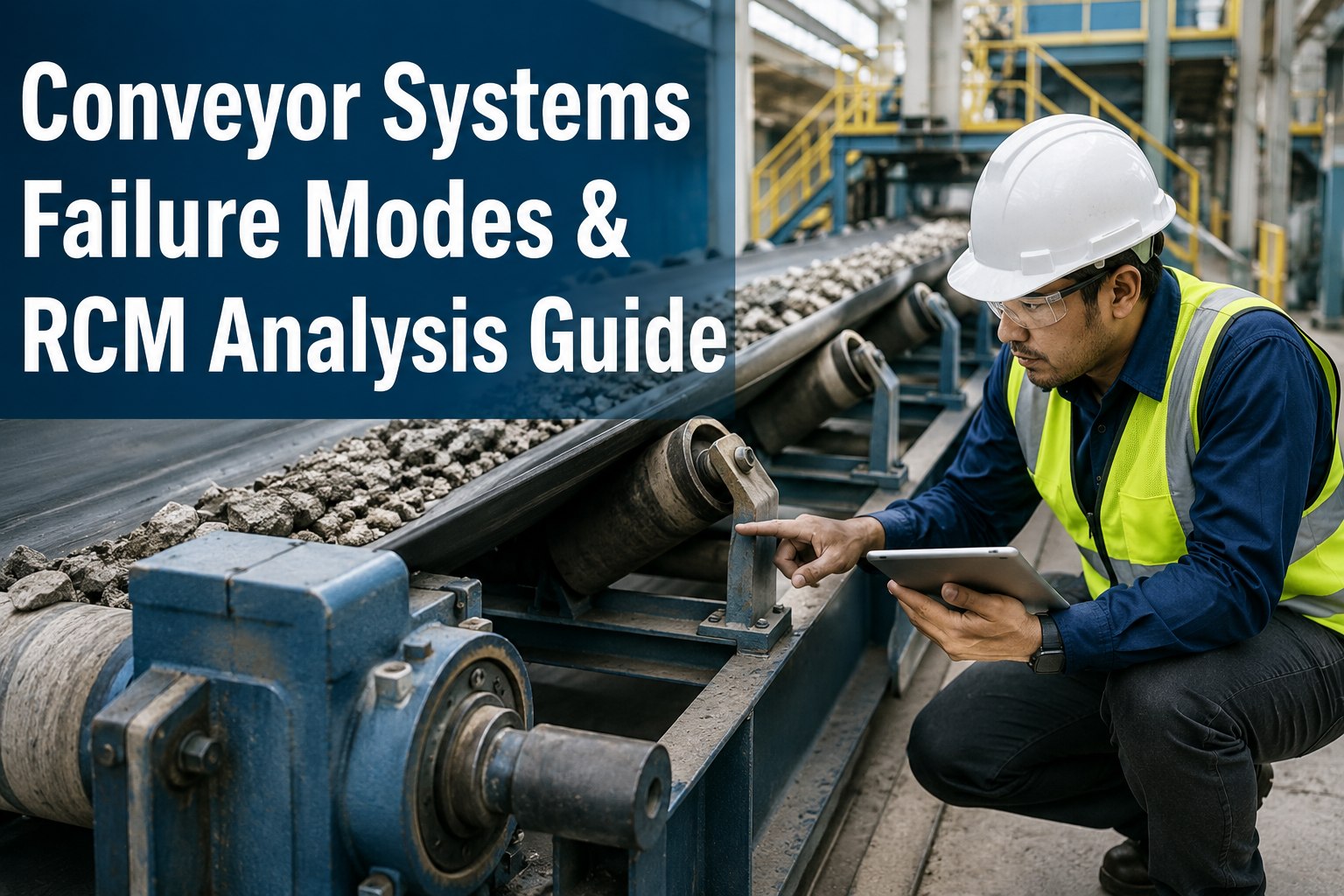
Every manufacturing shift that starts with a conveyor jam, a misaligned belt, or a burned-out drive motor is a shift that loses hours — and unplanned downtime costs manufacturers upwards of $250,000 per hour in lost throughput, emergency labor, and ripple-effect delays across the production line. Conveyor system failures are among the most common and preventable causes of that downtime, yet most plants still wait for the symptom before acting on the cause. A structured conveyor maintenance and troubleshooting program — paired with a digital maintenance system — changes that equation entirely. Start a free trial with Oxmaint to build digital conveyor PM checklists your team actually follows, or book a demo to see how automated scheduling keeps your conveyors running shift after shift.
The Conveyor System Maintenance & Troubleshooting Guide
From belt tracking to motor health — every failure mode, its warning sign, and the maintenance response that stops it before it stops your line.
$250K+
Per hour cost of unplanned conveyor downtime in manufacturing
85%
Of conveyor failures are preventable with a structured PM program
20%+
Energy wasted by a single misaligned conveyor belt under load
3x
Longer belt life with consistent lubrication and alignment checks
Why Conveyors Fail
The 6 Root Causes Behind Most Conveyor Breakdowns
Before you can maintain a conveyor effectively, you need to know where failures actually originate. Most breakdowns are not random — they trace back to a small set of root causes that show detectable warning signs weeks before the line stops.
01
Belt Mistracking
Caused by uneven loading, worn idlers, off-center splices, or an unlevel frame. Creates edge wear, material spillage, and accelerated component damage along the full conveyor path.
Warning: Belt drifting to one side during loaded or unloaded runs
02
Bearing & Roller Seizure
Inadequate or contaminated lubrication, misalignment, and age-related fatigue cause rollers to seize. A single frozen roller increases belt drag and raises motor current draw significantly.
Warning: Squealing or grinding noise, localized belt hot spot
03
Belt Slippage
Worn pulley lagging, incorrect tension, wet or oily surfaces, and overloaded systems cause the belt to slip on the drive pulley. Generates heat and reduces throughput without obvious visible signs.
Warning: Reduced speed under load, burning smell near drive pulley
04
Motor Overheating
Blocked ventilation, voltage imbalance, seized downstream components, and missed lubrication schedules lead to motor overheating. Drive chain wear and sprocket damage compound when ignored.
Warning: Motor running hot to touch, tripping thermal overload relay
05
Splice & Belt Damage
Incorrect splice installation, crimped storage, sharp-edge contact, and material carryback abrasion degrade belt integrity at splice points — the most common failure location on any belt.
Warning: Visible cracks, fraying edges, or bulge at splice joint
06
Control System Faults
Faulty wiring, software glitches, sensor misalignment, and inadequate PLC maintenance cause unexpected stops and false emergency triggers that disrupt production without any mechanical fault present.
Warning: Intermittent unexpected stops, E-stop activating without contact
Stop Reacting to Conveyor Failures. Start Preventing Them.
Oxmaint gives your maintenance team mobile checklists, automated PM scheduling, real-time asset tracking, and work order generation — in one platform built for manufacturing maintenance.
Troubleshooting Reference
Conveyor Problem Diagnosis: Symptom to Solution
When something goes wrong, your team needs fast answers. This reference table maps the symptom to the probable cause and the correct first-response action — so your technicians spend time fixing the problem, not debating what it is.
| Symptom Observed |
Most Likely Cause |
Priority |
Corrective Action |
| Belt drifting to one side |
Misaligned idlers or uneven loading across belt width |
High |
Check frame level, realign idlers; adjust training idlers symmetrically — do not over-tension to compensate |
| Belt slipping on drive pulley |
Insufficient tension, worn lagging, or overloaded system |
High |
Check tension against spec; inspect pulley lagging wear; reduce load if above rated capacity |
| Excessive belt wear at edges |
Belt running against frame due to mistracking |
Moderate |
Correct belt alignment immediately; inspect edge for structural damage before return to service |
| Loud squealing or grinding |
Dry or seized roller bearing; belt rubbing on structure |
Critical |
Identify and replace seized rollers; do not lubricate a seized bearing — replace the unit |
| Motor tripping thermal overload |
Blocked ventilation, overload, or seized conveyor component |
Critical |
Do not restart without investigation; check amp draw, inspect for seized rollers or jammed material |
| Material spillage along belt path |
Mistracking, overloaded cross-section, or worn belt sidewalls |
High |
Correct tracking; install or adjust edge skirts; reduce feed rate to designed capacity |
| Belt vibrating or bouncing |
Uneven roller spacing, flat spots on rollers, incorrect tension |
Moderate |
Inspect rollers for flat spots; verify idler spacing against design spec; adjust tension |
| Unexpected conveyor stop |
E-stop sensor misalignment, electrical fault, PLC error |
High |
Check pull-cord continuity and sensor alignment; inspect wiring for loose connections; review PLC fault log |
| Carryback material under conveyor |
Worn belt cleaner blades, material sticking to belt |
Monitor |
Inspect and replace worn cleaner blades; verify blade pressure against belt surface |
| Reduced throughput speed |
VFD fault, belt slippage, or motor under-performing |
High |
Check VFD error codes; verify motor power supply voltage; inspect belt tension and pulley grip |
Preventive Maintenance Schedule
Conveyor PM by Frequency: What to Check and When
The most reliable conveyor programs use inspection frequency matched to component wear rates — not a single annual checklist. Here is the tiered schedule that maintenance engineers use to catch developing faults before they become unplanned stops.
Daily
Walkthrough
Visual belt tracking check — loaded and unloaded
Listen for abnormal noise along full belt path
Check for material spillage at transfer points
Verify emergency stops are unobstructed
Confirm belt speed is consistent under load
Weekly
Hands-On
Belt tension measurement and adjustment if needed
Lubricate bearings per manufacturer schedule
Inspect rollers by hand — check for free rotation
Clean drive area and remove carryback buildup
Check motor temperature and current draw
Monthly
Scheduled Stop
Full belt surface inspection for cracking or splices
Pulley lagging thickness and condition check
Electrical panel and sensor function test
Safety guard integrity and fastener check
Frame squareness measurement at key points
Quarterly
Full Audit
Motor insulation resistance (megger) test
Drive chain wear measurement and tension
Sprocket tooth profile inspection for hook wear
Belt stretch measurement and splice integrity
Full energy control procedure (LOTO) verification
Belt Tracking Deep Dive
Belt Tracking: The Most Common Problem, Done Right
Belt mistracking is the single most common conveyor maintenance issue — and the most mishandled. Over-tensioning to force the belt to center is the default mistake that increases energy draw, damages splices, and accelerates wear without fixing the root cause. Alignment comes first. Here is the systematic approach.
1
Level the Frame First
Use a carpenter's level to verify the frame is level to within 1/32 inch. Measure diagonally corner to corner — if measurements differ, the frame is out of square. No belt adjustment will hold until the frame is correct. This step is skipped in most reactive repairs and is why the problem returns.
2
Square All Components
Verify that pulleys, snubs, and idlers are perpendicular to the belt centerline and parallel to each other. Even a few millimeters of pulley misalignment produces persistent drift. Use a laser alignment tool for accurate measurement — eyeballing is not sufficient for tracking diagnosis.
3
Set Tension to Specification
Set initial tension per manufacturer specification — typically measured by belt sag between idlers. Tension sets traction and sag; it does not fix drift. Cranking in excess tension to center a drifting belt increases energy consumption and accelerates splice fatigue without solving the alignment fault.
4
Use Training Idlers for Fine Adjustment
Make small, symmetric adjustments to training idlers or return trainers. Adjust one idler at a time. Wait for the belt to respond over 3–5 full belt revolutions before making the next adjustment. Observe behavior under both loaded and unloaded conditions — a belt that tracks under load but drifts empty points to loading point misalignment.
5
Confirm After Thermal Stabilization
Belt tracking changes as the system warms to operating temperature. Final confirmation of correct tracking must be made after the system has run for a full operating cycle under normal load. Document the final idler positions and tension readings in the asset maintenance record for future reference.
Lubrication Best Practices
Lubrication: Getting It Right and Avoiding the Common Mistakes
Inadequate lubrication is a leading cause of bearing failure — but over-lubrication is equally destructive. Excess grease attracts dust and debris, contaminating bearings and creating the very wear it was meant to prevent. The goal is the right lubricant, applied correctly, on schedule.
Lubrication Do's
Use the lubricant specified by the component manufacturer — not a generic substitute
Build the lubrication schedule around operational load and environment, not calendar alone
Increase frequency in dusty, wet, or high-temperature operating environments
Apply grease to bearings slowly — until slight resistance is felt, then stop
Use synthetic oils for gearboxes and high-load drive applications
Document every lubrication event in the asset maintenance record
Lubrication Don'ts
Do not use the same lubricant for bearings and gearboxes — types are not interchangeable
Never lubricate a bearing that has already seized — replace the unit entirely
Do not apply lubricant to contaminated components without cleaning first
Avoid mixing lubricant brands or types — incompatibility causes accelerated degradation
Do not skip lubrication because the system appears to be running fine
Never rely on visual inspection alone to determine if lubrication is needed
The Real Cost of Skipping Conveyor Maintenance
$8,000–$40,000
Typical cost of an unplanned conveyor belt replacement including parts, emergency labor, and line downtime
72 hours
Average time to restore full production after a major drive motor failure without spare parts on hand
4–6 weeks
Lead time for custom conveyor belts or specialty drive components ordered after an unplanned failure
Digital Maintenance Connection
From Inspection Finding to Closed Work Order — Without the Gaps
A conveyor PM checklist on paper gets lost, forgotten, or never escalated. A digital system ensures that every finding — a misaligned idler, a rising motor temperature, a worn splice — becomes a tracked work order that gets assigned, completed, and documented without manual follow-up.
Conveyor Asset Data Tracked in Oxmaint
Belt Condition History
Alignment Records
Lubrication Log
Motor Health Data
Work Order Timeline
PM Compliance Rate
Spare Parts Usage
"We went from reacting to belt failures every three weeks to running four months without an unplanned conveyor stop. The difference was getting every technician on the same digital checklist and having every finding auto-generate a work order. Nothing falls through the cracks anymore."
Maintenance Supervisor
Midwestern Packaging and Distribution Facility
Frequently Asked Questions
Conveyor Maintenance: Common Questions Answered
How often should conveyor belts be inspected?
Daily visual walkthroughs for tracking, noise, and debris are the baseline for any operational conveyor. Weekly hands-on checks should cover belt tension and roller condition. Monthly inspections during planned downtime address belt splice integrity, pulley lagging, and electrical systems. High-throughput or harsh-environment conveyors need daily checks supplemented by more frequent component-level inspection based on operating data.
Oxmaint automates inspection scheduling so intervals are enforced per conveyor, not assumed.
What causes conveyor belts to track off-center and how do you fix it?
Belt mistracking is almost always caused by an unlevel frame, misaligned idlers, off-center loading, or worn components — not insufficient tension. The correct fix starts with leveling the frame, then squaring all pulleys and idlers to the belt centerline. Training idler adjustments come last.
Book a demo to see how Oxmaint guides technicians through structured alignment procedures with mobile checklists.
What are the most important signs that a conveyor motor needs attention?
Key warning signs include the motor running hot to the touch, thermal overload relay trips, audible humming under load, reduced belt speed at rated load, and elevated current draw measured at the panel. Any single sign warrants investigation before the next production run. Oxmaint lets teams log motor readings directly from the field and
auto-generate work orders when readings exceed set thresholds.
How does a CMMS help with conveyor maintenance management?
A CMMS like Oxmaint replaces paper checklists and verbal handoffs with digital PM schedules, mobile inspection forms, and automatic work order creation when findings require follow-up. Every inspection, lubrication event, and repair is logged against the conveyor asset record — giving maintenance managers full visibility into compliance and asset condition without chasing technicians for updates.
Start free with Oxmaint and configure your first conveyor PM schedule in under an hour.
What is the right way to lubricate conveyor bearings?
Use the lubricant specified by the bearing manufacturer — not a universal substitute. Apply grease slowly until slight resistance is felt, then stop. Over-lubrication attracts dust and accelerates bearing wear just as under-lubrication does. Establish a lubrication schedule tied to run hours or calendar interval and document every application. Never lubricate a seized bearing — it must be replaced.
Your Conveyor Maintenance Program Deserves Better Than Paper Checklists
Oxmaint connects conveyor inspections, PM schedules, and repair work orders into one mobile-first platform. Every finding gets tracked. Every task gets closed. Every conveyor gets the attention it needs — before it stops your line. Deploy across your full facility in days, not months.