Manufacturing has entered an era where waiting for a machine to break before you fix it is no longer a competitive strategy — it is a liability. Digital twin technology gives plant teams a live virtual replica of every physical asset, updated continuously with real sensor data, so engineers can simulate failures, stress-test operational changes, and predict breakdowns days or weeks before they happen — all without touching the actual equipment. The global digital twins in manufacturing market was valued at $21.26 billion in 2025 and is projected to reach $441.98 billion by 2032 at a CAGR of 54.27%, the fastest-growing segment in all of industrial technology. This page explains exactly what a digital twin is, how it works on the plant floor, and what measurable results manufacturers are achieving right now. If your plant is still reacting to failures instead of predicting them, sign up free on Oxmaint and see how predictive simulation fits into your maintenance workflow.
Smart Factory & Industry 4.0 — 2026
Digital Twins Are Letting Manufacturers See the Future of Their Equipment
A virtual replica of your factory floor that predicts failures before they happen, simulates changes before you make them, and optimizes performance without risking production. This is digital twin technology — and it's reshaping manufacturing maintenance.
The Market Signal
$441B
Projected size of the digital twins in manufacturing market by 2032 — growing at 54.27% CAGR, the fastest of any industrial tech segment
75%
Of businesses have already adopted or piloted digital twin technology as of 2025
92%
Of companies implementing digital twins report ROI above 10%, with 50% achieving 20%+ returns
50%
Reduction in development time achieved by manufacturers using virtual prototyping and simulation (McKinsey)
90%
Of potential production issues identified before physical changes are made — PepsiCo's result from digital twin implementation
What a Digital Twin Actually Is
Most explanations make digital twins sound abstract. Here is the practical reality for a manufacturing plant.
01
Physical Asset + Sensors
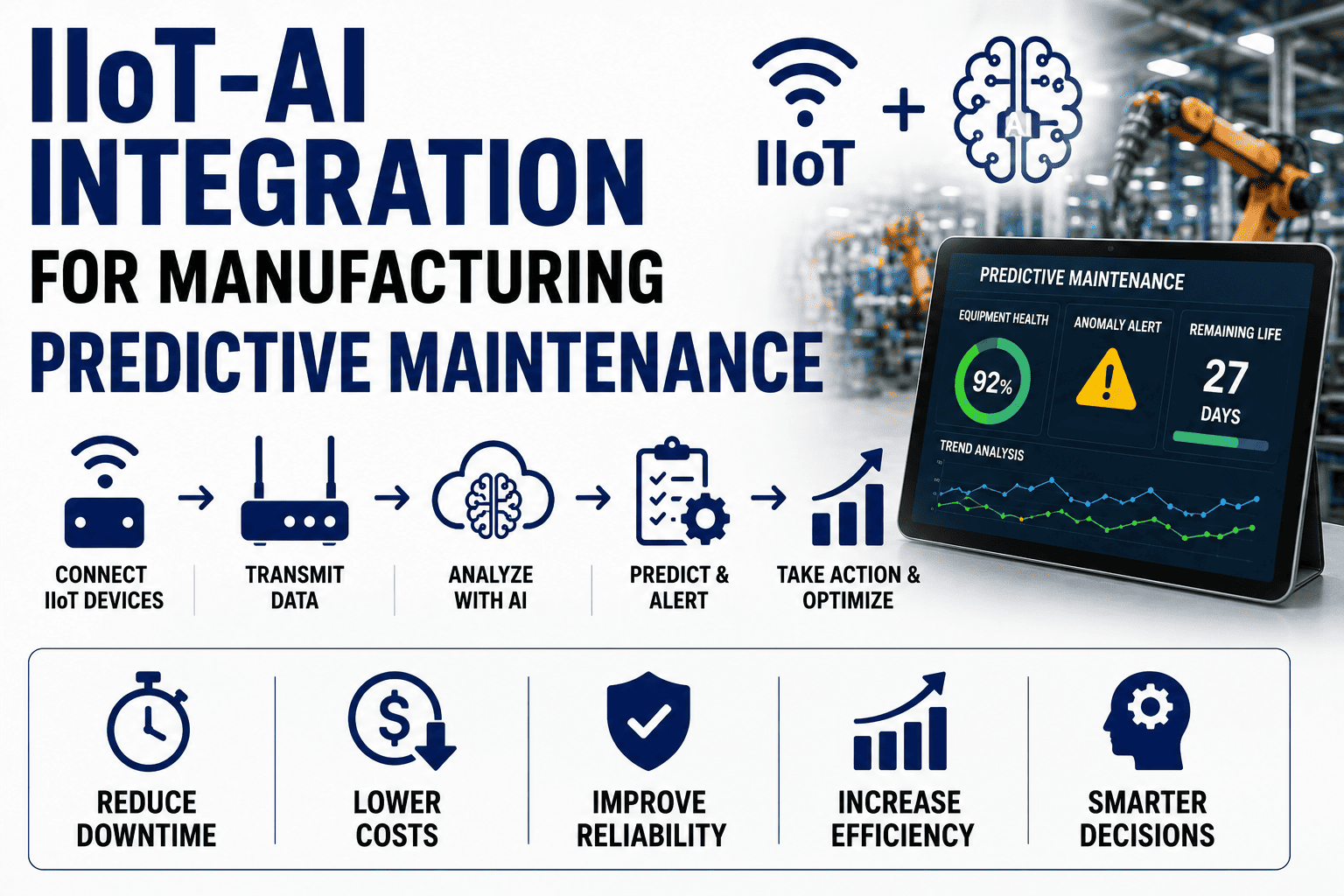
IoT sensors attached to machines capture vibration, temperature, pressure, speed, and current data in real time — every second, every shift, continuously.
02
Live Data Feed to Virtual Model
That data streams into a digital replica of the asset — a dynamic virtual model that mirrors exactly what the physical machine is doing at any given moment.
03
AI Simulation & Prediction
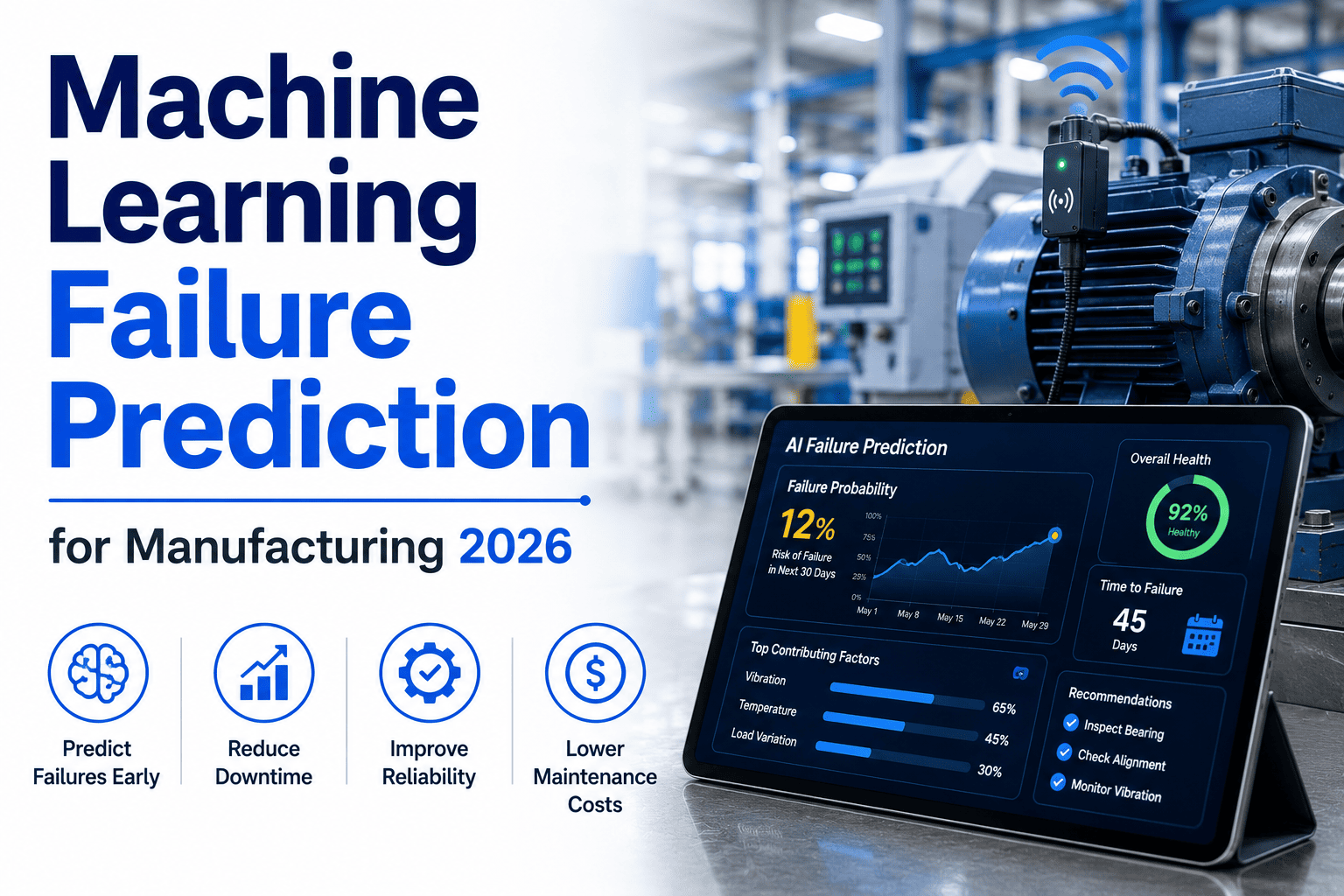
AI models run on the virtual replica to simulate stress scenarios, detect anomaly patterns, and forecast when specific components will reach failure thresholds — before it happens on the floor.
04
Actionable Maintenance Alerts
Predicted failures trigger work orders in your CMMS automatically — with recommended action, required parts, and optimal timing — so maintenance happens before production stops.
Traditional Monitoring
Sensors tell you what is happening right now. You react after the problem appears. You cannot test changes without risking production.
VS
Digital Twin
A living virtual model shows you what is about to happen. You act before the problem occurs. You test every change safely in the virtual environment first.
5 Ways Plants Are Using Digital Twins Right Now
Digital twins are not a single application — they solve five distinct problems that have cost manufacturers billions for decades.
Highest ROI
Predictive Failure Detection
The virtual model continuously compares actual machine behavior against baseline performance profiles. When vibration patterns, temperature curves, or current draw deviate from normal ranges, AI flags the anomaly and predicts failure timing — up to 30 days in advance. Plants in capital-intensive industries using this approach have reduced unexpected work stoppages by up to 20%, saving over €36 million per year per facility in some oil and gas operations.
Design & Product
Virtual Prototyping
New products and components are tested in the digital environment under stress, fatigue, and thermal loads before a single physical prototype is built. McKinsey research confirms this cuts total development time by up to 50% and dramatically reduces costly physical iterations.
Operations
Process Optimization
Production line configurations, shift schedules, and throughput targets can be modeled and stress-tested virtually. Organizations using digital twins report up to 20% improvement in consumer promise fulfillment and 10% reduction in labor costs through process simulation.
Capital Planning
Layout & Capacity Planning
Factory expansions, equipment repositioning, and capacity upgrades can be planned and validated in the virtual environment before any physical changes are made — reducing capital waste and accelerating commissioning timelines.
Sustainability
Energy Optimization
Digital twins continuously process power consumption data and system performance to identify energy inefficiencies. Buildings and plants using digital twin energy management have achieved up to 50% reduction in carbon emissions and 35% improvement in operational efficiency.
Oxmaint bridges the gap between digital twin alerts and maintenance action. When your simulation flags a predicted failure, Oxmaint automatically generates the work order, assigns the technician, and confirms the right part is in stock.
Measured Results From Real Implementations
The numbers behind digital twin adoption are no longer theoretical projections — they are documented outcomes from manufacturers who have deployed this technology at scale.
–25 to –55%
Maintenance Cost Reduction
Manufacturers using digital twins report 25–55% reductions in total maintenance costs within the first 12–36 months of implementation, driven by fewer emergency repairs and more precise preventive interventions.
15 to 42%
Operational Efficiency Gain
Operational efficiency improvements of 15–42% are consistently documented across manufacturing sectors, combining reduced downtime, faster changeovers, and optimized production scheduling enabled by simulation.
20 to 30%
Capital & Operational Efficiency
McKinsey's 2025 analysis found digital twins delivered 20–30% better capital and operational efficiency in industrial programs where they were fully deployed and integrated with live asset data.
3–6 months
Time to First ROI
Manufacturing operations see the first measurable ROI from digital twin investments in as little as 3–6 months — typically from predictive maintenance savings alone — before the full transformation benefits are realized over 12–36 months.
Is Your Plant Ready for Digital Twins?
Digital twin implementation does not require a complete infrastructure overhaul. It scales with where your plant is today. Here is how readiness typically breaks down across manufacturing facilities.
Starting Point
Connected Sensors on Critical Assets
Begin with IoT sensors on your 10 most critical machines. Even basic vibration and temperature monitoring on CNC spindles or conveyor drives delivers immediate value — and creates the data foundation the virtual model needs.
Requires: IoT sensors, CMMS integration
Intermediate
Asset-Level Digital Twin
Individual assets get full virtual replicas synced with live data. Failure prediction operates per machine. Maintenance is triggered by condition, not calendar. Most plants see breakeven within 6–9 months at this stage.
Requires: Sensor network, AI analytics, CMMS work order automation
Advanced
Full Production Line Twin
The entire production line or facility runs as a synchronized virtual model. Process optimization, capacity planning, energy management, and maintenance all operate from one integrated simulation environment — the fully realized smart factory.
Requires: Full IIoT deployment, AI platform, integrated ERP/MES/CMMS
Frequently Asked Questions
What is a digital twin in manufacturing and how is it different from a simulation?
A simulation is a model that uses historical or static data to predict system behavior under specific conditions — it is a snapshot in time that you run manually. A digital twin is a dynamic, living virtual replica that is continuously updated with real-time data from the physical asset via IoT sensors. The key difference is bi-directional data flow: the digital twin mirrors the physical asset moment to moment, allowing real-time monitoring, anomaly detection, and predictive analytics that a one-time simulation cannot provide.
How much does digital twin technology reduce manufacturing downtime?
In capital-intensive manufacturing environments, digital twin implementations have reduced unexpected work stoppages by up to 20%. In oil and gas, this translates to savings of approximately €36 million per year per facility. For general manufacturing, the combination of predictive failure detection and maintenance cost optimization delivers 25–55% reductions in total maintenance spend within 12–36 months. The predictive maintenance segment specifically is the leading application driving digital twin adoption — projected to grow at a 37.3% CAGR through 2032.
How does a digital twin integrate with a CMMS like Oxmaint?
The integration works as a closed loop: the digital twin's AI detects a predicted failure and sends an alert to the CMMS, which automatically generates a work order with the failure type, affected asset, recommended repair action, and required parts list. The technician receives a mobile notification, performs the maintenance before failure occurs, and closes the work order — feeding real repair data back into the digital twin model to continuously improve its prediction accuracy. This loop converts predictive intelligence into executable maintenance action without manual intervention.
What is the typical ROI timeline for digital twin implementation in manufacturing?
Research across implemented programs shows manufacturers typically see initial ROI within 3–6 months, primarily from predictive maintenance savings. Full transformation benefits — covering operational efficiency, energy optimization, and capital planning improvements — typically realize within 12–36 months. 92% of companies that have implemented digital twins report ROI above 10%, and approximately 50% achieve returns of 20% or more. The starting point requires far less investment than most plants assume — a focused pilot on 10 critical assets with IoT sensors and CMMS integration often reaches breakeven within the first year.
Do small and mid-size manufacturers benefit from digital twin technology?
Yes — and increasingly so. The entry point for digital twin adoption has dropped significantly as cloud-based platforms, lower-cost IoT sensors, and AI-as-a-service solutions have matured. More than 40% of manufacturers are currently in the pilot phase of digital twin adoption, signaling a transition from large-enterprise-only technology to wider industrial use. Mid-size plants can start with asset-level twins on their most critical machines, achieve measurable downtime reduction within months, and scale incrementally without a full infrastructure overhaul.
Your Equipment Is Generating Data Right Now.
Start Acting on It.
Digital twins turn sensor data into predictive intelligence — and Oxmaint turns that intelligence into maintenance action. Track every asset, automate every work order, and predict every failure before it stops your production line.