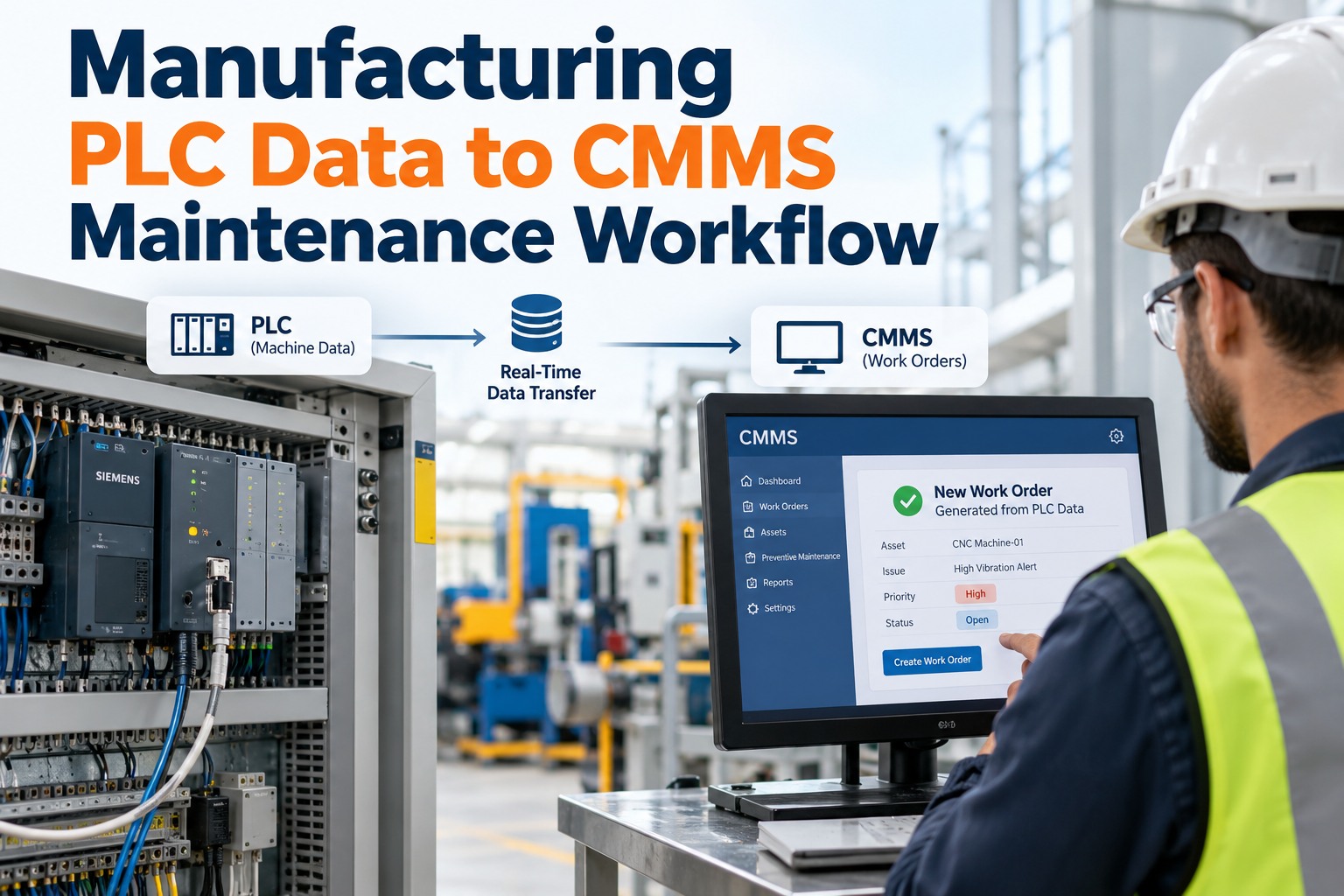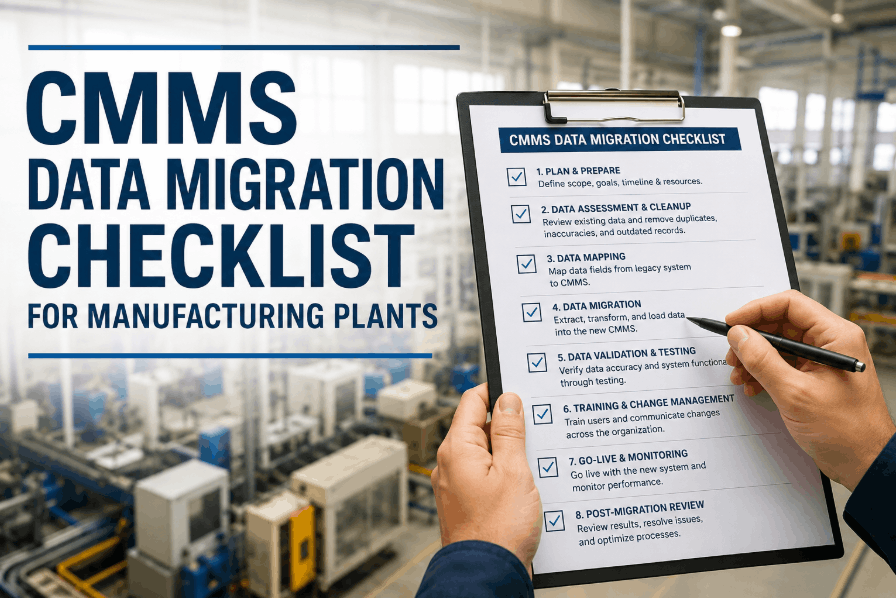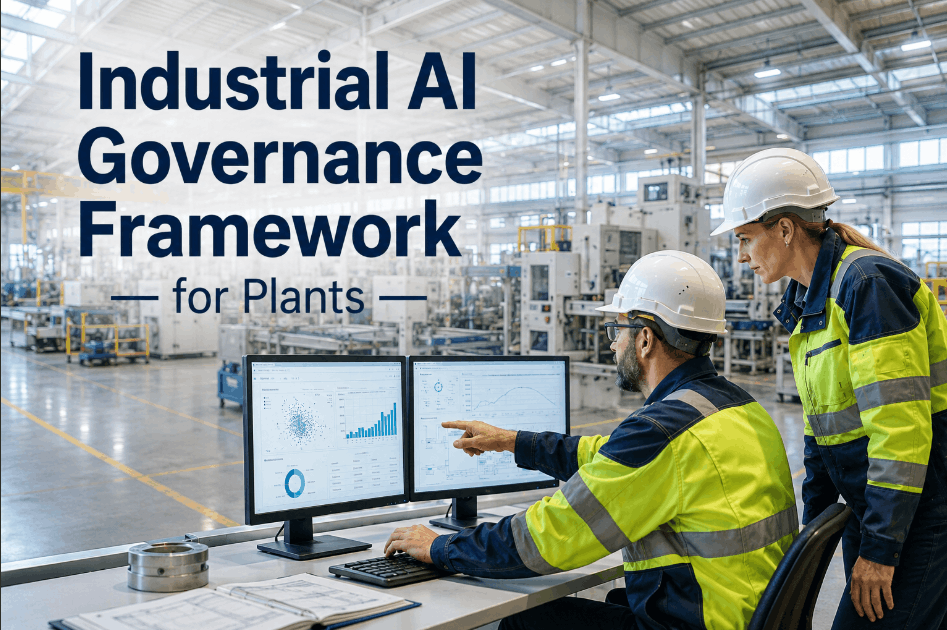
An industrial AI governance framework breaks down the same way every time: a vision model flags a defect, a predictive model schedules a work order, and nobody can say afterward who validated the detection or whether a human reviewed it before action was taken. Plants deploying AI vision cameras and predictive maintenance models need model ownership, validation steps, and a human review checkpoint built in from day one — not added after an audit raises questions. Sign Up Free to see how OxMaint structures AI detections, confidence scores, and auto-generated work orders so every AI action stays traceable and reviewable.
Deploy Plant AI With a Built-In Review Checkpoint
OxMaint pairs AI Vision and predictive maintenance detections with confidence scores and auto-generated work orders, so every AI action has a traceable record and a human review step.
Why Plants Need an Industrial AI Governance Framework Now
As plants move from pilot cameras and sensors to AI models that auto-create work orders and reserve parts, the governance question shifts from "does the model work" to "who is accountable when it acts." A model running on-premise still needs a defined approval workflow, a record of what confidence threshold triggered an action, and a clear point where a technician confirms or overrides the AI's recommendation. Plants that Book a Demo with OxMaint see how on-premise inference, confidence scoring, and auto-generated work orders combine into an auditable AI control structure rather than a black box.
NVIDIA edge AI processes camera and sensor data locally, keeping inference and the underlying data inside the plant's own infrastructure.
Every AI Vision detection — cracks, corrosion, PPE violations — carries a confidence percentage, giving reviewers a basis to validate or question the result.
AI-generated work orders route to an assigned technician who confirms the finding and completes the action — the model proposes, a person decides.
Every AI-triggered work order logs the detection, the confidence score, the assigned tech, and the resolution, creating a reviewable action history.
Predictive maintenance recommendations are tied to specific sensor inputs and historical patterns, so model output can be traced back to its basis.
AI-enriched records syncing to SAP, including Joule AI copilot interactions, stay inside existing ERP approval and cost-center controls.
Core Components of an Industrial AI Governance Framework
Each AI model — vision detection, predictive failure scoring, the AI assistant — needs a named owner responsible for its accuracy and its deployment scope across plants. Teams that Sign Up Free can configure model scope per facility before extending AI Vision coverage further.
Before trusting a detection model in production, its outputs need to be checked against confirmed faults and known-good conditions, establishing a measured accuracy baseline rather than an assumed one.
Defining which confidence levels route straight to a work order versus which require a supervisor look first keeps low-confidence detections from triggering action without oversight.
On-premise edge processing keeps camera and sensor data inside the plant, but the governance framework still needs to define how long detection records and images are retained and who can access them.
A consistent policy for adding cameras, sensors, or new model versions across plants prevents each site from running a different, unaudited version of the same AI capability. Book a Demo to see how multi-camera and multi-model deployment is managed centrally.
Industrial AI Governance Framework: Plant Reference
| Governance Component | Control Point | Review Trigger | OxMaint Mechanism | Review Frequency |
|---|---|---|---|---|
| Model ownership | Deployment configuration | New model or site rollout | Scoped model settings | Per deployment |
| Detection validation | Confidence scoring | Score below threshold | AI Vision confidence output | Continuous |
| Human review | Work order assignment | Auto-generated WO created | Technician confirmation step | Per work order |
| Data oversight | Edge data handling | Detection image and log capture | On-premise NVIDIA inference | Ongoing policy |
| Approval flow | ERP sync | Cost or parts impact | SAP-linked action records | Per transaction |
How OxMaint Supports Industrial AI Governance
OxMaint doesn't run AI without a record of what it did. AI Vision detections carry a confidence score, predictive maintenance recommendations link to the sensor data behind them, and AI-generated work orders log the detection, the assigned technician, and the resolution before the action is considered closed. On-premise NVIDIA inference keeps the data behind those decisions inside the plant. Plants can Sign Up Free and review how AI-triggered actions are logged before extending model coverage to additional lines.
Building an Industrial AI Governance Framework: Implementation Steps
Assign Model Owners
Name a responsible owner for each AI capability in use — vision detection, predictive scoring, and the AI assistant.
Set Confidence Thresholds
Define the score at which a detection auto-creates a work order versus routes to a supervisor for review first.
Document the Human Review Step
Specify who confirms an AI-generated work order before parts are reserved or the action is logged as closed.
Define Data Retention Rules
Set how long detection images, logs, and confidence records are kept, and who can access them across the plant.
Pilot on One Asset Class
Run the governance framework on a limited set of assets or cameras before extending coverage plant-wide.
Review and Expand Coverage
Use the pilot's accuracy and review data to refine thresholds before adding more cameras, sensors, or sites. Book a Demo to walk through a phased AI governance rollout.
Give Plant AI a Defined Review and Approval Path
OxMaint keeps model ownership, confidence scoring, and technician review built into every AI-triggered work order — on-premise and auditable.
Frequently Asked Questions
What is an industrial AI governance framework?
It is the set of controls — model ownership, validation, human review, and data oversight — that determine how AI detections and predictions are trusted and acted on in a plant.
Does OxMaint AI take action without human review?
AI Vision and predictive models generate work orders and recommendations, but a technician reviews and completes the assigned action before it's recorded as closed.
Where does AI Vision detection data get processed?
OxMaint's NVIDIA edge AI server processes video and image data on-premise, keeping inference and the underlying footage inside the plant's own infrastructure.
How are AI confidence scores used in governance?
Confidence scores attached to detections and predictions give reviewers a quantitative basis to decide whether a result needs additional review before action.
Can AI-triggered actions be traced back for audit?
Yes. Every AI-generated work order logs the detection, confidence score, assigned technician, and resolution against the asset record.
Build Plant AI Governance Around a Reviewable Action Trail
OxMaint gives plants confidence-scored detections, technician review steps, and on-premise inference for accountable AI deployment.