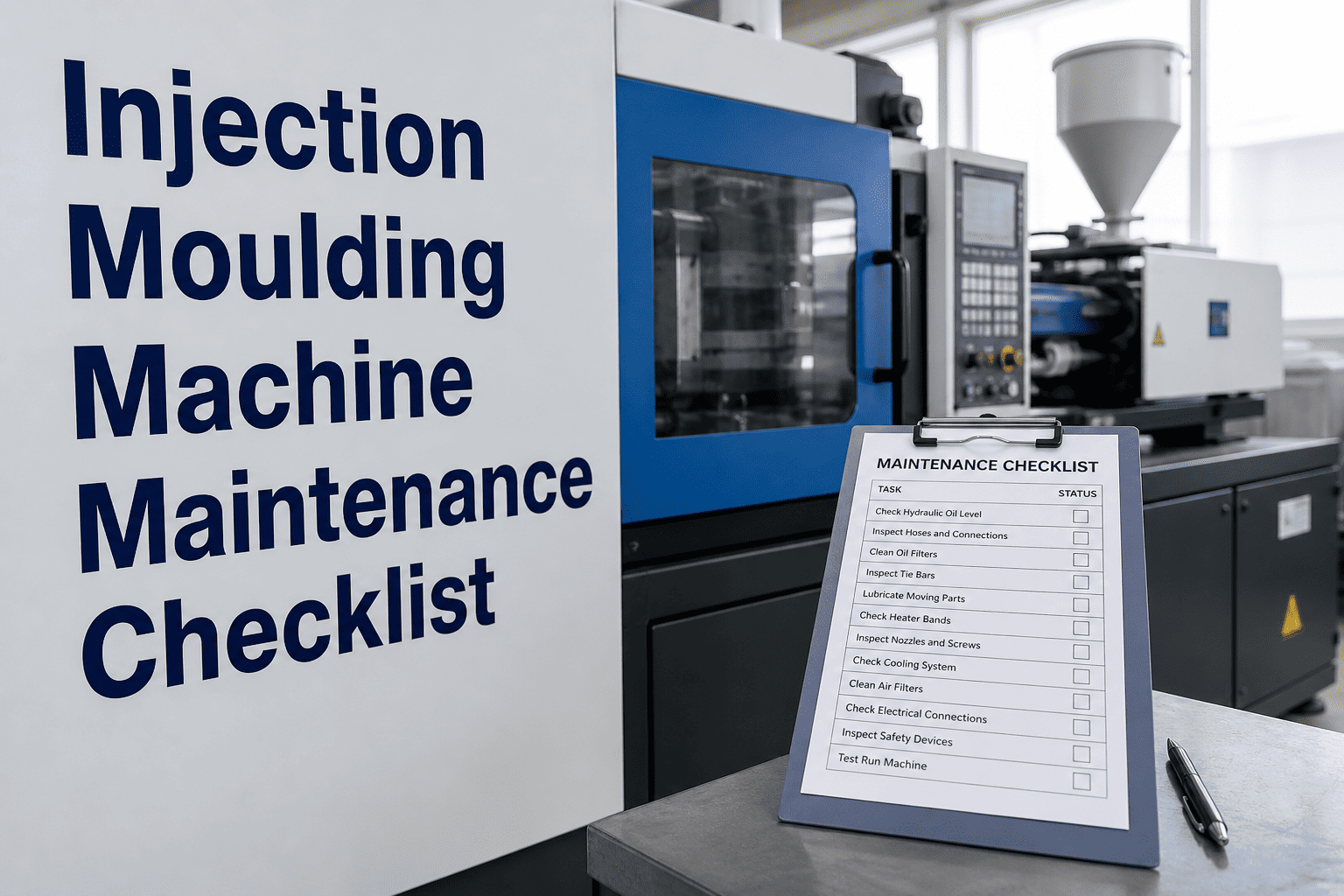
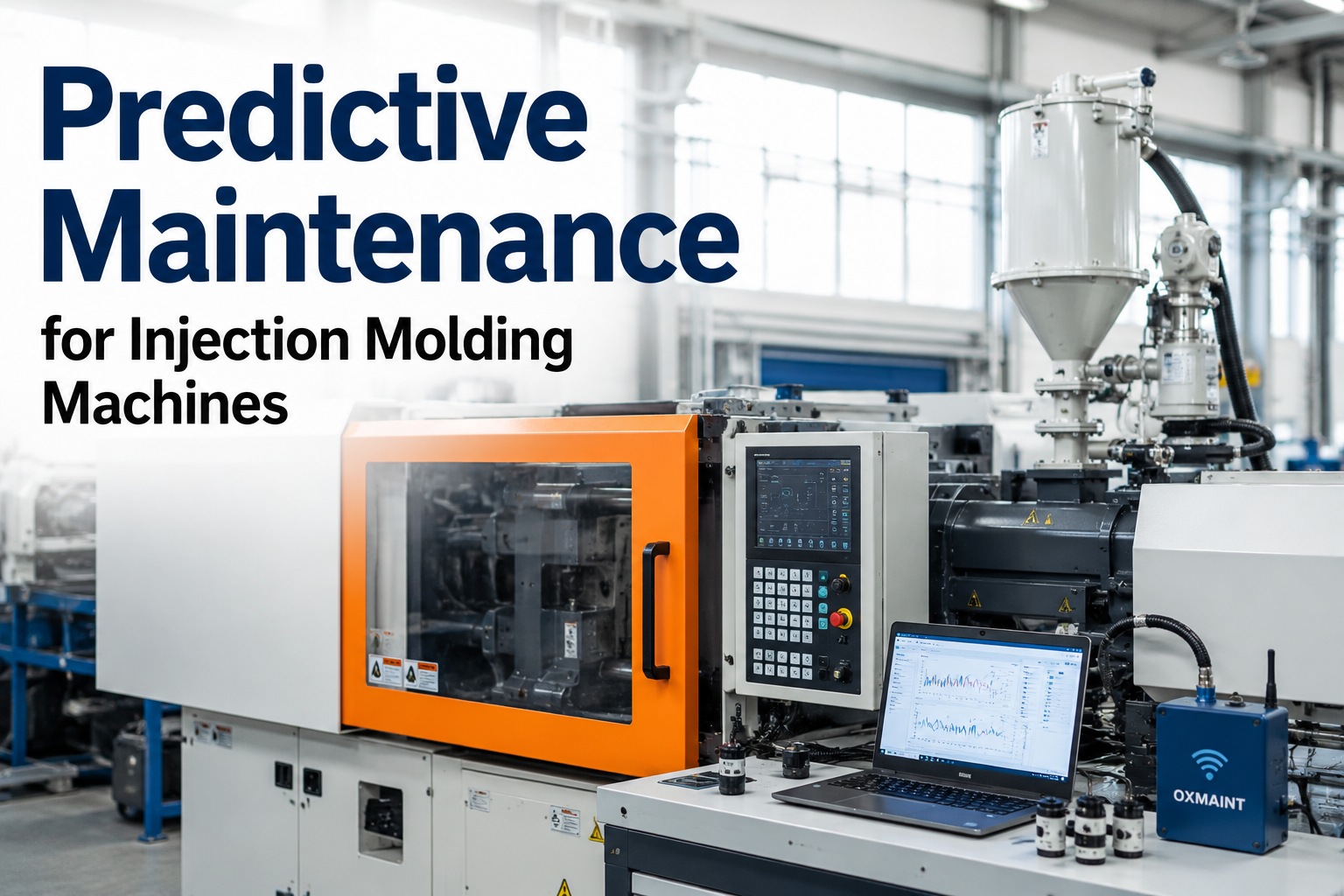
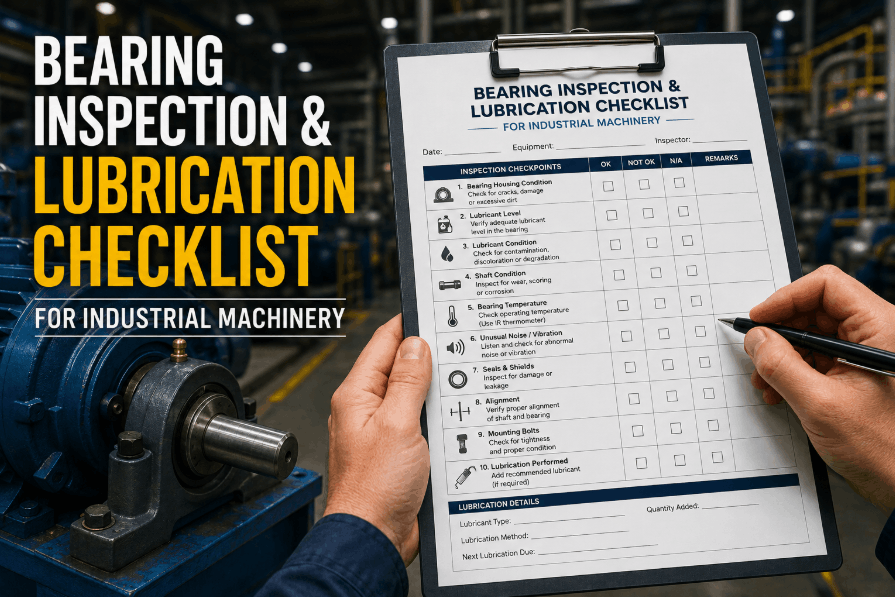
Injection moulding machines run on tight tolerances and precise conditions — even a small deviation in barrel temperature, hydraulic pressure, or clamp force can shift a batch from acceptable to scrap within minutes. This maintenance checklist is designed for plastics manufacturing teams who need a structured, repeatable programme covering every critical subsystem: barrel and screw assembly, hydraulics, clamping unit, cooling circuits, electrical controls, and safety interlocks. Use it as a field guide for daily rounds, monthly PM tasks, and annual overhaul planning. Teams using OxMaint's CMMS can schedule, assign, and document every check against the machine asset record — with full maintenance history always available at the point of service.
Plastics Manufacturing · Injection Moulding · PM Checklist
Injection Moulding Machine Maintenance Checklist
A complete preventive maintenance programme covering six subsystems — designed to reduce scrap, extend machine life, and keep your production floor running without unplanned stops.
6
Subsystems Covered
50+
Check Points
40%
Downtime Reduction with PM
D–A
Daily to Annual Intervals
DDaily
WWeekly
MMonthly
QQuarterly
AAnnual
Section 01
Barrel, Screw & Plasticising Unit
The barrel and screw are the heart of the injection unit. Wear, contamination, and temperature deviation here affect shot weight, melt quality, and cycle time — all before the material reaches the mould.
D
Barrel temperature zones at setpoint within ±5°C before first shot — verify all zones on HMI, not just first and last
Machine Operator · Start-up log
D
No purge material buildup on nozzle tip or drool from previous cycle — purge before production run begins
Machine Operator · Pre-production checklist
D
Back pressure and screw RPM within process parameters for material being run — any deviation logged and investigated
Process Technician · Process parameter log
W
Nozzle tip, check ring, and nozzle seat inspected for wear, pitting, or material degradation residue
Maintenance Tech · Weekly inspection form
M
Screw pulled and inspected for flights wear, corrosion pitting, and compression ratio — compare against OEM wear limit data
Instrumentation Tech · Screw inspection record
M
Barrel bore measured at feed, transition, and metering zones — out-of-round or tapered bore indicates replacement is approaching
Maintenance Supervisor · Barrel measurement log
Q
Heater band resistance measured across all barrel zones — failed or drifting bands replaced before they cause cold spots in melt
Electrical Tech · Heater resistance log
Q
Thermocouple calibration verified for each barrel zone — drift in temperature sensing causes melt quality variation invisible on HMI
Electrical Tech · Thermocouple calibration log
Section 02
Hydraulic System
Hydraulic pressure is the force behind every injection, clamp, and ejection movement. Fluid contamination and pressure drift are the leading causes of unexplained dimensional variation and cycle time creep.
D
Hydraulic oil level within operating range on sight glass — low level risks pump cavitation and pressure drop under load
Machine Operator · Pre-shift inspection
D
No visible oil leaks at pump, valves, hose connections, or cylinder seals — leaks wiped and source identified before shift continues
Machine Operator · Pre-shift inspection
D
Oil temperature within normal operating range (35–55°C) — overheating accelerates fluid degradation and valve seal wear
Machine Operator · Temperature log
M
Hydraulic fluid sample taken and analysed for viscosity, water content, and particulate contamination — results logged against asset
Maintenance Tech · Fluid analysis record
M
Return line filter differential pressure within OEM specification — filter replaced when indicator shows red, not on calendar only
Maintenance Tech · Filter change log
Q
System relief valve set pressure verified with calibrated gauge — pressure creep beyond ±5% of setpoint triggers full valve service
Hydraulics Technician · Valve test report
A
Full hydraulic fluid change with tank flush — fluid degradation after 8,000 operating hours increases wear rate across all seals and valves
Maintenance Supervisor · Annual fluid change record
Digitalise your PM programme
OxMaint automates every maintenance interval, captures photo evidence from the shop floor, and gives your team a single dashboard to track PM compliance across every injection moulding machine in the plant.
Section 03
Clamping Unit & Toggle Mechanism
Inadequate clamp force causes flash on the parting line. Excessive force causes mould damage. Toggle link wear and tie bar elongation are gradual — only structured inspection catches them before they affect part quality.
D
Clamp force setpoint verified on HMI before first shot — clamp force below rated value risks flash on high-cavity moulds
Machine Operator · Start-up log
W
All toggle link pins and bushings lubricated per OEM schedule — dry toggles wear exponentially faster under full clamp load
Maintenance Tech · Lubrication log
W
Tie bar parallelism and elongation checked — uneven elongation across four tie bars indicates platens are running out of square
Maintenance Tech · Tie bar inspection form
M
Moving platen slideways cleaned and lubricated — worn or dry slideways cause platen tilt under injection pressure
Maintenance Tech · Slideway lubrication record
Q
Toggle link wear measurement recorded and compared to OEM wear limit — replacement planned before excessive play develops
Reliability Engineer · Toggle wear report
A
Full clamp force measurement with strain gauge sensors — compare actual measured force to machine nameplate and process requirement
OEM Service / Reliability · Annual clamp audit
Section 04
Cooling System
Cooling is often 60–70% of total cycle time. An undersupplied or partially blocked mould cooling circuit adds seconds per cycle — multiplied across a shift, that is thousands of lost shots per week.
D
Coolant flow rate and temperature at mould inlet and outlet within process window — any deviation risks warpage or sink marks
Process Technician · Process log
W
Cooling water conductivity and pH within acceptable range — out-of-spec water accelerates corrosion inside mould cooling channels
Maintenance Tech · Water quality log
M
Chiller unit performance verified — supply temperature at setpoint and chiller compressor current within normal operating band
Utilities Tech · Chiller performance log
Q
Mould cooling channels flushed and descaled — calcium buildup reduces heat transfer by 20–30% within one year of unchecked operation
Maintenance Tech · Channel flush record
A
Full cooling circuit flow balance test across all mould zones — unbalanced circuits cause localised warpage undetectable during short-term runs
Process Engineer · Annual flow balance report
Section 05
Electrical Controls & Safety Interlocks
A control fault on an injection moulding machine can result in an uncontrolled injection shot, platen closure with a hand in the mould area, or ejector pin deployment mid-cycle. Safety interlocks are not optional.
D
All guard doors and safety gates fully operational before cycle starts — any gate bypass or disable immediately tagged out
Machine Operator · Pre-shift safety check
D
Emergency stop button tested and confirmed functional on all sides of machine — check both E-stop and safety gate stop
Machine Operator · Pre-shift safety check
W
Control panel ventilation fans running — overheated control cabinets cause intermittent faults, drive failures, and PLC lockouts
Electrical Tech · Weekly inspection
M
Control cabinet interior inspected for dust, moisture, and loose terminal connections — dirty cabinets are a leading cause of random electrical faults
Electrical Tech · Cabinet inspection log
Q
All safety interlock logic tested to ISO 13849 safety category requirements — documented test with sign-off by engineering
Safety Engineer · Interlock test report
A
Full PLC and HMI software backup verified and stored offline — machine programme loss during control board failure causes days of lost production
Controls Engineer · Annual software backup log
Section 06
Mould & Ejector System
Mould care directly determines part quality and mould service life. A poorly maintained mould is a quality defect waiting to happen — and mould repair costs typically exceed routine preventive maintenance by a factor of ten.
D
Parting line and cavity faces wiped clean at every mould change — contamination on parting line causes flash on every shot
Mould Setter · Mould change checklist
D
Ejector pin movement smooth and without binding — sticking ejector pins are the most common cause of stuck parts and mould damage
Mould Setter · Pre-production mould check
W
Mould lubrication applied to guide pillars, bushings, and ejector pins per mould maintenance card — over-lubrication as damaging as under-lubrication
Mould Maintenance Tech · Mould maintenance card
M
Cavity and core surfaces inspected for erosion, pitting, or stress marks — early identification prevents scrap at volume production stage
Toolroom Tech · Mould inspection record
Q
Mould shot counter reviewed against manufacturer's recommended PM interval — preventive refurbishment scheduled before wear affects dimensions
Toolroom Supervisor · Shot count PM planner
A
Full mould dimensional audit with CMM measurement — cavity dimensions verified against drawing for critical dimensions and tolerance stack
Quality Engineer · Annual mould audit report
Performance Metrics
Key KPIs to Measure PM Effectiveness
| Metric |
How to Measure |
Target |
Review Cadence |
| PM Completion Rate |
Completed PMs / Scheduled PMs |
100% |
Weekly |
| Mean Time Between Failures |
Running hours / Number of breakdowns |
Trending up |
Monthly |
| Scrap Rate |
Scrap parts / Total parts produced |
Below 1% |
Daily |
| Planned vs Unplanned Maintenance |
Planned WOs / Total WOs |
Above 80% planned |
Monthly |
| Overdue Corrective WO Closure |
WOs past due date |
Zero overdue |
Weekly |
FAQs
Frequently Asked Questions
How often should injection moulding machines receive full preventive maintenance?
A structured PM programme covers daily operator checks, weekly lubrication and inspection tasks, monthly component-level checks, quarterly system audits, and an annual full overhaul. The right frequency depends on machine age, material run, and operating hours.
OxMaint lets you set intervals by operating hours or calendar, whichever comes first.
What are the most common causes of unplanned downtime on injection moulding machines?
Hydraulic seal failures, heater band burnout, thermocouple drift, screw and barrel wear, and toggle link lubrication failure are the top five recurring causes. All are detectable and preventable through structured PM — none require reactive repair when caught early.
Book a demo to see how OxMaint tracks these by machine.
How do I know when a screw or barrel needs replacing?
The primary indicator is shot weight variation — if cycle-to-cycle shot weight drifts beyond ±0.5%, screw-barrel clearance should be measured. OEM specifications typically recommend replacement when clearance exceeds 0.8–1.0% of the screw diameter. Physical inspection of flight wear and barrel bore confirms the finding.
What records should be maintained for each injection moulding machine?
Each machine should have a CMMS asset record with all PM work orders, fluid analysis results, screw and barrel measurement history, mould shot counts, safety interlock test reports, and calibration certificates. Retaining this history against the asset — not in paper files — enables trend analysis and supports regulatory inspections.
Start building that record today.
Can operators perform maintenance, or does it require a dedicated technician?
Daily and weekly checks — visual inspection, lubrication top-ups, temperature verification, and basic cleaning — are designed for trained operators and machine setters. Monthly and quarterly checks involving fluid analysis, heater resistance measurement, and toggle wear assessment should be assigned to qualified maintenance technicians. Annual tasks typically require either dedicated specialists or OEM service support.
Ready to build a world-class PM programme?
Schedule Every PM. Track Every Check. Reduce Every Breakdown.
OxMaint gives injection moulding teams a mobile-first CMMS that schedules work orders by operating hours or calendar, captures field evidence with photos, and surfaces performance trends — so you spend less time reacting and more time producing.