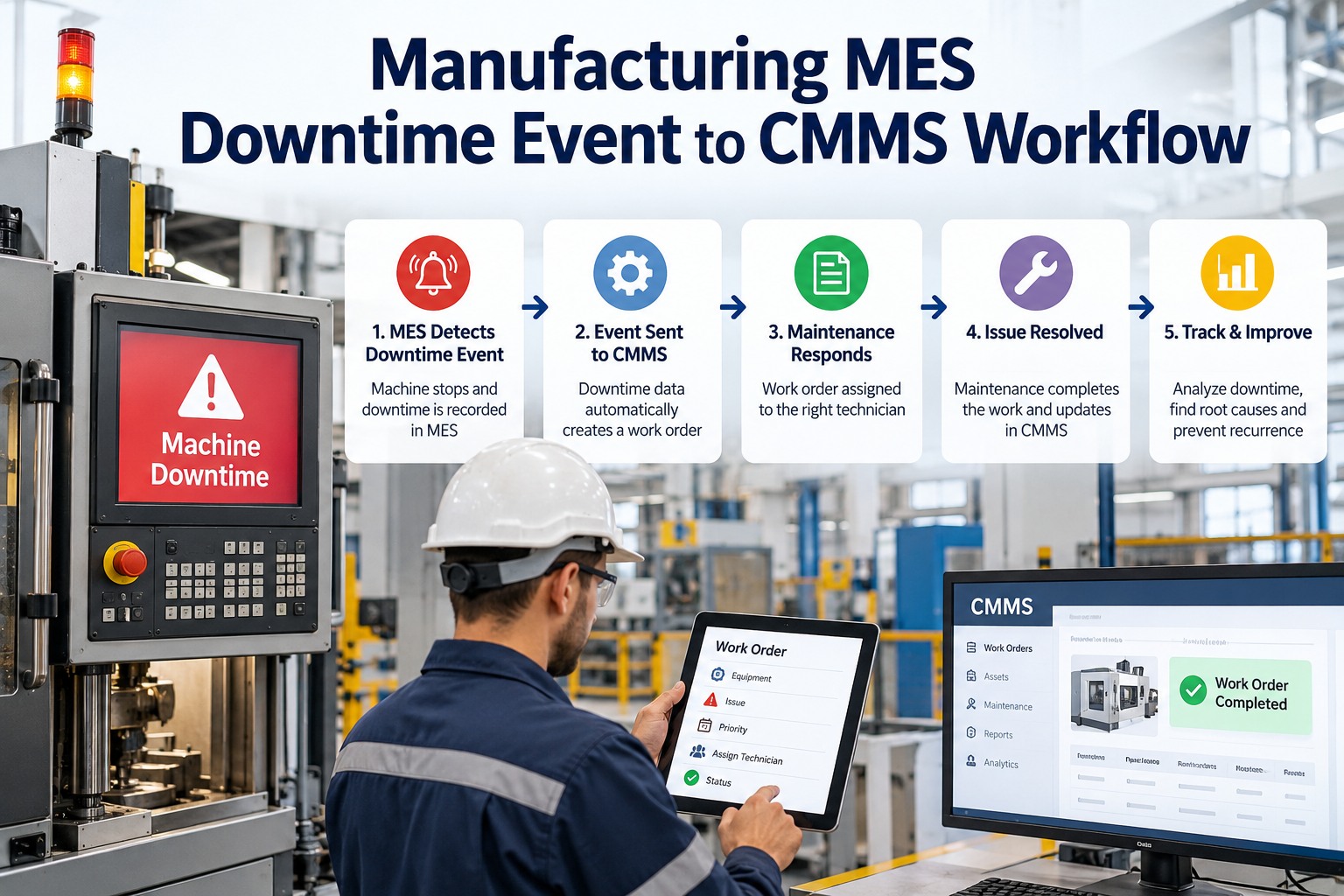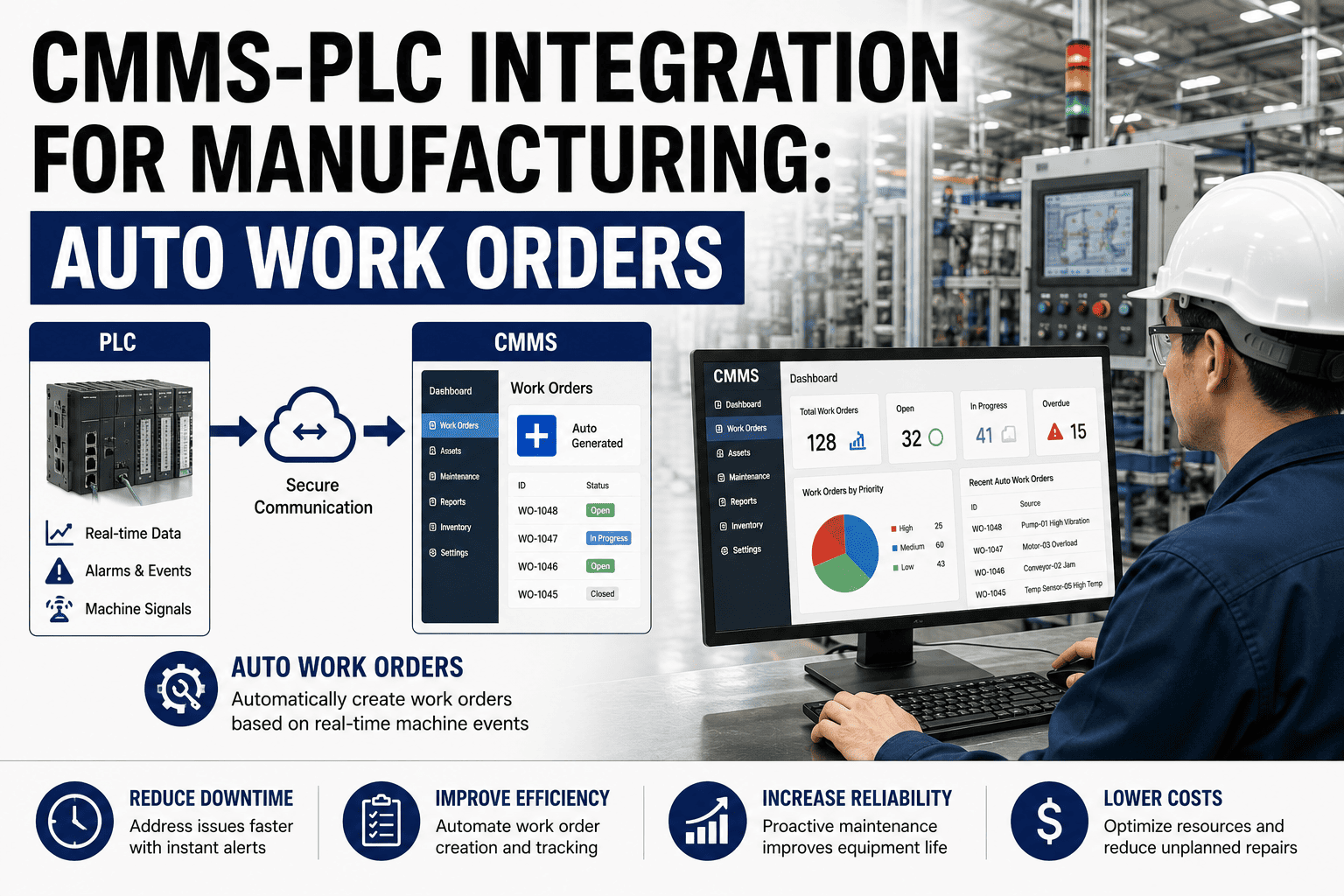
CNC downtime cost calculator tools give manufacturing teams a precise financial lens on their most expensive operational problem — unplanned machine stoppages. Every idle CNC machining center, turning lathe, or 5-axis mill costs far more than the repair bill: lost throughput, missed delivery windows, idle labor, and expedited material costs compound rapidly. Facilities that quantify CNC downtime in real dollar terms consistently make smarter maintenance investment decisions — and those using Sign Up Free with OxMaint's CMMS report 25–35% reductions in unplanned stoppages within the first year of deployment.
What Does CNC Machine Downtime Actually Cost Manufacturers?
Before any calculator can produce meaningful numbers, facility managers need to understand the full cost structure behind a CNC stoppage. Direct costs — labor, parts, emergency service — are easy to measure. But indirect costs routinely exceed direct costs by 3–5×. Sign Up Free on OxMaint to start tracking all downtime cost categories automatically across your CNC assets.
CNC Downtime Cost Calculator: Key Variables to Include
A reliable CNC downtime cost calculator must account for every cost category that a stoppage triggers — not just the repair invoice. The framework below covers the variables that separate a realistic cost model from an underestimate that fails to justify maintenance investment. Book a Demo with OxMaint to see how our CMMS auto-populates these metrics from live work order and asset data.
Direct Repair and Labor Costs
Emergency technician rates (1.5–3× standard), replacement parts, expedited shipping premiums, and contractor callout fees. For CNC spindle failures or servo drive replacements, parts alone can reach $8,000–$30,000 per incident.
Lost Throughput and OEE Impact
Revenue lost per idle machine-hour based on average part value, cycle time, and production rate. Multiply idle hours × parts-per-hour × margin to arrive at throughput loss — typically the single largest cost component.
Idle Operator and Setup Labor
CNC operators, setup technicians, and quality inspectors idled during unplanned stoppages represent sunk labor cost. Calculate hourly burdened rate × headcount × downtime duration to quantify this category.
Expedited Material and Delivery Penalties
CNC stoppages upstream force expedited raw material procurement and may trigger contractual delivery penalty clauses. These downstream cost events are frequently excluded from downtime estimates — and routinely double the total incident cost.
Scrap, Rework, and Inspection Costs
CNC failures mid-cycle produce scrapped in-process parts. Restart sequences generate first-off inspection requirements. Rework labor and scrap material costs must be logged per incident for an accurate total cost picture.
CNC Failure Modes That Drive the Highest Downtime Costs
Effective maintenance planning targets the failure modes that generate disproportionate downtime cost. The table below maps common CNC failure modes against their cost drivers and predictive detection indicators — giving maintenance teams a prioritization framework for sensor deployment and condition monitoring investment.
| CNC Component | Common Failure Mode | Predictive Indicator | Detection Lead Time | Avg. Downtime Cost |
|---|---|---|---|---|
| Spindle Assembly | Bearing wear, thermal runaway | Vibration spectrum, spindle temp | 2–6 weeks | $12,000–$45,000 |
| Servo Drive / Motor | Encoder failure, overheating | Current draw, drive temperature | 3–8 weeks | $6,000–$25,000 |
| Ball Screw / Linear Guide | Wear, backlash, contamination | Positioning deviation, vibration | 4–10 weeks | $4,000–$18,000 |
| Coolant System | Pump failure, clogging, leaks | Flow rate, temperature, pressure | 1–3 weeks | $2,000–$8,000 |
| ATC / Tool Changer | Gripper wear, actuator failure | Cycle time deviation, torque | 2–4 weeks | $3,000–$12,000 |
| Hydraulic / Pneumatic | Seal degradation, pressure loss | Pressure transducer, leak detection | 1–4 weeks | $1,500–$6,000 |
How to Build a CNC Downtime Cost Reduction Program with OxMaint
Calculating CNC downtime costs is the diagnostic step. The operational step is deploying a structured program that systematically reduces them. OxMaint's CMMS integrates condition monitoring, work order automation, and maintenance analytics into a single platform — enabling manufacturers to move from reactive firefighting to condition-based CNC maintenance. Book a Demo to see the full OxMaint CNC maintenance workflow in action.
CNC Asset Criticality Ranking
Rank each CNC machine by downtime cost per hour and failure frequency. Bottleneck machines with no parallel capacity rank highest and receive priority monitoring and PM investment.
Downtime Cost Baseline in OxMaint
Configure OxMaint with asset-level downtime cost rates. Every work order closed automatically logs downtime duration and triggers cost calculations — giving you live cost-per-machine data without manual spreadsheets.
Preventive Maintenance Schedule Deployment
Build OEM-aligned PM checklists for spindles, servo systems, coolant circuits, and tool changers inside OxMaint. Automated scheduling ensures intervals are never missed — eliminating the preventable failures that dominate CNC downtime logs.
Condition Monitoring and Fault Alert Integration
Connect IoT sensor data to OxMaint to trigger condition-based work orders when CNC health parameters deviate from baseline. Fault alerts auto-assign to the right technician with full diagnostic context attached.
Downtime KPI Reporting and Trend Analysis
OxMaint dashboards surface MTBF, planned-to-reactive ratios, downtime cost trends, and technician response time by machine — giving maintenance managers the data to prove ROI and continuously optimize CNC reliability programs.
CNC Maintenance KPIs That Reduce Downtime Cost Over Time
A downtime cost calculator produces a snapshot. KPI tracking produces the continuous improvement loop that drives lasting cost reduction. These are the metrics manufacturing maintenance teams must monitor to systematically reduce CNC downtime costs — all available natively inside OxMaint's analytics dashboards. Sign Up Free and activate live KPI tracking for your CNC assets from day one.
Preventive vs. Predictive Maintenance for CNC Cost Reduction
The most cost-effective CNC maintenance strategy combines time-based preventive schedules for consumable components with condition-based predictive monitoring for high-consequence mechanical systems. Applying predictive monitoring to every CNC component is economically unnecessary — applying it only to the components that generate catastrophic failures is where the ROI concentrates. OxMaint supports both PM scheduling and condition-based work order triggering in a single platform — giving CNC maintenance teams a hybrid program without managing two separate systems. Book a Demo to map the right maintenance strategy to each of your CNC assets.
Preventive Maintenance — Best For
- Coolant filter and fluid replacements on fixed intervals
- Lubrication schedules for guideways and ball screws
- Tooling inspection and replacement cycles
- Belt and coupling checks on regular service windows
- Low-cost consumable components with uniform wear
Predictive Monitoring — Best For
- Spindle bearing health — highest failure cost component
- Servo drive and motor condition before catastrophic failure
- Ball screw wear before positioning accuracy degrades
- Hydraulic system integrity on automated clamping circuits
- Any failure carrying $10,000+ replacement or downtime cost
Frequently Asked Questions: CNC Downtime Cost Calculator
How do you calculate the true cost of CNC machine downtime?
Multiply idle machine-hours by revenue-per-hour, then add direct repair costs, idle labor costs, expedited material premiums, and any delivery penalty exposure. A complete CNC downtime cost calculator must include all five categories — direct repair alone typically represents only 20–30% of total incident cost.
What is an acceptable CNC downtime percentage in manufacturing?
World-class CNC facilities target unplanned downtime below 5% of total available production time. Facilities running reactive maintenance programs typically experience 15–25% unplanned downtime — representing significant recoverable cost through structured PM and condition monitoring programs.
How does a CMMS like OxMaint help reduce CNC downtime costs?
OxMaint automates PM scheduling to prevent the most common CNC failures, tracks downtime costs per asset from closed work orders, and integrates condition monitoring alerts to detect failures before they stop production — replacing manual spreadsheet tracking with a live operational data platform.
Which CNC components generate the highest downtime costs?
Spindle assemblies, servo drives, and ball screw systems generate the highest individual downtime costs due to long lead times on replacement parts and extended repair durations. These three components should be the first targets for predictive condition monitoring investment.
How quickly can a manufacturer reduce CNC downtime with OxMaint?
Most facilities see measurable reductions in unplanned CNC stoppages within 60–90 days of deploying OxMaint's PM scheduling and work order automation. Full program maturity, including condition-based monitoring integration, typically delivers 30–40% downtime cost reduction within 12 months.