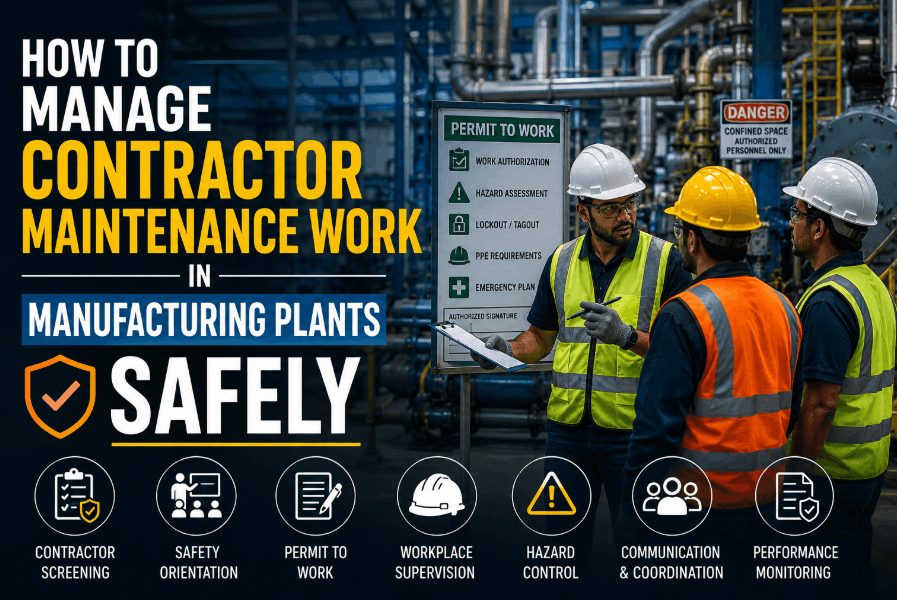
Managing contractor maintenance work in manufacturing plants is one of the most operationally complex and safety-critical challenges plant managers face. From Sign Up Free to streamline contractor onboarding to ensuring every third-party technician operates under a valid permit, the stakes are high — injuries, compliance failures, unplanned production stops, and legal liability all trace back to gaps in contractor oversight. In 2026, plants that treat contractor maintenance management as a structured, data-driven process consistently outperform those relying on clipboards, spreadsheets, and tribal knowledge. This guide walks through the full contractor management lifecycle — vetting, induction, permit-to-work, supervision, documentation, and CMMS tracking — so your facility can bring third-party work under control without slowing down operations.
Contractor Management · Work Permits · Compliance Tracking
Manage Every Contractor Work Order from One Platform
Oxmaint gives plant managers a live view of contractor activity, permit status, and compliance documentation — all in one connected CMMS.
Why It Matters
Why Contractor Maintenance Management Is a Top Safety and Operations Risk in 2026
Third-party contractors account for a disproportionate share of manufacturing plant incidents. Book a Demo to see how Oxmaint's contractor tracking module captures every touchpoint — from credential verification to work order sign-off. Without structured oversight, contractor work becomes an invisible risk: no centralized record of who is on site, what they are permitted to do, and whether they followed the correct isolation or safety procedure.
43%
Of plant incidents involve third-party or contractor personnel
60%
Of contractor incidents occur during the first visit to a new site
2–4×
Higher cost per job when contractors operate without structured work orders
80%
Reduction in compliance gaps achievable with digital contractor management
Management Lifecycle
The 6-Stage Contractor Maintenance Management Lifecycle
Effective contractor maintenance management is not a single event — it is a structured six-stage process that begins before a contractor sets foot on site and ends only after all documentation is closed and performance is reviewed. Sign Up Free and configure Oxmaint's vendor and contractor module to enforce each stage digitally across your facility.
01
Contractor Vetting and Pre-Qualification
Verify licenses, insurance certificates, safety records, and trade qualifications before any contractor is approved for site entry. A pre-qualified vendor register eliminates last-minute credential checks under production pressure.
Reduces Compliance Risk
02
Site Induction and Safety Orientation
Every contractor must complete a site-specific induction covering hazard areas, emergency procedures, PPE requirements, and communication protocols. Digital induction tracking ensures no one skips the process — and gives you an audit trail.
Mandatory Before Site Entry
03
Permit-to-Work Issuance
Hot work, confined space, electrical isolation, and height work all require formal permits with defined scope, duration, and authorization levels. A CMMS-linked permit system ensures permits are issued, tracked, and closed — never left open indefinitely.
Zero Unauthorized Access
04
Work Order Scope and Cost Control
Contractor work must operate against a defined work order with clear scope, materials list, labor rate, and completion criteria. Without this, scope creep, unauthorized substitutions, and invoice disputes become routine operational overhead.
Prevents Scope Creep
05
On-Site Supervision and Progress Tracking
Real-time visibility of contractor activity — which assets they are working on, what stage the job is at, and whether any holds or issues have emerged — prevents surprises that delay production restarts. Mobile CMMS access gives supervisors live job status without walking the floor.
Live Visibility via CMMS
06
Job Close-Out and Performance Review
Every contractor job should close with a formal sign-off: work completed as specified, permit closed, test results recorded, asset returned to service. Tracking contractor performance over time builds a data-driven vendor register that identifies reliable partners and flags underperformers.
Data-Driven Vendor Rating
Permit-to-Work
Permit-to-Work Systems for Contractor Maintenance: What Manufacturing Plants Need
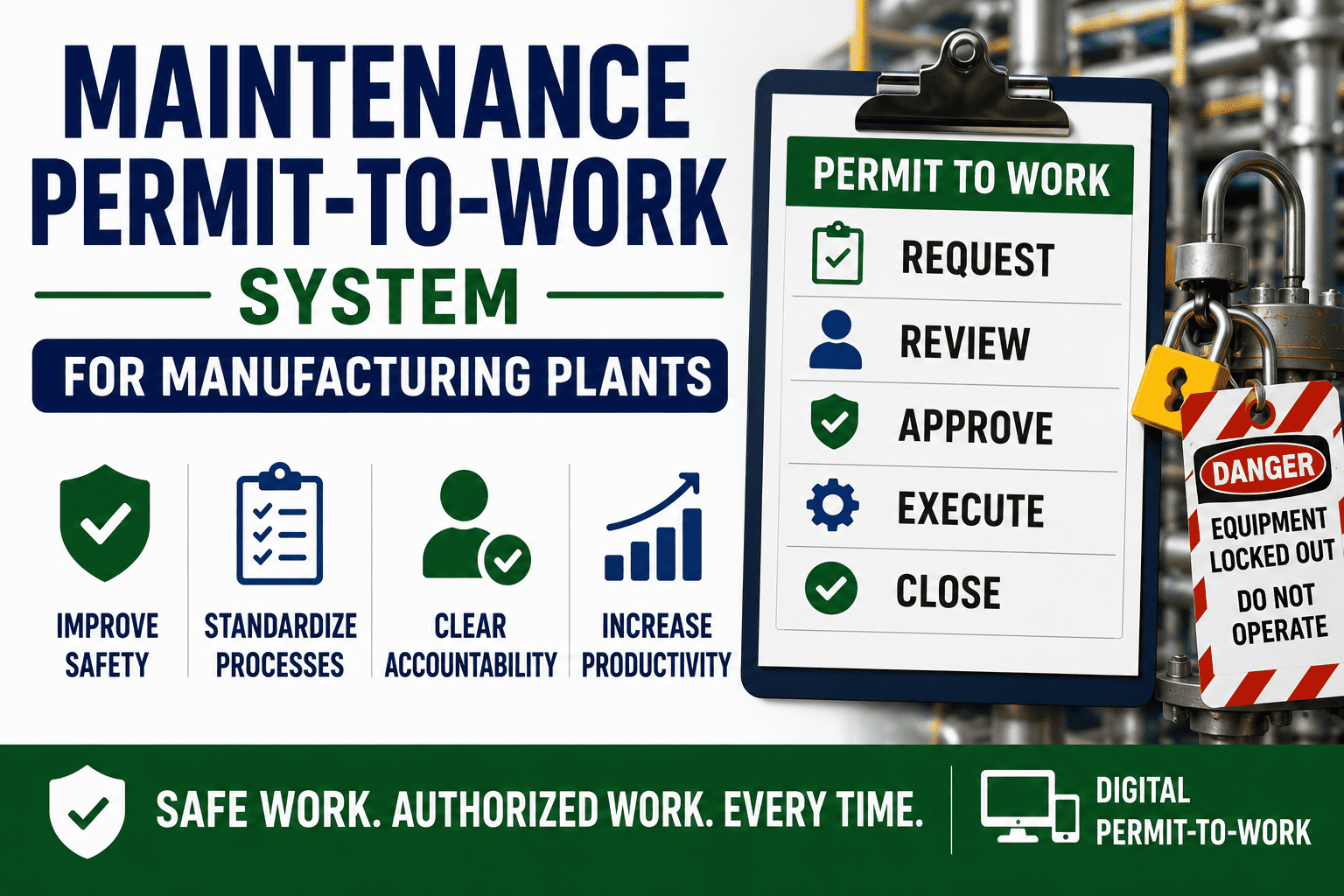
A permit-to-work (PTW) system is the formal control mechanism that authorizes contractors to perform high-risk tasks on specific assets within defined parameters. Book a Demo and see how Oxmaint's digital permit module connects directly to work orders, asset records, and maintenance schedules — eliminating the paper PTW bottlenecks that delay contractor start times and create compliance gaps.
| Permit Type |
Applicable Work |
Key Control Requirements |
CMMS Tracking Need |
| Hot Work Permit |
Welding, cutting, grinding near flammable materials |
Fire watch, extinguisher staging, gas testing, area clearance |
Permit linked to asset; auto-expire after shift |
| Confined Space Entry |
Vessel cleaning, tank inspection, duct work |
Atmospheric testing, standby rescue, lockout/tagout, comms check |
Entry/exit log; supervisor sign-off at each stage |
| Electrical Isolation |
Panel work, motor replacement, control system maintenance |
LOTO verification, dead-check, multi-lock hasp for contractors |
LOTO status visible on asset record in CMMS |
| Working at Height |
Overhead crane, roof access, elevated conveyor work |
Harness inspection, anchor point sign-off, exclusion zone below |
Equipment certification attached to work order |
| General Access Permit |
Low-risk contractor access to controlled production areas |
Escort required, PPE compliance, no unauthorized asset contact |
Timed access window; auto-alert on overrun |
CMMS Integration
How a CMMS Transforms Contractor Maintenance Management
Without a CMMS, contractor management relies on email chains, phone calls, and physical sign-in sheets — none of which give plant managers the real-time visibility needed to control cost, quality, and safety. Sign Up Free and connect contractor work directly to Oxmaint's work order, asset, and compliance infrastructure. Book a Demo to see how the vendor module eliminates the manual overhead that makes contractor oversight feel impossible at scale.
Centralized Vendor Register
Pre-qualified contractors → faster mobilization, zero credential gaps
Store contractor licenses, insurance, trade certifications, induction records, and performance ratings in one place. Oxmaint flags expired credentials automatically — before a contractor arrives on site, not after an incident.
Digital Work Order Assignment
Defined scope + rate + asset link = no invoice surprises
Assign contractor work orders directly from the CMMS with asset linkage, defined labor rates, materials list, and completion checklist. Every cost is captured in real time against the asset's maintenance history and budget code.
Permit Integration with Work Orders
Permit status visible on asset record → no work without authorization
Link permit-to-work records directly to work orders in Oxmaint. Contractors cannot mark a job in progress without an active permit. Supervisors see permit status in real time without walking to a control room or calling site security.
Contractor Performance Scoring
Historical close-out data → data-driven vendor selection decisions
Track on-time completion rate, rework frequency, safety incident history, and invoice accuracy for every contractor over time. The data builds a living vendor scorecard that removes subjectivity from re-tendering and contract renewal decisions.
Best Practices
Contractor Maintenance Safety: 5 Non-Negotiable Practices for Manufacturing Plants
Compliance alone does not prevent contractor incidents. The plants with the best contractor safety records combine formal systems with a practical operational culture where every person on site — employee or contractor — understands the rules, has the tools to follow them, and knows what happens when they do not.
Practice 01
No Permit, No Start — Zero Exceptions
The most common cause of contractor incidents is work starting before controls are in place. Enforce a hard gate: no contractor begins any task classified as high-risk without a valid, signed permit. CMMS permit tracking makes this enforceable without relying on supervisor memory or manual checks.
Practice 02
Scope Freeze After Work Order Sign-Off
Contractor scope changes mid-job create the conditions for safety failures and cost overruns simultaneously. Require a formal change request logged in the CMMS before any work deviates from the original scope. This single practice eliminates most contractor invoice disputes and unauthorized access events.
Practice 03
Asset Return-to-Service Checklist
Every asset worked on by a contractor must pass a formal return-to-service check before production resumes: all isolations removed, tools and materials cleared, functional test completed, and maintenance record updated. Rushing this step is the primary cause of early post-maintenance failures.
Practice 04
Digital Induction with Competency Verification
Paper induction records cannot be audited quickly in an incident investigation. Digital induction — including competency quiz completion and date-stamped acknowledgment — creates an instant audit trail. Oxmaint's contractor module stores induction status against each vendor contact record.
Vendor Register · Permit-to-Work · Work Order Control
Put Every Contractor Work Order Under Full CMMS Control
Oxmaint connects contractor vetting, permit issuance, work order tracking, and close-out documentation into one auditable workflow — built for manufacturing plant operations.
Common Questions
Contractor Maintenance Management — Questions from Plant Managers and Maintenance Leaders
What is the biggest risk when managing contractor maintenance work in manufacturing?
The biggest risk is work starting without adequate controls — no valid permit, incomplete induction, or unclear scope. A CMMS with digital permit-to-work integration enforces these gates automatically and creates an audit trail for every contractor touchpoint.
How should contractor maintenance work be tracked in a CMMS?
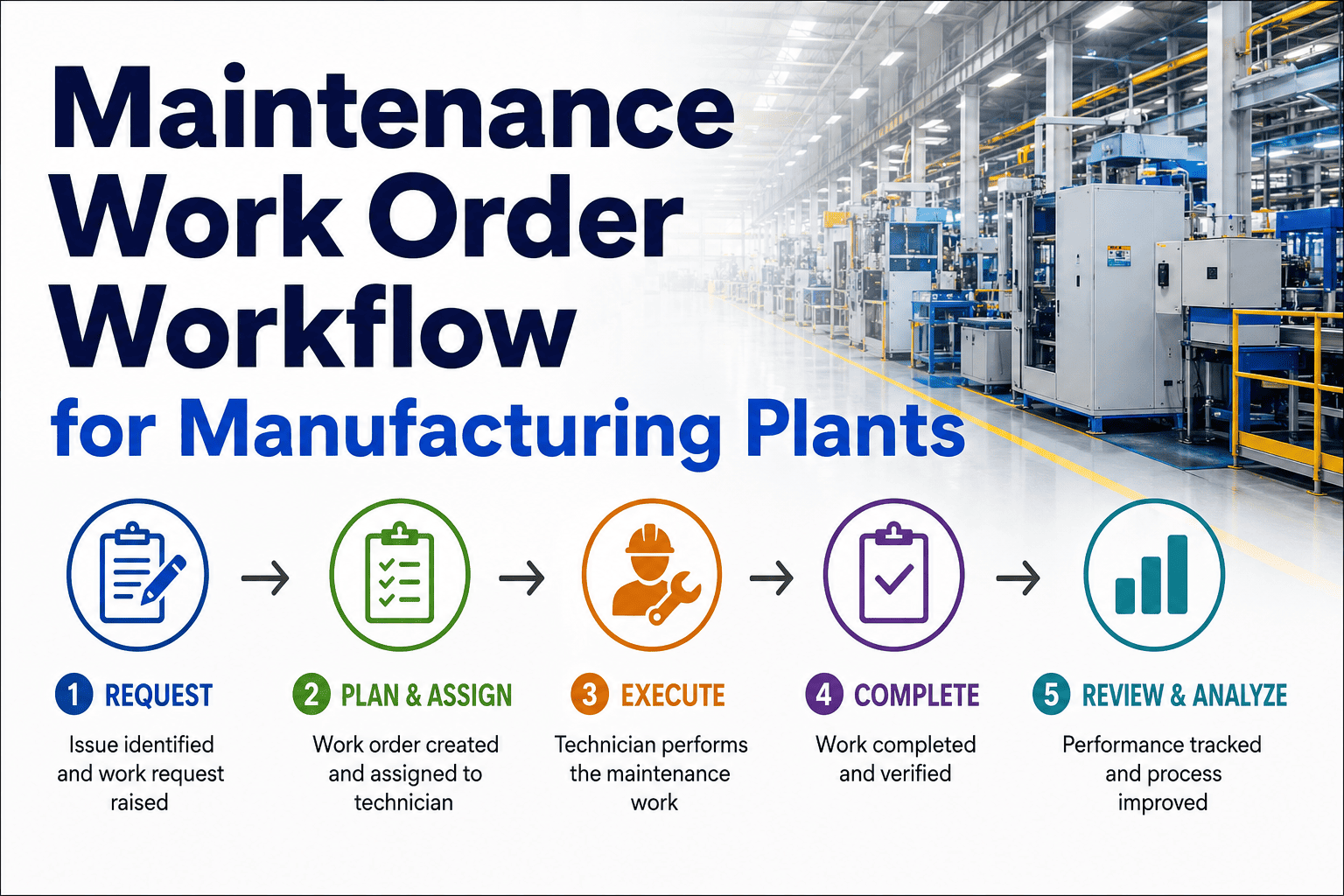
Contractor work should be assigned via a formal work order linked to the specific asset, with labor rate, scope, and completion checklist attached. Oxmaint captures contractor time, materials, and costs against each work order and updates the asset maintenance history automatically.
What documentation is required for contractor maintenance compliance in manufacturing?
At minimum: contractor credentials and insurance, site induction completion, permit-to-work records, signed work orders, and return-to-service sign-off. Oxmaint stores all of these digitally against the contractor and asset record for instant audit access.
How do you control contractor maintenance costs without impacting quality?
Pre-defined work orders with agreed labor rates, scope freeze policies, and CMMS-tracked performance scoring are the three most effective cost controls. Plants using Oxmaint report significant reductions in contractor invoice disputes and rework frequency.
Can Oxmaint support multi-contractor and multi-site maintenance operations?
Yes. Oxmaint is built for multi-site operations with site-specific contractor registers, permit templates, and work order workflows. Contractors can be assigned to specific sites, and performance data is consolidated at the enterprise level for vendor management decisions.
Contractor Safety · CMMS · Compliance Automation
Stop Managing Contractors with Spreadsheets and Sign-In Sheets
Oxmaint gives you digital contractor registers, permit-to-work tracking, and work order control — so every third-party job runs on data, not guesswork.