
Shutdown Sequencing Pressure in Utility-Heavy Sites

By Josh Turly on June 15, 2026

shutdown-sequencing-pressure-in-utility-heavy-sites

Planned shutdowns at utility-heavy sites are a race against dependency chains—permits must clear before access is granted, access must happen before isolation, and isolation must hold before restart can begin. When sequencing isn't planned around these dependencies, downtime windows stretch far beyond their scheduled length. Sign Up Free on Oxmaint to plan shutdown tasks with built-in dependency sequencing, so permit delays and access conflicts surface before the outage window opens, not during it.

Plan Shutdowns Around Real Dependencies Oxmaint sequences permits, access windows, and restart tasks so utility-heavy shutdowns stay on schedule instead of stretching into overtime.

Why Sequencing Pressure Builds During Shutdowns

A single delayed permit or blocked access point can cascade into hours of lost outage time when downstream tasks all depend on it. Book a Demo to see how Oxmaint maps task dependencies so critical path delays are visible before the shutdown begins.

30%
Of shutdown overruns are traced back to permit or access delays on the critical path
4–8 hrs
Typical extension to an outage window caused by a single unplanned sequencing conflict
20%
Schedule compression achievable when dependency chains are mapped before the shutdown
100%
Visibility into restart readiness when task completion is tracked against the dependency plan

Key Dependency Chains in Utility-Heavy Shutdowns

Permit Flow

Work permits that must be issued and signed off before isolation or access tasks can legally begin on site.

Access Timing

Physical access windows to utility areas that depend on isolation being completed and confirmed safe.

Critical Path Tasks

The sequence of tasks that determines the minimum possible duration of the shutdown, where any delay extends the whole outage.

Restart Readiness

Verification that all preceding tasks are closed and systems are safe before restart sequencing can begin.

Managing Sequencing in a Structured Shutdown Plan

Sign Up Free to build your shutdown task list in Oxmaint, and Book a Demo to see how dependency mapping highlights critical path risk ahead of the outage.

01
Map Task Dependencies

List every task with its required predecessors, including permits, isolations, and access approvals.

02
Identify the Critical Path

Highlight the task sequence that defines the minimum shutdown duration and flag any single points of delay.

03
Track Permit Status Live

Monitor permit approvals against the schedule so access delays are caught before they block downstream work.

04
Confirm Restart Sequence

Verify all dependent tasks are closed in the Oxmaint plan before initiating restart procedures.
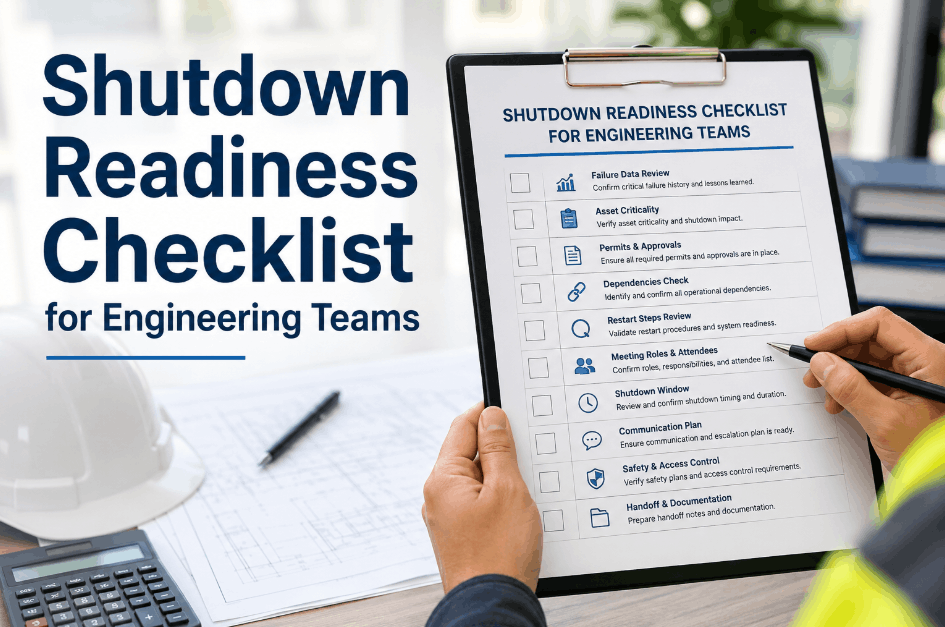
Cut Sequencing Delays Out of Your Next Shutdown Oxmaint's shutdown management tools sequence permits, access, and restart tasks so your outage window holds.

FAQs: Shutdown Sequencing in Utility-Heavy Sites

What causes sequencing pressure during shutdowns?
Permits, access approvals, and isolations that aren't mapped to dependent tasks create bottlenecks that delay the entire outage window.
How does Oxmaint help with shutdown sequencing?
Oxmaint's shutdown management tools sequence tasks by dependency, so permit and access delays on the critical path are visible before they cause overruns.
Can Oxmaint track permit approvals during a shutdown?
Yes. Permit status can be tracked against the task schedule so teams know when downstream work is cleared to proceed.
Is this suitable for multi-utility sites?
Yes. Oxmaint supports complex shutdown plans across multiple utility systems with shared dependency tracking.
Take Control of Your Next Shutdown Schedule Plan sequencing, permits, and restart with Oxmaint's shutdown management tools.

Share This Story, Choose Your Platform!