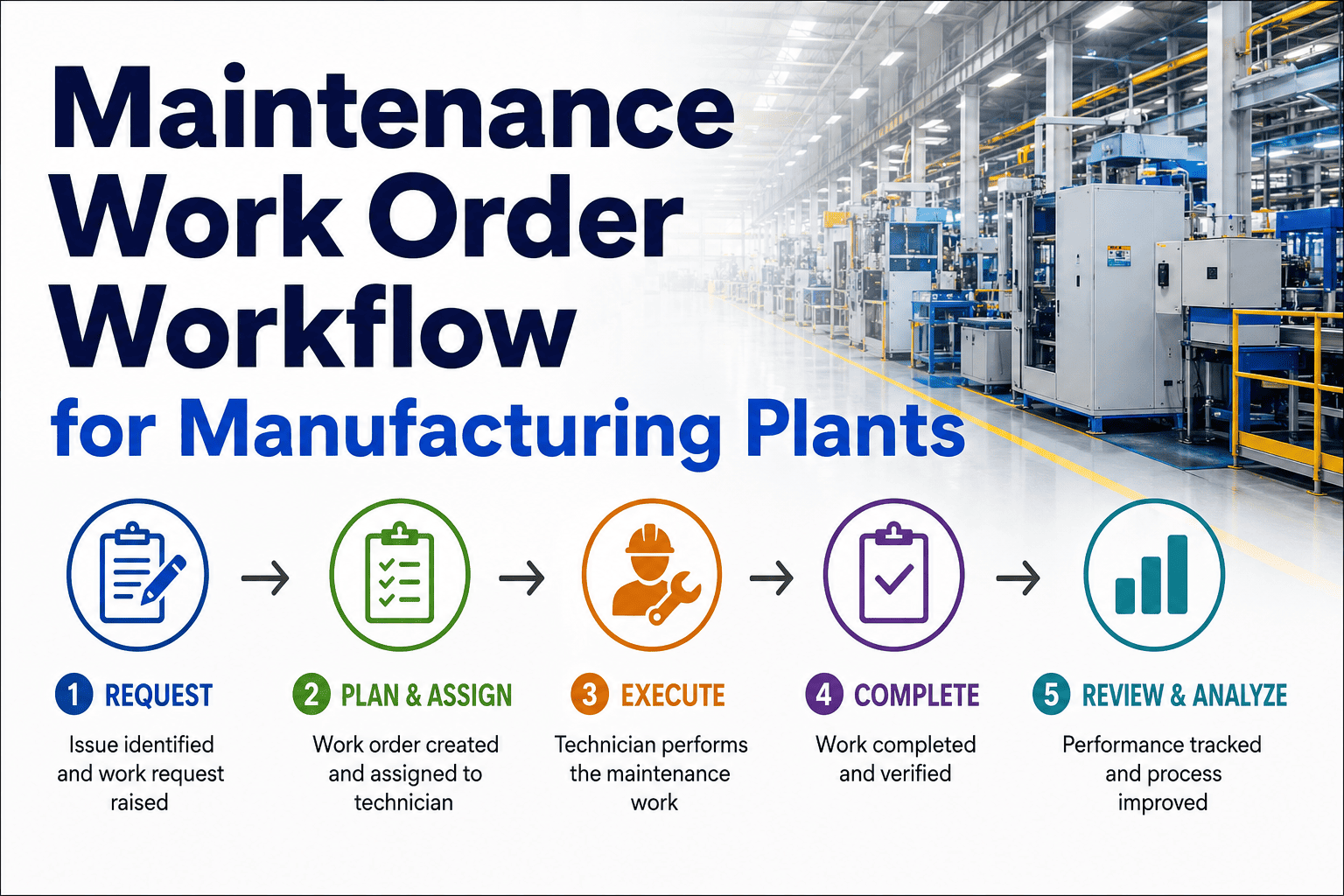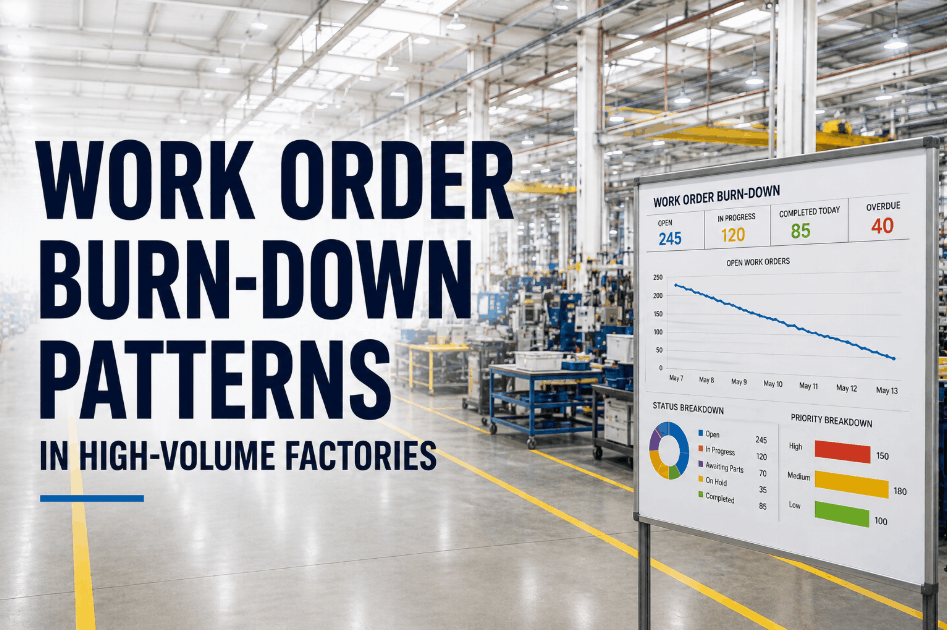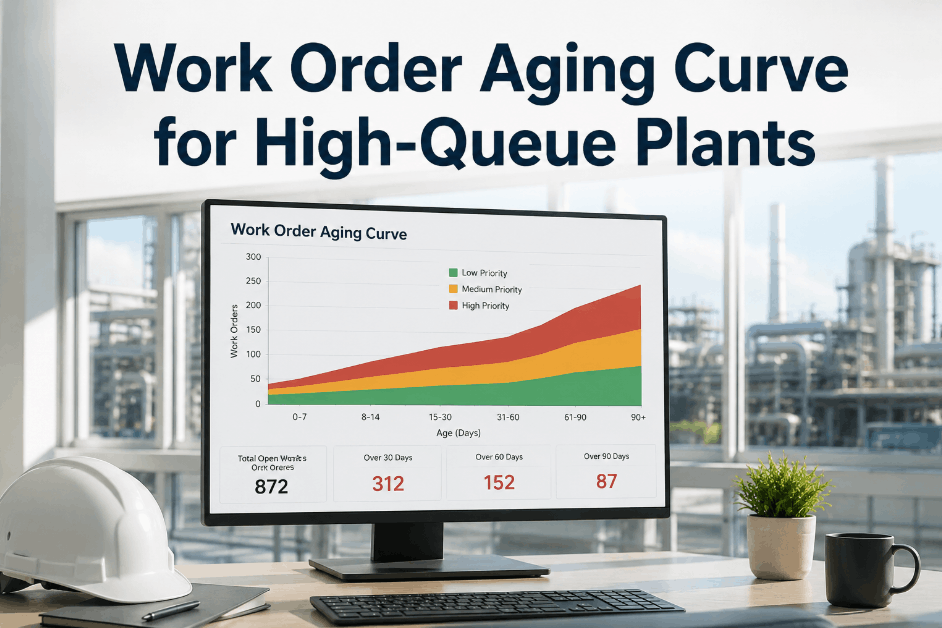
In high-queue plant environments, work orders age silently until they become emergencies. Planners without a visual aging model cannot distinguish a job that has been waiting two days from one that has been waiting two weeks — and that invisible backlog accumulates until it consumes the technician capacity reserved for critical response. Work order aging curve analysis gives maintenance leaders the shift-level visibility needed to spot queue swelling, execution lag, and priority inversion before output is affected. Sign Up Free to configure OxMaint's work order management tools with aging bands, backlog dashboards, and queue-depth reporting built for high-throughput plant operations.
See Every Open Work Order, Sorted by Age and Priority
OxMaint gives plant maintenance teams work order aging dashboards, priority-based queue management, shift execution tracking, and backlog trend analytics — built for planners who need to see queue depth and aging exposure before the shift ends.
Why High-Queue Plants Need Aging Curve Visibility, Not Just Open-Order Counts
A raw count of open work orders tells planners how much work exists. An aging curve tells them which work is becoming dangerous. In plants with high task volumes, the distinction between a one-day-old order and a five-day-old order is often invisible without a structured aging model — because both appear identically as "open" in a flat list. Book a Demo to see how OxMaint's work order queue dashboard segments open tasks by aging band, priority tier, and asset criticality — so planners can make triage decisions based on exposure, not just volume. Queue depth without age context is one of the primary reasons maintenance backlogs compound into production disruptions in high-throughput manufacturing environments.
Work Order Aging Band Definitions for Plant Maintenance Planning
Current — 0 to 24 Hours
Newly created or recently assigned work orders within normal response windows. Band 1 volume is expected and healthy — it reflects active task intake. Concern arises when Band 1 orders remain unacknowledged past their response clock, signaling dispatch or workload imbalance.
Aging — 24 to 72 Hours
Work orders that have exceeded initial response windows but remain open. Band 2 accumulation on critical or essential assets should trigger planner review and potential priority escalation. Sign Up Free to configure Band 2 aging alerts in OxMaint's escalation rules engine.
At-Risk — 3 to 7 Days
Orders in this band represent confirmed backlog exposure. If any Band 3 order is tied to a critical or bottleneck asset, it is a production risk. OxMaint's aging dashboard highlights Band 3 concentration by asset class and shift, so planners can identify where execution is consistently falling short. Book a Demo to see the backlog trend view.
Critical Backlog — 7+ Days
Orders aged beyond seven days represent systemic planning or capacity failure. Band 4 volume on any asset class signals that deferred work is outpacing closure rate — a leading indicator of equipment degradation risk. OxMaint's backlog aging reports quantify Band 4 exposure by technician, asset type, and priority tier for management review.
Aging Threshold Standards by Asset Criticality and Order Type
| Order Type | Asset Criticality | Aging Alert Threshold | Escalation Trigger | OxMaint Action |
|---|---|---|---|---|
| Emergency | Critical / Bottleneck | 4 hours unacknowledged | Immediate supervisor alert | Auto-escalation + reassign |
| Urgent Corrective | Essential | 24 hours open | Planner review required | Priority flag + aging badge |
| Scheduled Corrective | Standard | 72 hours open | Band 3 aging report | Backlog exposure alert |
| Deferred / PM | Non-critical | 7+ days open | Band 4 management report | Aging trend dashboard update |
Building a Work Order Aging Program: Phase by Phase
Queue Baseline and Aging Band Setup
Define aging band thresholds in OxMaint for each order type and asset criticality class. Aging standards without documented thresholds cannot trigger automated alerts. Sign Up Free to configure your aging rules today.
Escalation Rules and Planner Notifications
Configure OxMaint's work order rules engine to push aging alerts to planners and supervisors when orders cross Band 2 or Band 3 thresholds. Automated escalation removes the dependency on manual queue review that allows backlog to compound undetected across shifts.
Shift Execution Tracking and Dispatch Rhythm
Monitor work order closure rates by shift in OxMaint's dispatch dashboard. Shifts where intake consistently exceeds closure create aging curve steepening — a leading indicator of backlog risk that planners can correct through labor loading adjustments before the queue becomes unmanageable.
Backlog Trend Reporting and Planning Review
Use OxMaint's PM dashboard to review aging curve trends over rolling weekly and monthly periods. Backlog trend data supports capacity planning conversations, contractor engagement decisions, and priority sequencing adjustments — grounded in actual queue exposure history. Book a Demo to see the backlog analytics view.
Flat Queue Management vs. Aging Curve-Driven Planning
Give Your Planners the Aging Curve View They Need
OxMaint gives plant maintenance teams work order aging dashboards, automated escalation rules, shift-level execution tracking, backlog trend reporting, and priority-based dispatch — built for high-queue operations where queue depth without age context becomes a production risk.
Frequently Asked Questions: Work Order Aging for High-Queue Plants
What is a work order aging curve in maintenance planning?
A work order aging curve visualizes how open tasks accumulate across defined time bands — showing planners which jobs are current, aging, at risk, or in critical backlog so triage and resource decisions are based on exposure, not just volume.
At what age does a deferred work order become a production risk?
Industry data indicates that deferred work orders on critical or essential assets most commonly convert to emergency events when they cross the 72-hour threshold unresolved — particularly in high-throughput manufacturing environments.
How does OxMaint help track work order aging across shifts?
OxMaint timestamps every work order event from creation through closure, surfaces aging band status on the planner dashboard, and pushes automated alerts when orders cross configurable thresholds — without requiring manual queue review.
Can work order aging data support capacity planning decisions?
Yes — rolling aging trend reports in OxMaint show whether backlog is growing or shrinking over time, which shifts consistently fall behind, and which asset classes accumulate the most deferred volume — all inputs for staffing and contractor engagement decisions.
What is the difference between backlog volume and backlog aging exposure?
Volume counts how many orders are open. Aging exposure measures how long they have been open relative to their response standard — which determines actual operational risk. A plant with 50 aging orders is more exposed than one with 200 current orders.
Ready to See Your Backlog Before It Becomes an Emergency?
OxMaint gives high-queue plant teams aging band dashboards, priority-based routing, automated escalation rules, and shift execution analytics — so planners see queue exposure in real time and act before aging work orders become production events.