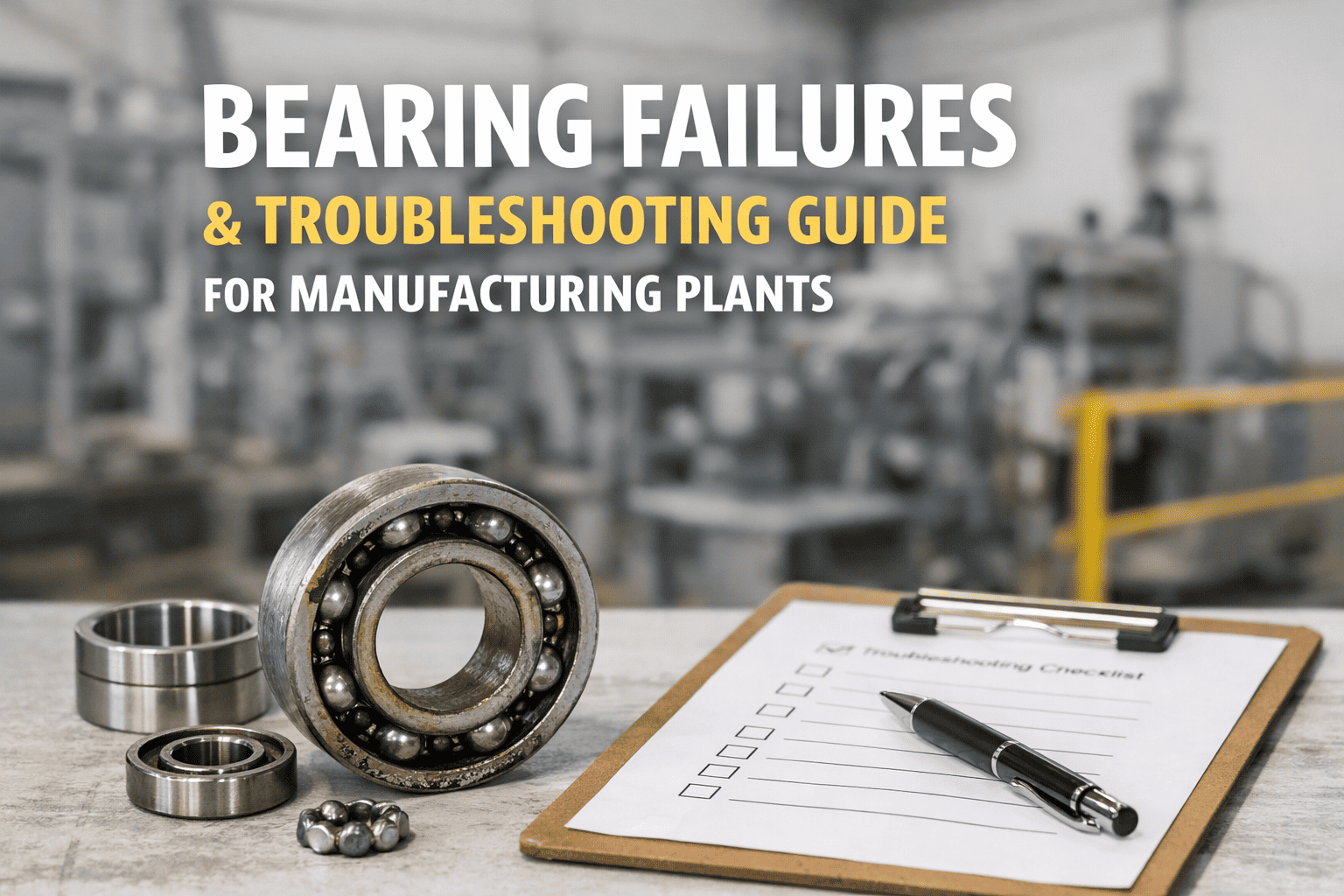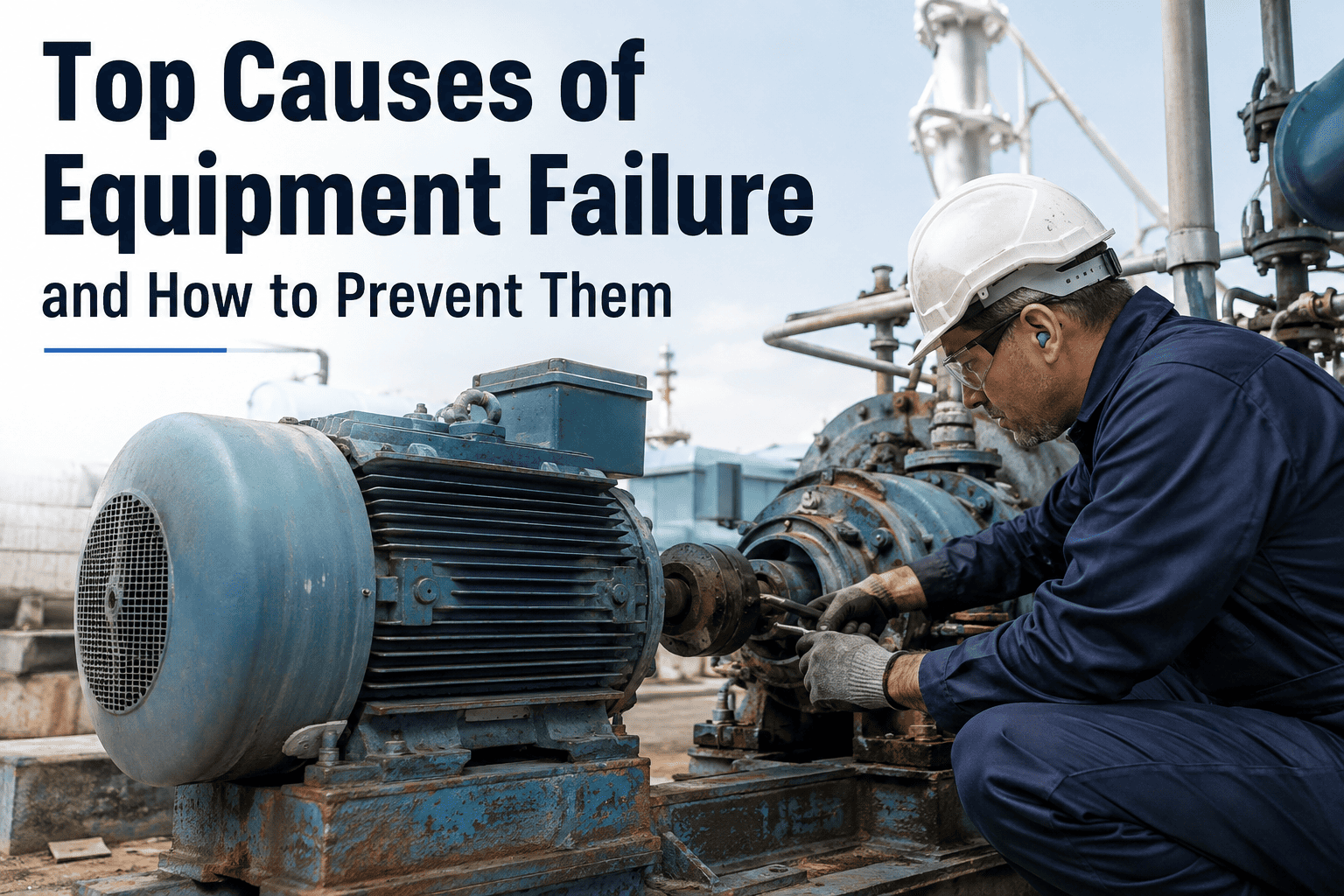
The top causes of equipment failure in manufacturing plants rarely change year over year — aging assets, lubrication errors, contamination, misalignment, and missed inspections account for the vast majority of unplanned downtime. When reliability teams understand why machines fail, they can shift from reactive firefighting to a predictable, prevention-first maintenance strategy that protects production capacity and extends asset life. By implementing precision maintenance, contamination control, and operator care routines, plants can systematically reduce equipment downtime causes and stabilize OEE. OxMaint helps maintenance teams eliminate these failure modes with AI-driven work order automation, preventive scheduling, and real-time asset tracking — you can Start Free Trial to see the impact on your floor immediately.
What if 80% of your unplanned downtime was entirely preventable?
Most manufacturing equipment failure causes are well-documented and predictable. From lubrication breakdown to aging asset degradation, the root causes of machinery failure follow known patterns. Identifying and mitigating these failure modes is the difference between a 90% OEE plant and one bleeding profits through reactive maintenance.
The Leading Causes of Equipment Failure in Manufacturing
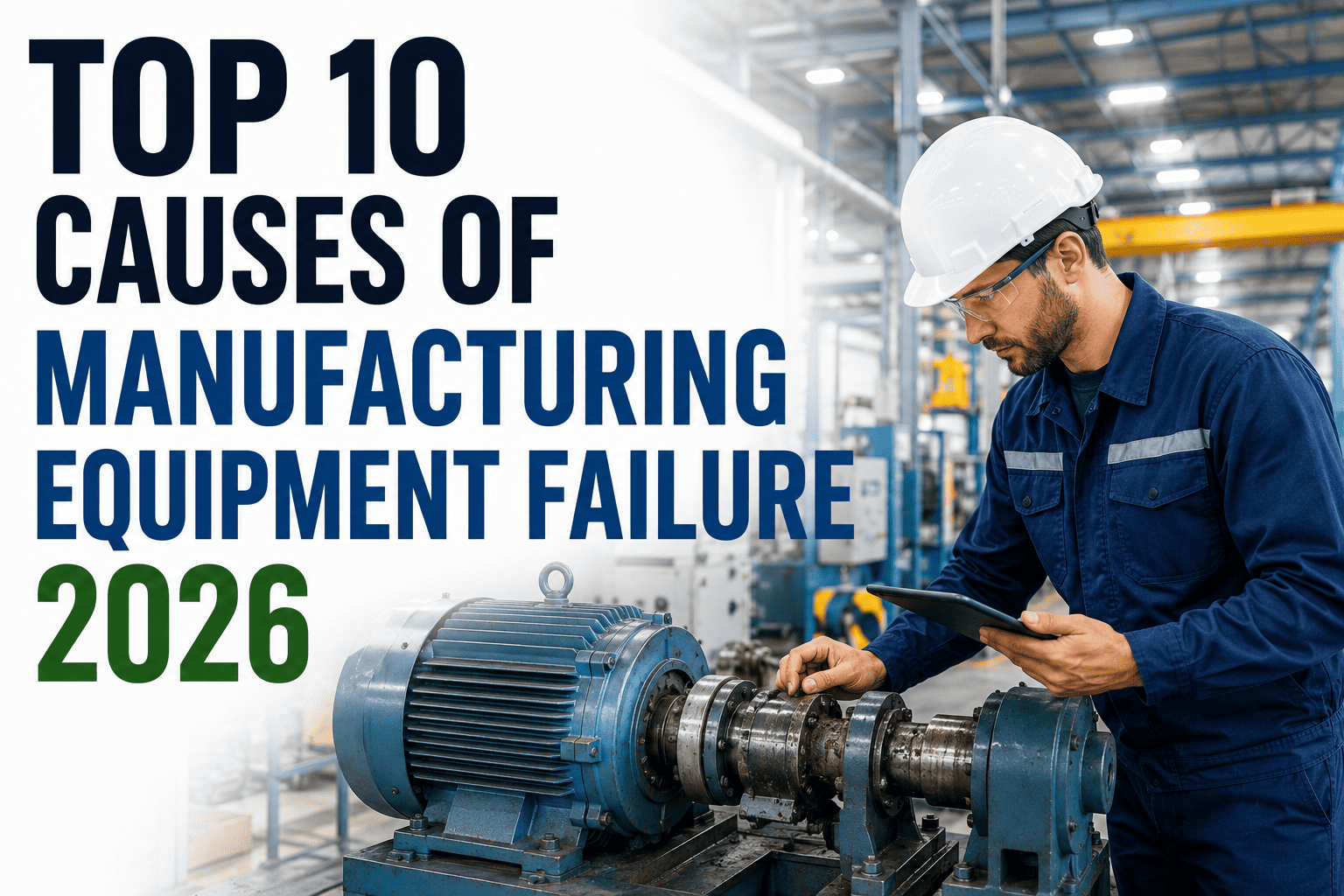
Reliability engineers and plant managers consistently identify the same core issues across manufacturing facilities. Understanding these common equipment failures is the first step in building an effective breakdown prevention strategy. Here are the top machine failure causes you need to track.
Aging Assets & Degradation
Over 50% of industrial equipment operates beyond its original design life. Metal fatigue, thermal cycling, and mechanical wear accelerate failure rates exponentially after the 15-year mark. Without condition-based monitoring, aging assets fail catastrophically and without warning, driving up emergency repair costs by 3-5x compared to planned replacements.
Lubrication Errors
Incorrect lubricant, over-greasing, under-greasing, and contaminated oil cause up to 40% of premature bearing failures. When maintenance teams rely on memory or paper logs, PMs slip. Consistent, automated lubrication routes are the single highest-ROI step in equipment failure prevention.
Contamination & Poor Fluid Health
Particulate contamination in hydraulic and lubrication systems acts as a grinding compound, destroying pumps, valves, and actuator internals. ISO 4406 cleanliness targets are frequently ignored. A single hard particle can initiate a spall that reduces a $5,000 bearing's life from 100,000 hours to 10,000 hours.
Misalignment & Imbalance
Shaft misalignment and rotor imbalance create vibration loads that destroy couplings, seals, and bearings. A shaft offset of just 0.002 inches can reduce bearing life by up to 50%. Precision laser alignment and dynamic balancing are mandatory for high-speed rotating equipment reliability.
Human Error & Operational Misuse
Bypassing safety interlocks, ignoring startup procedures, and overloading machines beyond nameplate capacity account for roughly 15% of all plant equipment failure. Lack of standard work and inadequate operator care routines leave assets vulnerable to easily preventable damage.
Missed Inspections & Deferred PMs
When production pressures override preventive maintenance schedules, minor defects evolve into major failures. Missing a single quarterly vibration analysis or oil sampling PM removes the early warning system, turning a $200 seal replacement into a $12,000 gearbox rebuild.
How to Prevent Machine Breakdown: A Proactive Timeline
Machinery failure prevention is not a single action; it is a phased deployment of people, processes, and technology. Transitioning from reactive firefighting to predictive maintenance requires a structured timeline. Follow this 90-day blueprint to establish equipment failure prevention in your facility.
Audit Assets & Digitize PM Schedules
Catalog every critical asset, capture nameplate data, and map existing failure modes. Replace paper logs and whiteboards with a centralized CMMS. Migrate all deferred PMs into automated scheduling to immediately eliminate missed inspection cycles.
Implement Precision Maintenance & Care Routines
Deploy laser alignment tools, establish strict lubrication routes with tagged points, and set ISO 4406 fluid cleanliness targets. Train operators on autonomous maintenance (AM) tasks: visual inspections, leak checks, and basic cleaning to catch issues before they escalate into equipment downtime causes.
Activate Predictive Analytics & KPI Tracking
Connect vibration, temperature, and oil analysis sensors to your CMMS. Set threshold-based alerts to trigger work orders automatically. Begin tracking MTBF (Mean Time Between Failures) and OEE to quantify the reduction in unplanned downtime and validate your breakdown prevention investment.
The Cost of Inaction: Why Machines Fail Without CMMS
Understanding why machines fail is only half the battle; quantifying the cost of inaction justifies the shift to prevention. A facility relying on reactive maintenance pays a severe premium in emergency labor, expedited parts, and lost production. See how common equipment failures impact your bottom line.
| Failure Cause | Reactive Cost (Per Incident) | Preventive Cost (Per Cycle) | Downtime Impact |
|---|---|---|---|
| Bearing Failure (Lubrication) | $12,400 rebuild | $85 grease & labor | 8-14 hours |
| Gearbox Contamination | $22,000 replacement | $150 filter change | 24-48 hours |
| Shaft Misalignment | $5,800 coupling/repair | $200 laser alignment | 4-6 hours |
| Aging Motor Burnout | $8,500 rewind | $90 thermography | 16-36 hours |
| Missed Safety Inspection | $45,000+ OSHA fine | $0 CMMS auto-remind | Potential shutdown |
How OxMaint Prevents Equipment Failure
OxMaint transforms your maintenance operation from reactive to predictive. By leveraging AI-driven CMMS and EAM capabilities, reliability teams can systematically eliminate the root causes of manufacturing equipment failure. Here is how OxMaint directly maps to your failure prevention goals.
Automated Preventive Maintenance
Never miss a PM again. OxMaint auto-generates work orders based on runtime, calendar days, or meter readings. Eliminates the missed inspections that cause 30% of unplanned downtime and extends asset life by up to 25%.
AI-Powered Predictive Analytics
Connect IoT sensors to OxMaint to monitor vibration and temperature in real-time. Our AI predicts failures before they happen, cutting emergency work orders by 40-60% and preventing catastrophic asset destruction.
Spare Parts Inventory Tracking
Stop hunting for parts during a breakdown. OxMaint links BOMs directly to assets and triggers auto-reorder points. Cuts mean time to repair (MTTR) by 50% by ensuring critical spares are always in stock when failures occur.
Maintenance Analytics & KPIs
Track MTBF, MTTR, OEE, and labor utilization in real-time dashboards. Identify your worst-performing assets and target your reliability budget exactly where it eliminates the most equipment downtime causes.
Stop reacting to breakdowns. Start preventing them.
See how OxMaint maps your failure modes to automated work orders, predictive alerts, and complete asset history. Book a 30-minute demo with a reliability expert today.
The ROI of Equipment Failure Prevention
A 180-Asset Manufacturing Plant
A mid-sized discrete manufacturer was spending $42,000 annually on emergency maintenance labor and expedited parts due to recurring bearing and gearbox failures. By implementing OxMaint's automated PM scheduling, digital lubrication routes, and threshold-based alerts on critical motors, the plant reduced unplanned downtime by 38% in the first 6 months. Emergency labor spend dropped to $14,500, yielding a $27,500 annual savings and a payback period of less than 90 days on their CMMS investment.
Common Questions About Equipment Failure
What is the most common cause of equipment failure in manufacturing?
Lubrication errors — including over-greasing, under-greasing, and using the wrong lubricant — are widely recognized as the leading cause of premature equipment failure, accounting for up to 40% of bearing failures. Contamination and missed preventive maintenance schedules are close seconds. Digitizing your PMs with a CMMS like OxMaint virtually eliminates these easily preventable failure modes.
How does preventive maintenance reduce equipment downtime?
Preventive maintenance (PM) replaces components and services systems on a planned schedule before they fail, catching wear and degradation early. This shifts work from high-cost emergency reactive labor to low-cost planned labor, prevents collateral damage to adjacent components, and ensures parts are in stock. It typically reduces unplanned downtime by 30-50%.
What is the difference between failure modes and failure causes?
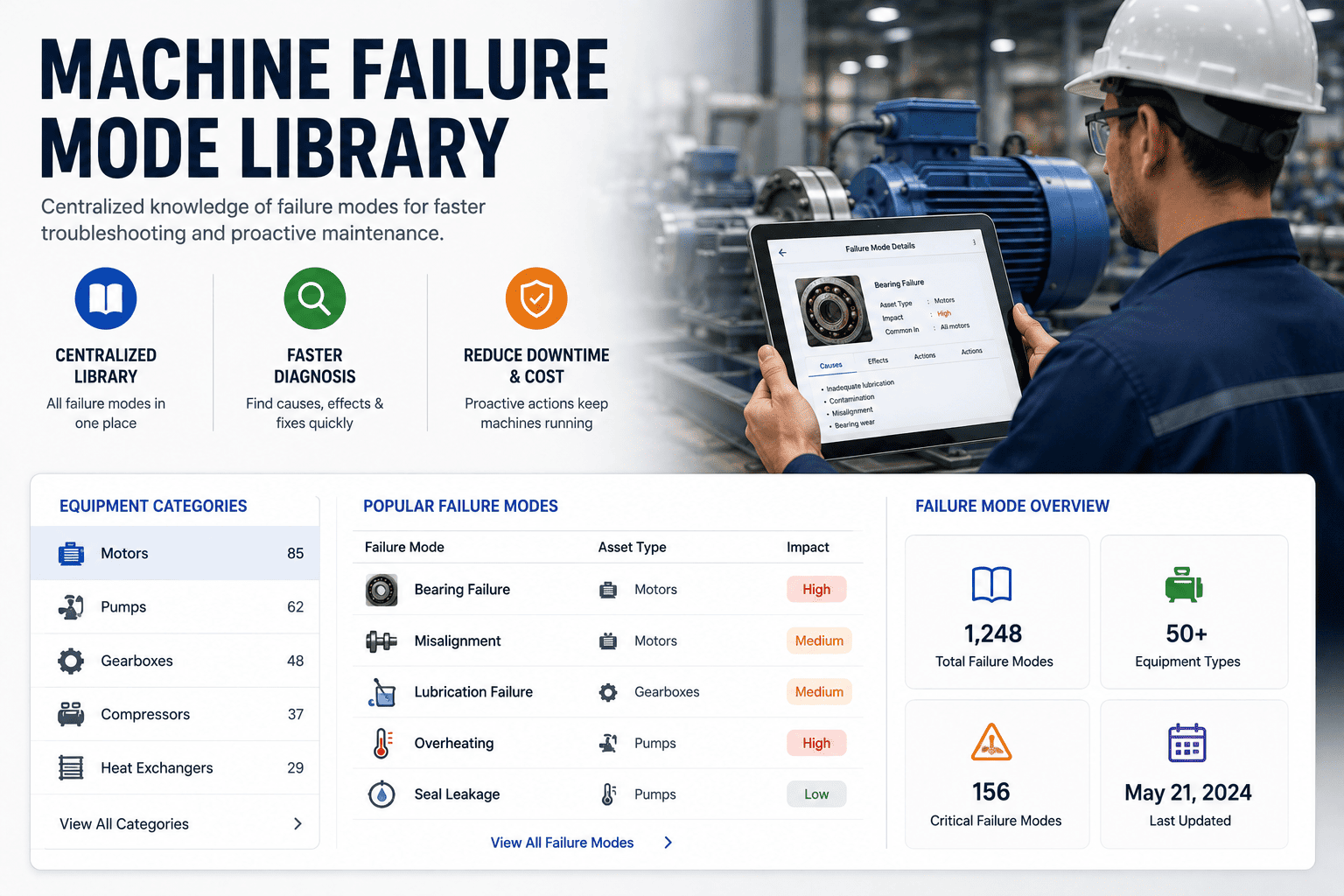
A failure cause is the underlying reason a machine breaks down (e.g., lack of lubrication, misalignment, or operator error), while a failure mode is the observable way the failure manifests (e.g., a seized bearing, a broken shaft, or an overheated motor). Identifying both is critical for effective machinery failure prevention. You can map these relationships directly in OxMaint's asset history module—Book a Demo to see how.
How can a CMMS help prevent machine breakdowns?
A Computerized Maintenance Management System (CMMS) prevents breakdowns by automating PM schedules, centralizing asset history, and tracking spare parts inventory. It ensures no inspection or lubrication route is ever missed due to human error. Furthermore, a modern CMMS like OxMaint uses AI analytics to turn sensor data into predictive alerts, fixing equipment before it breaks.
How quickly can a plant transition from reactive to preventive maintenance?
A facility can establish the foundational layers of preventive maintenance within 30 to 90 days. This involves auditing assets, migrating paper checklists to a digital CMMS, and setting up automated PM triggers. Full predictive maintenance integration with IoT sensors typically follows over the next 3-6 months as baseline condition data is established.
Ready to eliminate your top causes of equipment failure?
Join the reliability teams using OxMaint to automate work orders, predict breakdowns, and maximize asset uptime. Set up your environment today and see results in less than a week.
Free 14-day trial · No credit card