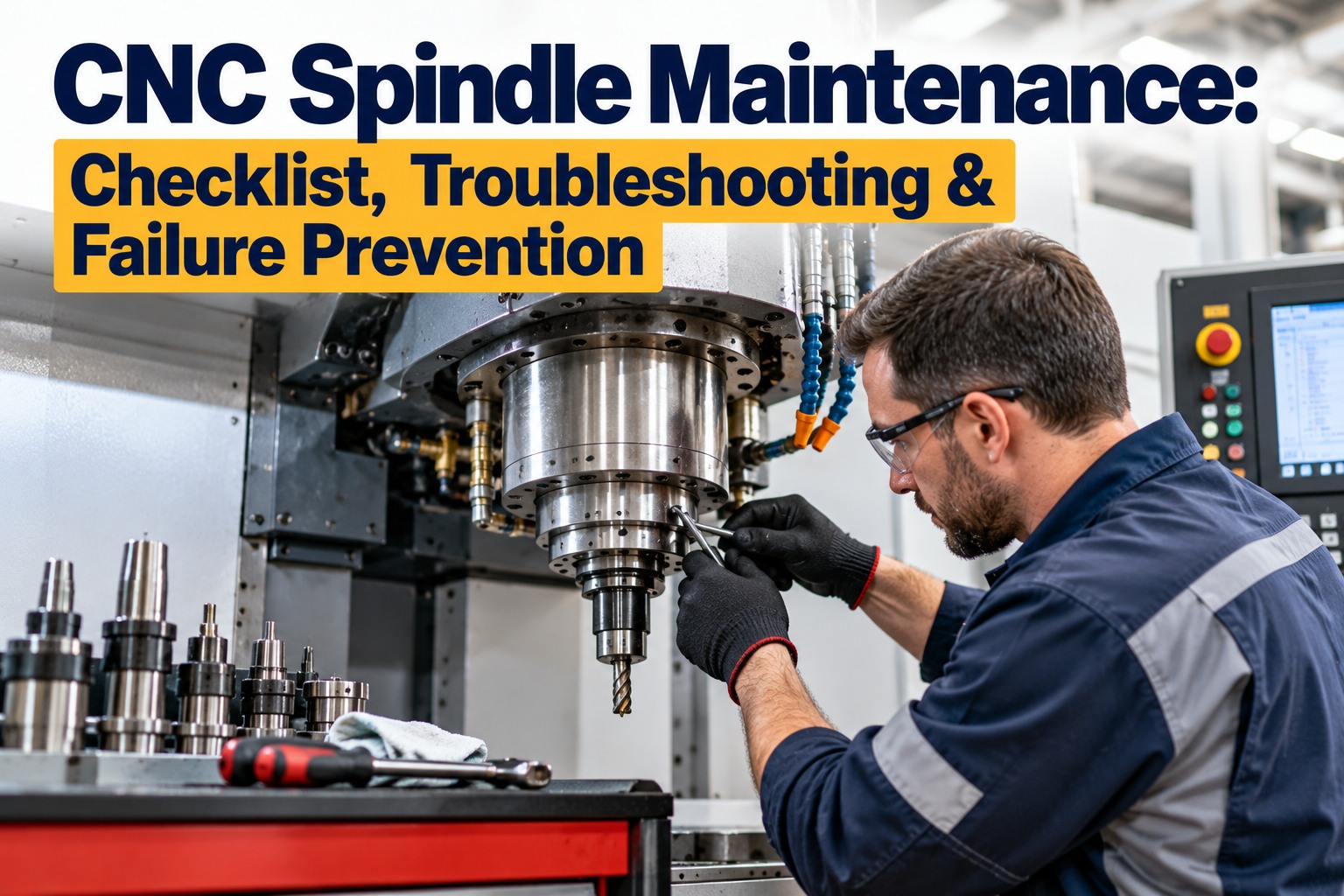
The spindle is the most expensive part of a CNC machine to lose, and it rarely fails without warning. Surface finish gets a little worse, the housing runs warmer than last month, a faint noise appears at one speed. Each sign is small, easy to explain away, and usually not written down anywhere. A spindle checklist works when it is done on schedule and its findings go somewhere. OxMaint AI turns that checklist into mobile inspections, work orders and PM schedules for every machine.
CNC Spindle Maintenance: Checklist, Troubleshooting & Failure Prevention
Use the checklists below to catch lubrication, bearing, heat and vibration problems early. Then run them in OxMaint AI: operator checks and inspections raise defects, defects become work orders, and the history feeds preventive and predictive maintenance for each spindle.
Automated PM scheduling and a complete history for every spindle.
Spindle Anatomy: Where Failures Start
Know the five zones. Most spindle problems begin in one of them, and the checklists below map to each. Always follow your machine builder's manual for specifications and intervals. Start free and register each spindle as an asset.
The Spindle Maintenance Checklist
Three layers by cadence. Intervals are examples to adjust to your machine builder's guidance, spindle duty and failure history. Book a demo to load these as templates.
- Listen for unusual noise or change in sound
- Check spindle temperature reading or alarm
- Clean taper and tool holder before loading
- Check coolant and air supply to the spindle
- Look for leaks, chips or coolant at the nose
- Note any change in surface finish
- Check lubrication level, lines and delivery
- Inspect drawbar clamp force and tool seating
- Check chiller level, filters and temperature
- Record vibration and temperature readings
- Inspect belts, guards and cable condition
- Check air purge and seals
- Run-out and accuracy check at the taper
- Compare vibration trend against baseline
- Inspect bearings if indicators have changed
- Review lubricant condition and replace as specified
- Test encoder and drive parameters
- Review the spindle's full repair history
A Checklist on Paper Gets Filed. A Checklist in OxMaint AI Gets Acted On.
Operators tap through the checks on a phone. A failed item raises a defect and a work order. Readings build a history per spindle, so trends are visible before the bearing is.
Warning Signs: Green, Amber, Red
Set your own limits from the manufacturer's data and your spindle's baseline. The point is a clear response for each level. Start free and set alert thresholds.
Troubleshooting Quick Reference
Match what you see to the likely cause and the first check. Book a demo to attach this to a work order.
| Symptom | Likely causes | First check |
|---|---|---|
| Spindle overheating | Lubrication fault, cooling failure, bearing wear, preload | Chiller, lubricant delivery, temperature trend |
| Rising vibration | Bearing wear, imbalance, loose tool, contamination | Tool holder, balance, vibration trend |
| Poor surface finish | Bearing play, run-out, tool seating, chatter | Taper cleanliness, run-out, tooling |
| Unusual noise | Bearing damage, dry lubrication, contamination | Listen across speeds, check lubrication |
| Tool pull-out / poor clamping | Drawbar wear, worn taper, spring fatigue | Clamp force, pull-stud and taper wear |
| Spindle alarm or drive fault | Encoder, cable, drive, overload | Alarm code, cabling, load history |
What Actually Kills Bearings
Four root causes account for most early spindle bearing failures. Prevent these and the checklist does the rest. Start free and track repeat causes per spindle.
From Checklist to Reliability Program
Frequently Asked Questions
Protect the Spindle Before It Protests.
Small signs are the cheapest repairs. Put the checklist on every operator's phone, turn findings into work orders, and keep a history for each spindle.