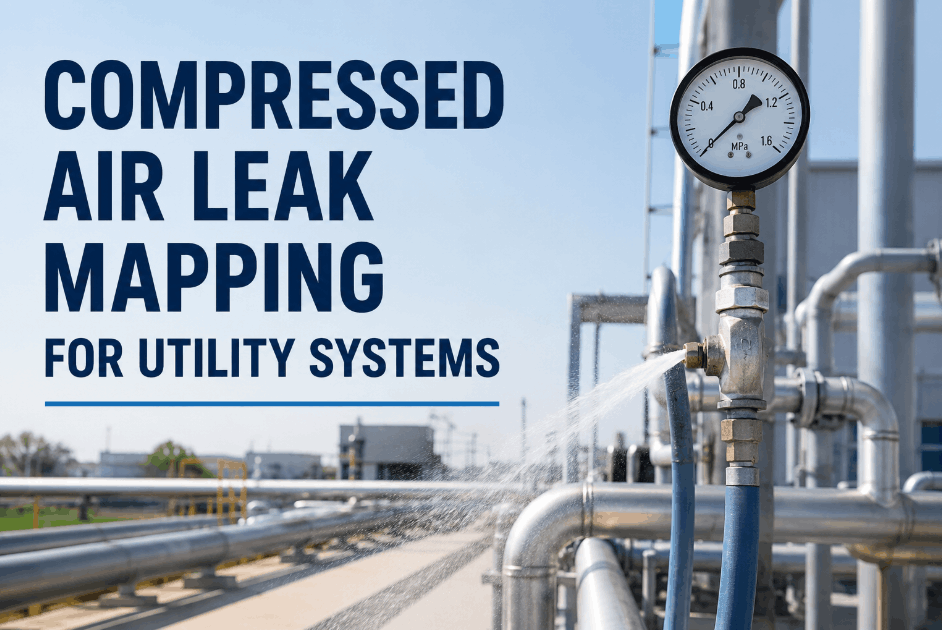
Utility consumption mapping for shared services is the foundational step that turns plant-wide energy spending into targeted, actionable reduction programs. When electricity, water, compressed air, and steam consumption is allocated to individual shared service areas — rather than absorbed into a single facility total — operations leaders can identify which services drive the highest consumption, where metering gaps exist, and where maintenance practices are inflating utility costs. Facilities using Sign Up Free on OxMaint connect asset maintenance records directly to the service consumption data that makes utility mapping credible and correctable at the operational level.
Why Shared Services Create the Biggest Utility Mapping Blind Spots
Shared services — HVAC, compressed air distribution, chilled water, steam, and electrical infrastructure — consume utility resources that benefit multiple production areas simultaneously. Without dedicated submetering and maintenance tracking, their consumption remains invisible in budget allocations and carbon intensity reports. Book a Demo to see how OxMaint helps facilities connect shared service asset maintenance to the consumption data that drives smarter utility governance decisions.
Six Steps in a Shared Services Utility Consumption Mapping Program
Utility consumption mapping works only when it is connected to maintenance execution — not just metering installation. Each mapping step must produce maintenance-actionable outputs, not just reporting data. Sign Up Free to start tracking shared service asset maintenance in OxMaint and build the operational data that your utility consumption map needs to stay current.
Identify and Register All Shared Service Assets
Compressed air headers, cooling towers, steam distribution lines, central HVAC units, and electrical substations serving multiple areas must be registered as discrete assets in OxMaint before consumption can be attributed, inspected, or managed systematically.
Deploy Submetering by Service and Cost Center
Submetering at service boundary points enables consumption allocation by cost center, shift, or process area. Without submeter data, utility consumption mapping remains a manual estimate exercise rather than an actionable operational discipline.
Establish Demand Profile Baselines
Baseline demand profiles by shared service type reveal normal consumption ranges, seasonal variation patterns, and shift-level demand peaks. OxMaint work orders generated against demand deviations create a closed-loop between metering anomalies and maintenance response.
Schedule Leak Detection and Loss Inspections
Compressed air leaks, steam trap failures, and water distribution losses are the leading causes of shared service consumption waste. OxMaint's recurring inspection work orders ensure leak detection is performed on schedule — not only after utility bills spike unexpectedly.
Connect Consumption Data to Maintenance History
Shared service consumption trends that correlate with maintenance backlogs, overdue PMs, or recent repair events reveal cause-effect relationships that isolated energy reports cannot surface. OxMaint stores this history in a format that makes correlation analysis straightforward.
Report Allocation and Drive Accountability
Utility consumption maps that never produce cost allocation reports or action plans create reporting theater rather than operating improvements. OxMaint's reporting framework connects shared service consumption findings to work order activity and maintenance outcome data in a format that drives department-level accountability.
Utility Consumption Benchmarks by Shared Service Type
Different shared service types carry different consumption profiles, waste patterns, and maintenance sensitivities. Understanding where each service sits in the consumption map guides prioritization when metering resources and maintenance capacity are limited. Book a Demo to explore how OxMaint structures asset records and maintenance schedules around shared service utility consumption data.
| Shared Service Type | Primary Consumption Driver | Common Waste Source | Metering Priority | OxMaint Maintenance Action |
|---|---|---|---|---|
| Compressed Air Distribution | Compressor load, system pressure | Leaks, pressure drop across headers | Very High | Scheduled leak detection work orders |
| Central HVAC Systems | Cooling load, AHU efficiency | Filter fouling, coil degradation | High | Filter change PMs + coil inspection tasks |
| Steam Distribution | Boiler output, trap performance | Steam trap failures, insulation loss | Very High | Steam trap survey + insulation audit tasks |
| Chilled Water Systems | Chiller efficiency, pump load | Fouling, refrigerant loss | High | Condenser cleaning + refrigerant checks |
| Process Water Supply | Pump energy, treatment load | Leaks, non-return valve failures | Medium | Water balance audits + valve inspection PMs |
Maintenance Gaps That Distort Shared Service Consumption Maps
Four maintenance gaps consistently inflate shared service utility consumption beyond what production demand alone would justify. Addressing these gaps through OxMaint-managed work orders and inspection programs closes the distance between your utility consumption map and the operating cost reduction it should deliver. Sign Up Free to begin closing these gaps with structured maintenance execution in OxMaint.
Implementing a Maintenance-Connected Utility Consumption Map in OxMaint
Register Shared Service Assets with Criticality Classifications
Enter each shared service asset into OxMaint with criticality ratings that reflect both production impact and utility consumption intensity. Assets serving multiple cost centers should be flagged for priority maintenance scheduling.
Build Inspection Schedules Around Consumption Map Priorities
Configure OxMaint inspection work orders for leak detection, thermal profiling, and efficiency audits on the shared service assets your consumption map identifies as highest-impact. Map inspection intervals to consumption anomaly risk, not just calendar frequency.
Trigger Corrective Work Orders from Consumption Deviations
When submeter data shows consumption deviating from established baselines, OxMaint converts the deviation into a priority inspection or corrective work order — connecting the consumption map to maintenance action in a closed loop rather than leaving deviations as unreported data points.
Track Consumption Improvement Against Maintenance Investment
OxMaint's asset cost tracking connects maintenance labor and parts spend on shared service assets to utility consumption trends. This supports a cost-benefit view of maintenance investment that energy governance and facilities management stakeholders can act on together.
Report Shared Service Consumption Performance by Period
Generate monthly consumption performance reports by shared service type from OxMaint's dashboards. Include PM compliance rates, corrective action closure rates, and cost allocation data to give stakeholders a complete picture of shared service utility efficiency.
Frequently Asked Questions: Utility Consumption Mapping for Shared Services
What is utility consumption mapping for shared services?
Utility consumption mapping allocates electricity, water, steam, and compressed air use to individual shared service systems and cost centers. It converts facility-wide utility totals into asset-level and department-level data that maintenance and operations teams can act on.
Why is submetering essential for shared service utility mapping?
Without submetering, shared service consumption remains invisible in plant-wide utility totals. Submetering isolates consumption by service boundary, enabling the allocation and accountability that drives meaningful reduction programs rather than broad facility targets.
How does OxMaint support utility consumption mapping?
OxMaint provides shared service asset registration, inspection scheduling, consumption-triggered work orders, PM compliance tracking, and cost allocation reporting — connecting the maintenance execution layer to the utility consumption data that drives governance decisions.
What are the highest-impact shared services to map first?
Compressed air and steam distribution systems typically offer the highest immediate return on mapping investment due to the magnitude of leak-driven waste. HVAC and chilled water systems follow closely in facilities with aging coil or filter maintenance backlogs.
How often should shared service consumption maps be updated?
Consumption maps should be reviewed monthly against submeter data and updated whenever significant maintenance events — major repairs, equipment replacements, or seasonal demand shifts — alter the shared service consumption baseline.