Washdown operations consume far more water than most plant managers realize until utility bills arrive with no breakdown by process area. A water use baseline establishes the actual demand per shift, per zone, and per equipment cycle—making waste visible, measurable, and actionable. Sign Up Free to begin logging washdown water consumption against asset-level records in OxMaint, connecting inspection data to utility spend before the next billing cycle. Without a documented baseline, every conversation about water reduction becomes a debate without numbers. OxMaint structures washdown inspection checklists into repeatable workflows, captures meter readings per zone, and generates usage trend reports that show variance from target—giving plant managers the data to make reduction decisions with confidence. Book a Demo to see how OxMaint helps operations teams set and defend water baselines across washdown areas.
PLANT OPERATIONS · WATER MANAGEMENT · 2026
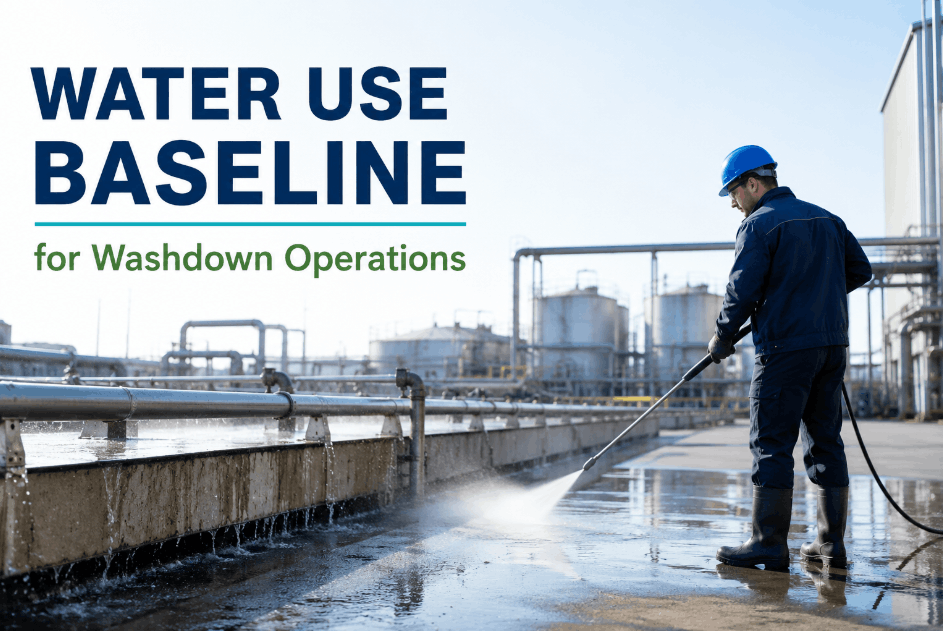
Water Use Baseline for Washdown Operations
Washdown water waste is invisible without a baseline. OxMaint connects meter readings, inspection checklists, and usage alerts to give plant teams the numbers they need to reduce consumption without compromising hygiene standards.
25%Average washdown water reduction achievable after establishing a documented use baseline
$31K+Annual utility cost recovered through baseline-driven washdown optimization in mid-size plants
3xFaster leak detection when zone-level metering is connected to a maintenance platform
45 daysTypical time to establish a reliable washdown water baseline using structured metering
What a Water Use Baseline Covers in Washdown Operations
A washdown water baseline is not a single meter reading. It maps consumption by zone—equipment washdown, floor cleaning, conveyor rinse, CIP circuits, and cooling water return—and establishes expected volumes per shift and per production run. Each zone has different demand characteristics: a CIP cycle consumes a fixed volume per run while floor washdown varies with crew practices. OxMaint structures each zone as a tracked asset with associated checklists, meter read tasks, and alert thresholds—so when actual consumption deviates from baseline, a work order is generated to investigate before the variance compounds. Sign Up Free to map your washdown zones and start capturing baseline readings inside OxMaint. When baseline data is connected to the CMMS, leak detection becomes proactive: a hose fitting that fails between scheduled inspections shows up as a consumption anomaly before it becomes a visible flood or a surprise on the water bill. Book a Demo to see OxMaint's anomaly alerting for utility metering.
Washdown Water Baseline — Zone Coverage Map
Equipment Washdown Bays
Per Shift
Volume per wash cycle, pressure consistency, nozzle condition, drain flow rate
CIP Circuits
Per Run
Pre-rinse volume, chemical phase consumption, final rinse target, cycle time compliance
Floor & Drain Cleaning
Daily
Crew usage patterns, hose runtime logging, squeegee-first protocol compliance, drain flow check
Conveyor & Line Rinse
Per Production Run
Rinse duration, pressure settings, water recirculation ratio, discharge quality check
Cooling Tower Makeup
Weekly
Blowdown frequency, cycles of concentration, makeup meter readings, drift eliminator condition
Utility Distribution Lines
Monthly
Pressure drop across zones, valve seat condition, pipe joint inspection, meter accuracy verification
Nozzle & Spray Head Condition
Weekly
Worn orifice inspection, spray pattern verification, flow rate measurement against spec, blockage check
Valve & Backflow Prevention
Quarterly
Valve seat wear, backflow preventer test, isolation valve full-close confirmation, solenoid response check
Steam & Hot Water Rinse Lines
Monthly
Steam trap condition on rinse headers, heat exchanger delta-T, water temperature at point of use, insulation jacket integrity
Wastewater & Effluent Flow
Weekly
Drain flow rate vs. intake comparison, effluent meter readings, surcharge risk flag, grease trap loading check
Turning Baseline Data Into Reduction Actions and Compliance Records
Establishing a baseline is only valuable if it drives action. Once target consumption is defined per zone, any deviation becomes a maintenance trigger. OxMaint's threshold alerting converts meter variance directly into inspection tasks—when a zone reads 20% above baseline for two consecutive shifts, a technician is dispatched to check for running valves, nozzle wear, or protocol deviation. This removes the month-end surprise and converts water management from a reporting exercise into an operational discipline. Sign Up Free to set consumption thresholds for each washdown zone in your facility. For facilities with sustainability reporting requirements, OxMaint stores every meter reading, inspection result, and corrective action with timestamp and asset linkage—providing the audit trail that ESG and regulatory frameworks require. The baseline itself becomes a living document, updated as equipment changes or production volumes shift, rather than a static spreadsheet that grows stale within weeks. Book a Demo to see OxMaint's utility management reporting in action.
Step 1
Zone Mapping
Identify all washdown points and meter locations
List every water outlet by zone, assign asset records, install submeters where absent
Missing zones = incomplete baseline and undetected waste
Step 2
Data Capture
Log readings per shift for 30 days to establish range
Use OxMaint checklists to capture meter readings at shift start and end per zone
Less than 30 days of data = unreliable baseline target
Step 3
Alert & Act
Set thresholds and connect deviations to work orders
Configure OxMaint alerts for variance above target; auto-dispatch inspection when threshold is exceeded
No alert = variance compounds undetected for weeks
Step 4
Review & Refine
Update baseline targets as equipment or production changes
Quarterly review of zone consumption targets in OxMaint—adjust for new equipment, product changeovers, or seasonal demand shifts
Stale baseline = alerts fire on valid consumption or miss real waste
Step 5
Report & Comply
Generate audit-ready water use reports for ESG and compliance
OxMaint exports timestamped zone readings, corrective actions, and trend data for sustainability reporting and regulatory submissions
Missing records = failed audit and unverifiable reduction claims
Step 6
Optimize & Target
Set reduction targets by zone based on audit findings
Use OxMaint's consumption trend data to identify the highest-waste zones and assign percentage reduction targets to each area owner
No targets = savings left on the table after baseline is set
Step 7
Track Savings
Measure and document verified water savings per zone
OxMaint compares pre- and post-intervention meter readings per zone, calculates verified savings, and stores the record for budget and ESG justification
Untracked savings = no case for continued investment in water programs
Set Your Washdown Water Baseline Today
OxMaint structures washdown zone metering, baseline tracking, variance alerts, and corrective work orders in one platform. Know exactly where your water goes—and stop the waste before it shows up on a utility bill.
Frequently Asked Questions — Water Use Baseline for Washdown Operations
Why does a washdown operation need a water use baseline?
Without a baseline, water waste is invisible until it appears on a utility bill with no breakdown by area. A baseline shows exactly how much each zone should consume per shift, making any deviation immediately detectable and actionable.
How long does it take to establish a reliable washdown water baseline?
Most facilities need 30 days of zone-level meter readings across varying production schedules to establish a reliable consumption range. OxMaint checklists structure this capture process automatically.
Can a CMMS track water consumption alongside maintenance records?
Yes. OxMaint links meter reading tasks to asset records, stores consumption history per zone, and connects variance alerts directly to corrective work orders—keeping water management inside the maintenance workflow.
What causes washdown water consumption to exceed baseline?
Common causes include worn nozzles, running valves between cycles, crew protocol deviations, hose fitting leaks, and CIP cycle drift. Each produces a distinct consumption signature visible in zone-level trend data.
How does water baseline data support sustainability reporting?
OxMaint stores timestamped meter readings, inspection records, and corrective actions per zone—providing the documented audit trail required for water intensity KPIs, ESG reports, and environmental compliance submissions.
Build Your Water Use Baseline with OxMaint
OxMaint automates washdown zone metering, baseline comparison, variance alerting, and sustainability reporting. Free to start. Reduce water waste with data, not guesswork.