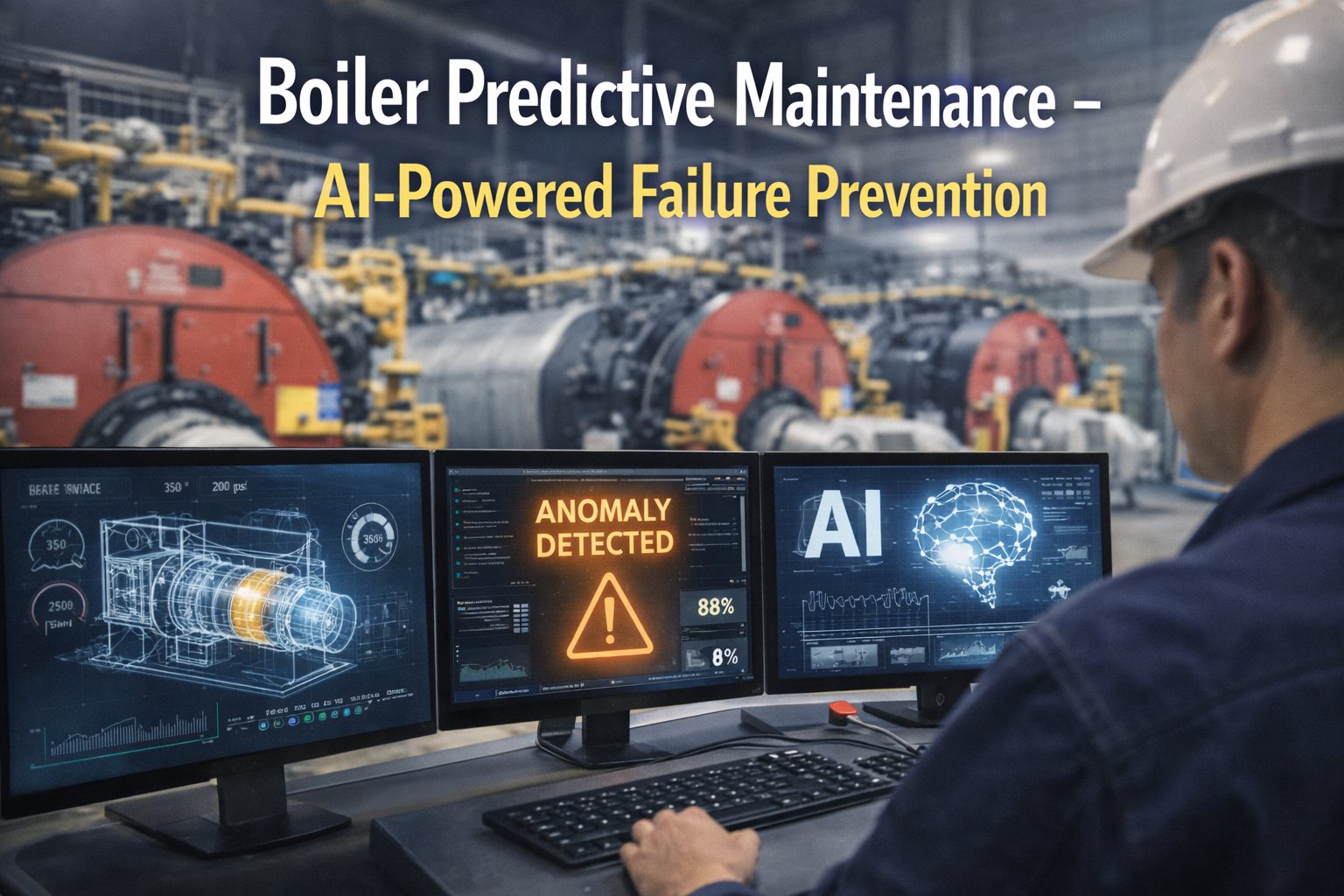
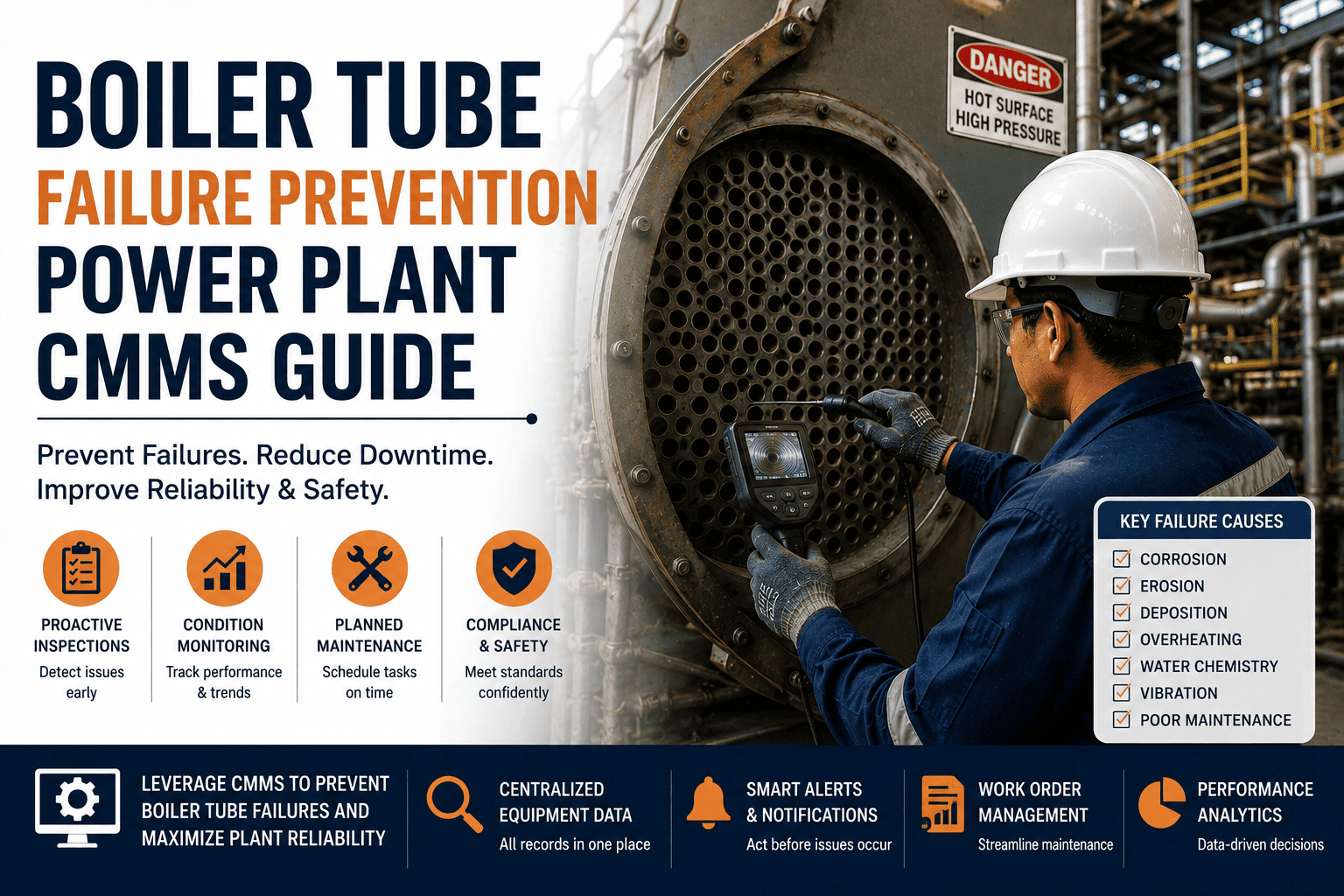
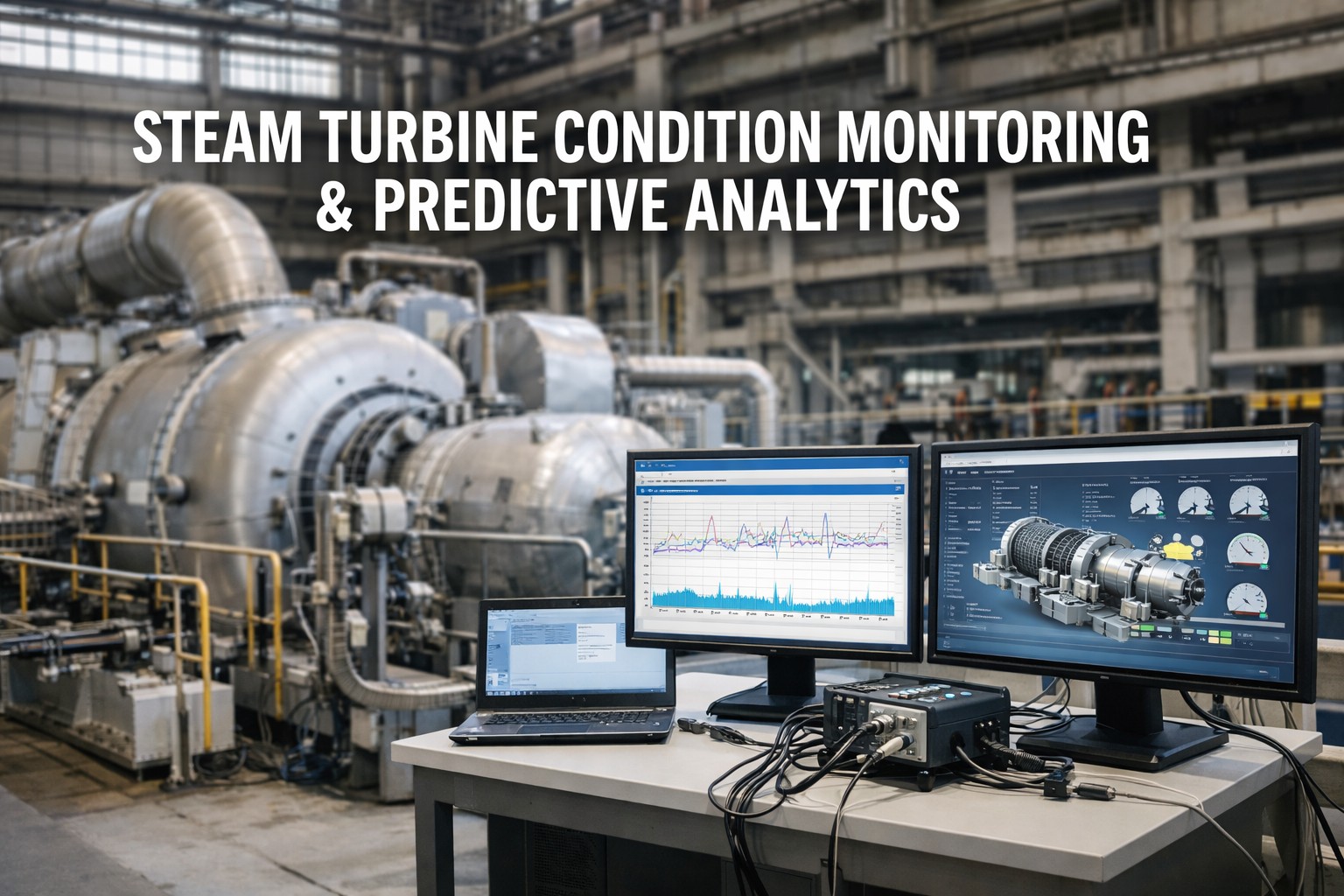
Every industrial facility depends on boilers for steam generation, heating, and critical process operations, yet a single unplanned boiler failure costs an average of $125,000 per hour in lost production, emergency repairs, and idle labor. Large industrial plants lose an average of 27 hours per month to machine failures, with boiler systems ranking among the most frequent and expensive culprits. The underlying problem is almost always the same: maintenance teams rely on reactive strategies that address failures only after catastrophic breakdown has already disrupted operations. AI-powered predictive maintenance changes this equation entirely by analyzing real-time sensor data, detecting subtle degradation patterns weeks or months before failure, and automatically generating work orders that enable planned repairs during scheduled downtime. Oxmaint's boiler predictive maintenance platform gives operations teams the intelligence to monitor boiler health continuously, forecast failures with precision, and eliminate the costly cycle of breakdown and emergency repair that drains maintenance budgets.
Reactive / Calendar-Based
Boiler Failure Detection
After Breakdown Occurs
Average Repair Cost Multiplier
4.8x Emergency Premium
Unplanned Downtime per Year
180 - 340 Hours Facility-Wide
Production Disruption Events
12 - 28 Per Year
AI-Powered Predictive
Boiler Failure Detection
2 - 12 Weeks Before Failure
Average Repair Cost Multiplier
1x Planned Rate
Unplanned Downtime per Year
45 - 95 Hours (65% Reduction)
Production Disruption Events
1 - 4 Per Year
Average Annual Savings for a Mid-Size Boiler Fleet: $1.2M - $2.8M
Six Critical Boiler Components That Demand AI Monitoring
Not every boiler component justifies predictive investment, but the subsystems that carry catastrophic failure costs, pose safety risks, and directly impact production continuity absolutely do. These six component categories account for over 90% of unplanned boiler downtime and 87% of emergency maintenance spending. Predictive monitoring on these systems alone delivers ROI that funds the entire program. Facilities deploying predictive platforms through Oxmaint prioritize these high-impact components first, expanding coverage as the program matures and proves value.
Boiler Tubes and Heat Exchangers
35%
Of total boiler emergency spend caused by fouling, scale buildup, corrosion, and tube rupture
Feed Water Pumps
22%
Single pump failure can shut down entire boiler system causing bearing wear, cavitation, seal leaks
Combustion Systems
5-15%
Fuel waste from dirty nozzles, incorrect air-fuel ratios, and O2 sensor drift per year
Pressure and Safety Valves
Life Safety
Overpressure events, valve degradation, and relief system failures pose explosion risk
Control and Automation Systems
Drift
Sensor calibration drift, controller tuning degradation, actuator wear cause silent efficiency loss
Water Treatment Systems
Cascade
Poor water chemistry cascades into corrosion, scale, and tube thinning across entire boiler
How AI Predictive Maintenance Intelligence Works for Boilers
Predictive maintenance is not guesswork with better tools. It is a structured intelligence pipeline that converts continuous boiler performance data into failure forecasts with specific timelines, recommended actions, and cost impact projections. The system works in four stages: continuous data ingestion from sensors, SCADA, and CMMS work history; AI-powered anomaly detection comparing real-time behavior against learned baselines; failure probability scoring with remaining useful life estimation; and automated work order generation with parts, labor, and timing recommendations. Facilities implementing this pipeline through Oxmaint connect their existing monitoring infrastructure to predictive algorithms without replacing any current systems.
01
Continuous Monitoring
Temperature, pressure, flow, vibration sensors
Water chemistry and combustion gas analyzers
CMMS work history and inspection logs
Ingestion: Every 30 Seconds
02
AI Anomaly Detection
Compare real-time data vs learned baselines
Detect subtle degradation invisible to operators
Cross-reference load, ambient, and seasonal data
Accuracy: 85 - 92%
03
Failure Forecasting
Remaining useful life estimation per component
Risk scoring: safety, cost, production impact
Timeline projection: weeks to months ahead
Prediction: 2 - 18 Months
04
Automated Action
Work orders auto-generated with parts and labor
Optimal timing aligned to production schedule
Cost avoidance documented for management reporting
Response: Weeks Ahead
Component-by-Component: What AI Catches and When
Each critical boiler component produces distinct degradation signatures that AI algorithms detect at different lead times. Understanding what the system monitors, what patterns indicate impending failure, and how far in advance intervention is possible helps maintenance leaders prioritize sensor deployment and set realistic program expectations. Schedule a demo to see these predictive models applied to your specific boiler fleet.
Tubes and Heat Exchangers
Thermal differential trends, wall thickness correlation, efficiency deviation, flue gas temperature rise
4 - 12 Weeks
Feed Water Pumps
Vibration signatures, bearing temperature trending, current draw patterns, cavitation acoustics
4 - 12 Weeks
Combustion Systems
O2 sensor calibration drift, air-fuel ratio deviation, flame scanner output, burner nozzle fouling
2 - 6 Weeks
Pressure and Safety Valves
Valve cycling frequency, seat leakage acoustics, spring tension correlation, discharge temperature
3 - 18 Months
Control Systems
Sensor output variance, controller response lag, actuator position accuracy, loop tuning degradation
2 - 8 Weeks
Water Treatment
Conductivity trends, pH variance, dissolved oxygen correlation, blowdown frequency, hardness levels
6 - 18 Months
Overall Predictable Boiler Failure Rate
85%
The 15% of failures not predicted are typically sudden catastrophic events such as manufacturing defects, external impacts, or vandalism that produce no degradation pattern. Every gradual wear-based failure mode shows detectable signatures when the right data is monitored.
Predict Boiler Failures Weeks Before They Shut Down Production
Oxmaint connects to your existing sensors, SCADA, and monitoring systems to detect boiler degradation patterns invisible to manual inspection. Automated work orders with parts, timing, and cost impact documentation ensure your team intervenes during planned windows, not during production emergencies.
ROI of AI Predictive Maintenance for Boiler Fleets
The financial case for predictive boiler maintenance is straightforward arithmetic. Every prevented emergency failure avoids 4.8x cost multipliers from overtime labor, expedited parts, temporary equipment rental, and cascade damage to adjacent systems. Every predicted failure that enables planned repair during a scheduled window eliminates production losses entirely. Facilities that present this ROI data to leadership consistently secure capital investment that reactive-mode budget requests never achieve.
Emergency Repair Avoidance
8 prevented emergencies at $65,000 average cost avoided (4.8x multiplier eliminated)
$520,000
Fuel and Energy Optimization
5-15% fuel savings from combustion fault detection, efficiency monitoring, and burner tuning
$340,000
Equipment Life Extension
15-25% longer boiler component life, deferring $2M+ in capital replacement costs
$280,000
Production Loss Prevention
Avoided production halts worth $125K+/hour across 14 prevented boiler incidents per year
$410,000
Staff Productivity Gains
30% increase in wrench-time as technicians fix known issues rather than diagnose unknown problems
$150,000
Total Annual Value Delivered
$1.7M
Platform investment: $80K-$200K/year including software, sensor integration, and training. Net ROI: $1.5M-$1.6M. Typical payback period: under 3 months. Value compounds as AI models improve with facility-specific operational data.
Implementation: From Pilot to Full Predictive Boiler Coverage
Deploying AI predictive maintenance for boiler fleets follows a structured path that delivers measurable value at each phase, building confidence and internal funding for expansion. You do not need to instrument every component on day one. Start with the highest-risk systems that cause the most emergency costs. Prove value fast. Expand with evidence. Book a demo to design a phased deployment plan tailored to your specific boiler fleet.
01
Month 1-2: Connect
Audit existing sensors, SCADA, and BAS data
Select 1-2 highest-risk boilers for pilot
Connect data feeds to Oxmaint platform
Output: Full Visibility
02
Month 3-6: Detect
AI learns boiler-specific operating baselines
First fault detections and predictive alerts fire
Deploy additional IoT sensors on critical components
Output: $200K - $500K
03
Month 7-12: Prevent
Expand to all boilers and auxiliary systems
Predictive work orders embedded in daily workflow
First management presentation with proven ROI data
Output: $800K - $1.7M
04
Year 2+: Optimize
Full fleet coverage on all thermal assets
AI models continuously improving accuracy
Capital planning driven by condition data
Output: 5 - 10x ROI
Real-World Predictive Catches: What the Data Reveals
The most compelling evidence for AI predictive maintenance comes from what it catches: the failures that would have happened but did not because data-driven alerts enabled planned intervention. These are documented catches representing real disasters prevented by weeks of advance warning.
Catch 1: Feed Water Pump Bearing Failure
What AI Detected
12% current draw increase combined with rising bearing temperature over 3 weeks
Prediction Lead Time
6 Weeks Before Projected Failure
Planned Repair Cost
$4,200 (Bearing Replacement)
Avoided Emergency Cost
$274,000 (Rental + Production Loss)
Catch 2: Superheater Tube Corrosion
What AI Detected
Gradual efficiency decline correlated with water chemistry anomalies over 8 weeks
Prediction Lead Time
10 Weeks Before Projected Tube Rupture
Planned Repair Cost
$18,500 (Tube Section Replacement)
Avoided Emergency Cost
$385,000 (Shutdown + Emergency Repair + Lost Production)
Combined ROI from Two Catches Alone: 28x Sensor Investment
Overcoming Common Boiler Predictive Maintenance Barriers
Every facility faces obstacles when deploying predictive maintenance for boiler systems. Understanding the most common barriers and their proven solutions accelerates the path from pilot to full fleet value. None of these challenges are insurmountable. Every one has been solved by facilities already operating predictive programs.
Legacy SCADA Systems
Solved
Protocol gateways bridge legacy Modbus/BACnet systems for $500-$2K per boiler
IT Security Concerns
Solved
Read-only data collection, SOC 2 compliance, encrypted, network-segmented OT/IT architecture
Staff Skepticism
Solved
Advisory mode first where AI recommends and humans decide. Trust builds with validated catches.
Messy Data Quality
Solved
AI platforms auto-detect sensor drift and anomalies. Imperfect data is expected and not a blocker.
Budget Constraints
Solved
Self-funding: energy savings in months 3-6 typically exceed annual platform cost. Free trial available.
Organizational Silos
Solved
Platform serves Operations, Maintenance, Safety, and Finance as shared infrastructure.
Frequently Asked Questions
How much can AI predictive maintenance actually save on boiler operations?
Documented results show that facilities implementing AI-powered predictive maintenance on boiler systems achieve 40% reduction in overall maintenance costs, 50% reduction in unplanned downtime, and 5-15% improvement in fuel efficiency. For a mid-size facility running 4-8 industrial boilers, this translates to
$1.2M - $2.8M in annual savings without major capital equipment investment. The savings come from eliminated emergency repair premiums, optimized fuel consumption, extended equipment life, and prevented production losses.
Sign up free to start modeling savings for your specific boiler fleet.
Do we need to replace our existing monitoring systems to use AI predictive maintenance?
No. Oxmaint is designed to layer on top of your existing infrastructure without replacing anything. The platform connects to legacy SCADA systems, BAS, and existing sensors through standard industrial protocols like Modbus and BACnet using protocol gateways. For boilers with minimal instrumentation, standalone wireless IoT sensors at $100-$500 per monitoring point fill data gaps without any system replacement. Most facilities achieve initial integration within 4-8 weeks using their existing hardware, and the AI begins learning boiler-specific operating baselines immediately upon connection.
How accurate are AI failure predictions for boiler equipment?
Accuracy varies by failure mode and monitoring maturity. For fault detection such as combustion inefficiency, stuck valves, or sensor drift, accuracy exceeds 90% from day one because rules-based detection works immediately. For predictive failure forecasting, models need 2-4 weeks to learn each boiler's normal operating baseline, with accuracy improving over 3-6 months. By month 6, most facilities report 85-92% prediction accuracy for major boiler failure modes. The small percentage of unpredicted failures are typically sudden catastrophic events like manufacturing defects or external damage that produce no degradation pattern.
What is the typical payback period for a boiler predictive maintenance program?
Most facilities achieve positive ROI within
3-6 months of full deployment. If your facility experiences 8-15 emergency boiler incidents per year at an average emergency cost of $35,000-$65,000 per event, and predictive maintenance prevents 65% of those failures, you avoid $182,000-$633,000 in emergency costs annually. Add fuel savings from automated combustion fault detection and the total first-year value typically reaches $600K-$1.7M against an annual platform investment of $80K-$200K.
Book a demo and we will model ROI using your facility's actual maintenance history and boiler portfolio.
Can maintenance technicians use the platform in harsh boiler room environments?
Oxmaint's mobile interface is built for industrial environments. Technicians complete inspections, log measurements, and report issues from any smartphone with large-button layouts designed for use with work gloves. Offline mode captures data in areas with poor connectivity near boiler rooms, syncing automatically when connection returns. Photo attachments for equipment condition, gauge readings, and flame patterns are standard. The platform works on any mobile device without requiring specialized hardware.
Your Boilers Are Degrading Right Now. The Data Exists. Use It.
Every boiler in your facility is generating performance data that reveals its health trajectory. The question is not whether failures are predictable, 85% of them are. The question is whether you will see the warnings weeks ahead or discover them when production stops at 2 AM. Oxmaint connects your existing sensors, SCADA, and maintenance data into predictive intelligence that prevents the emergency calls, eliminates production losses, and transforms your maintenance team from firefighters into strategic asset managers.