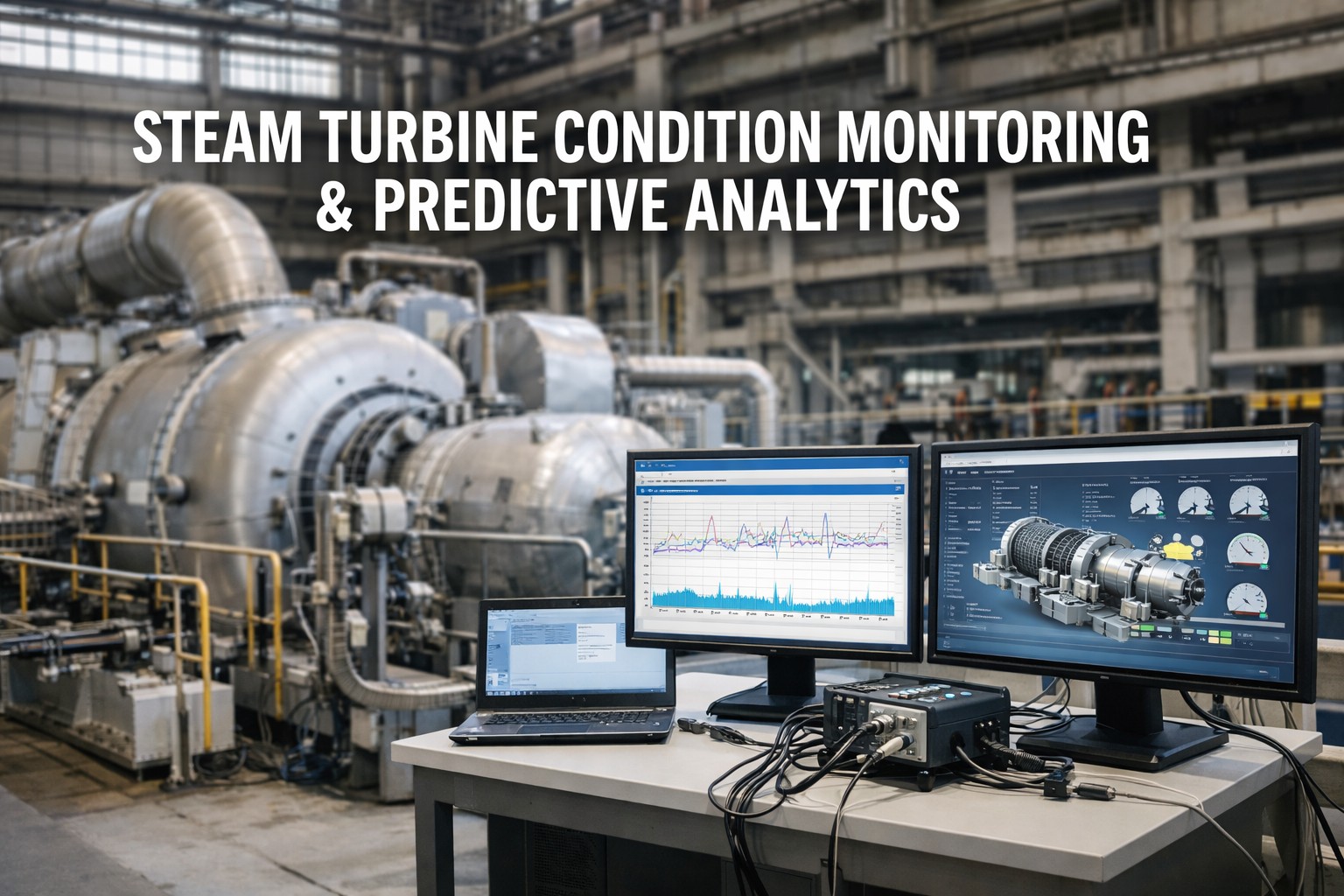
Nuclear power plants generate approximately 10% of the world's electricity, and maintaining these complex facilities at peak reliability is not optional — it is a regulatory and safety imperative. With average operations and maintenance costs exceeding $216 million annually for a single 1.4 GW plant, and unplanned outages costing between $1.5 million and $2.8 million per day in lost generation revenue, the financial case for smarter maintenance is overwhelming. Yet most nuclear facilities still rely on calendar-based preventive maintenance schedules that either replace components too early (wasting millions in unnecessary parts and labor) or too late (risking catastrophic unplanned shutdowns). The predictive maintenance market in the energy sector is projected to reach $7.08 billion by 2030, growing at over 25% annually — and nuclear operators who adopt predictive strategies are reporting 25-30% reductions in maintenance costs, 35-50% decreases in unplanned downtime, and equipment life extensions of 20-40%. Oxmaint's predictive maintenance platform brings these capabilities to nuclear power operations through real-time asset monitoring, AI-powered failure forecasting, and automated work order generation — all built for the stringent compliance and safety requirements of the nuclear industry.
Nuclear Maintenance Intelligence
Unplanned Nuclear Plant Outages Cost $1.5M–$2.8M Per Day in Lost Revenue
Predictive maintenance detects 85% of equipment failures 3–18 months before breakdown — transforming emergency shutdowns into planned maintenance windows aligned with refueling outages.
92.7%
U.S. Fleet Avg Capacity Factor
$216M
Annual O&M Per 1.4 GW Plant
18-24
Months Between Refueling Cycles
60 Yr
Typical Licensed Plant Lifespan
Why Nuclear Plants Need Predictive Maintenance Now
Nuclear power plants operate under a unique set of constraints that make predictive maintenance not just beneficial but essential. The combination of extreme safety requirements, aging infrastructure, regulatory pressure, and massive financial stakes creates an environment where reactive and even calendar-based preventive maintenance strategies are no longer sufficient. Over half of the nuclear fleet in several countries is approaching or exceeding 40 years of operation, and license extensions to 60 and even 80 years mean these aging assets must perform reliably for decades longer than originally designed. Signing up for Oxmaint gives nuclear maintenance teams the condition-based intelligence needed to manage aging assets safely and cost-effectively.
Aging Infrastructure
Over 50% of operating reactors worldwide are 30+ years old. Aging components produce degradation signatures that predictive algorithms detect months before failure — enabling intervention during planned outages rather than forced shutdowns.
Impact: 15-25% equipment life extension
Zero-Tolerance Safety Culture
Nuclear Regulatory Commission (NRC) mandates demand proactive failure prevention. Predictive maintenance provides documented evidence of equipment health trends, supporting compliance with 10 CFR 50.65 Maintenance Rule requirements.
Impact: 65% reduction in safety-related equipment failures
Outage Cost Pressure
Every day of unplanned outage costs $1.5M-$2.8M in lost electricity revenue. Refueling outages already consume 30+ days every 18-24 months. Extending outage durations due to unexpected equipment failures compounds losses exponentially.
Impact: 35-50% reduction in unplanned downtime
Workforce Knowledge Gap
Experienced nuclear technicians are retiring faster than new ones are trained. AI-powered predictive tools capture institutional knowledge in algorithms, enabling less-experienced staff to make data-driven maintenance decisions.
Impact: 30% increase in technician wrench-time productivity
Critical Nuclear Plant Systems for Predictive Monitoring
Not every component in a nuclear facility requires predictive investment, but the systems that directly affect reactor safety, generation capacity, and regulatory compliance absolutely demand it. These six system categories account for the vast majority of unplanned nuclear plant downtime and emergency maintenance spending. Prioritizing predictive monitoring on these systems delivers ROI that justifies the entire maintenance intelligence program. Book a demo with Oxmaint to see how these critical systems are monitored in real time.
Reactor Coolant Pumps
$4.2M
Average cost per unplanned pump failure including forced outage, emergency repair, and NRC event reporting
Steam Generators
$8.5M
Tube degradation detection via eddy current trending — failure requires multi-week forced outage and NRC scrutiny
Main Turbine-Generator
$2.8M/day
Vibration analysis detects bearing wear, blade erosion, and shaft misalignment 4-12 weeks before failure threshold
Electrical Switchgear
Arc Flash
Thermographic monitoring of 4kV and 13.8kV buses, breaker trip pattern analysis, transformer oil dissolved gas trending
Emergency Diesel Generators
Life Safety
Must-start reliability monitoring — fuel quality, coolant chemistry, battery voltage sag, load bank test performance trending
HVAC & Cooling Systems
40%
Of total plant auxiliary power consumption — chiller efficiency, cooling tower performance, containment ventilation health
How Predictive Maintenance Intelligence Works in Nuclear Facilities
Predictive maintenance in nuclear plants is a structured four-stage intelligence pipeline that converts continuous equipment performance data into failure forecasts with specific timelines, recommended actions, and regulatory documentation. The system ingests data from plant instrumentation and control systems, IoT sensors, and CMMS work history — then applies AI-powered anomaly detection to identify degradation patterns invisible to manual inspection. Oxmaint connects to your existing plant data infrastructure without replacing any current systems, adding predictive intelligence as a layer on top of what you already have.
01
Continuous Monitoring
Plant I&C data: temperature, pressure, flow, vibration, current
IoT sensors: acoustic emission, oil particle count, thermal imaging
CMMS history: work orders, parts consumption, failure codes
Ingestion: Every 30 Seconds
02
AI Anomaly Detection
Compare real-time behavior against learned baselines
Detect subtle multi-parameter degradation patterns
Cross-reference operating mode, load, and ambient conditions
Accuracy: 85-92%
03
Failure Forecasting
Remaining useful life estimation for each monitored asset
Risk scoring: safety classification, generation impact, NRC reporting
Probability timeline: weeks to months of advance warning
Prediction: 3-18 Months
04
Automated Action
Work orders auto-generated with parts, labor, and procedures
Timing aligned to next refueling outage window
Regulatory documentation auto-compiled for NRC reporting
Response: Weeks Ahead
Predict Equipment Failures Before They Force Unplanned Shutdowns
Oxmaint connects to your existing plant instrumentation, CMMS, and sensor infrastructure to detect degradation patterns invisible to manual inspection — then auto-generates work orders aligned with your refueling outage schedule so maintenance happens on your terms, not during peak generation periods.
Predictive Detection Windows by Nuclear Asset Type
Each critical nuclear plant system produces distinct degradation signatures that AI algorithms detect at different lead times. Understanding what the system monitors, what patterns indicate impending failure, and how far in advance intervention is possible helps maintenance planners prioritize sensor deployment and align repairs with outage schedules.
Reactor Coolant Pumps
Vibration signatures, seal leakage rate trending, motor current analysis, bearing temperature profiling
6-16 Weeks
Steam Generators
Eddy current tube wall thickness trending, secondary side chemistry correlation, thermal performance degradation
6-18 Months
Main Turbine-Generator
Vibration spectrum analysis, bearing metal temperature, lube oil particle count, shaft eccentricity trending
4-12 Weeks
Emergency Diesel Generators
Load bank performance degradation, fuel quality analysis, coolant chemistry trending, starting battery voltage sag
4-16 Weeks
Electrical Switchgear
Thermographic hot spot trending, breaker trip frequency analysis, transformer dissolved gas, insulation resistance
3-18 Months
Containment HVAC
Fan vibration and motor current, damper position feedback, filter differential pressure, chiller efficiency trending
2-8 Weeks
Overall Predictable Failure Rate
85%
The 15% of failures not predicted are typically sudden catastrophic events — manufacturing defects, external impacts, or seismic events — that produce no degradation pattern. Every gradual wear-based failure mode shows detectable signatures when properly monitored.
ROI of Predictive Maintenance for Nuclear Power Plants
The financial case for predictive maintenance in nuclear operations is arithmetic, not theory. Every prevented emergency failure avoids the 4-5x cost multiplier from emergency contractor mobilization, expedited parts procurement, NRC event reporting burden, and lost generation revenue during forced outages. Organizations implementing predictive maintenance report 95% positive ROI, with many achieving full payback within the first year.
Forced Outage Avoidance
4 prevented forced outage days x $2.1M/day average lost revenue
$8.4M
Emergency Repair Cost Reduction
8 prevented emergency repairs x $180K avg cost avoided (4.5x multiplier eliminated)
$1.44M
Equipment Life Extension
Optimal maintenance timing extends critical asset life 15-25%, deferring $12M in capital replacement
$2.1M
Outage Duration Optimization
3 fewer outage days through predictive scope planning x $2.1M/day generation value
$6.3M
Staff Productivity Gains
30% increase in wrench-time — technicians repair instead of diagnose, search, and wait for parts
$820K
Total Annual Value Delivered
$19.06M
Platform investment: $400K-$800K/year including software, IoT sensors, and integration. Net ROI: $18M+. Return compounds as AI models mature with plant-specific operational data over successive refueling cycles.
Implementation Roadmap: From Pilot to Plant-Wide Predictive Operations
Deploying predictive maintenance in a nuclear facility follows a phased approach that respects the industry's rigorous change management requirements while delivering measurable value at each stage. You do not need to instrument every system on day one — start with the 15-20% of assets that cause 60-70% of your emergency costs, prove value quickly, and expand with documented evidence. Schedule a demo with Oxmaint to design a phased deployment plan for your specific plant configuration.
01
Month 1-2: Connect
Audit existing plant I&C, CMMS, and historian data
Select 5-8 highest-consequence systems for pilot
Connect data feeds to Oxmaint platform
Output: Full Asset Visibility
02
Month 3-6: Detect
AI learns each asset's normal operating baseline
First fault detections and predictive alerts generated
Deploy IoT on highest-cost critical equipment
Value: $2M-$5M Avoided
03
Month 7-12: Prevent
Expand monitoring to all safety-related systems
Predictive work orders embedded in daily workflow
First outage planned using predictive scope data
Value: $8M-$15M Avoided
04
Year 2+: Optimize
Full plant coverage on all monitored systems
AI models continuously improving with plant data
Capital planning driven by equipment condition data
Value: 10-25x ROI
Transform Your Nuclear Plant Maintenance from Reactive to Predictive
Join nuclear operators reducing unplanned outages, extending equipment life, and saving millions through AI-powered predictive maintenance. Your first measurable results are weeks away — not years.
Frequently Asked Questions
How does predictive maintenance differ from the current Maintenance Rule (10 CFR 50.65) compliance approach?
The NRC Maintenance Rule requires plants to monitor the effectiveness of maintenance for safety-related and risk-significant structures, systems, and components. Predictive maintenance enhances Maintenance Rule compliance by providing continuous, data-driven evidence of equipment health trends rather than relying solely on periodic testing and post-failure analysis. Oxmaint automatically documents condition data, degradation trends, and maintenance effectiveness metrics in formats that support (a)(1) and (a)(2) assessments — making regulatory compliance a byproduct of your maintenance workflow rather than a separate documentation burden. Plants using predictive approaches report significantly fewer (a)(1) classifications because emerging issues are caught and corrected before performance criteria are exceeded.
Can Oxmaint integrate with our existing plant historian and I&C systems without cybersecurity risk?
Yes — and cybersecurity is a primary design consideration for nuclear deployments. Oxmaint uses read-only data collection through one-way data diodes or OPC-UA connections that physically prevent any write-back to plant control systems. All data transmission is encrypted end-to-end, and the platform operates within your existing network segmentation architecture (IT/OT separation per NEI 08-09 cybersecurity plan requirements). The system integrates with common nuclear plant historians including PI, Wonderware, and eDNA through standard protocol gateways. No changes to safety-related systems are required — the platform adds intelligence on top of data your plant already generates.
What is the typical payback period for a nuclear plant predictive maintenance program?
Most nuclear plants achieve positive ROI within 6-12 months of full deployment. The math is driven by the extreme cost of nuclear plant forced outages — at $1.5M-$2.8M per day in lost generation revenue, preventing even a single forced outage day in the first year pays for the entire program several times over. Add the 4-5x emergency repair cost multiplier avoided on each predicted failure, the outage duration reduction from predictive scope planning, and equipment life extension benefits, and the typical first-year value for a single-unit plant reaches $15M-$20M against a platform investment of $400K-$800K. That represents 20-50x first-year ROI, with returns compounding as AI models improve over successive operating cycles.
How accurate are predictive maintenance failure forecasts for nuclear-grade equipment?
Prediction accuracy varies by asset type and monitoring maturity. For fault detection — identifying current operational problems like pump seal degradation, bearing wear, or cooling system fouling — accuracy exceeds 90% from initial deployment because rules-based detection works immediately upon data connection. For predictive failure forecasting, AI models need 2-4 weeks to learn each asset's normal operating baseline, with accuracy improving over 3-6 months as the system learns seasonal patterns, load variations, and equipment-specific behaviors. By month 6, most plants report 85-92% prediction accuracy for major equipment failure modes. The 8-15% of unpredicted failures are typically sudden catastrophic events that produce no degradation pattern.
Does Oxmaint support predictive maintenance for both PWR and BWR reactor types?
Oxmaint is designed for all commercial nuclear reactor types including Pressurized Water Reactors (PWR) and Boiling Water Reactors (BWR). For PWR operations, the platform monitors reactor coolant pump seal performance, steam generator tube integrity, pressurizer heater and spray valve health, and chemical and volume control system degradation. For BWR operations, it tracks recirculation pump vibration, jet pump performance, feedwater system health, and reactor water cleanup system efficiency. Each reactor type has dedicated monitoring templates with type-specific PM checklists, degradation models, and alarm thresholds calibrated to the unique operating characteristics of PWR and BWR systems.