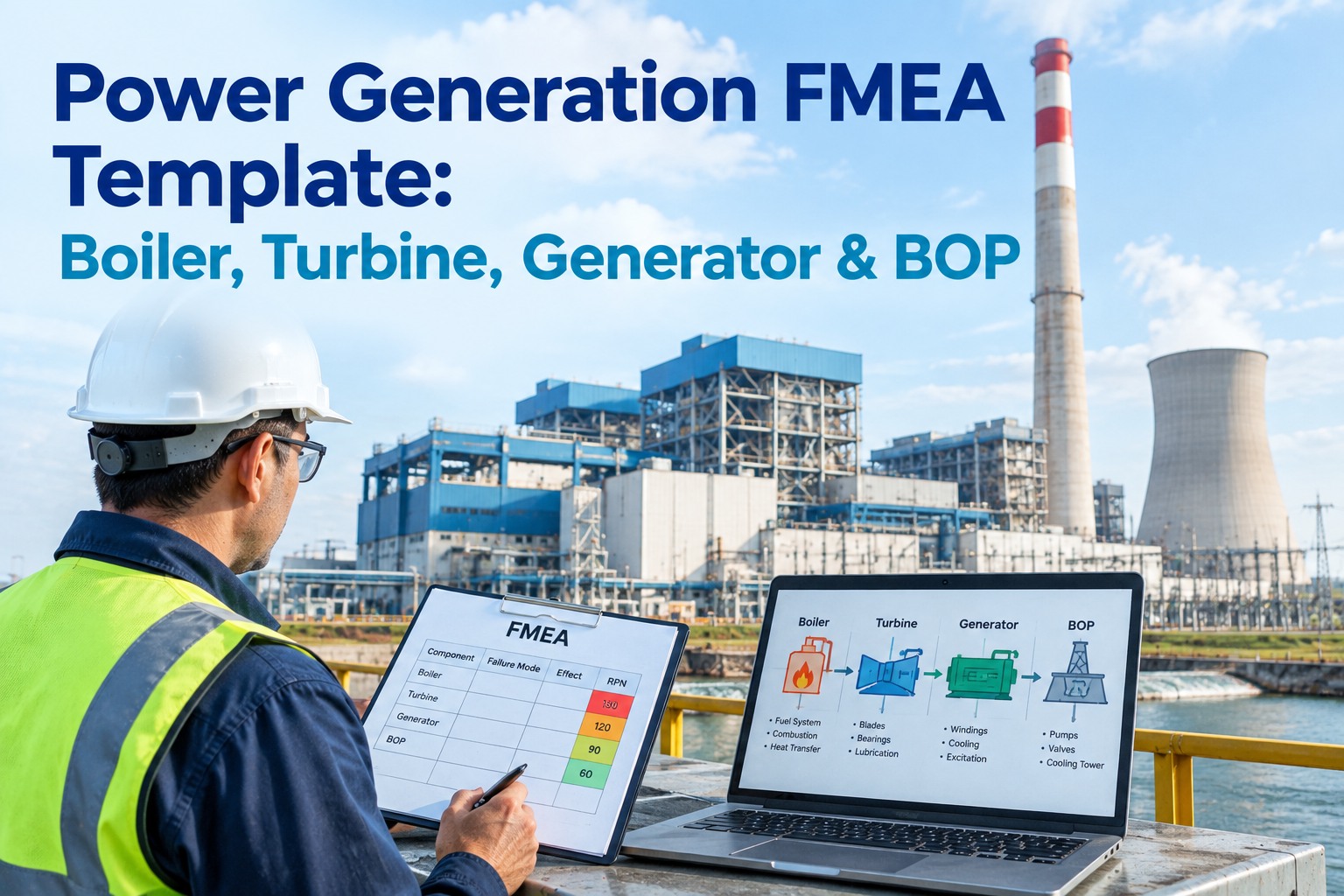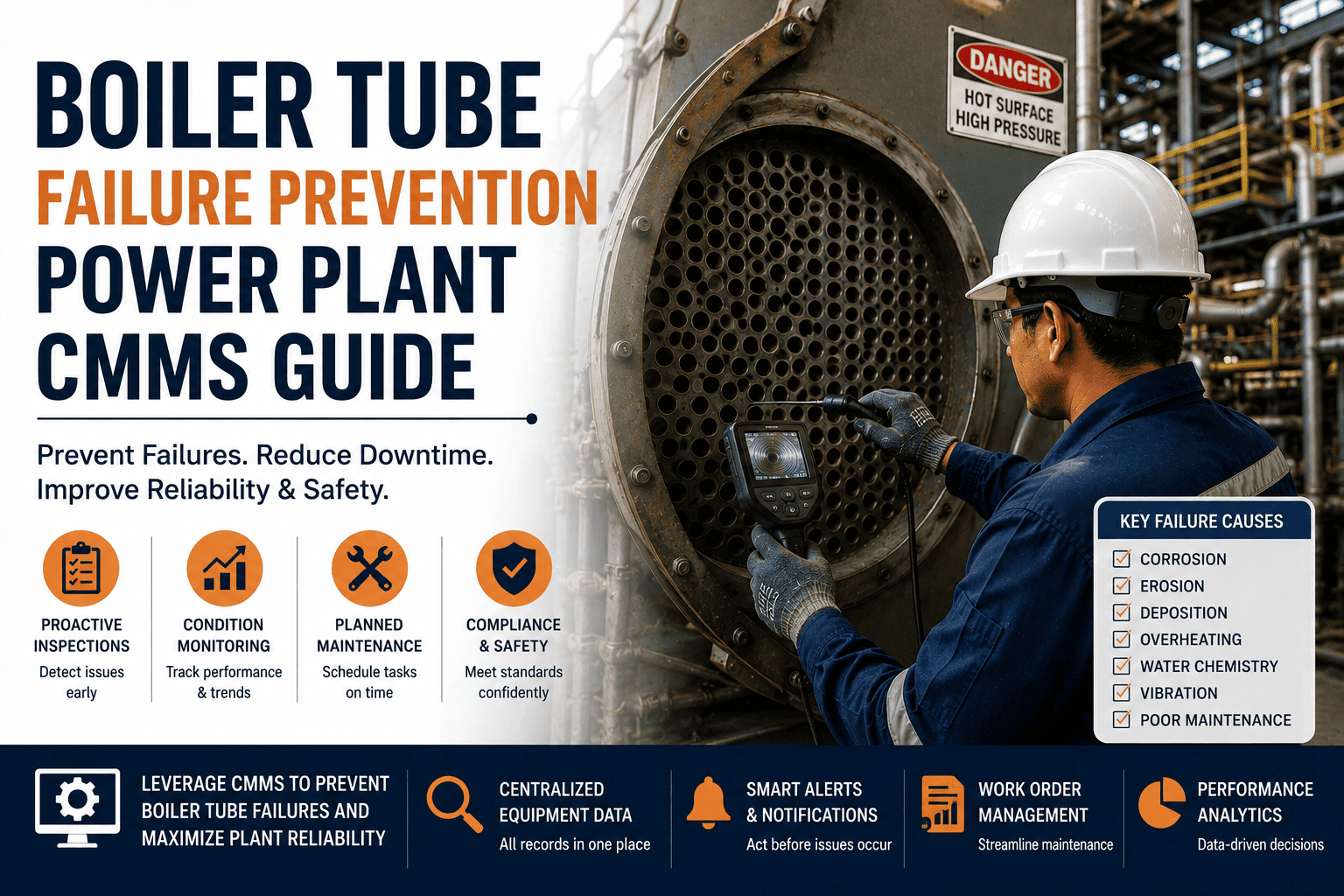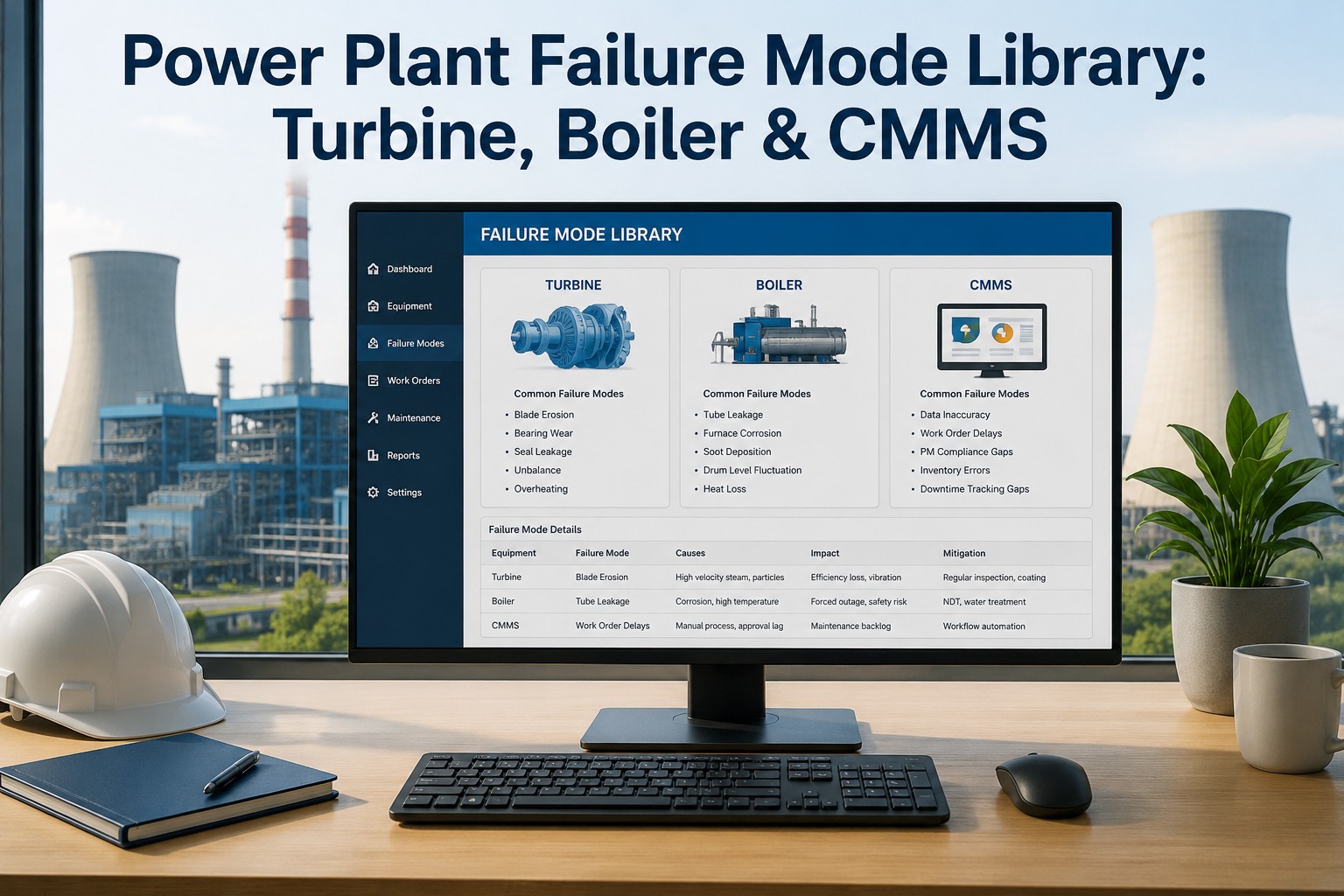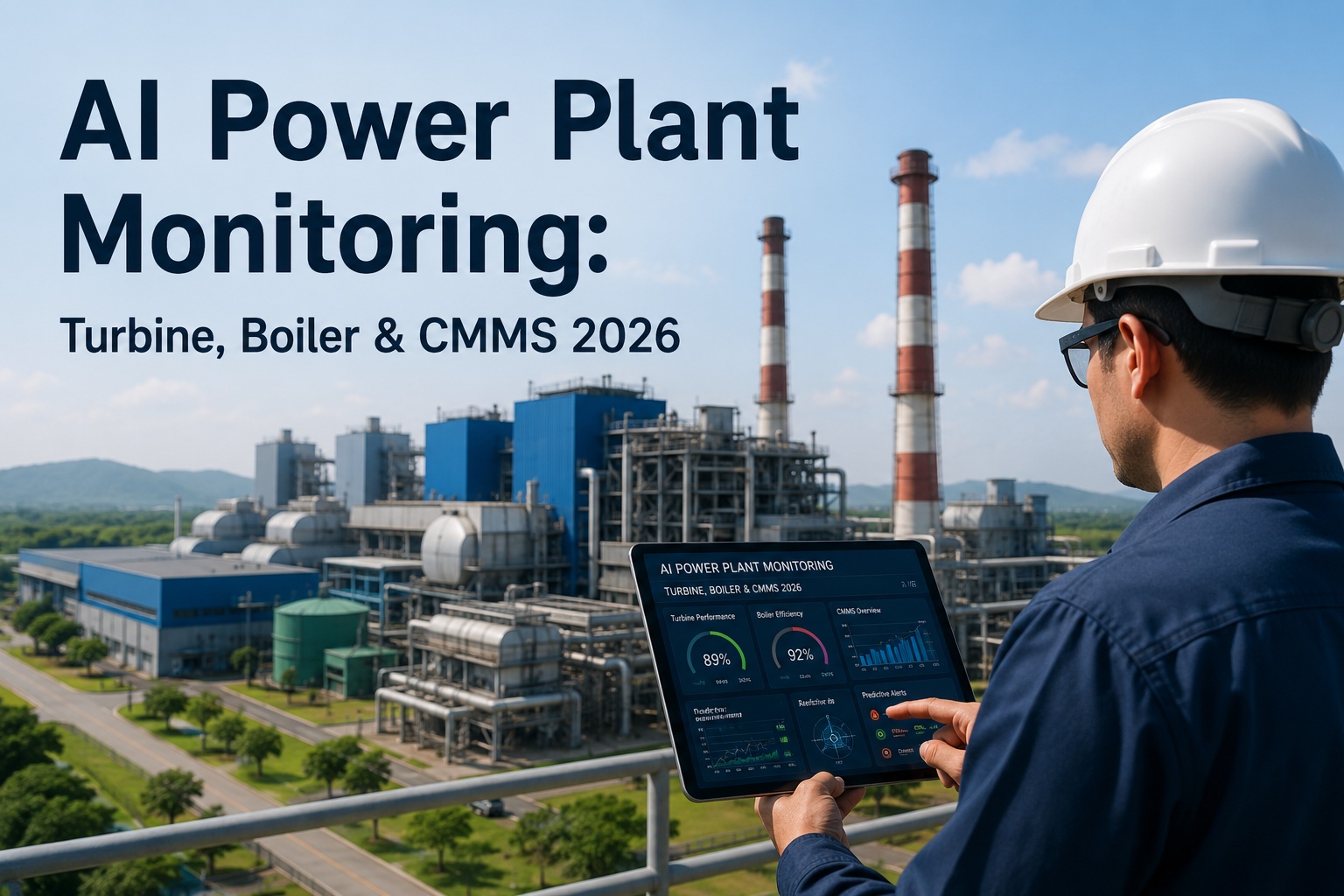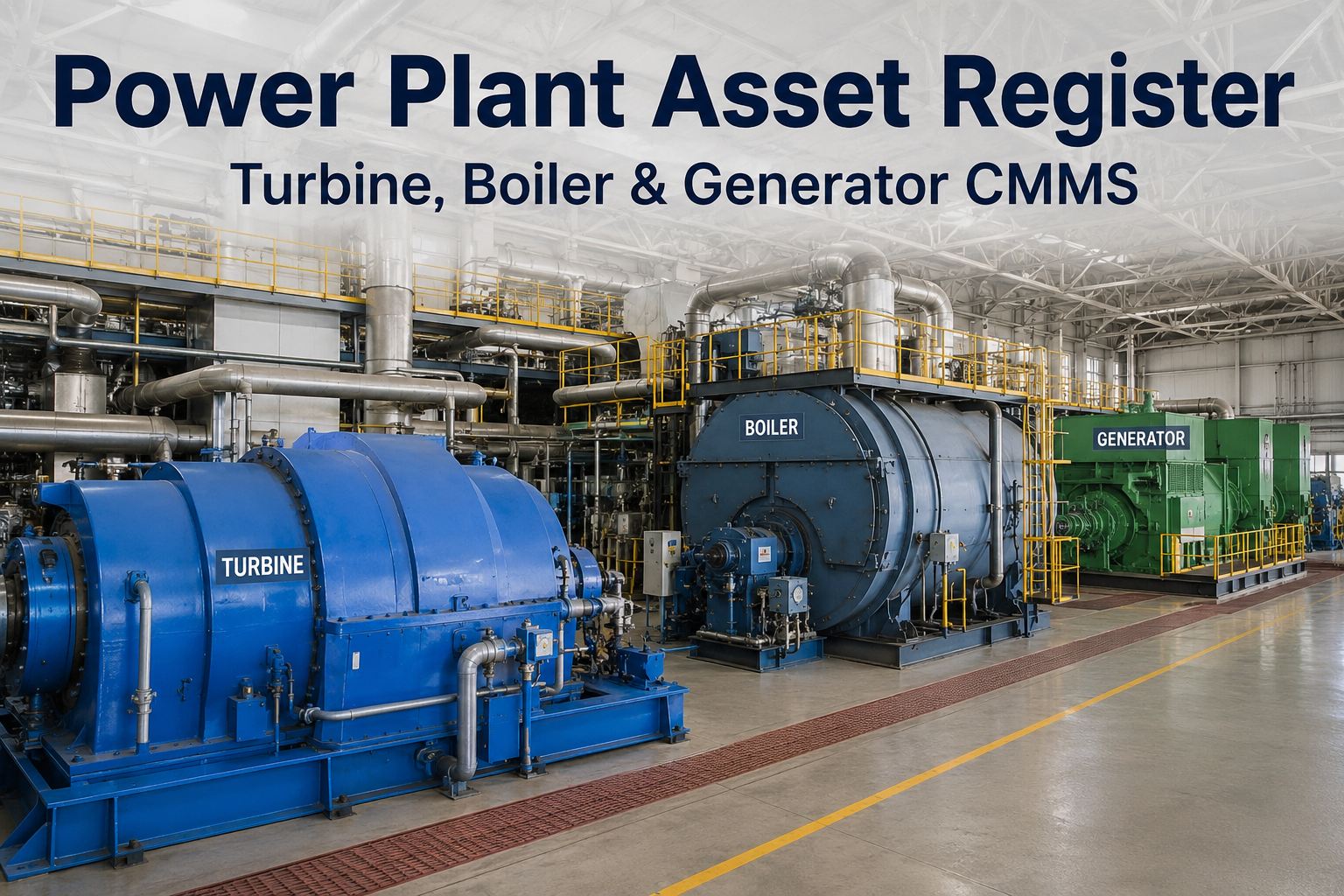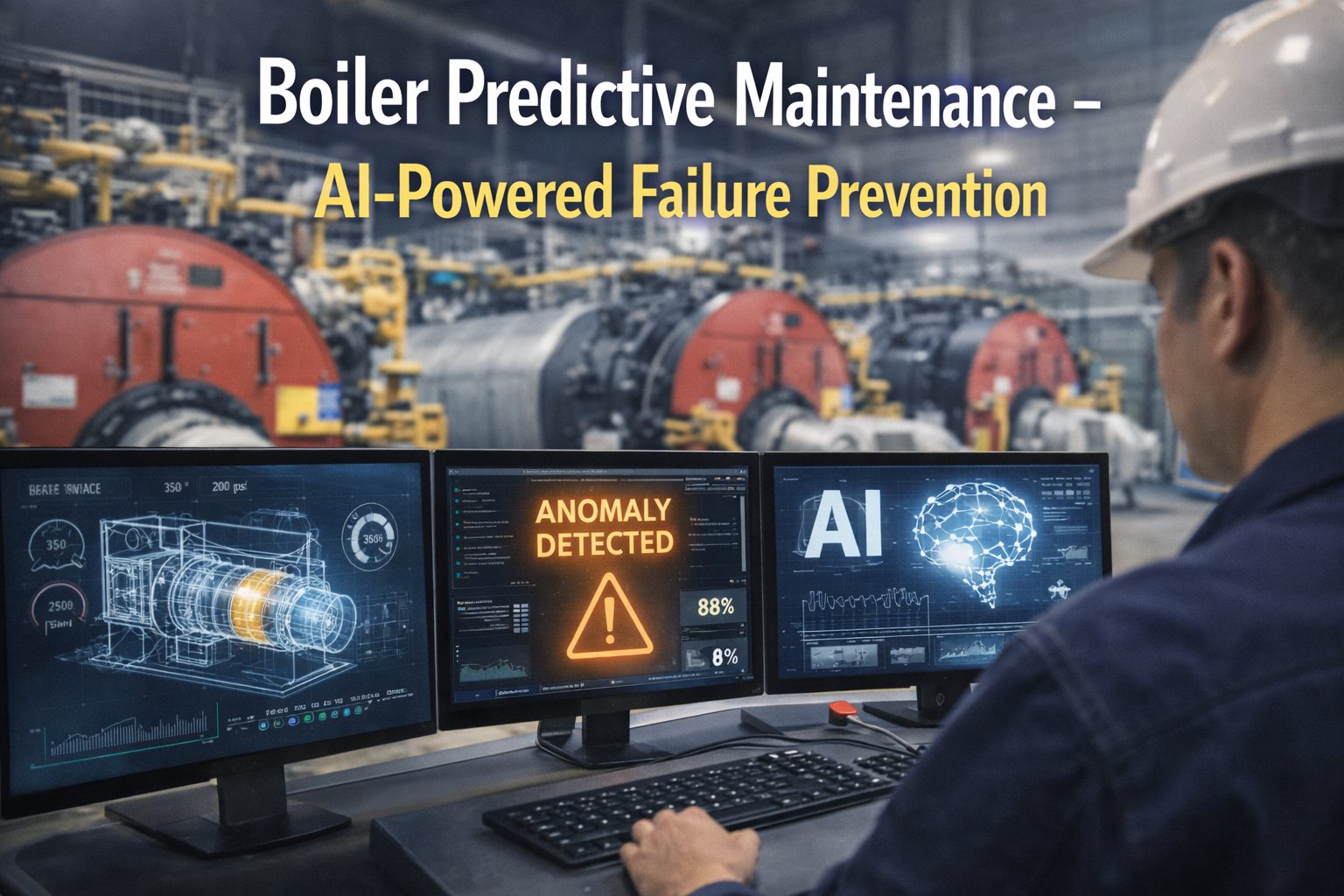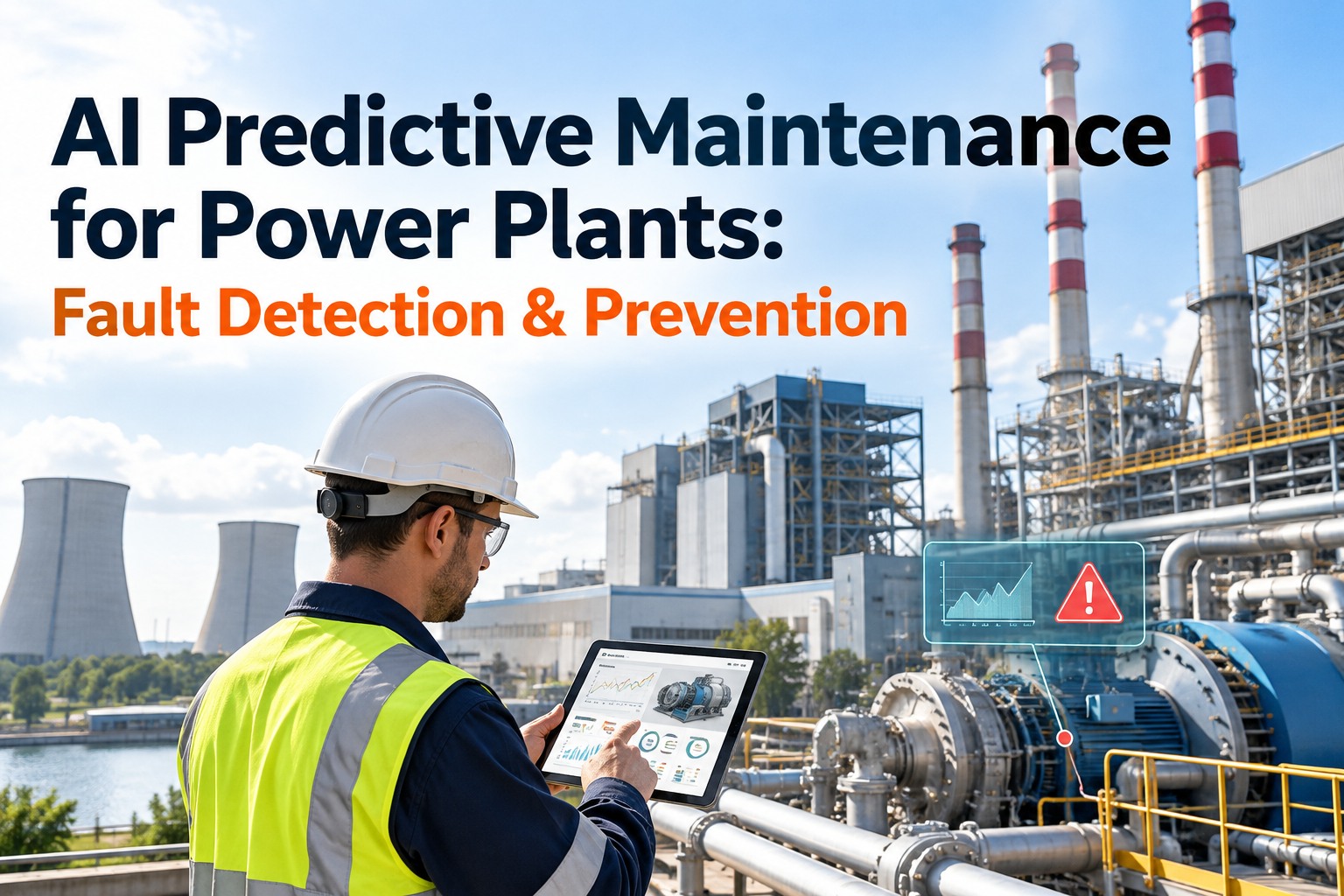
A power plant rarely fails without warning. A turbine bearing runs a few degree hotter, a boiler feed pump starts to vibrate differently, a generator winding shows a faint electrical signature — and weeks later it becomes a forced outage. The signal was always there; nobody was watching it closely enough. This guide explains how AI predictive maintenance detects faults in turbines, boilers, pumps and generators early, what the market data says about adoption, and how OXMAINT AI, the AI-powered CMMS, turns every early warning into a tracked, completed work order.
AI Predictive Maintenance for Power Plants: Catch the Fault Before It Trips the Unit
Fixed-interval maintenance misses the faults that matter and replaces parts that were fine. AI fault detection learns what “normal” looks like for every turbine, boiler, pump and generator, flags drift early, and lets your team plan the repair on your terms. OXMAINT AI, the AI-powered CMMS and maintenance management software, makes sure each alert becomes a scheduled job, not an ignored notification.
Why Power Plants Are Moving to AI Fault Detection
Market analysts point to three pressures: ageing generation fleets, rising costs from unplanned downtime, and the spread of connected sensors and SCADA data that AI can finally put to work. Renewable sites add more distributed assets with fewer people on site. The result is a clear shift from calendar-based tasks to condition-based decisions. Book a demo to see condition-based maintenance in OXMAINT AI.
Four Assets, Four Early Warning Signs
Every critical asset “talks” through a few key signals. AI models learn the healthy pattern and raise a flag when the pattern drifts. Here is what is typically watched on each. Start free and register your plant assets in OXMAINT AI.
How AI Detects a Fault: The 5-Step Pipeline
AI fault detection is not magic. It is a repeatable loop that begins with data and ends with a repair on the schedule. The loop only pays off when the last step actually happens. Book a demo to see the full loop in OXMAINT AI.
The Warning Window: Where AI Gives You Time
Every failure follows a curve. A human can usually notice it only once it is audible, hot or leaking. AI picks it up at the first sign of drift, which is where the cheapest, calmest repair lives.
| Approach | Trigger | Typical result |
|---|---|---|
| Reactive | Asset breaks | Forced outage, emergency repair, secondary damage |
| Preventive | Calendar or run-hours | Some faults caught, some healthy parts replaced early |
| Predictive (AI) | Actual asset condition | Repairs planned just in time, fewer surprises |
A Prediction Nobody Acts On Is Just a Chart.
The weak link in most predictive programs is not the algorithm. It is the hand-off: the alert sits in one tool while the work order lives in another. A CMMS that turns each warning into an assigned, tracked job is what converts early detection into avoided downtime.
Fault Library: What the Early Signal Looks Like
These are common power plant faults, the first sign AI can pick up, and the planned action that follows. Start free and build your fault checklists in OXMAINT AI.
| Fault | Early signal | Planned action |
|---|---|---|
| Bearing wear (turbine, pump) | Rising vibration at bearing frequencies, slow temperature creep | Inspect, lubricate or replace at next window |
| Pump cavitation | Broadband vibration noise, unstable discharge pressure | Check suction conditions, inspect impeller |
| Boiler tube leak | Rising make-up water demand, tube wall temperature shift | Locate and repair during planned shutdown |
| Generator insulation ageing | Increasing partial discharge, falling insulation resistance | Schedule testing and winding refurbishment |
| Heat exchanger fouling | Widening temperature approach, higher pressure drop | Plan cleaning before efficiency losses grow |
Closing the Loop With OXMAINT AI
OXMAINT AI is the layer where predictions meet people. Condition scores, meter readings and inspection findings sit next to the asset history, and every flagged issue becomes a work order with an owner, due date and parts list. Book a demo to see alert-to-work-order flow in OXMAINT AI.
Start Small: A Simple Rollout Path
We always had the data, but alerts lived in one place and maintenance in another. Once warnings turned straight into scheduled jobs with parts and crews lined up, we stopped treating early detection as a report and started treating it as a plan. Outages became something we scheduled, not something that happened to us.
Frequently Asked Questions
Hear the Fault Before It Becomes an Outage.
Bring predictive maintenance and daily maintenance work into one place with OXMAINT AI: asset history, condition readings, alert-driven work orders and mobile execution for your turbines, boilers, pumps and generators. Plan the repair, protect the output.