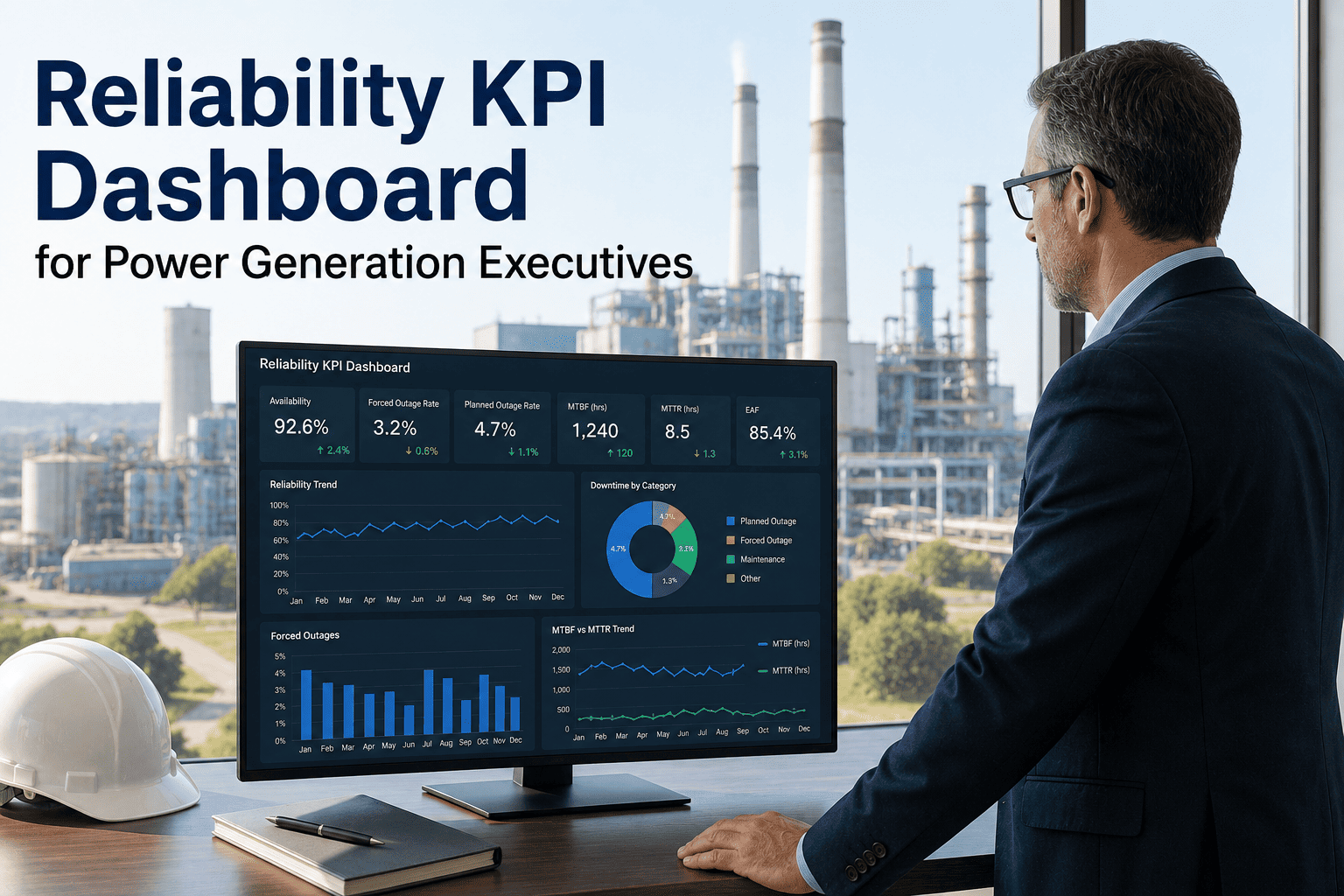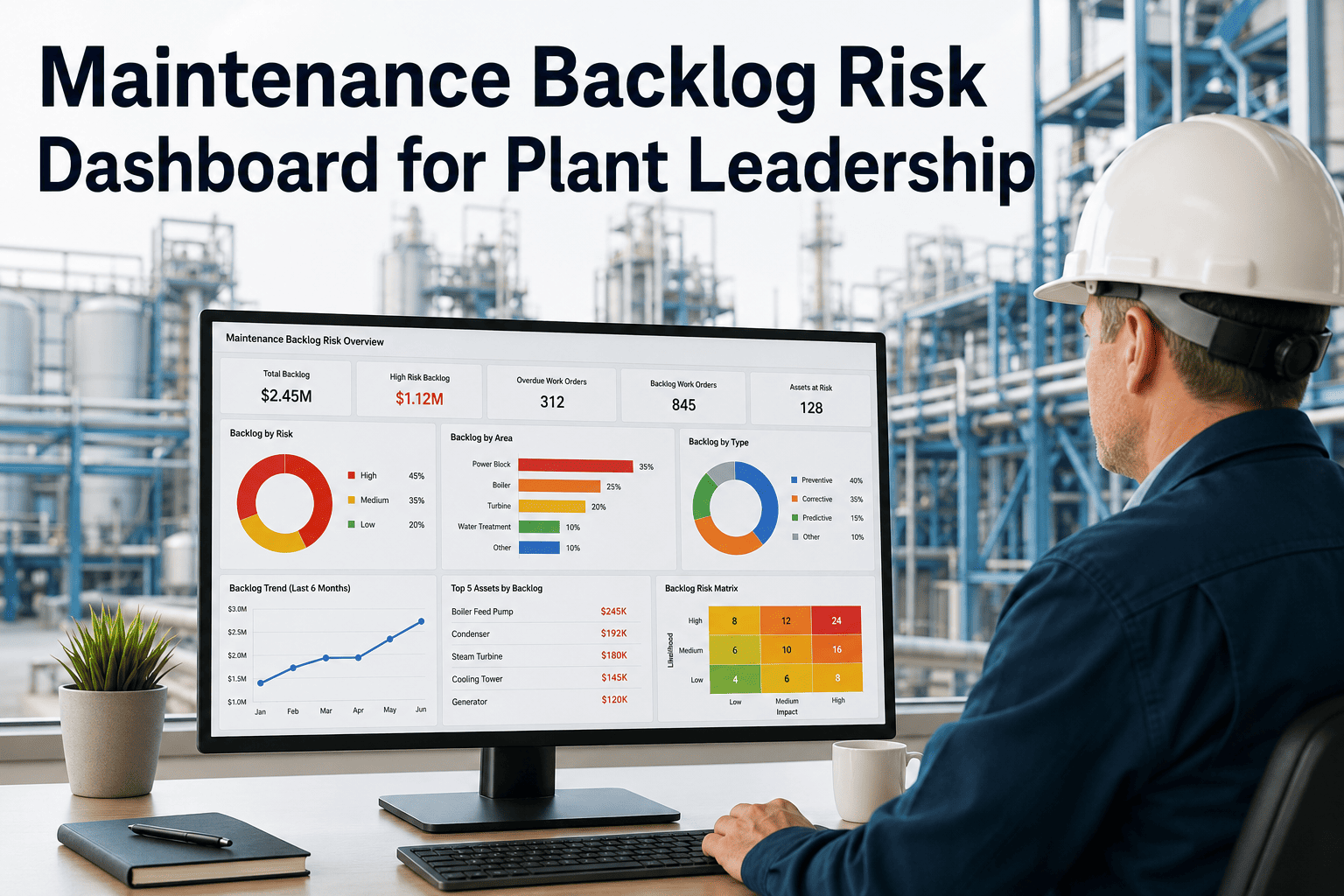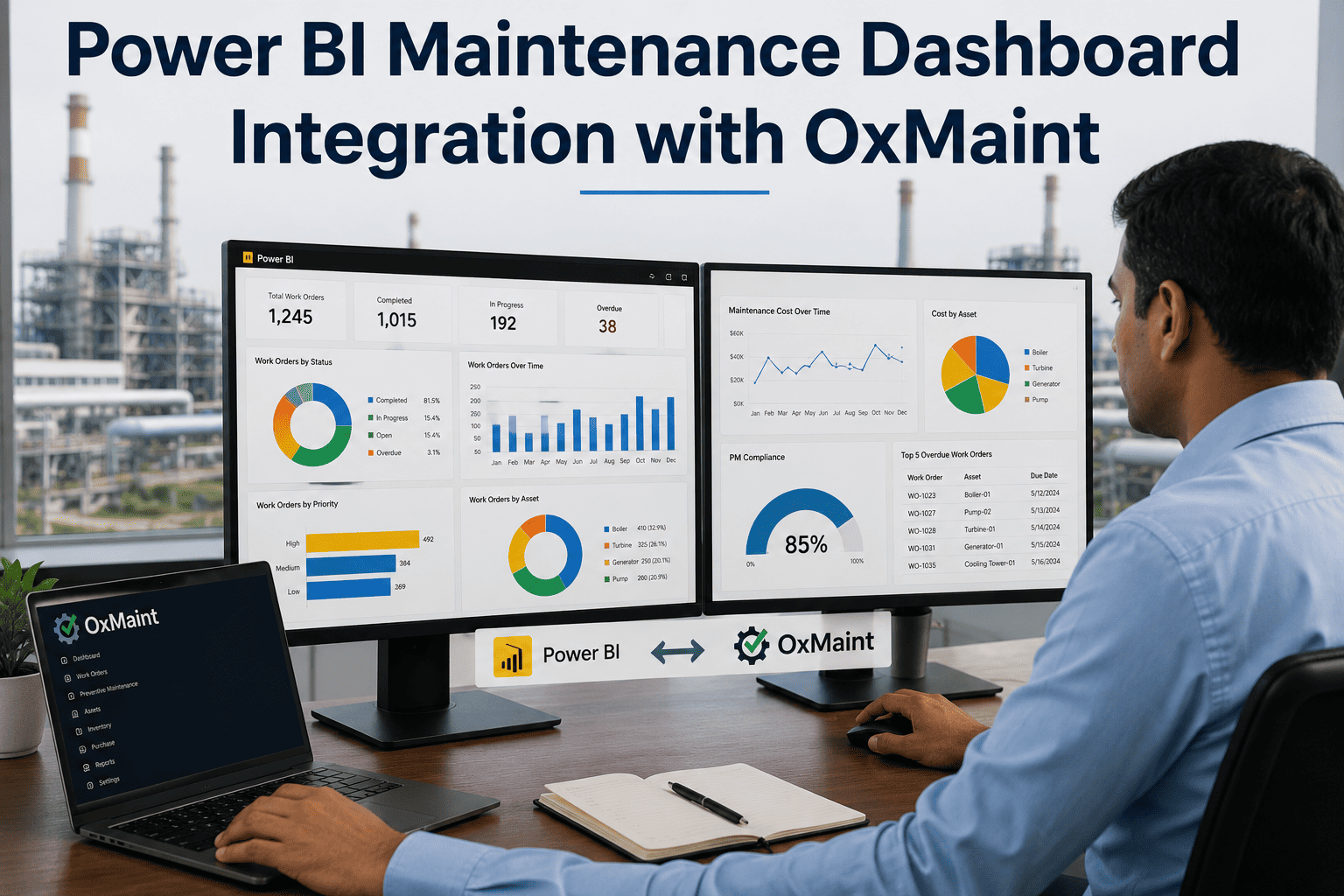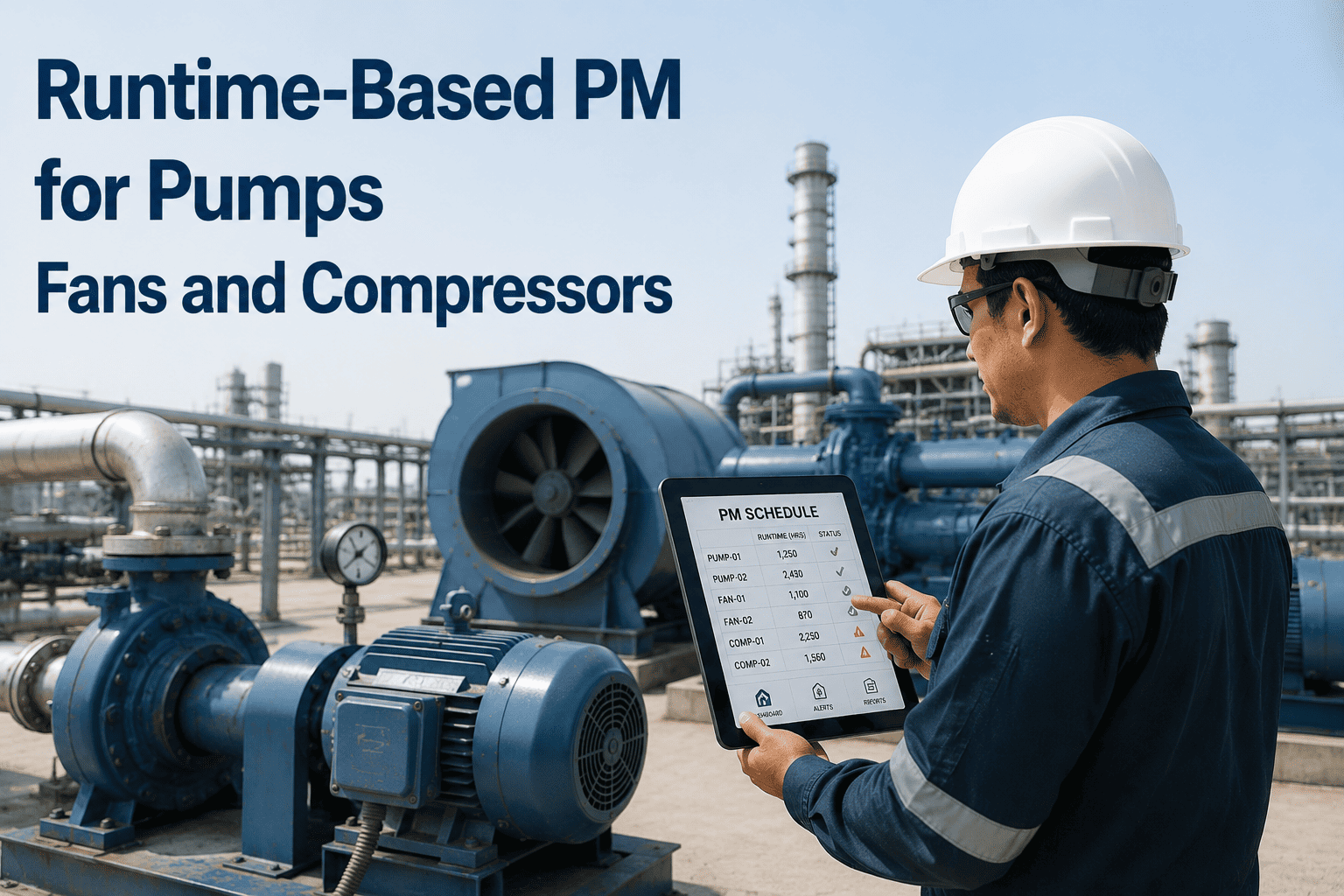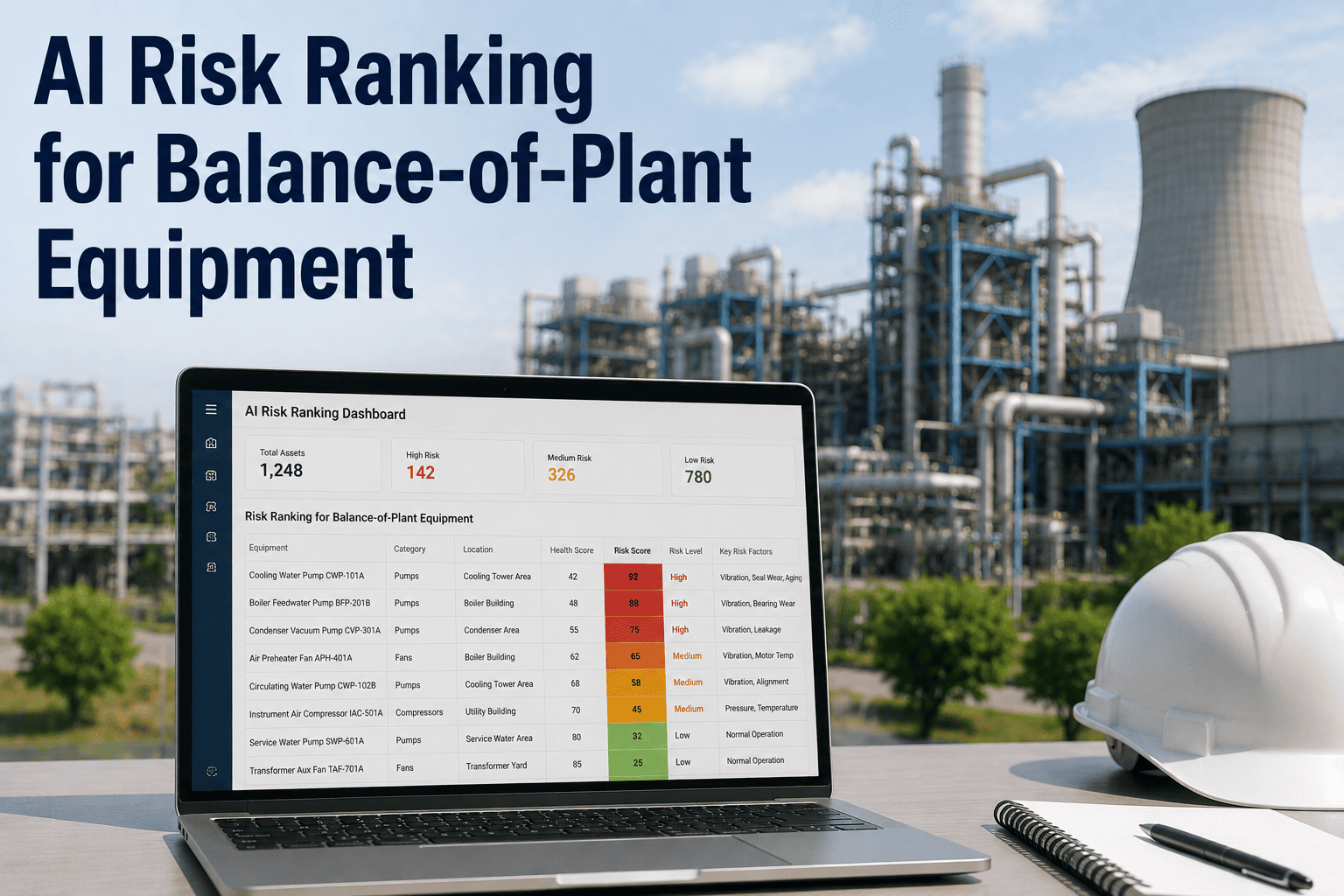
Balance-of-plant equipment doesn't generate megawatts directly — but when a BOP pump trips, a cooling tower fan fails, or a compressed air compressor goes down, the revenue-generating turbine follows it offline within hours. BOP failures account for more forced outage hours at combined cycle and steam plants than any single primary equipment type — yet BOP assets routinely receive less maintenance attention than turbines, generators, and boilers because they're harder to prioritize without a systematic risk framework. AI risk ranking changes that. By continuously analyzing failure history, maintenance cost, operational criticality, condition data, and downtime impact, OxMaint's AI engine assigns a dynamic risk score to every BOP asset — so your maintenance team spends time where failure is most likely and consequences are highest. This page covers how AI-driven risk ranking works for BOP equipment and what it means for your plant's reliability strategy. Curious how your BOP assets would score? Book a demo and see your risk dashboard live.
Balance-of-Plant Failures Cause More Forced Outage Hours Than You Think
OxMaint's AI engine scores every BOP pump, fan, compressor, and valve by failure probability, downtime impact, and maintenance cost — giving your team a live, prioritized risk register instead of a flat PM schedule that treats a cooling water pump like a lighting fixture.
Why BOP Equipment Gets Under-Prioritized
Most plants have hundreds or thousands of BOP assets. Without a scoring system, maintenance decisions default to whoever shouts loudest — not where risk is actually highest.
How OxMaint's AI Calculates BOP Risk Scores
Each BOP asset receives a composite risk score updated continuously as new data flows in. The score combines four weighted input categories into a single prioritization number.
See Your BOP Risk Dashboard in OxMaint — Free
OxMaint scores every balance-of-plant asset in your registry and surfaces the highest-risk equipment automatically. No spreadsheets. No guesswork. Just a live risk register your team can act on.
BOP Equipment Categories OxMaint AI Ranks
Balance-of-plant spans dozens of equipment categories. OxMaint's risk model covers all of them — from main cooling water pumps to instrument air compressors.
Frequently Asked Questions
How does the AI model handle BOP assets with no failure history yet?
For new or recently installed assets with no failure history, OxMaint's AI initializes risk scoring using fleet-level benchmarks from similar asset types, manufacturer MTBF data, and the asset's criticality classification (based on redundancy and generation impact). The model then refines the score as operational data accumulates — inspection results, vibration readings, and PM outcomes — progressively replacing benchmark assumptions with plant-specific data. See how scoring works for new assets.
Can maintenance managers adjust the risk ranking weights for their specific plant?
Yes. OxMaint allows risk model configuration at the plant or asset-class level. Plants with high replacement power costs may increase the downtime impact weight; plants with aging fleets may weight failure probability more heavily. Custom criticality matrices can also be loaded to override default impact scores for plant-specific redundancy configurations. Book a demo to configure a model for your site.
How does AI risk ranking integrate with the existing PM schedule?
OxMaint's AI risk scores feed directly into PM scheduling logic. Assets with rising risk scores can trigger shortened PM intervals automatically, while assets with consistently low risk and clean inspection history can be extended — shifting from fixed-interval to condition-based PM. The system tracks which PM interval changes are AI-recommended versus manually overridden, building an audit trail for reliability engineering review.
What condition monitoring data sources does OxMaint's AI ingest for BOP assets?
OxMaint ingests condition data through multiple pathways: direct API integration with vibration monitoring platforms, SCADA or historian connections (OSIsoft PI, Ignition, Wonderware), manual inspection entry via mobile, and uploaded lab results for oil and water analysis. Any structured numeric measurement can be mapped to an asset and fed into the risk model as a condition indicator.
How quickly does the risk score update when a new defect or failure is recorded?
Risk scores update in real time as new data is entered. When a technician records an abnormal finding during an inspection, logs a failure event, or enters an out-of-tolerance condition reading, the affected asset's risk score recalculates immediately. If the new score crosses a configured threshold, an alert is generated for the reliability engineer and the asset moves to the top of the maintenance priority queue.
Stop Treating All BOP Assets the Same.
Start Prioritizing by Risk.
OxMaint's AI risk ranking gives your reliability team a live, data-driven priority list for every balance-of-plant pump, fan, compressor, and valve — so maintenance effort goes where failure is actually most likely to happen.