Balance of Plant equipment rarely gets the reliability attention that turbines and boilers receive, yet pumps, fans, conveyors, valves, and auxiliary systems are collectively responsible for a large share of unplanned trips across a typical thermal power plant. The pattern is familiar to most maintenance directors — the BOP asset that finally fails was on nobody's priority list, its maintenance history was scattered across three different spreadsheets, and the technician who last worked on it left the company two years ago. Consolidating this long tail of equipment into a single, structured maintenance system is where OxMaint's Balance of Plant maintenance software earns back the most reliability for the least effort.
Balance of Plant Equipment Maintenance Software
Pumps, fans, conveyors, and auxiliary systems don't get the reliability budget of the turbine — but they cause a disproportionate share of unplanned trips. Here is how to bring BOP maintenance up to the same standard.
The BOP Equipment Landscape
Balance of Plant spans a wide range of equipment categories, each with its own failure patterns and maintenance demands. Fragmented tracking across this many categories is exactly why BOP reliability lags behind the main power train.
Pumps
Boiler feed, condensate, cooling water, and service water pumps — vibration and seal wear are the leading failure precursors.
Fans & Blowers
Forced draft, induced draft, and cooling tower fans — bearing temperature and belt condition drive most unplanned downtime.
Conveyors
Coal and ash handling conveyors — belt tracking, idler wear, and jam detection are the recurring maintenance themes.
Valves & Actuators
Control and isolation valves across every auxiliary system — stroke time and seat leakage are the key health indicators.
Compressed Air Systems
Instrument and service air compressors — dryer performance and leak rate directly affect plant-wide reliability.
Water Treatment Skids
Demineralizers, filtration, and chemical dosing skids — often the least monitored systems in the entire plant.
The Old Way vs. The Structured Way
Most plants don't lack effort on BOP maintenance — they lack a structure that keeps information connected across hundreds of smaller assets.
The Turbine Isn't the Only Thing That Can Trip the Plant
OxMaint gives every pump, fan, conveyor, and valve in the plant the same structured maintenance discipline as your critical rotating equipment.
What the Platform Actually Does
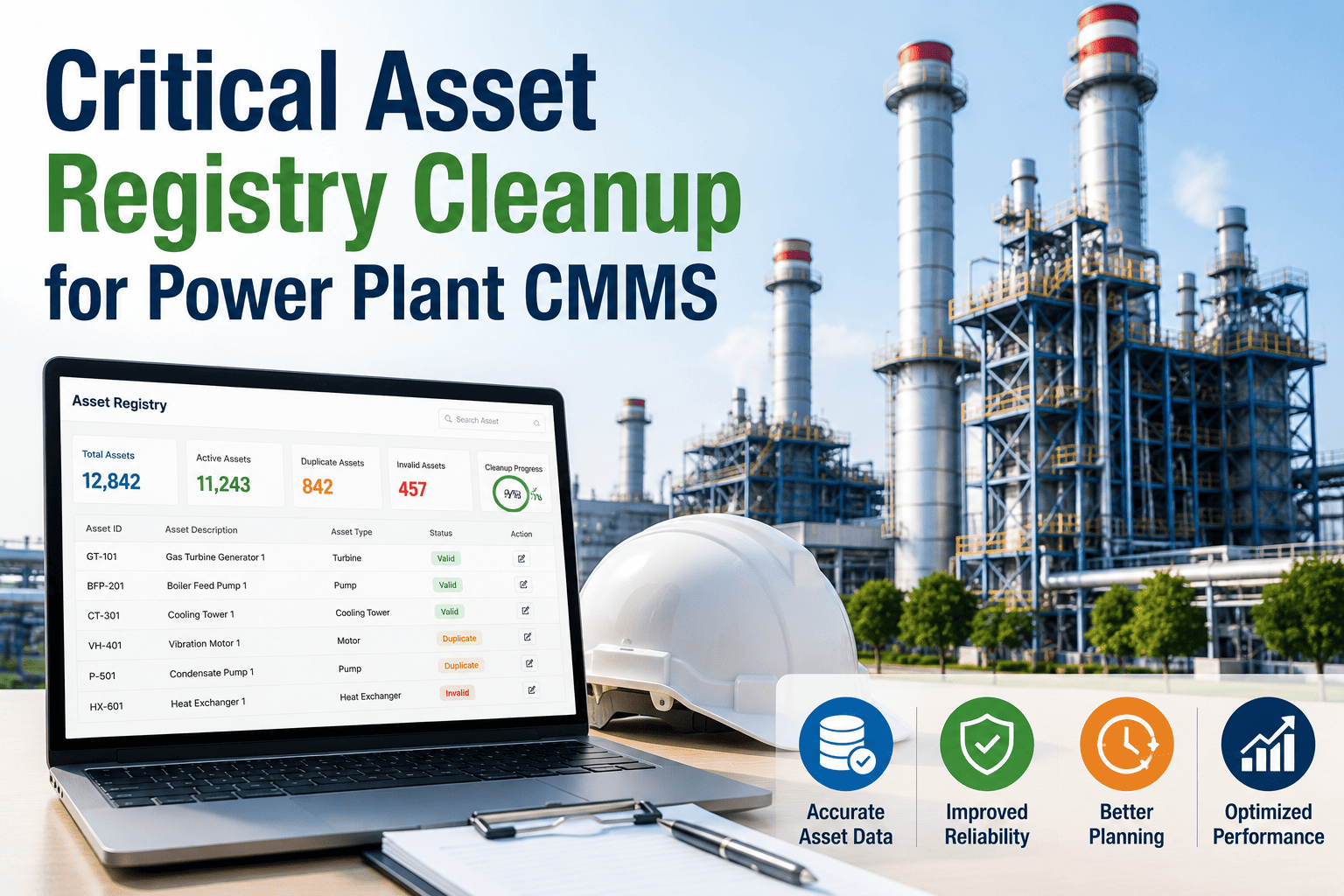
Unified Asset Registry
Every BOP asset, from a coal conveyor to a compressed air dryer, lives in one searchable registry with criticality classification and complete history.
Risk-Weighted PM Scheduling
Preventive maintenance frequency is set by asset criticality and failure history, so limited maintenance hours go where they reduce the most risk.
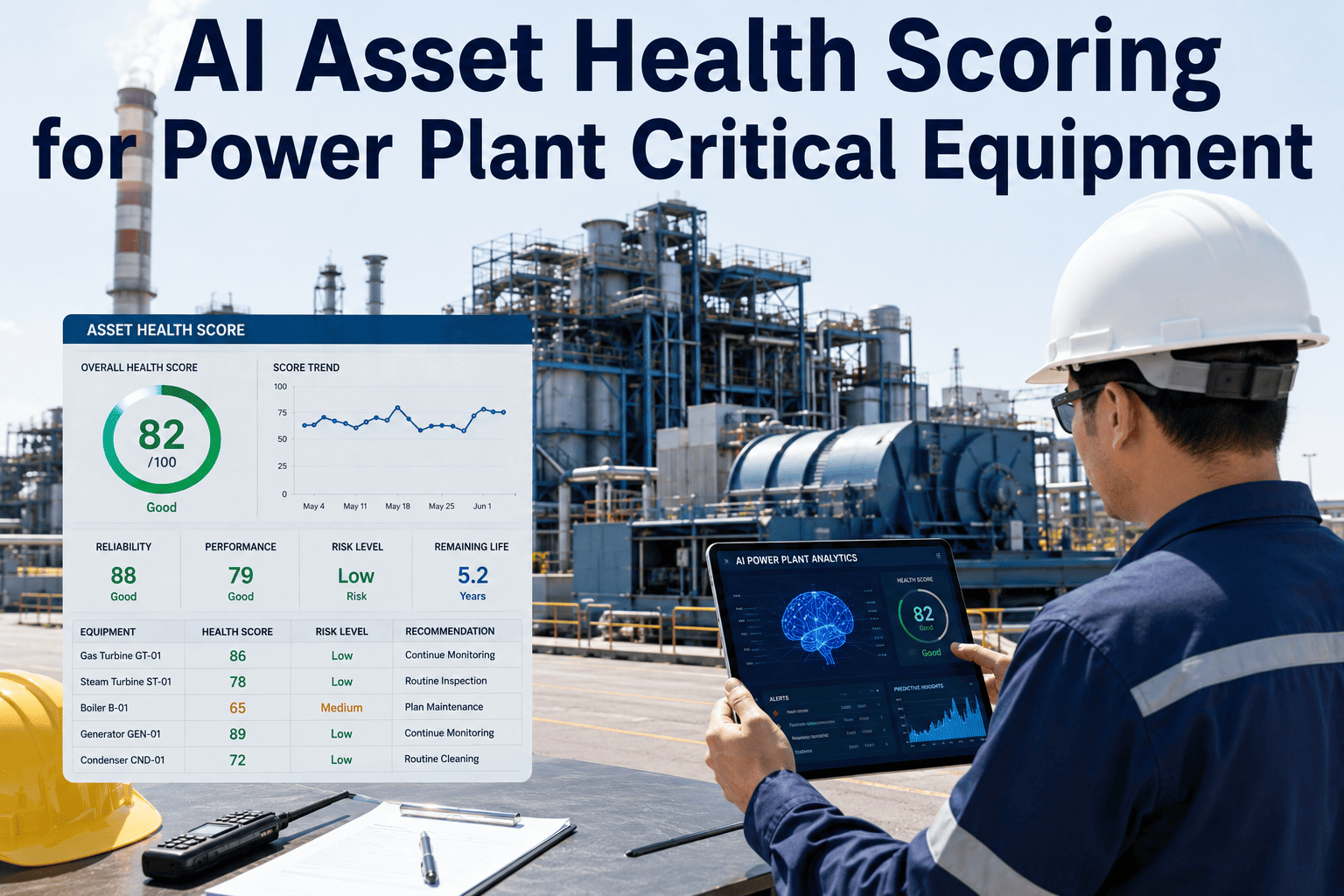
Failure Trend Analytics
Recurring failure patterns across similar equipment types surface automatically, flagging systemic issues before they repeat plant-wide.
Mobile Work Order Execution
Technicians close out work orders, log readings, and request parts directly from the field, even in areas with limited connectivity.
Integrated Spares Management
Spare parts inventory is tied to specific assets and work orders, reducing both stockouts and excess inventory across BOP systems.
Fleet-Wide Reporting
Multi-site operators compare BOP reliability metrics across plants to identify which sites need additional maintenance investment.
What Structured BOP Maintenance Is Worth
A Maintenance Director's Perspective
The turbine and boiler always had a maintenance plan. It was everything in between — the ash conveyors, the compressed air system, the water treatment skids — that never got the same structure. Once we put every BOP asset into one system with a real PM schedule, our unplanned trips from auxiliary equipment dropped noticeably within two outage cycles, and for the first time we could actually see which failure patterns kept repeating across the fleet instead of relearning the same lesson at every site.
Frequently Asked Questions
Why does Balance of Plant equipment cause a disproportionate number of unplanned trips?
BOP equipment rarely receives the same reliability engineering attention as the turbine or boiler because it is perceived as lower-risk individually, yet collectively it represents hundreds of assets any one of which can force a plant trip if it fails at the wrong moment. Maintenance budgets and reliability programs tend to concentrate on the highest-visibility assets, leaving auxiliary systems to run on ad hoc or reactive maintenance until a failure forces attention. Book a demo to see how OxMaint brings structure to this long tail of equipment.
How do we prioritize which BOP assets deserve a full preventive maintenance program first?
Start by classifying assets on both failure consequence and failure frequency — an asset whose failure would force a full unit trip deserves priority even if it fails rarely, while a frequently failing asset with low consequence may only need a lighter maintenance touch. Boiler feed pumps, forced draft fans, and compressed air systems typically rank highest because their failure directly threatens unit availability, while smaller auxiliary skids can often follow a run-to-failure or condition-based approach initially.
Can a single system really handle equipment as different as conveyors, pumps, and water treatment skids?
Yes, a well-structured CMMS handles this diversity by allowing each asset type to carry its own maintenance template, criticality classification, and relevant readings, while still rolling everything up into common reporting and work order workflows. The value comes precisely from unifying dissimilar equipment types into one system, since that is what surfaces cross-category patterns like a compressed air issue that is quietly affecting valve actuator performance elsewhere in the plant. Start free in OxMaint to see how asset templates handle this variety.
How long does it typically take to bring a full BOP equipment inventory into a structured maintenance system?
Most plants can register their critical and high-priority BOP assets within the first month, since this typically represents a smaller, well-understood subset of the total equipment count. Full inventory consolidation, including lower-priority auxiliary equipment and historical maintenance record migration, generally takes two to four months depending on how scattered the existing records are and how many sites are involved. Sign in to OxMaint to start the asset registry with your highest-priority BOP equipment.
Does consolidating BOP maintenance data actually reduce spare parts costs?
It typically does, primarily by eliminating the duplicate and excess inventory that accumulates when different maintenance teams independently stock parts for the same equipment without visibility into what others already hold. Linking spare parts directly to specific assets and their maintenance history also improves forecasting, since usage patterns become visible across the whole fleet rather than being estimated site by site.
Give Balance of Plant Equipment the Reliability Program It Deserves.
OxMaint unifies every pump, fan, conveyor, and auxiliary asset into one system with risk-based maintenance schedules and fleet-wide failure trend visibility.