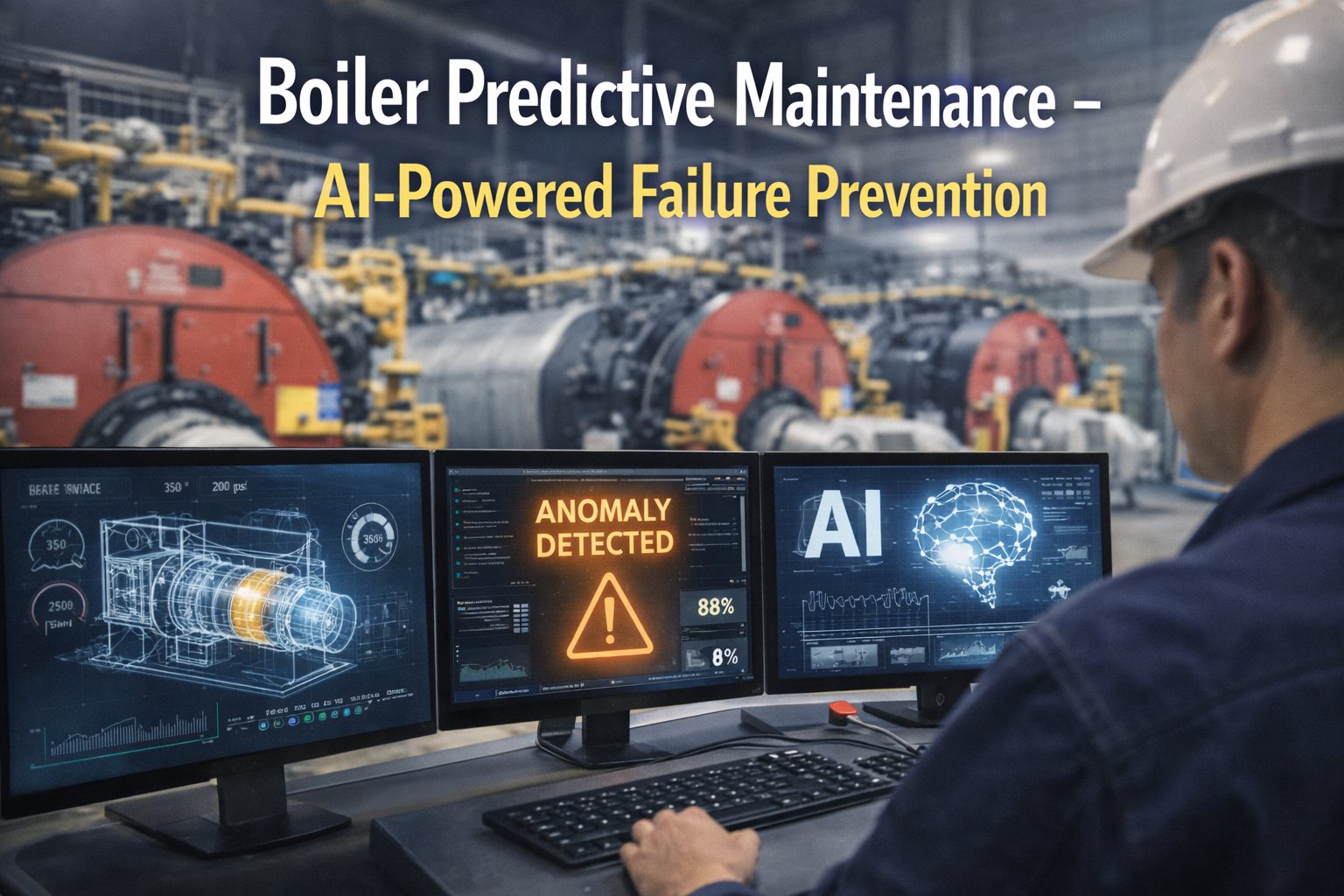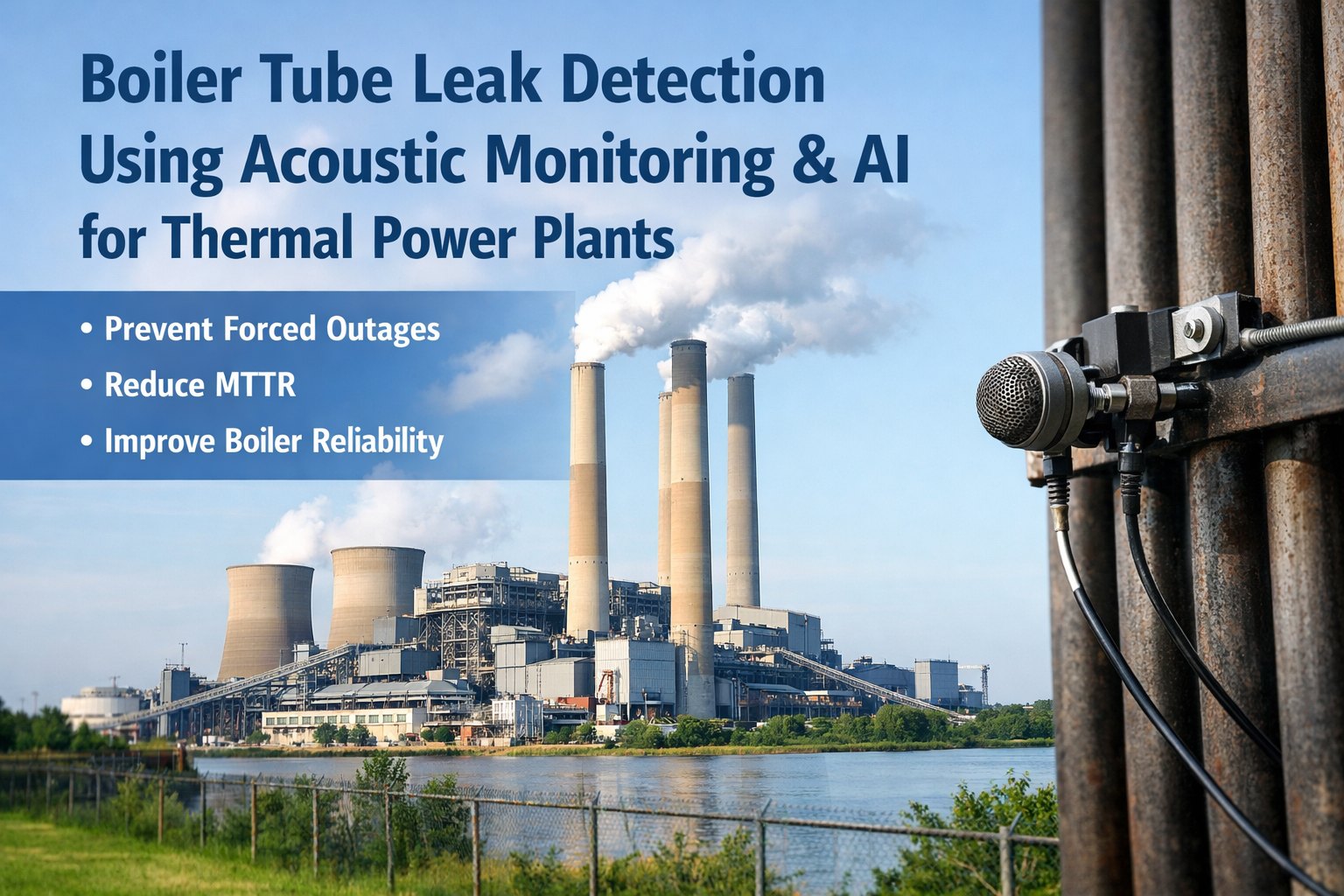
Boiler tube failures are the leading cause of unplanned outages in thermal power plants — responsible for more than 40% of all forced shutdowns globally. When a tube leaks or ruptures, the consequences cascade: emergency shutdowns, repair costs reaching hundreds of thousands of dollars, lost generation revenue, and serious safety risks to plant personnel. Traditional inspection methods catch failures too late. AI-powered predictive maintenance platforms like OxMaint are changing the equation — giving engineers early warnings weeks before failures occur and helping plants achieve over 90% reduction in boiler-related unplanned outages.
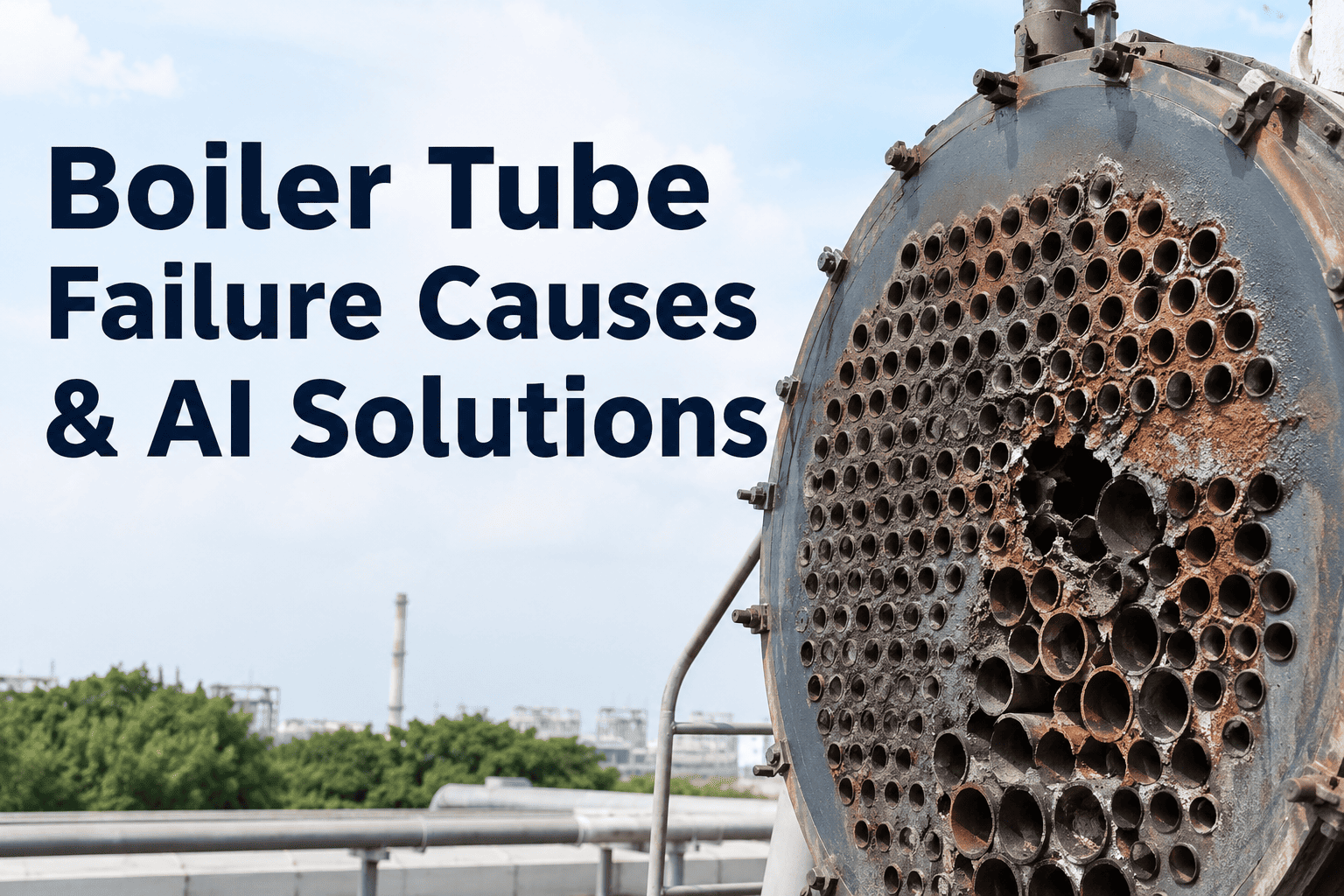
Boiler Tube Failure Causes & AI Solutions
Why boiler tubes fail, what the data reveals, and how AI-driven condition monitoring stops costly outages before they happen — a guide for power plant engineers and maintenance teams.
Why Boiler Tubes Fail: The Root Causes Engineers Must Know
Boiler tube failures don't happen overnight. They are the end result of months or years of accumulated stress, chemical attack, and operating condition deviations — most of which are detectable long before failure if you have the right monitoring in place.
Repeated heating and cooling cycles create micro-cracks in tube walls. Common in superheater and reheater sections where temperature swings exceed material tolerances during startups and shutdowns.
Moisture trapped beneath insulation layers causes localized external corrosion. Particularly destructive because it remains invisible during routine visual inspections until wall thinning is severe.
Sustained operation above design temperatures causes tube metal to deform slowly over time (creep). Often triggered by scale buildup on inner walls restricting heat transfer and driving up metal temperatures.
Poor feedwater chemistry — high oxygen content, low pH, or dissolved solids — attacks tube inner surfaces. Pitting corrosion can penetrate full wall thickness within months under aggressive conditions.
High-velocity fly ash particles in flue gas physically abrade tube outer surfaces. Economizer and air heater sections are most vulnerable — wall thinning rates can exceed 1mm per year in severe cases.
Caustic attack on tube surfaces generates atomic hydrogen that diffuses into the metal lattice, causing embrittlement and sudden brittle fracture — one of the most dangerous and unpredictable failure modes.
The Failure Timeline: From Initiation to Catastrophic Rupture
Understanding the progression of a boiler tube failure helps maintenance teams identify the optimal intervention window — which AI monitoring is specifically designed to target.
Micro-cracking, scale buildup, or corrosion begins. No visible symptoms. Tube integrity sensors and thermal anomaly detection can identify deviations at this stage.
Damage spreads through tube wall. Slight changes in steam flow, pressure differential, or tube metal temperature become measurable. AI pattern recognition identifies anomalies 4–8 weeks before failure.
Accelerating wall thinning, increasing acoustic emission, or detectable steam loss. Traditional methods detect failure at this stage — too late for planned maintenance.
Full wall breach. Emergency shutdown required. Estimated repair cost: $200K–$800K. Lost generation revenue: $50K–$150K per day depending on plant capacity and power purchase agreements.
Catch Failures at Stage 1 or 2 — Not Stage 4
OxMaint's AI engine continuously analyzes temperature gradients, pressure deviations, vibration patterns, and historical failure data to alert your team weeks before a boiler tube fails — turning emergency shutdowns into scheduled maintenance windows.
How AI Predicts Boiler Tube Failures Before They Happen
AI-powered condition monitoring doesn't replace your engineers — it gives them a continuous early warning system that processes thousands of data points per second from sensors your plant already has installed.
OxMaint connects to existing plant historian systems, thermocouples, pressure transmitters, and acoustic emission sensors — no additional hardware required in most plants. Data streams are processed in real time, 24/7.
The AI establishes normal operating envelopes for each tube section based on historical performance data. Deviations from baseline — even subtle ones invisible to human operators — trigger anomaly flags automatically.
Machine learning models trained on thousands of historical boiler failure events classify detected anomalies by failure type — corrosion, thermal fatigue, creep — and estimate remaining useful life for each flagged tube zone.
When the system detects a high-confidence failure precursor, it automatically generates a prioritized work order in OxMaint CMMS — assigned to the right technician with inspection checklist, historical data, and recommended action.
Traditional Inspection vs. AI Predictive Monitoring
The gap between scheduled inspection programs and continuous AI monitoring isn't just about technology — it's about how many failures each approach catches in time to act on.
| Factor | Traditional Inspection | AI Predictive Monitoring | Outcome |
|---|---|---|---|
| Detection Timing | At failure or days before | 4–12 weeks before failure | Planned maintenance window |
| Coverage | Sampled zones during outage | 100% of instrumented tube sections, 24/7 | No blind spots |
| Failure Cause ID | Post-failure metallurgical analysis | Real-time failure mode classification | Root cause before failure |
| Inspection Cost | $80K–$200K per outage inspection | Continuous at fraction of inspection cost | 60–70% cost reduction |
| Unplanned Outage Rate | Industry avg: 3–6 per year | Less than 0.5 per year (monitored plants) | 90%+ reduction |
| Data History | Inspection reports — gaps between outages | Continuous sensor history — full asset lifecycle | Complete failure traceability |
Most Vulnerable Boiler Zones by Failure Type
Not all boiler sections face the same risks. AI monitoring applies targeted sensitivity to each zone based on known failure patterns — here is where the highest risk concentrates.
Operate at the highest temperatures in the boiler — typically 540–600°C. Scale deposits reduce heat transfer and drive metal temperatures above design limits. AI monitors metal temperature differentials across tube bundles to catch thermal deviation early.
Located in the flue gas path, economizer tubes face continuous particle bombardment. Erosion rates accelerate when fly ash velocity or concentration increases. AI correlates fuel quality data with wall thinning rates to predict erosion progression.
Waterwall tubes are highly sensitive to feedwater chemistry excursions. Caustic concentration events, even brief ones, can initiate hydrogen damage that causes sudden failure weeks later. AI flags chemistry deviations and tracks cumulative exposure risk.
"The majority of boiler tube failures we analyze were detectable weeks or months before the rupture — there were signals in the data. The problem isn't that the signals don't exist. The problem is that no human operator can monitor thousands of sensor channels simultaneously. AI does exactly that, and it changes the economics of boiler maintenance fundamentally."
— Senior Reliability Engineer, 1,200MW Coal Power Station
A 2023 EPRI study found that plants deploying AI-based boiler tube monitoring reduced boiler-related forced outage hours by an average of 67% within 18 months of deployment, with payback periods under 14 months at plants with annual boiler repair costs above $400K.
Stop Reacting. Start Predicting.
Every unplanned boiler outage your plant experiences this year was detectable weeks in advance. OxMaint gives your engineering team the AI monitoring layer to act on that data — automatically, continuously, and with the work order workflow built in. See it live in 30 minutes.

-root-cause-analysis-and-prevention-programs.png)