A tube leak almost never announces itself. It begins as a few thousandths of lost wall under a deposit, a slow-thickening oxide scale, or an erosion scar in a gas lane — and the first unmistakable sign is often a forced outage. Boiler tube failures are the single biggest availability problem in fossil power plants, and nearly every one traces back to a condition that was already visible at the last inspection. This is exactly the gap the OXMAINT AI — the AI-powered maintenance management software — closes, turning every inspection, thickness reading and leak into tracked work-order data so the next failure shows up as a trend instead of a trip.
Boiler & HRSG Reliability · Thermal Power Plants · Tube Leak Prevention · 2026
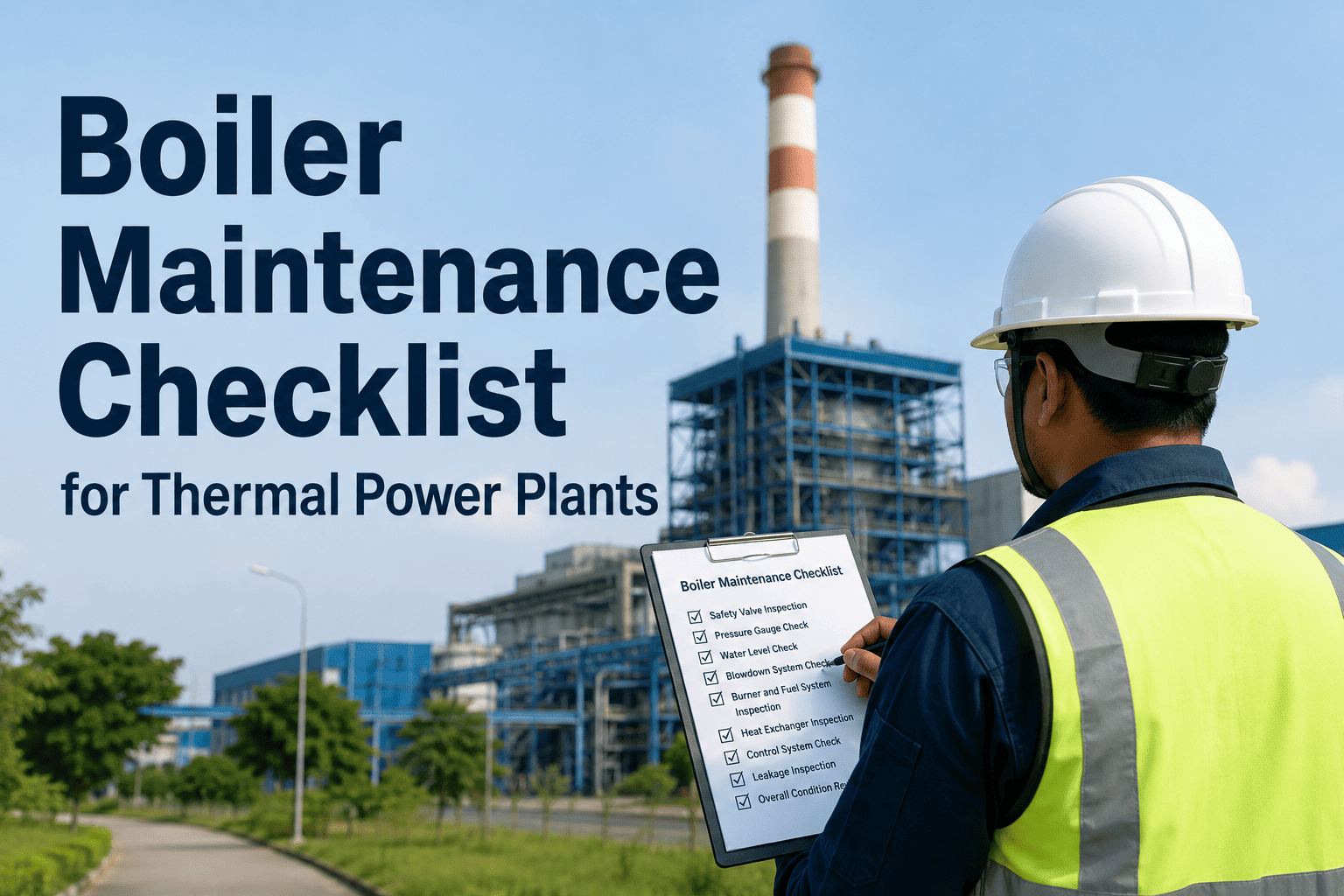
Boiler Tube Leak Prevention Checklist for Thermal Power Plants
Work through eight review areas — tube condition, chemistry, deposits, erosion, corrosion, overheating, inspection history and recurring failure locations — and the leak forming inside your boiler stops being a surprise. The OXMAINT AI maintenance management software runs this checklist as live work-order data, so reliability teams catch each failure while it is still a reading on a chart.
1Inspect & read
→
2Classify mechanism
→
3Raise work order
→
4Trend & close out
No. 1
Tube failures are the biggest availability problem in fossil power plants
28 modes
EPRI groups boiler tube failures into 28 mechanisms across five families
8 areas
Condition, chemistry, deposits, erosion, corrosion, heat, inspection, location
One system
OXMAINT AI holds all eight in one place, trended and tied to action
A Tube Leak Is Never Really Sudden
By the time steam is venting into the furnace, the mechanism behind it has usually been running for weeks, months or years. The failure looks sudden only because nobody was watching the slow signal that led to it — a thinning wall, a rising oxide scale, a chemistry excursion logged and forgotten. The OXMAINT AI maintenance management software is built to catch exactly that signal, making every tube reading a tracked trend instead of a note in a file; start free and put your boiler-tube data to work in OXMAINT AI.
It builds slowly
Wall loss, scale growth and deposits advance over long periods — plenty of time to catch, if the software is measuring.
The signal is on record
The reading that predicts the leak is often already captured — OXMAINT AI is what trends it, flags it and acts on it.
The same spots repeat
Fix the tube but not the mechanism and the next failure lands in the same zone — the software closes that loop.
Prevention is cheaper
A planned tube change in an outage window costs a fraction of an emergency repair and the generation lost with it.
Where Leaks Start, Zone by Zone
Each part of the boiler sits at a different gas temperature and chemistry, so each zone fails in its own characteristic way. Knowing which mechanism belongs to which zone tells your crew where to look first — and OXMAINT AI pins every past leak to its exact zone so that history guides the next inspection; book a demo to see failure locations mapped as a heat-map in OXMAINT AI.
Furnace & WaterwallHigh radiant heat
The hardest-worked tubes, and the ones deposits punish most.
Under-deposit corrosionShort-term overheatingCorrosion fatigueHydrogen damage
SuperheaterHighest metal temperature
Runs closest to its material limit, so time and heat do the damage.
Long-term overheating / creepFireside corrosion
ReheaterCyclic thermal load
Takes the brunt of start-stop cycling and uneven steam flow.
Thermal fatigueStress cracking
EconomizerCooler flue-gas lanes
Where ash-laden gas scours the wall and feedwater corrosion shows.
Fly-ash erosionFlow-accelerated corrosion
The Eight-Area Prevention Checklist
Run this before every major outage and after every leak. Each area closes a path a tube uses to fail — tick the items as you confirm them, and let the gaps tell you where next season's risk is sitting. Inside OXMAINT AI the whole checklist becomes a reusable work order, so nothing is skipped and every run is on record; start free and run this checklist as a repeatable work order in OXMAINT AI.
Read the Early Warning Before It Ruptures
Most mechanisms leave a tell long before they open a hole — if you know the sign, the zone and the speed, you know how urgently to act. OXMAINT AI tags each leak to its mechanism at the point you log it, so this scan becomes part of the record rather than tribal memory; book a demo to see mechanism tagging built into the leak record in OXMAINT AI.
Mechanism
Early warning sign
Where it shows up
How fast
Short-term overheating
Bulging, thin-lip rupture
Waterwall, burner belt
Hours
Long-term overheating / creep
Thick oxide scale, swelling
Superheater, reheater
Years
Hydrogen damage
Thick-lip "window" rupture
Waterwall, under deposits
Weeks
Fly-ash erosion
Flat, worn, thinned wall
Economizer, gas lanes
Months
Fireside corrosion
Grooving, surface wastage
Burner belt, high-ash zones
Months
Corrosion fatigue
Cracks at attachments
Waterwall, membrane welds
Months
Flow-accelerated corrosion
General, even thinning
Economizer, feeders
Months
Dissimilar-metal weld
Cracking along the weld line
Superheater alloy transitions
Years
A Checklist on Paper Is Done Once. OXMAINT AI Watches All Year.
The value of this checklist is not the single run — it is the trend across runs. Route it through the OXMAINT AI maintenance management software and every reading, finding and leak becomes a data point, so a thinning wall or a repeating zone surfaces as a pattern long before it becomes an outage.
How OXMAINT AI Prevents Boiler Tube Leaks
The checklist only prevents failures when the data behind it is complete, trended and tied to action — and that is the job the software does. Here is what the OXMAINT AI maintenance management software brings to boiler tube-leak prevention; start free and stand up your boiler-tube program in OXMAINT AI.
Reusable inspection work orders
OXMAINT AI runs the eight-area checklist as a standard work order every outage, so nothing is skipped and every run is on record.
Thickness trending
The software stores ultrasonic readings against fixed grid points, so wall loss is a slope you can project — not a one-off number.
Chemistry alerts
Excursions in oxygen, pH, conductivity or iron raise an alert and a work order in OXMAINT AI, so a chemistry event is never just logged and lost.
Failure heat-map
Every leak is pinned to a zone, elevation and tube number, so repeat-failure locations surface as a map, not a memory.
AI-ranked risk
OXMAINT AI combines readings, mechanism and operating hours into a ranked list, so the riskiest tubes rise to the top of the outage scope.
Closed-loop root cause
Each failure is classified and closed out with its mechanism, so the fix addresses the cause and the same spot stops repeating.
Frequently Asked Questions
What is the most common cause of a boiler tube leak?
There is no single cause — overheating and under-deposit corrosion families are among the most frequent. What they share is that the condition behind the leak was almost always measurable at the previous inspection.
How often should boiler tubes be inspected?
Major NDE happens in planned outage windows, but the interval should follow risk and trend — thickness grids, chemistry history and past failures — rather than a fixed calendar alone. High-risk zones earn more frequent spot checks.
What are the main boiler tube failure mechanisms?
EPRI classifies boiler tube failures into 28 mechanisms across five families — overheating and creep, fatigue, erosion, waterside corrosion and fireside corrosion — plus weld and maintenance-related damage.
Why do the same tubes keep failing?
How does OXMAINT AI help prevent boiler tube leaks?
The software will not weld a tube, but it makes the leading indicators visible, scheduled and trended — so wall loss, chemistry drift and repeat zones prompt action while there is still time to act, instead of after a rupture.
Catch the Next Tube Leak as a Trend, Not a Trip.
Run the eight-area checklist inside the OXMAINT AI maintenance management software — reusable inspection work orders, thickness trending, chemistry alerts, a failure heat-map and AI-ranked risk — so every reading, finding and leak builds a picture that warns you before the boiler forces your hand.