Boiler Maintenance Checklist for Thermal Power Plants

By Johnson on May 11, 2026

boiler-maintenance-checklist-thermal-power-plant

A single cracked furnace tube or an out-of-schedule safety valve test can cascade into a forced outage costing millions — and in a thermal power plant, the boiler is the heart of every megawatt produced. Preventive maintenance is what separates a planned 48-hour inspection window from an unplanned 10-day shutdown. This checklist gives your O&M, reliability, and instrumentation teams a single field-ready framework covering every critical boiler component — from pressure parts and burner assemblies to refractory lining and soot blowers. Each check is frequency-coded and role-assigned so nothing gets missed, and every finding flows directly into your OxMaint CMMS as a tracked work order with full audit trail.

Thermal Power Plant · Boiler Reliability · CMMS Checklist

Boiler Maintenance Checklist for Thermal Power Plants

A structured, zone-by-zone inspection framework covering pressure parts, burners, refractory, soot blowers, safety valves, and CMMS documentation — built for power plant engineers who can't afford a missed check.

7 Inspection Zones
50+ Verification Points
5 yrs Record Retention
P1 Critical Priority
DDaily
WWeekly
MMonthly
QQuarterly
AAnnual
Zone 01

Pressure Parts — Tubes, Headers & Drums

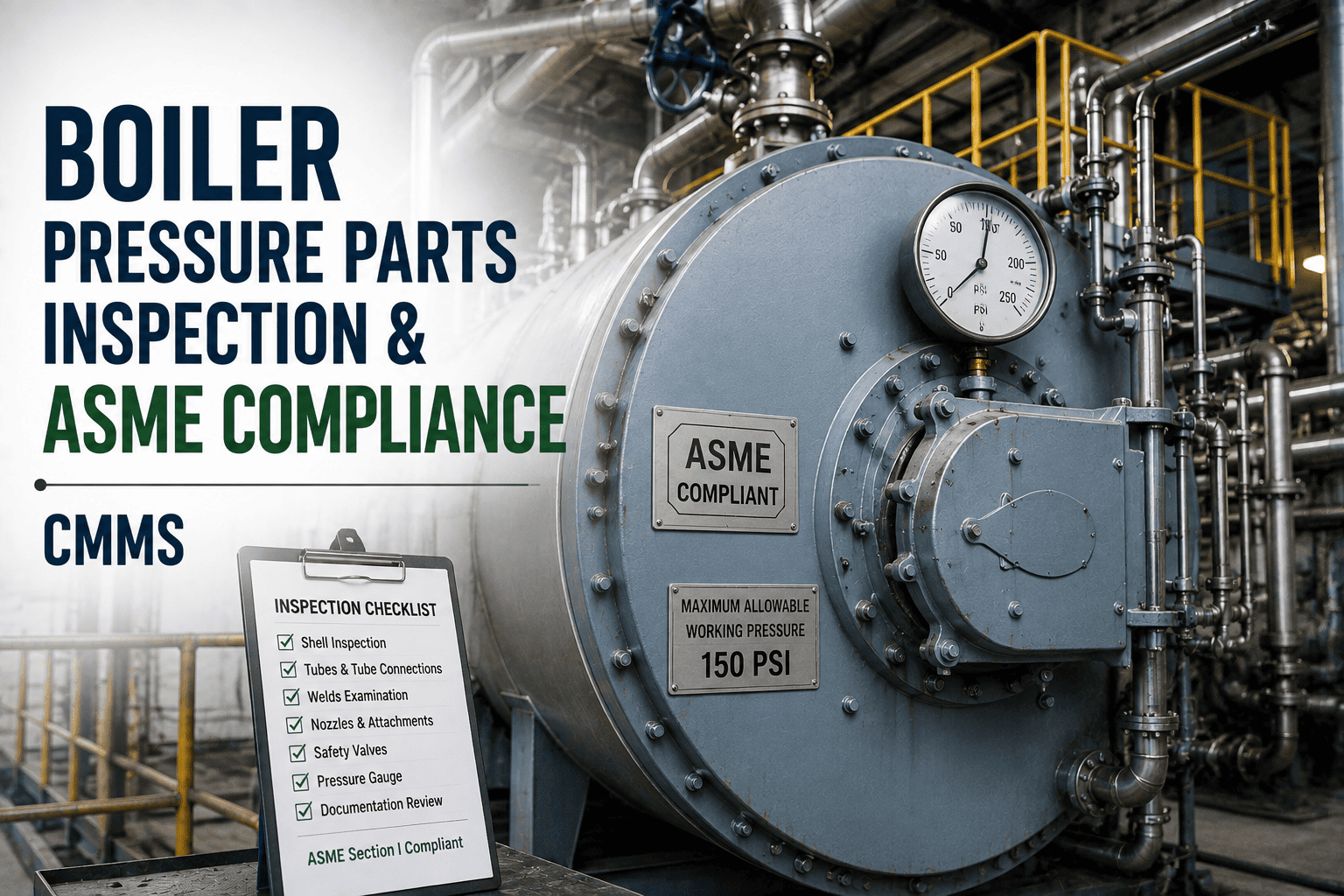
Pressure part failures account for the majority of forced boiler outages. Tube erosion, corrosion pitting, and weld defects develop invisibly — structured inspection intervals catch them before they cause a rupture or a reportable incident.


Drum water level within normal operating band — high and low level alarms verified functional at start of shift
DShift Operator · Drum log sheet

Steam drum pressure matching load demand — no unexplained pressure excursions in DCS trend for last 8 hours
DControl Room Operator · DCS trend log

Blowdown valve operated per schedule — continuous and intermittent blowdown logs completed with quantity and time
DShift Operator · Blowdown log

Waterwall tube exterior visually inspected for hot spots, bulging, or scale buildup through inspection doors
WBoiler Operator · Inspection door log

Superheater and reheater outlet temperatures within design range — metal temperature thermocouples checked against design limits
WI&C Engineer · Thermocouple trend review

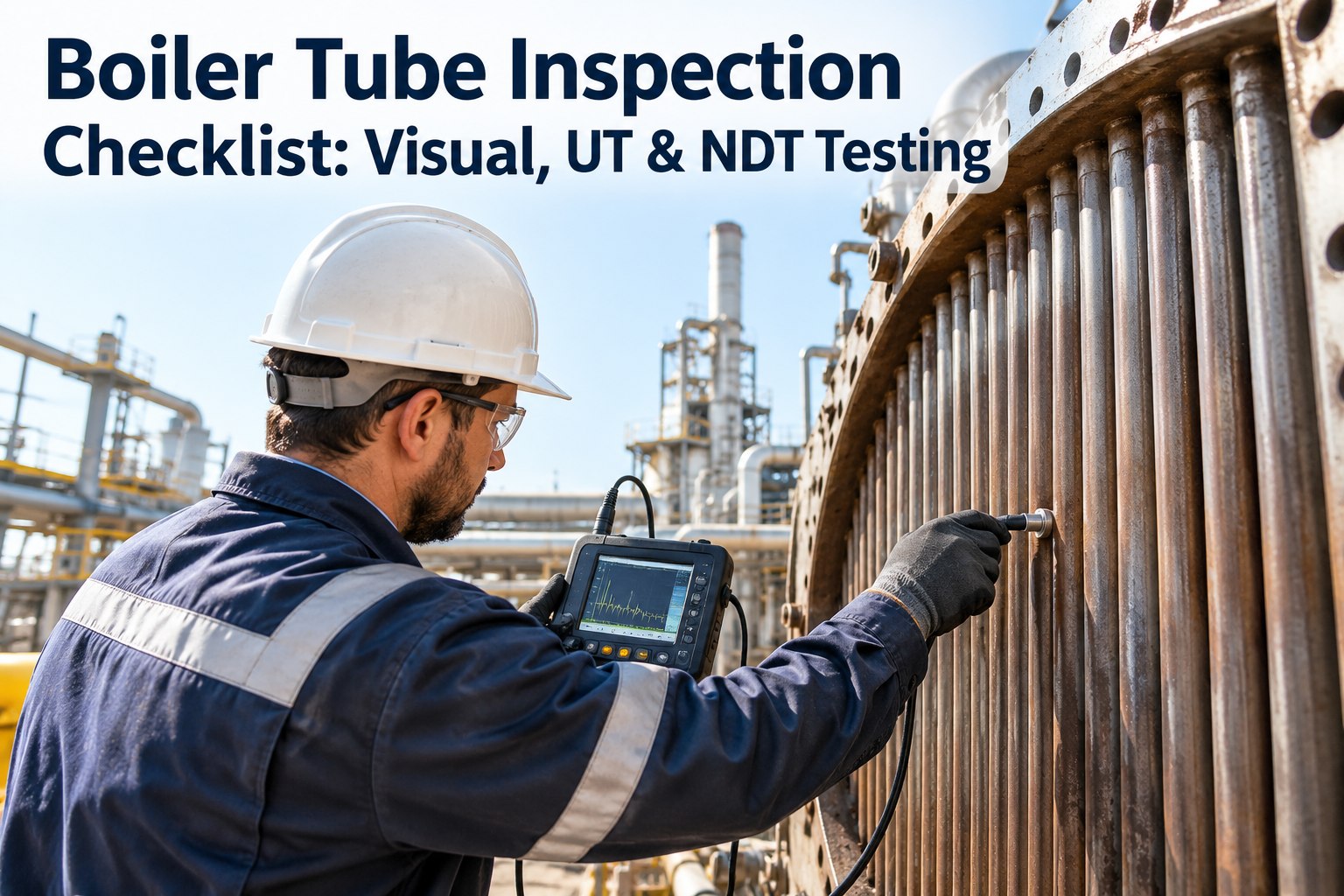
UT thickness measurement on selected tube sections — results trended against baseline to identify erosion-corrosion progression
QNDT Inspector · UT thickness report

Full pressure part inspection during planned outage — borescope, DPT on welds, hydro test clearance documented
ABoiler Inspector (IBR) · Annual inspection certificate
Zone 02

Burner Assembly & Fuel System

Poor burner maintenance leads to uneven flame patterns, incomplete combustion, and accelerated furnace tube wear. Pulverized coal and oil-fired units both demand rigorous nozzle and atomizer inspections at defined intervals.


Flame detector signal stable for all active burners — no flame-out alarms or flickering readings in control room log
DShift Operator · Burner management log

Fuel oil or pulverized coal flow rate within design range for load — no abnormal pressure drops across burner nozzles
DBoiler Operator · Fuel flow log

Burner air registers at correct position for load — no stuck or partially open dampers confirmed by local inspection
WBoiler Operator · Register position check

Oil atomizer tips cleaned and inspected — orifice diameter measured and compared to OEM tolerance to detect wear
MMaintenance Tech · Atomizer inspection record

Igniter electrode gap checked and tip condition verified — cracked ceramic or eroded electrodes replaced before next start
MMaintenance Tech · Igniter inspection log

Combustion analysis performed — O2, CO, CO2 in flue gas measured and burner tuning adjusted to achieve design efficiency
QPerformance Engineer · Combustion efficiency report
Zone 03

Refractory & Furnace Lining

Refractory degradation is silent and cumulative. A spalled furnace floor or a cracked division wall panel can force an emergency shutdown with weeks of repair time. Early-stage inspection catches cracks before they propagate to structural failure.


Furnace casing surface temperature checked by infrared — hot spots exceeding 80°C above ambient signal internal refractory damage
WBoiler Engineer · IR scan report

Furnace floor refractory visually inspected during low-load window — spalling, cracking, or missing blocks logged with photo evidence
MBoiler Operator · Furnace inspection log

Expansion joints on furnace walls inspected — no gaps, displaced seals, or air ingress points found around access doors
MMaintenance Tech · Expansion joint check

Full refractory condition survey during planned outage — mapping of damaged zones with repair priority classification (P1/P2/P3)
ARefractory Specialist · Outage inspection report

OxMaint auto-schedules every zone check, captures photo evidence in the field, and sends corrective work orders to the right technician before a finding becomes a forced outage.

Zone 04

Soot Blower System

Soot buildup on heat transfer surfaces reduces boiler efficiency by 2–5% per season if blowing schedules slip. Tube failures caused by soot blower lance erosion are among the most preventable — and most common — causes of unplanned outages.


Soot blower operation sequence completed per shift schedule — all blowers cycled in correct order without manual overrides logged
DBoiler Operator · Soot blower operation log

Steam supply pressure to soot blowers within OEM range — low pressure causes incomplete cleaning and nozzle erosion from wet steam
DBoiler Operator · Steam pressure log

Lance travel limit switches verified — overtravel into furnace causes direct tube impingement damage and lance jam incidents
WI&C Tech · Limit switch test record

Nozzle tips inspected for erosion — worn nozzles replaced proactively; eroded nozzles produce uncontrolled jet patterns
MMaintenance Tech · Nozzle inspection log

Drive motor current trending reviewed — rising no-load current indicates lance packing wear or internal fouling before seize-up occurs
QReliability Engineer · Motor current trend report
Zone 05

Safety Valves & Pressure Relief

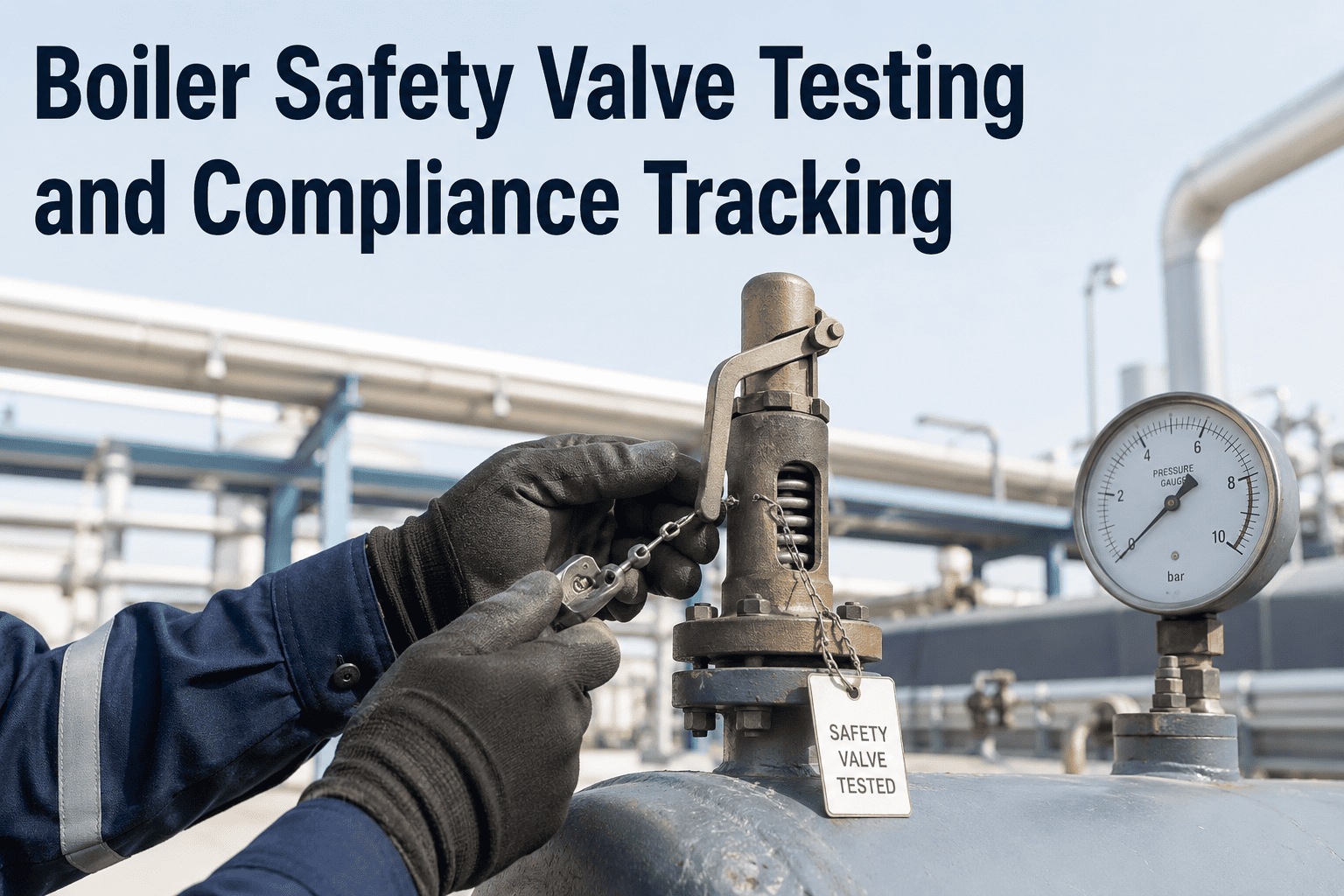
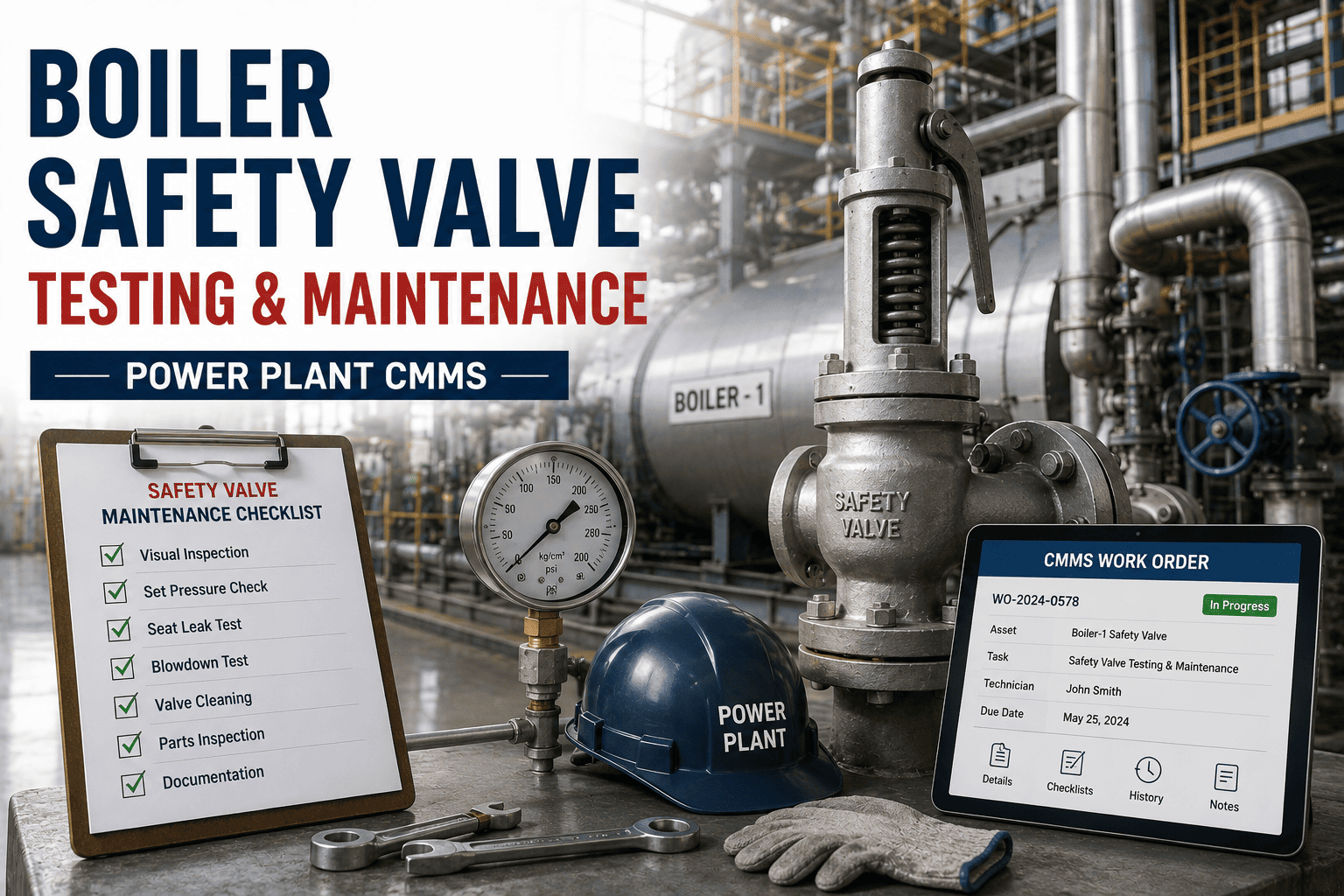
A safety valve that fails to lift at set pressure or fails to reseat cleanly is a regulatory violation and a catastrophic hazard. IBR and ASME codes mandate specific test intervals that cannot be waived or deferred without documented authority.


Safety valve easing gear tested — manual lift confirms free movement and immediate full reseat without simmering or wire drawing
MShift Engineer · Safety valve test record

Set pressure verified against stamped nameplate — no safety valve operating within 3% of its set pressure under normal load
MShift Engineer · Pressure verification log

Valve discharge piping and drip pocket free of obstruction — blocked discharge causes back pressure that prevents full lift
QBoiler Operator · Discharge line inspection

Full pop test with as-found set pressure documented and valve certified by statutory inspector — IBR Form 8 or equivalent completed
AStatutory Inspector (IBR) · Certification on CMMS asset record
Zone 06

Air & Flue Gas Path — FD, ID & PA Fans

The combustion air and flue gas system is where boiler load control happens. Fan degradation affects unit load capability directly, and blade erosion failures on ID fans have caused multi-week forced outages at coal-fired plants worldwide.


FD, ID, and PA fan vibration readings within alarm limits — any bearing reaching 7 mm/s velocity or 90°C temperature triggers investigation
DShift Operator · Vibration log

Inlet guide vanes (IGV) responding correctly to control signal — sticking vanes cause load control hunting and increased motor current
WI&C Tech · IGV stroke test log

Fan blade tip clearance checked and erosion depth measured — blades with more than 3 mm erosion on trailing edge flagged for replacement planning
QMechanical Engineer · Blade erosion report

Air preheater leakage test performed — O2 to CO2 ratio method or differential pressure method; leakage above 8% triggers outage work order
QPerformance Engineer · APH leakage report
Zone 07

CMMS Records, Water Chemistry & Compliance

Boiler water chemistry is the invisible maintenance item. Off-specification feedwater causes internal tube scale, corrosion, and priming events — none of which show up as alarms until the damage is already done. Documentation is what turns good maintenance into defensible compliance.


Feedwater pH, dissolved oxygen, and conductivity tested and logged — any parameter outside spec triggers immediate chemistry correction
DChemistry Lab · Water analysis log

Boiler water phosphate residual and silica within OEM band — out-of-spec silica causes turbine blade deposition within weeks
DChemistry Lab · Water chemistry report

All boiler PM work orders closed in CMMS with technician sign-off, finding notes, and next due date confirmed
WMaintenance Planner · PM compliance dashboard

IBR statutory inspection certificate current and on file — boiler cannot legally operate with an expired certificate in India
APlant Manager · Statutory register

Drift trends for all key parameters reviewed quarterly — rising flue gas outlet temperature signals heat transfer surface fouling 3–4 weeks before efficiency impact is visible
QReliability Engineer · Quarterly trend report
Key Performance Indicators

Six Metrics That Prove Your Boiler PM Is Working

Metric How to Measure Target Review Cadence
PM Completion Rate Completed PMs / Scheduled PMs 100% Weekly
Safety Valve Compliance Valves certified on time / Total valves 100% Monthly
Forced Outage Rate Unplanned outage hours / Total available hours Below 2% Monthly
Boiler Efficiency Heat input vs. useful output (indirect method) Above 87% Weekly
Corrective WO Closure Average days from finding to WO close Under 7 days Monthly
Tube Failure Incidents Count of tube leaks per rolling 12 months Zero Monthly
FAQs

Frequently Asked Questions

How often must a boiler be inspected under IBR regulations in India?

Under the Indian Boilers Regulations, a registered boiler must undergo a formal inspection by a competent authority at least once every 12 months. The inspection certificate must be renewed before expiry — operating without a valid IBR certificate is a statutory violation. OxMaint tracks certificate expiry and sends reminders automatically.

What is the most common cause of unplanned boiler shutdowns?

Waterwall and superheater tube failures account for the highest share of forced outages at coal-fired plants — most traced to missed UT thickness checks, poor water chemistry control, or deferred soot blower maintenance. A consistent PM schedule tracked in a CMMS like OxMaint is the most effective prevention measure.

How do I track safety valve test records for audit purposes?

Each safety valve test must be recorded with the valve tag, set pressure as-found and as-left, test date, inspector name, and IBR form number. Records should be retained for the life of the asset. OxMaint attaches certificates directly to the asset record so auditors can access the full history in seconds.

How does boiler water chemistry affect maintenance frequency?

Out-of-specification feedwater accelerates internal tube scale formation, raising metal temperatures and shortening tube life — directly increasing the frequency of tube inspections and replacement cycles. Controlling pH, dissolved oxygen, and silica daily is the lowest-cost maintenance intervention available to a boiler engineer.

What records do CERC or statutory auditors typically request first?

IBR inspection certificate, safety valve test records, water chemistry logs, PM completion rates, and tube failure history — usually covering the past 3 to 5 years. Book a demo to see OxMaint's audit-ready export format that assembles all of these in one click.

Ready to Digitize This Checklist?

Every Boiler Check Scheduled. Every Finding Tracked. Every Audit Passed.

OxMaint converts this checklist into mobile-first inspection rounds with timestamped completion, photo evidence, and auto-generated corrective work orders — giving your reliability and compliance teams one source of truth across all seven boiler zones.
Share This Story, Choose Your Platform!