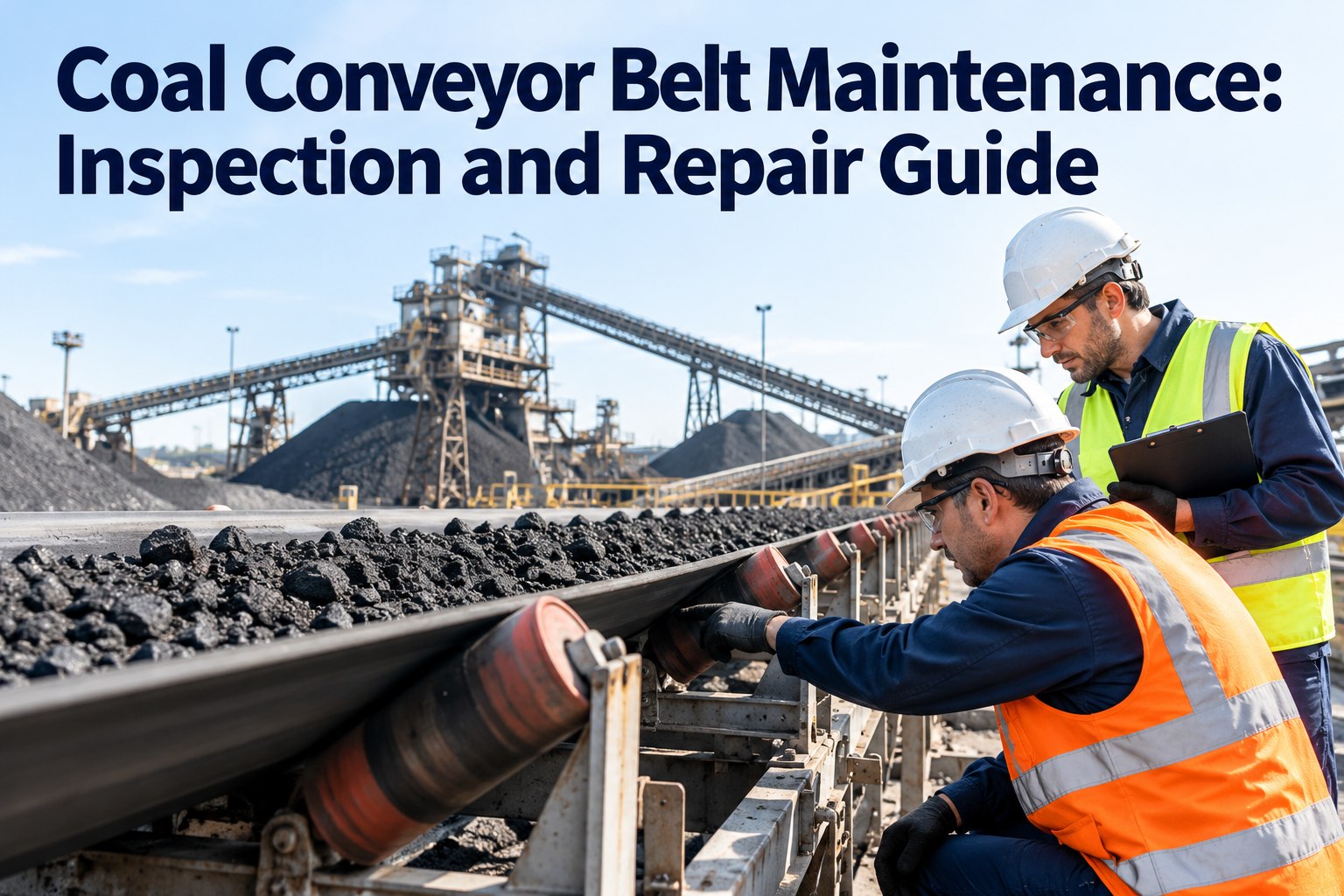
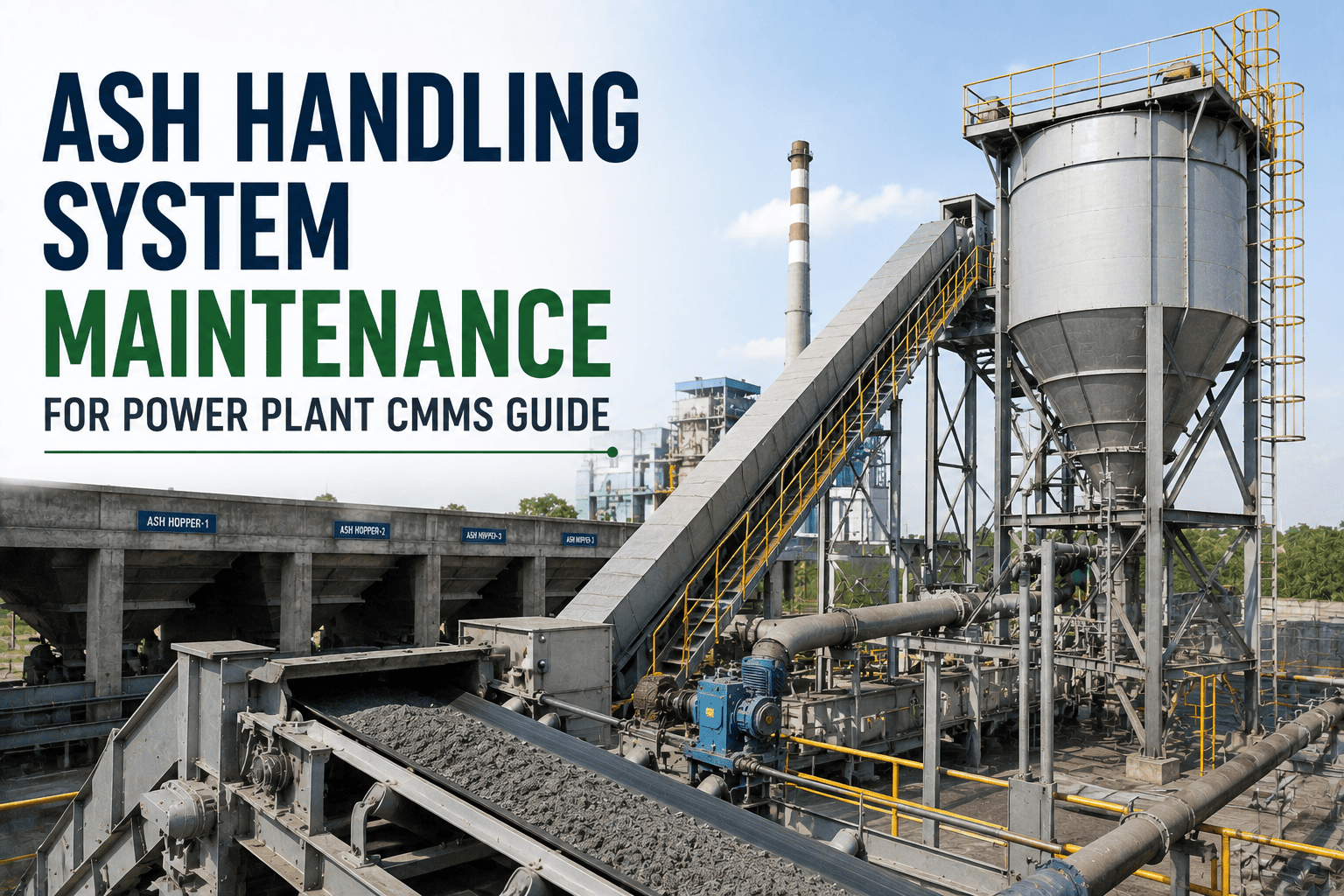
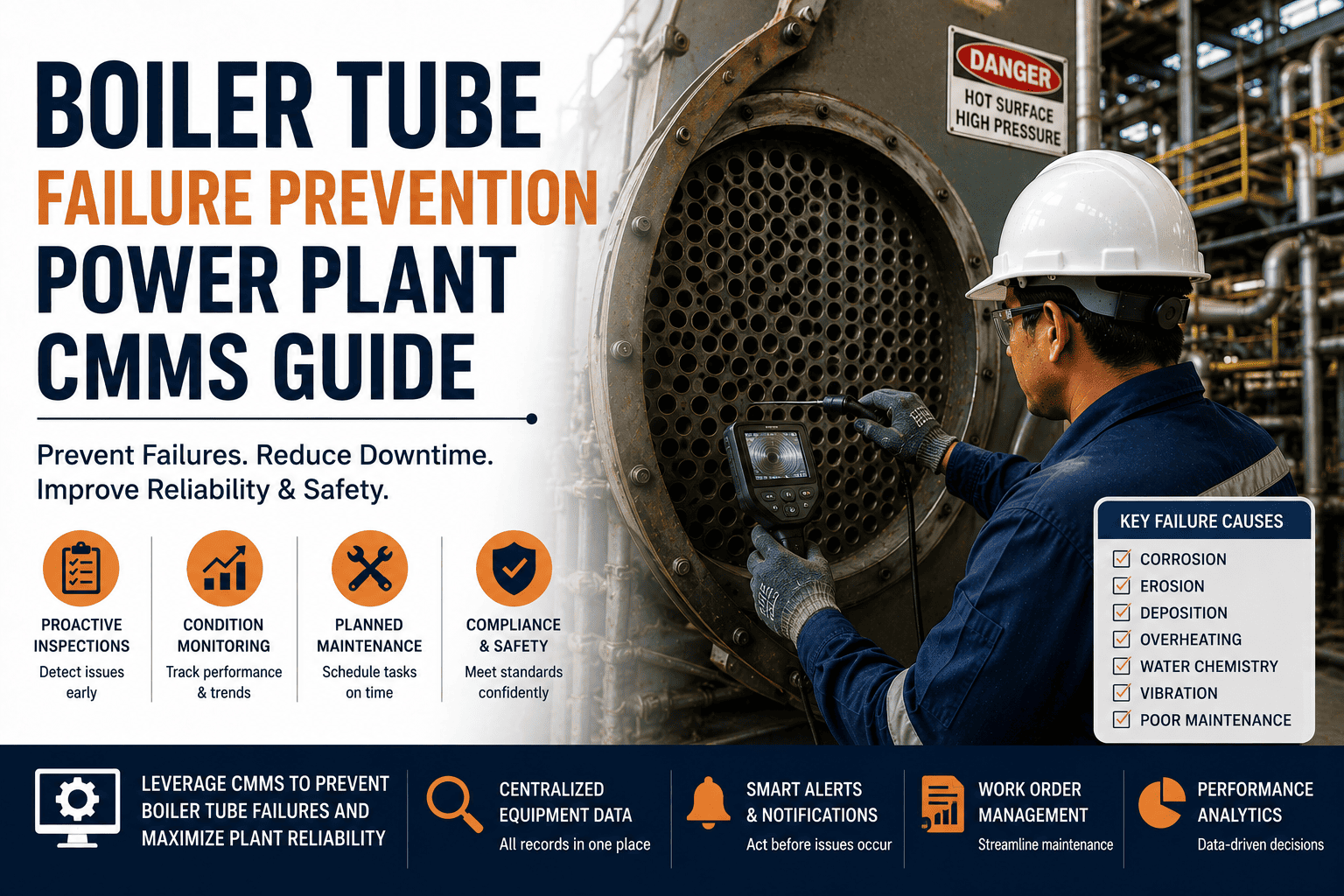
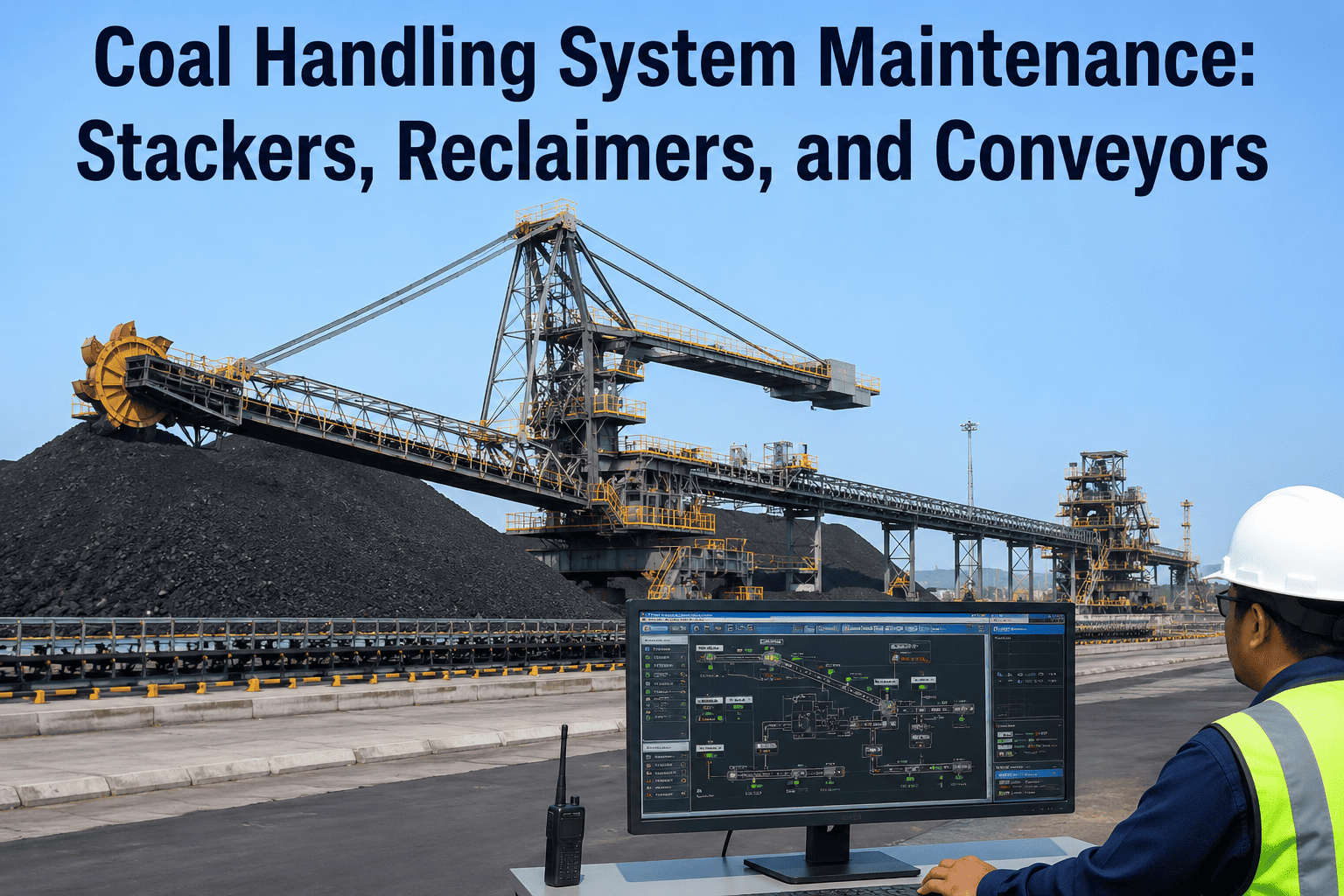
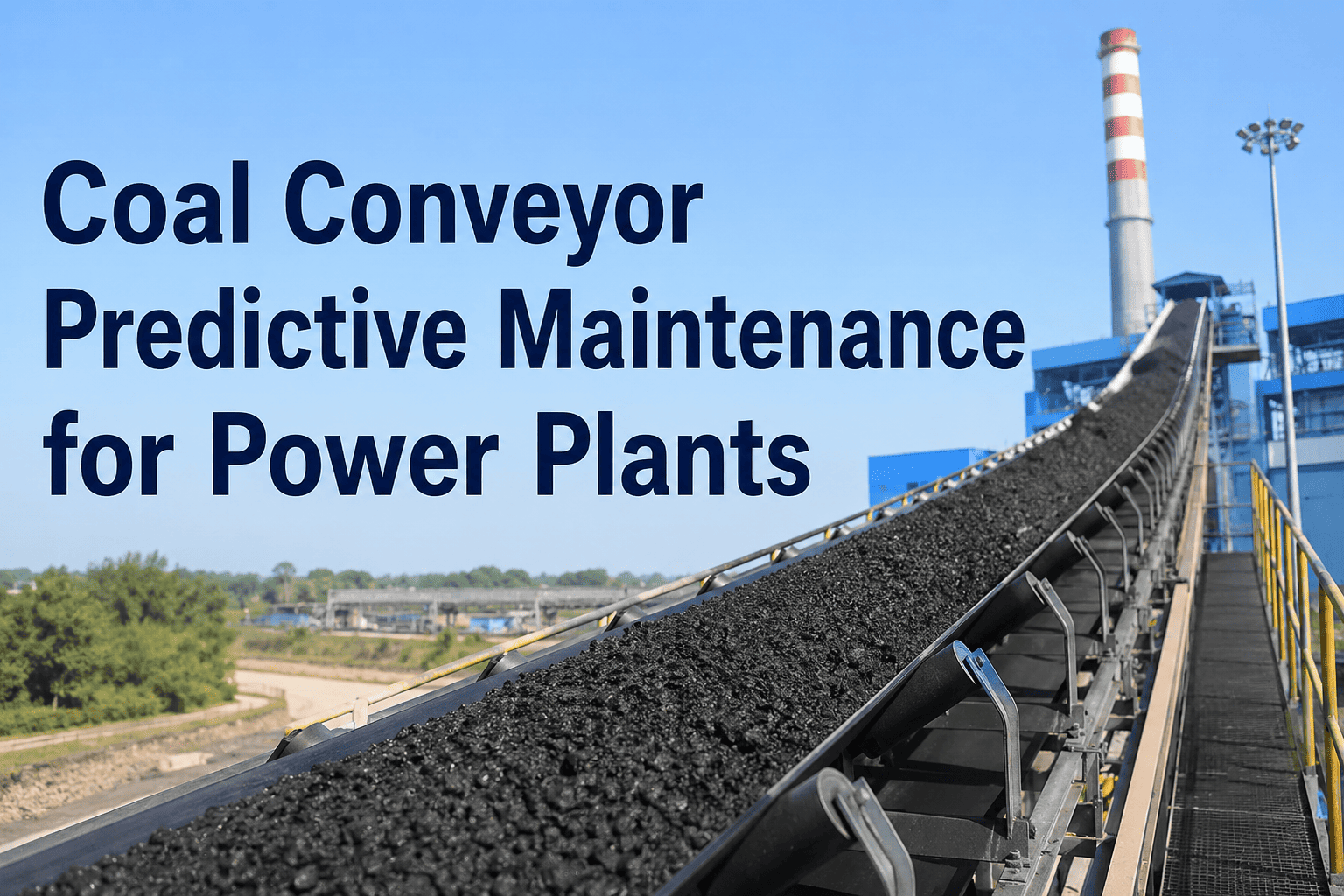
A coal conveyor is a single line of thousands of moving parts, and the boiler is only ever as fed as its weakest idler. One seized roller, one belt wandering off centre, one failed splice anywhere along a run that can stretch for kilometres, and the fuel supply stops — or worse, a hot bearing meets spilled coal dust. Conveyor maintenance is not about the belt alone; it is about catching the small failures all along the line before one of them takes the whole system down. This guide walks the inspection and repair of each component and how to run it in OXMAINT AI, or book a demo of coal handling maintenance.
COAL CONVEYOR BELT · INSPECTION & REPAIR GUIDE · 2027
Coal Conveyor Belt Maintenance: Inspection and Repair Guide
A conveyor fails one component at a time — an idler, a splice, a tracking drift — but the stop takes the whole fuel line with it. OXMAINT AI puts every roller, pulley and splice on inspection, turns a finding into a work order, and keeps the belt feeding the boiler.
Tail
Head
one weak point anywhere stops the line
Why One Component Stops Everything
A coal conveyor runs in series — the belt passes over hundreds or thousands of idlers, around pulleys, through transfer points, carried by one continuous belt. There is no redundancy in a single flight, so a failure at any point halts coal to the boiler. That is why inspection has to cover the whole line, not just the obvious spots. Start free and map your conveyor line in OXMAINT AI.
No Redundancy
A single flight has one belt and one drive — any stop along it stops the coal, and often the unit behind it.
Fire Risk
A seized idler runs hot against the belt, and coal dust is combustible — a bearing failure is a safety event, not just a breakdown.
Spillage Spiral
Mistracking and worn scrapers spill coal, which jams idlers and accelerates more wear — small faults compound fast.
Hard to Reach
Runs are long, elevated and dusty, so the component that fails is often the one nobody inspected.
Inspect and Repair, Component by Component
The line breaks down into a handful of component families, each with its own failure signature and its own fix. This is the heart of the guide — what to look for and what to do when you find it.
Inspect: seized or non-rotating rollers, bearing noise, heat, shell wear, build-up.
Repair: replace seized and worn idlers promptly — a hot one is a fire risk, not a defer.
Inspect: cuts, gouges, cover wear, edge damage, cracking and signs of rips.
Repair: patch or vulcanise damage early before a gouge opens into a full-length rip.
Inspect: splice separation, lifting edges, fastener wear and elongation.
Repair: re-splice at the first sign of separation — a splice failure lets the whole belt go.
Inspect: belt drifting off centre, edge contact with the structure, uneven loading.
Repair: adjust idlers and training rollers, fix the load point — do not just trim the belt.
Inspect: lagging wear, pulley build-up, drive and gearbox condition, coupling.
Repair: re-lag worn pulleys and service the drive before slip and heat set in.
Inspect: worn scraper blades, carryback, spillage, gaps in skirting and seals.
Repair: renew blades and seals to stop the spillage that feeds every other failure.
Do Not DeferA Seized Idler Is a Fire, Not a Work Order for Next Week
Most conveyor findings can be planned into the next window. One cannot: a non-rotating idler drags against a moving belt, heats up, and sits in an atmosphere of combustible coal dust. The same urgency applies to a belt rubbing the structure. These findings jump the queue — they are safety events, and the maintenance system has to treat them that way.
!Seized or hot idler — friction against the belt in coal dust; isolate and replace, do not run on.
!Belt rubbing structure — mistracking cutting into steel generates heat and belt damage fast.
!Heavy coal spillage — accumulated dust near moving parts is a fuel load; clear and find the source.
!Splice lifting — a separating splice can fail without warning and let the belt go mid-run.
Match the Check to the Interval
Not every check happens at the same cadence. A conveyor program layers quick running checks over deeper stopped inspections, so the fast-moving faults are caught daily and the slow ones at outage.
Running / Daily
Walk the line or watch monitoring — listen for idlers, look for tracking drift, spillage and smoke.
Weekly
Closer check of idler banks, scrapers, skirting, transfer points and belt edges.
Stopped / Periodic
Belt and splice inspection, pulley and lagging condition, drive and gearbox service.
Outage / Major
Belt replacement, bulk idler change-out, pulley re-lag, structure and chute repair.
The Numbers That Tell You It Is Working
Conveyor reliability shows up in a few measures — track them per conveyor and the program proves itself.
Conveyor Availability
Share of time the line can run and feed the boiler — the headline for coal handling.
Idler Change-Out Rate
Seized and worn idlers replaced over time, trended to spot a failing bank or batch.
Belt & Splice Life
Service life against expected, so wear and splice quality can be judged.
Spillage Events
Spillage and clean-up logged, so a recurring source gets a permanent fix.
Unplanned Stops
Conveyor-caused trips and their cause, the cost of missed inspection.
Planned vs Reactive
The ratio of scheduled work to breakdowns — the sign of a maturing program.
Why Conveyor Maintenance Slips
A coal conveyor program usually fails in familiar ways — and most of them come down to the line being long, dusty and easy to under-inspect.
×Run-to-Failure Idlers
Rollers left until they seize, when the replacement cost is a fraction of the fire risk.
×Tracking Ignored
A wandering belt trimmed or left, so edge damage and spillage keep coming back.
×Spillage Tolerated
Coal on the floor treated as normal, feeding idler jams and the next failure.
×No Line Register
Idlers and pulleys not catalogued, so there is no way to track or plan their renewal.
×Findings Not Tracked
A walk-down that spots faults but never turns them into assigned, closed work orders.
×Deferred Splices
A lifting splice left to the next outage that lets go mid-run instead.
Catch the Idler Before It Catches Fire.
Every conveyor failure starts small — a roller that stopped turning, a belt that drifted an inch, a splice that began to lift. OXMAINT AI puts the whole line on inspection and turns each finding into a tracked work order, so the small fault is fixed before it stops the fuel or starts a fire.
1Walk or monitor the line
→
2Log the finding with photo
→
3Work order, ranked by risk
→
4Fixed and recorded
How OXMAINT AI Runs Coal Conveyor Maintenance
OXMAINT AI is the AI-powered CMMS that registers every idler, pulley and belt section, schedules the inspections, and turns each finding into a prioritized work order — so the long line stays reliable and the fuel keeps moving. Start free and bring your coal handling line onto OXMAINT AI.
Line Asset Register
Every conveyor, idler bank, pulley and belt section logged with location and history.
Mobile Inspections
The component checklist on a phone along the line, with photos and GPS of the finding.
Finding to Work Order
A failed check becomes a work order on the spot, ranked so a hot idler jumps the queue.
Preventive Scheduling
Running, weekly and outage checks triggered automatically, so no interval is missed.
Spares & Idler Stock
Idlers, scrapers and splice kits stocked and linked to the assets that consume them.
Reliability Dashboard
Availability, idler change-out and unplanned stops trended per conveyor.
EXPERT REVIEW
Written for coal handling, fuel plant and maintenance teams. The components, failure signatures and intervals here are a general framework — your exact inspection scope, frequencies and repair methods come from the equipment manufacturer, your conditions and the governing fire, dust-explosion and machine-guarding regulations. Lock-out/tag-out, belt isolation and hot-work controls follow your site's procedures. OXMAINT AI registers assets, schedules inspections and tracks work; it does not replace OEM guidance, a competent conveyor engineer, or your plant's safety authority.
Frequently Asked Questions
What are the most common coal conveyor belt failures?
The usual culprits are seized or worn idlers, belt mistracking that damages edges and spills coal, splice separation, belt cuts and rips, worn pulley lagging, and failed scrapers that let carryback build up. Most of them start small and compound — a worn scraper spills coal, the spillage jams an idler, the seized idler heats the belt. Catching them early along the whole line is the point of a conveyor inspection program.
Start free and inspect your conveyor line in OXMAINT AI.
Why is a seized idler treated as urgent?
Because it is a fire risk, not just a worn part. A roller that has stopped rotating drags against a moving belt and heats up through friction, and a coal conveyor runs in an atmosphere of combustible coal dust — so a hot idler sitting in that dust is a genuine ignition hazard. That is why a seized or hot idler should be isolated and replaced immediately rather than deferred to the next planned window.
Book a demo of risk-ranked work orders in OXMAINT AI.
How often should a coal conveyor be inspected?
On layered intervals: a daily running check or continuous monitoring for idler noise, tracking drift, spillage and smoke; a weekly closer look at idler banks, scrapers, skirting and transfer points; periodic stopped inspections of the belt, splices, pulleys and drives; and major work such as belt replacement and bulk idler change-out at outage. The fast-moving faults need the frequent checks, while the slow ones are caught when the belt can be stopped safely.
Book a demo of conveyor inspection scheduling in OXMAINT AI.
How does belt mistracking cause so much damage?
A belt running off centre rubs its edge against the conveyor structure, which wears and can gouge the belt and generate heat, and it spills coal over the side as it goes. That spillage then jams idlers and fouls the return side, accelerating still more wear — so a small tracking problem left alone turns into edge damage, spillage and idler failures together. The fix is to correct the cause at the idlers, training rollers and load point rather than trimming the belt.
Can a CMMS improve coal handling conveyor reliability?
Yes — a CMMS registers every idler, pulley and belt section, schedules the layered inspections so none is missed, and turns each walk-down finding into a prioritized, tracked work order instead of a note that gets lost. It also trends availability, idler change-out and unplanned stops per conveyor, so a failing bank or a recurring spillage source becomes visible and gets a permanent fix. That is how a long, hard-to-inspect line stays reliable.
Start free and run coal conveyor maintenance in OXMAINT AI.
Keep the Coal Moving to the Boiler.
Run coal conveyor maintenance on OXMAINT AI: every idler, pulley and splice registered and inspected, hot-idler and mistracking findings fast-tracked, spillage tracked to its source, and every repair recorded — so the fuel line stays up and the fire risk stays down.