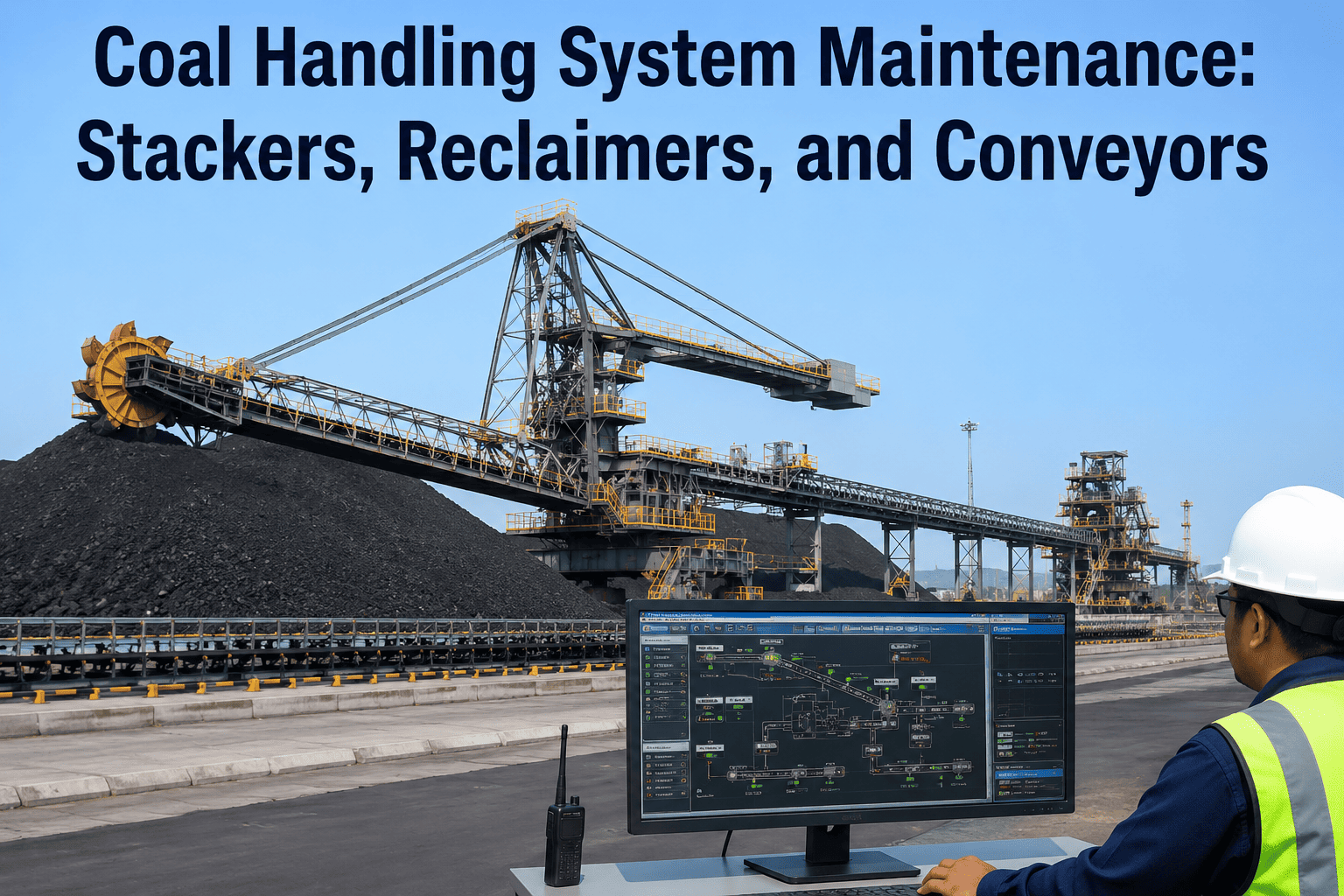
Coal handling systems are the fuel backbone of every thermal power plant — and they are also among the most neglected assets in the maintenance program. Stackers, reclaimers, conveyor belts, and transfer chutes run continuously under punishing conditions: high dust loads, variable tonnage, outdoor weather exposure, and no tolerance for unplanned stops. A single coal conveyor stoppage is not just a maintenance event — it is a direct fuel supply interruption that can force load reduction or emergency shutdown within hours. Facilities managing kilometres of conveyor belts, bucket wheel assemblies, and transfer towers without structured CMMS-tracked records are one failed idler or seized gearbox away from a very expensive day. This guide covers the complete maintenance framework for coal handling systems, from stacker-reclaimer inspection schedules to belt conveyor PM checklists, transfer chute audits, and lifecycle planning — including how a CMMS transforms reactive coal yard maintenance into a documented, condition-based program. Connect your coal handling assets to Oxmaint free and run your first PM campaign — or book a 30-minute demo to see coal handling maintenance workflows live.
Coal Handling System Maintenance: Stackers, Reclaimers, and Conveyors
The complete maintenance framework for coal yard assets — stacker-reclaimer inspection schedules, belt conveyor PM programs, transfer chute audits, and CMMS-tracked lifecycle records that keep fuel flowing and auditors satisfied.
Why Coal Handling Maintenance Breaks Down — and What It Costs
Coal handling systems fail for predictable reasons. Belt mistracking goes uncorrected through three shifts because nobody recorded the last alignment check. A stacker-reclaimer gearbox runs six weeks past its oil change interval because the schedule lives in a spreadsheet nobody checks. A transfer chute liner wears through and causes a spillage event because visual inspections were done on paper, not trended against wear data. The failure mode is almost never the equipment — it is the absence of a structured, documented, condition-aware maintenance program.
The financial consequence follows a consistent pattern: reactive maintenance costs 3 to 4 times as much as preventive maintenance over the same equipment lifecycle. Unplanned parts procurement alone adds 4 to 6 hours to every repair. For a thermal power plant running on tight generation schedules, a coal handling stoppage during peak demand is not a maintenance cost — it is a generation loss event with a price tag that dwarfs the PM program it replaced.
- Belt mistracking and edge damage
- Idler seizure and bearing failure
- Pulley lagging wear and slippage
- Drive motor overtemperature
- Splice failure under high load
- Hydraulic system oil contamination
- Slewing mechanism bearing wear
- Boom conveyor belt deviation
- Bucket wheel drive gearbox fault
- Travel drive motor overload
- Liner wear-through and coal spillage
- Skirt seal deterioration
- Impact plate structural cracking
- Blockage from coal size variation
- Dust seal failure at hood joints
Stacker Reclaimer Maintenance: Inspection Schedule and Critical Components
The stacker reclaimer is the highest-value, highest-consequence asset in the coal yard. A single stacker-reclaimer failure can halt coal delivery to bunkers within hours, depending on live storage levels. The machine's complexity — bucket wheel assembly, slewing mechanism, luffing system, boom conveyor, travel drive, and hydraulic circuits — demands structured inspection at three intervals: daily, weekly, and monthly. Each interval addresses different failure risk windows, and all findings must flow into a CMMS asset record, not a paper logbook.
Scroll right to see all columns on mobile
Coal Conveyor Belt Maintenance: What Every Shift Should Check
A typical large thermal plant coal handling system has dozens of conveyor strings — feed conveyors from the wagon tippler, yard conveyors, transfer conveyors between towers, and bunker-feed systems. Each has hundreds of idler sets, multiple drive pulleys, and a belt splice that represents the single highest failure-risk point on the system. Proper belt tension can extend belt life by up to 50% while reducing energy consumption, yet most facilities still adjust tension reactively after a slippage event rather than on a measured schedule. The structured maintenance program below replaces reactive responses with condition triggers.
See coal handling PM workflows running live in Oxmaint
In 30 minutes, we walk through stacker-reclaimer PM templates, conveyor inspection checklists, automatic work order generation, and the asset lifecycle dashboard — all configured for coal handling systems. No slides-only demo, no mock data.
Transfer Chute Maintenance and Audit: The Most Overlooked Asset in the Coal Yard
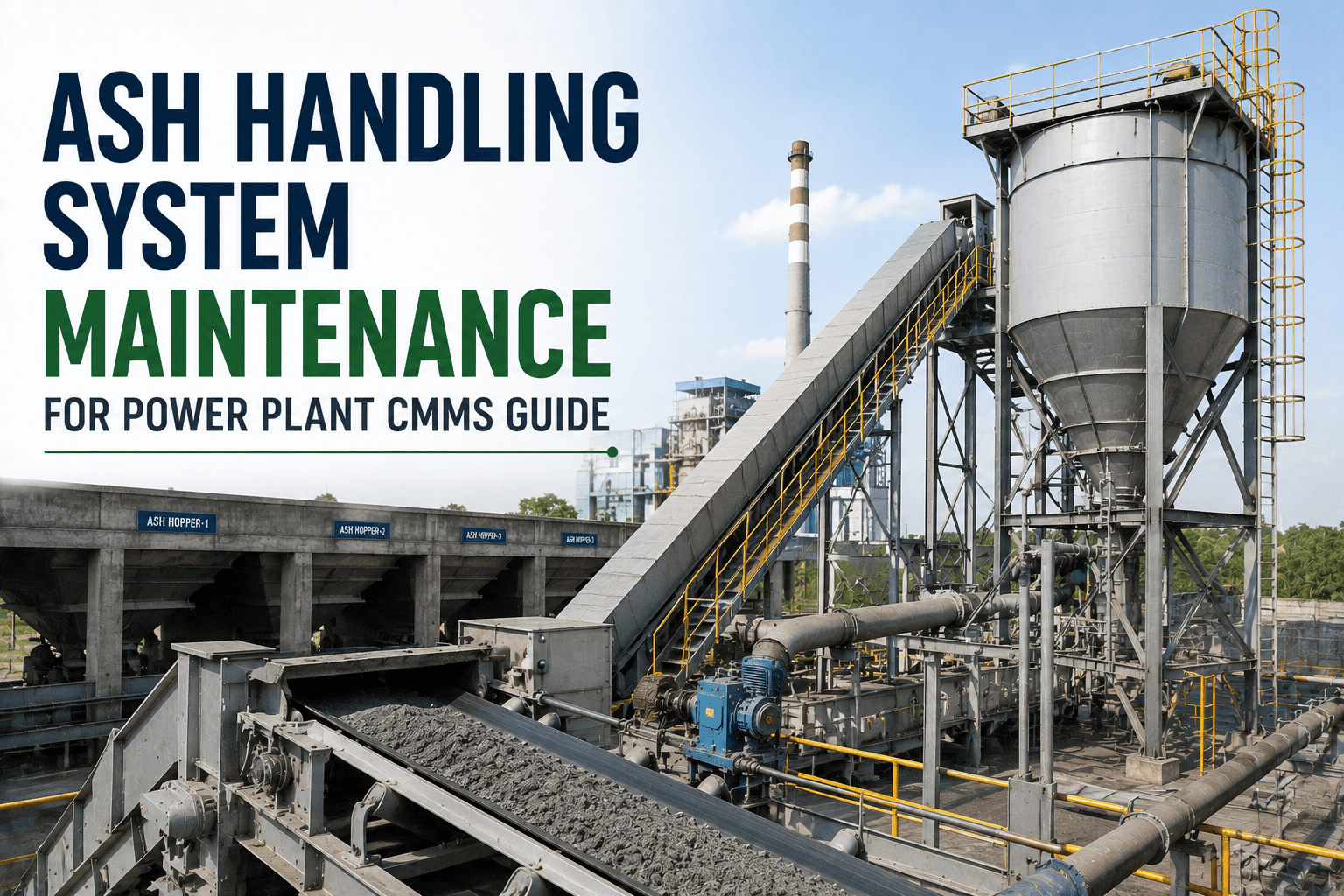
Transfer chutes sit at the intersection of every conveyor string in a coal handling system, and they are consistently the most under-maintained asset class in the yard. Liner wear-through causes coal spillage that triggers housekeeping emergencies, conveyor belt damage, and environmental compliance events — all from a failure mode that is entirely predictable and trackable with a structured inspection and liner-thickness trending program. A coal handling maintenance audit that does not include transfer chute liner condition data is incomplete.
Liner Thickness Measurement
Measure wear liner thickness at high-impact zones every 4–6 weeks using ultrasonic or mechanical gauging. Record readings per chute ID in CMMS. Trend wear rate to forecast replacement before liner fails through.
Skirt Seal Inspection
Check skirt rubber condition at all belt contact zones for tearing, hardening, and loss of contact pressure. Replace seals showing more than 30% gap from belt surface — dust and spillage begin here, not at the wear liner.
Impact Plate and Hood Structural Check
Inspect impact plates at primary load points for cracking or deformation. Check hood and shroud structural welds for fatigue cracking from repeated coal impact. Log any crack initiation immediately as high-priority corrective work.
Flow Geometry and Blockage Assessment
Document coal flow trajectory against design geometry at each transfer point. Changes in coal size grading or moisture content shift the flow pattern and create new wear hot spots. Update CMMS wear map when operating conditions change significantly.
Dust Containment and Environmental Compliance
Verify all dust suppression nozzle systems are operational and spray patterns are covering the transfer zone. Document dust seal integrity per chute for environmental audit records. CMMS compliance reports pull this data automatically at audit time.
How a CMMS Transforms Coal Handling Maintenance from Reactive to Documented
Coal Handling Asset Maintenance: Key Metrics and PM Intervals Reference
| Asset | Daily Check | Weekly PM | Monthly PM | Critical Failure Mode | CMMS Trigger |
|---|---|---|---|---|---|
| Stacker Reclaimer | Hydraulic leaks, travel track, safety devices | Reducer oil level, slewing gear, bearing temps | Oil particle count, wire rope, structural welds | Hydraulic failure, slew bearing seizure | Oil particle count exceed ISO 6 |
| Belt Conveyor | Belt tracking, idler noise, splice condition | Lagging wear, motor current, drive alignment | Belt tension, splice NDT, take-up stroke | Belt mistracking, splice failure, idler seizure fire | Motor current above 110% baseline |
| Transfer Chute | Spillage observation at base of structure | Skirt seal gap check, dust suppression function | Liner thickness measurement, hood structural check | Liner wear-through, spillage, belt damage | Liner thickness below minimum safe level |
| Wagon Tippler | Platen locking, drive chain tension, platform level | Chain lubrication, bearing condition, hydraulic level | Structural frame inspection, full drive system check | Chain snap, platen locking failure | Chain elongation exceeding 3% of original pitch |
| Crusher and Screen | Feed material observation, motor temperature | Screen mesh condition, hammer/teeth wear check | Vibration analysis, bearing replacement schedule | Screen blinding, hammer wear, tramp metal event | Vibration amplitude rise above baseline trend |
| Coal Bunker Feeders | Gate seal and flow observation, motor check | Feeder belt or chain wear, actuator function test | Capacity calibration, drive system overhaul | Feeder jam, gate seal failure causing boiler feed disruption | Flow rate deviation greater than 5% from set point |
Scroll right to view all columns on mobile
Frequently Asked Questions: Coal Handling Maintenance
What is the most critical maintenance interval for a stacker reclaimer?
The hydraulic oil particle count check every 15 days is the single most important interval for stacker-reclaimer reliability. Hydraulic contamination above ISO 6 cleanliness degrades seals and cylinders rapidly, and the failure cascade from a hydraulic system event will sideline the machine for days. Sign up for Oxmaint to run automated hydraulic PM reminders on your stacker-reclaimer asset record.
How do I reduce conveyor belt mistracking without constant manual adjustment?
The root cause of repeat mistracking is almost always material loading asymmetry, incorrect belt tension, or structural frame deflection — not the idler setting. A CMMS that logs every tracking adjustment against the conveyor asset record will surface repeat offenders and identify the real cause. Fix the root cause, not the symptom. Book a demo to see how Oxmaint trends tracking adjustment history across your conveyor fleet.
What records do I need for a coal handling plant regulatory audit?
Auditors typically require PM completion records with technician sign-off dates, corrective work order history with fault descriptions and closure dates, spare parts usage logs, and equipment calibration records for feeders and weigh bridges. A CMMS generates all of these automatically — without manual report preparation. Start free on Oxmaint to begin building your audit-ready maintenance record from day one.
How often should coal conveyor belt splices be inspected?
Vulcanized splices should be visually inspected every shift for edge fraying and every month with a structured condition check. Mechanical splices require inspection every week under high-tonnage coal duty. Splices approaching 12 months of age in abrasive coal service should be targeted for proactive replacement during planned outages, not run to failure. Book a demo to see splice age tracking in Oxmaint.
Can Oxmaint integrate with existing DCS or SCADA systems in a coal handling plant?
Yes. Oxmaint integrates with SCADA, DCS, and OPC-UA data historians, enabling condition-based PM triggers driven by live sensor data rather than fixed calendar intervals. Motor current readings, vibration outputs, and temperature signals can directly initiate work orders when they breach set thresholds. Start free to begin your data integration assessment.
Build a documented, condition-based coal handling maintenance program — starting today
Oxmaint connects to your existing sensor infrastructure, runs structured PM schedules for stackers, reclaimers, conveyors, and transfer chutes, and generates the audit-ready records your compliance team needs — all without paper checklists or spreadsheet tracking. Start free with your first coal handling assets, or see a live coal yard PM workflow in a 30-minute demo.