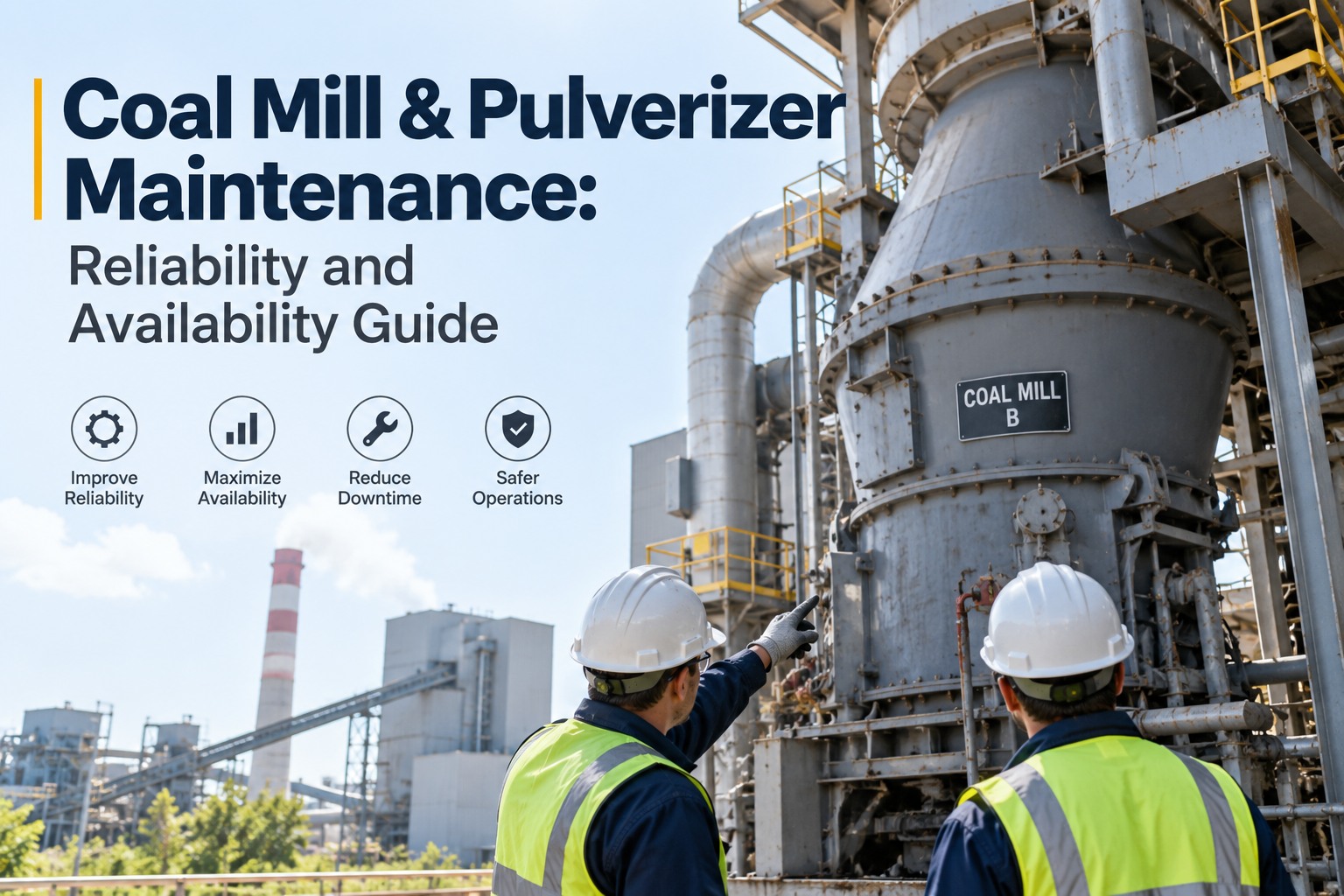
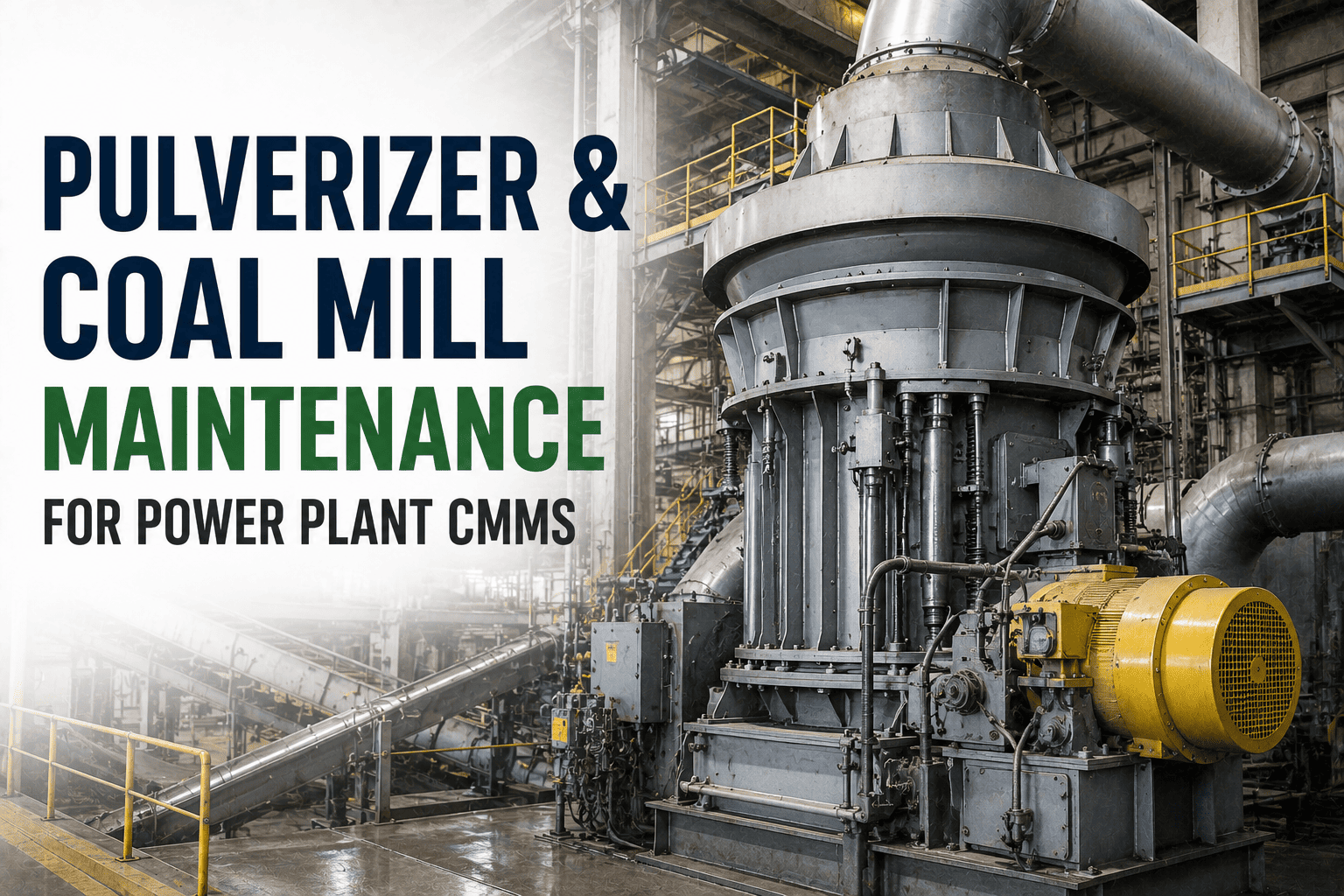
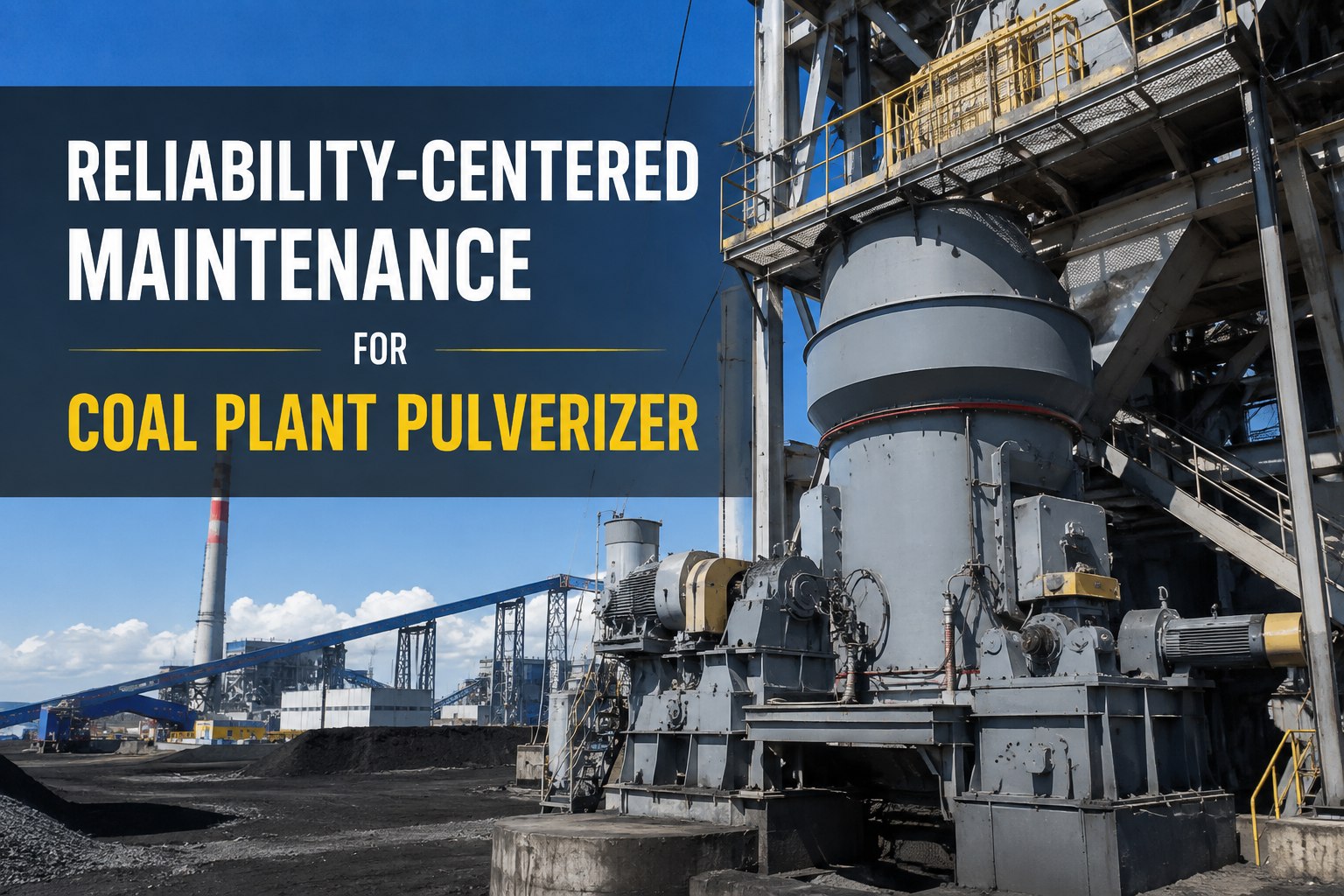
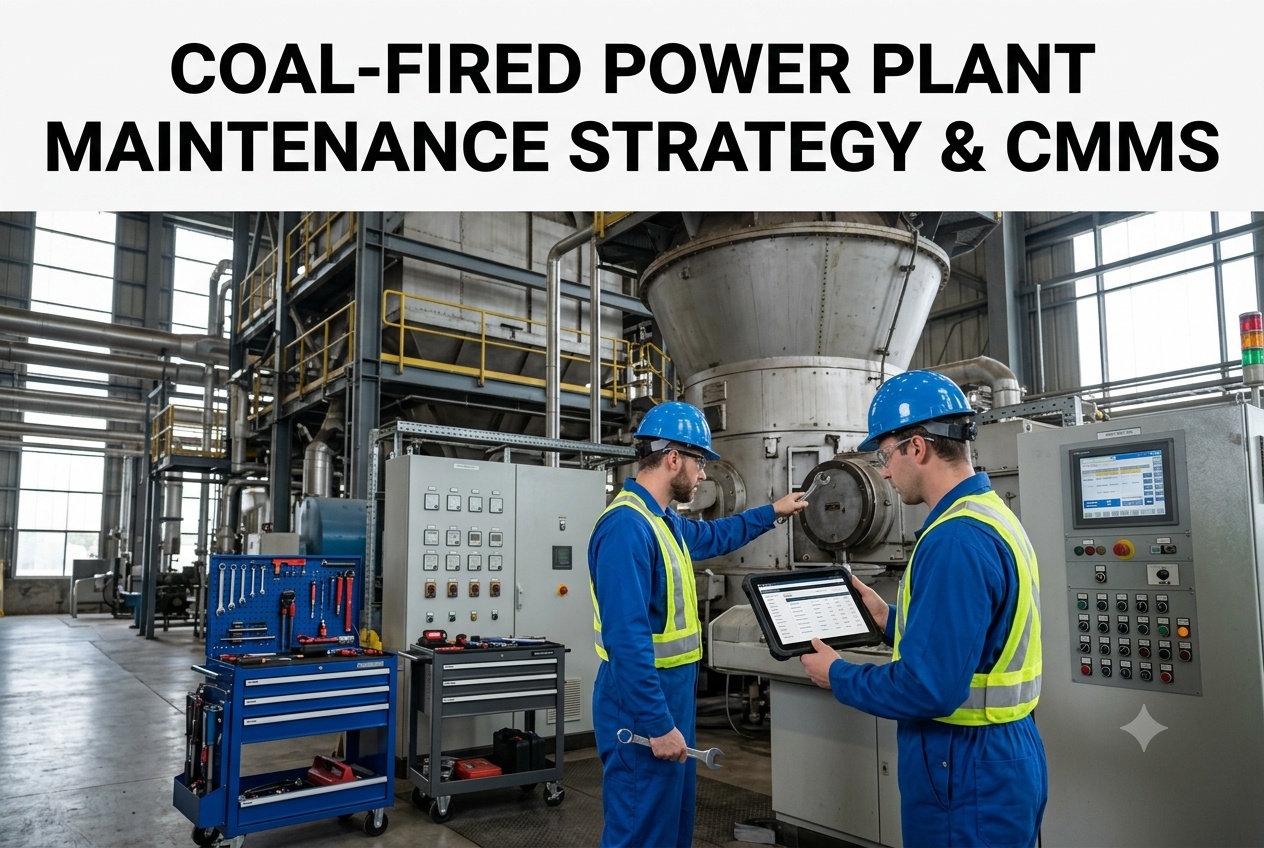
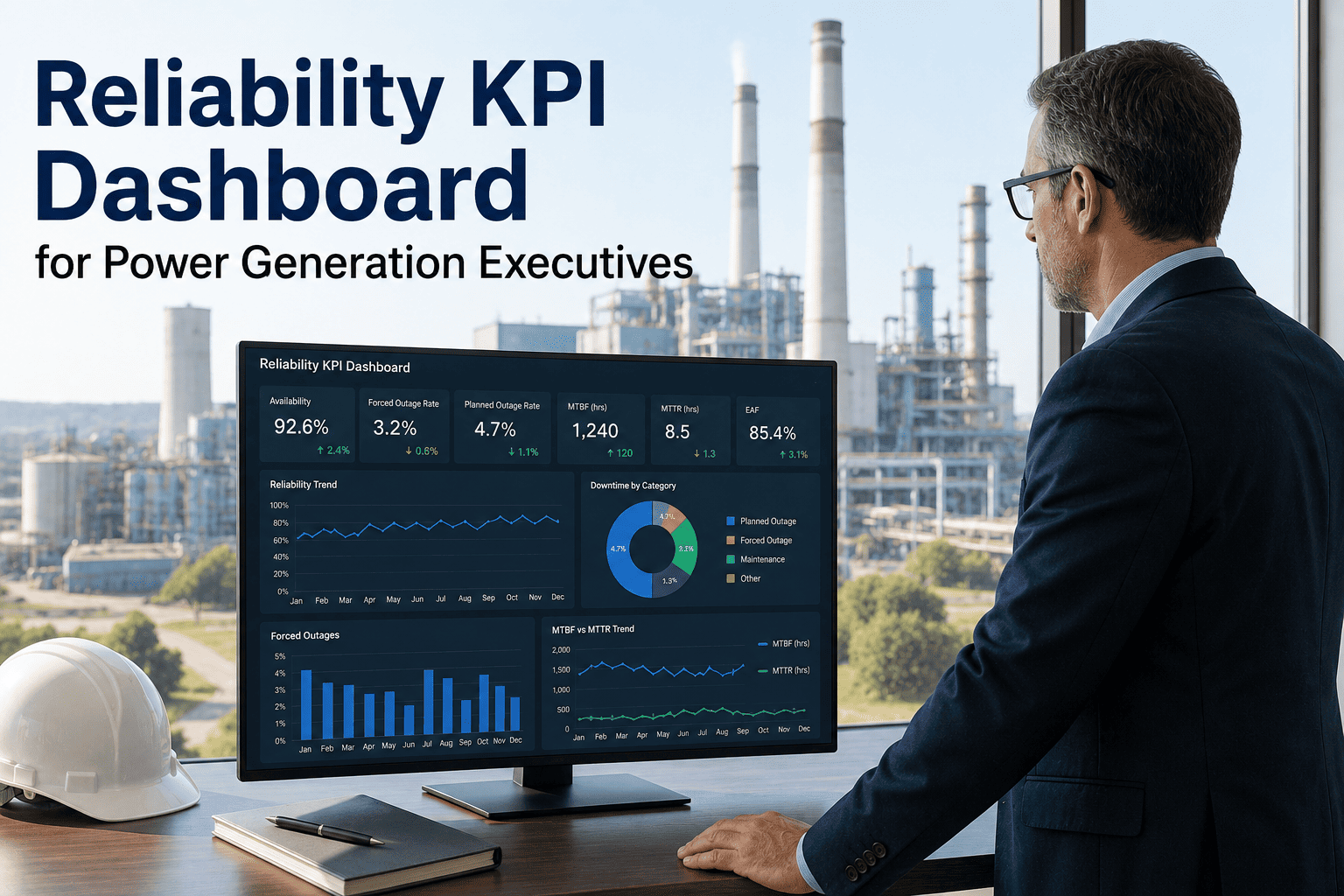
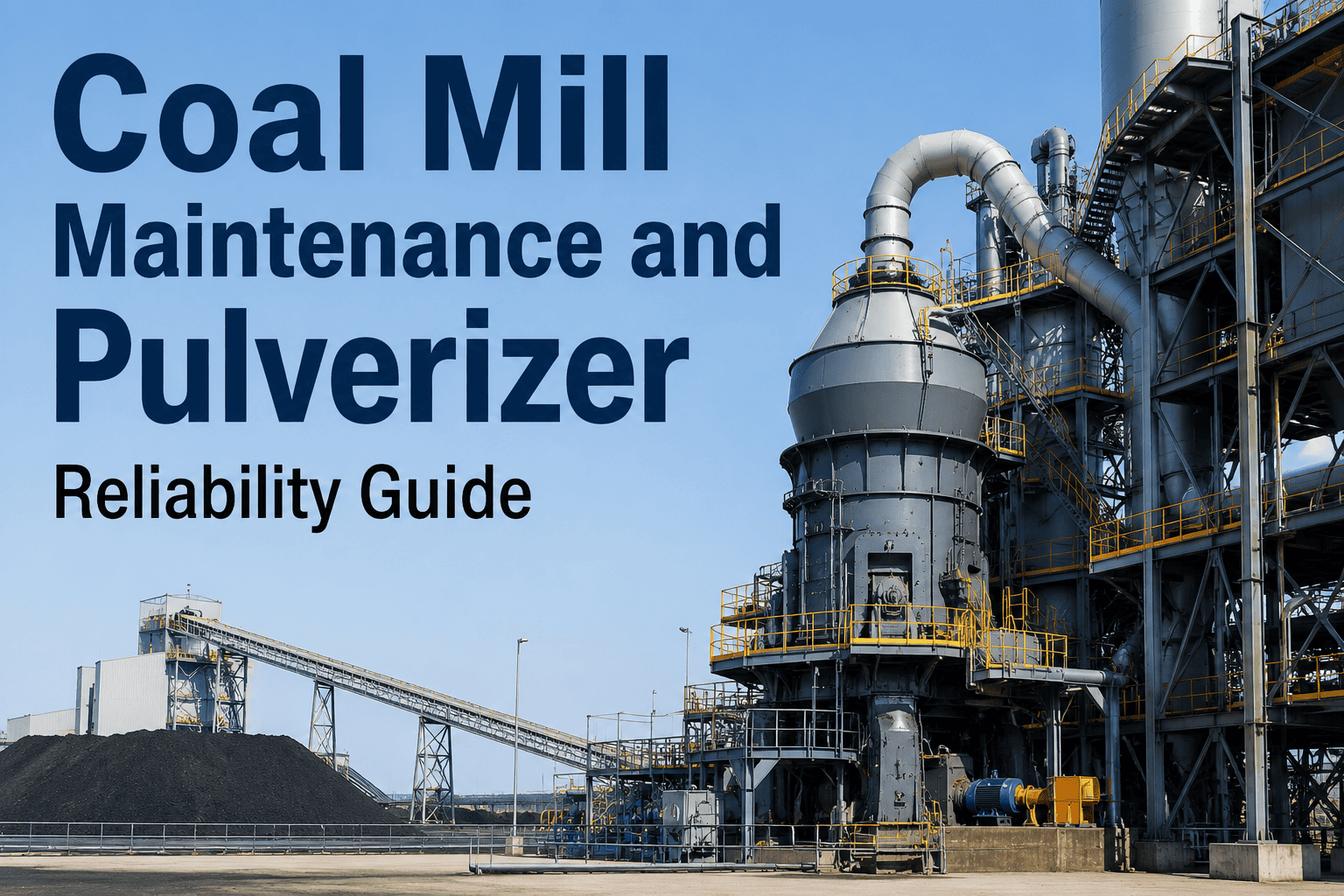
A coal pulverizer doesn't fail all at once — it drifts. Grinding rolls wear a fraction of a millimeter at a time, fineness slips below spec long before anyone notices flame instability, and lube oil quietly picks up wear metal and coal fines until a bearing that should have lasted years fails at eighteen months. Every one of those trends is measurable. The plants that keep their mills available aren't the ones with newer equipment — they're the ones tracking roll wear, differential pressure, lubrication condition and fineness together, and turning a drifting trend into a scheduled job before it becomes a forced outage. This guide covers what a reliability-focused pulverizer maintenance program actually looks like.
Coal Mill & Pulverizer · Reliability & Availability · Fuel & Boiler Auxiliaries · 2026
Catch Mill Wear Before It Shows Up as a Forced Outage
Roll wear, rising differential pressure, degrading lube oil condition and slipping fineness are all warning signs a mill gives well before it trips — but only if someone's tracking them against that specific mill's history. OXMAINT AI logs condition readings, inspection findings and wear measurements against each mill's asset record, and turns a threshold breach into a work order — so parts get ordered and outages get planned instead of discovered.
70–75%
typical target fineness passing 200 mesh (74 micron) for bituminous coal
2 dominant types
bowl/MPS mills and ball-and-race mills cover most coal-fired fleets
HGI-driven
Hardgrove Grindability Index is the single biggest driver of wear rate variation
30/30
ISO cleanliness code many OEM lube filtration setups struggle to hold on coal mills
Two Mill Types, Two Wear Profiles
Most coal-fired plants run one of two vertical spindle mill designs, and the wear program looks different for each. Knowing which one you're maintaining decides what to inspect, and how often. Start free and set up a wear-tracking record matched to your mill type.
The Six Pillars of a Reliability-Focused Mill Program
Availability doesn't come from one heroic inspection before an outage — it comes from these six things running continuously, together. Book a demo to see all six tracked on one mill record.
01
Condition Monitoring
Vibration and differential pressure trended continuously, not just checked during a walkdown.
02
Wear Tracking
Roll/tire thickness or ball charge weight measured at each inspection and trended against service hours.
03
Lubrication
Oil condition, contamination level and change intervals tracked against ISO cleanliness targets.
04
Inspections
Scheduled visual and measurement inspections logged with photos and findings on the mill's own history.
05
Parts Planning
Wear-rate trend used to order replacement rolls, tires or races ahead of the next planned outage window.
06
Performance-Based Maintenance
Fineness and capacity data tie mill condition back to actual grinding performance, not just component age.
How Wear Shows Up Before Fineness Does
As grinding rolls or races wear, the mill has to work harder to hold the same fineness — grinding pressure climbs, power draw rises, and differential pressure across the mill starts trending upward well before fineness actually falls out of spec. Watching that early trend is what turns a scheduled roll change into the plan, instead of a fineness excursion into the surprise.
New Rolls
Baseline DP, low power draw
Mid-Life
DP rising, pressure increasing to hold fineness
Late-Life
Fineness variable, replacement window closing
Overdue
Fineness out of spec, boiler efficiency & trip risk rising
Every Mill's Wear Trend, Lubrication History and Inspection Log — Together
OXMAINT AI keeps each mill's roll or race wear measurements, differential pressure trend, lubrication condition and inspection findings on one asset record — so a mill drifting toward its replacement window shows up as a planned work order, with parts already flagged for ordering.
Lubrication: The Failure Mode Nobody Inspects Until It's Too Late
Coal mill gearboxes and bearings run in one of the harshest lubrication environments in the plant — fine coal particles and wear metal enter the oil through worn seals and reservoir vents, and many OEM filtration setups can't keep pace, letting contamination levels drift well past target cleanliness codes. That contamination shortens bearing, gear and seal life quietly, long before a failure makes it obvious. Sign up free and start tracking oil condition against each mill's history.
From Reading to Scheduled Work — The 4-Step Loop
01
Log the Reading
Wear measurement, DP trend, vibration or oil sample result recorded against the specific mill.
02
Trend Against History
New reading compared to that mill's own wear curve and service hours, not a generic default.
03
Flag Parts & Window
Projected replacement date matched against the next planned outage — parts requisitioned ahead of time.
04
Schedule the Work Order
Roll change, race replacement or oil service scheduled and logged, closing the loop into the mill's history.
Inspection Checklist Worth Running Every Outage
Book a demo and turn this checklist into a repeatable inspection template.
✓
Measure roll/tire thickness or ball charge weight and log against the running wear trend, not just pass/fail.
✓
Check grinding ring/race profile for uneven wear — a sign of spring or hydraulic loading imbalance.
✓
Inspect classifier vanes — wear here shows up as fineness drift even with healthy grinding elements.
✓
Pull an oil sample and check against target ISO cleanliness code, not just change-interval schedule.
✓
Review differential pressure trend since last outage — a rising baseline flags accelerating wear early.
✓
Confirm fineness test results against spec, and log the coal HGI at time of test for context.
Frequently Asked Questions
What's the difference between a bowl mill and a ball-and-race mill?
A bowl mill (MPS/B&W type) grinds coal between rollers and a rotating bowl or table. A ball-and-race mill grinds it between balls and upper/lower races. Both are vertical spindle designs, but their wear parts, monitoring points and typical wear-life ranges differ.
Why does coal fineness matter so much for boiler performance?
Fineness affects how completely and how quickly coal particles combust. Coarser-than-spec coal burns less completely and less efficiently, and can contribute to flame instability — which is why fineness testing is treated as a core mill performance indicator, not just a mill health metric.
Does coal hardness (HGI) really change wear rate that much?
Yes — Hardgrove Grindability Index is one of the largest single variables in grinding-element wear rate. A coal blend shift toward higher abrasivity can shorten roll or race life meaningfully compared to the baseline established on a softer coal, which is why wear-rate trending needs to account for coal blend changes, not just running hours.
Can OXMAINT AI predict exactly when a roll or race will need replacement?
OXMAINT AI tracks wear measurements against service hours and trends the wear rate for each mill, which lets teams project an approximate replacement window and plan parts and outage timing around it — the projection improves as more measurement history accumulates for that specific mill and coal blend.
How often should lube oil be sampled on a coal mill gearbox?
This depends on the OEM filtration setup and observed contamination trend — mills without effective inline filtration generally need more frequent sampling, since coal fines and wear metal can enter the oil faster than a basic mesh filter can remove them.
Give Every Mill a Wear Trend, Not Just a Service Date.
Track roll and race wear, differential pressure, lubrication condition and fineness on one record per mill — and turn a drifting trend into a planned work order before it becomes a forced outage.