A boiler trip can throw 176 alarms in ten minutes. Somewhere in that flood was the one that said a feed pump bearing was running hot — the one that needed a work order, not an acknowledge-and-move-on. SCADA sees everything and acts on nothing; the CMMS acts but never saw the signal. The gap between them is where preventable failures live. OXMAINT AI is the AI-powered maintenance management software that turns the SCADA signals that matter into ranked work orders — or book a demo of SCADA-to-work-order in OXMAINT AI.
SCADA & CMMS INTEGRATION · POWER GENERATION MAINTENANCE · 2026
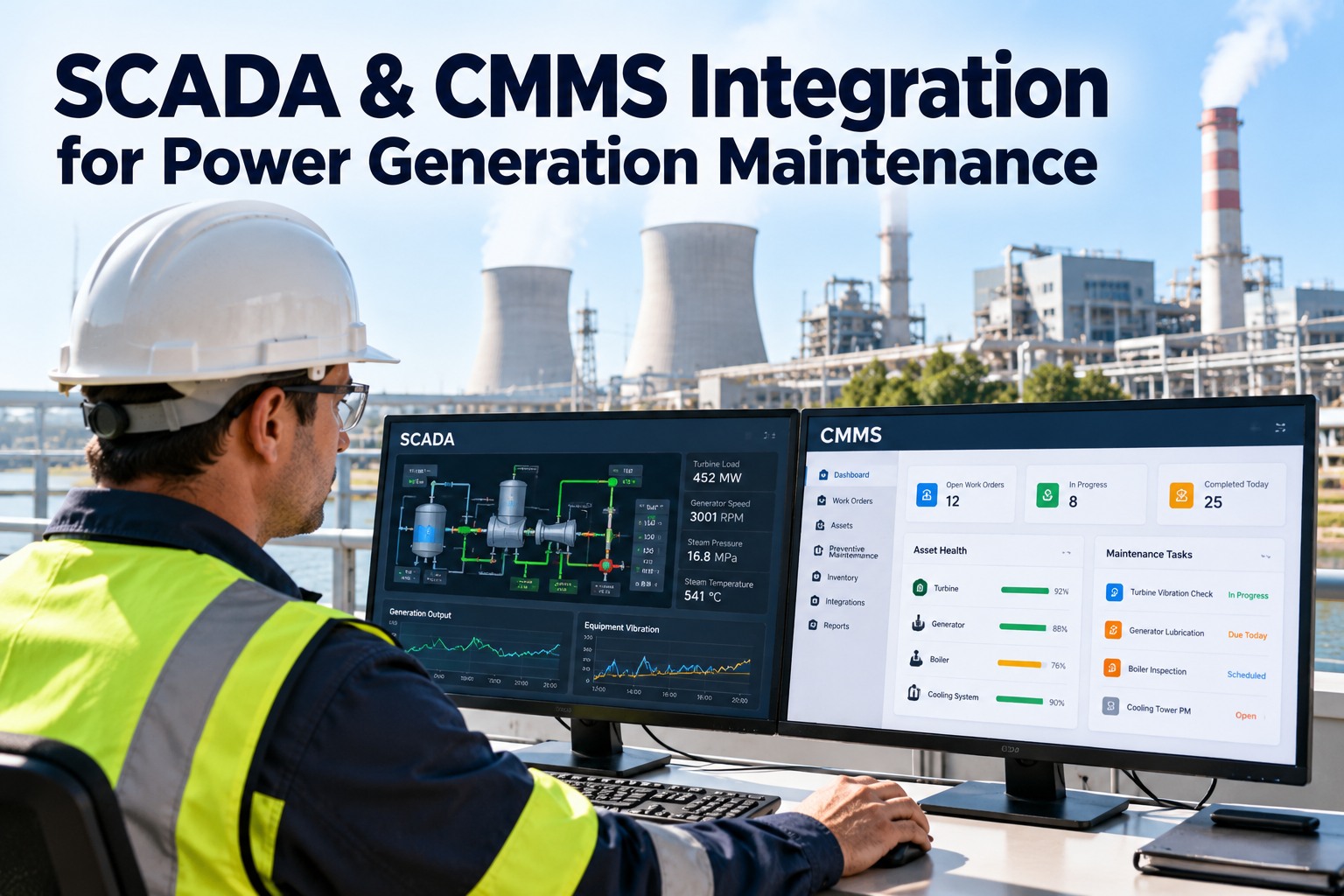
SCADA & CMMS Integration for Power Generation Maintenance
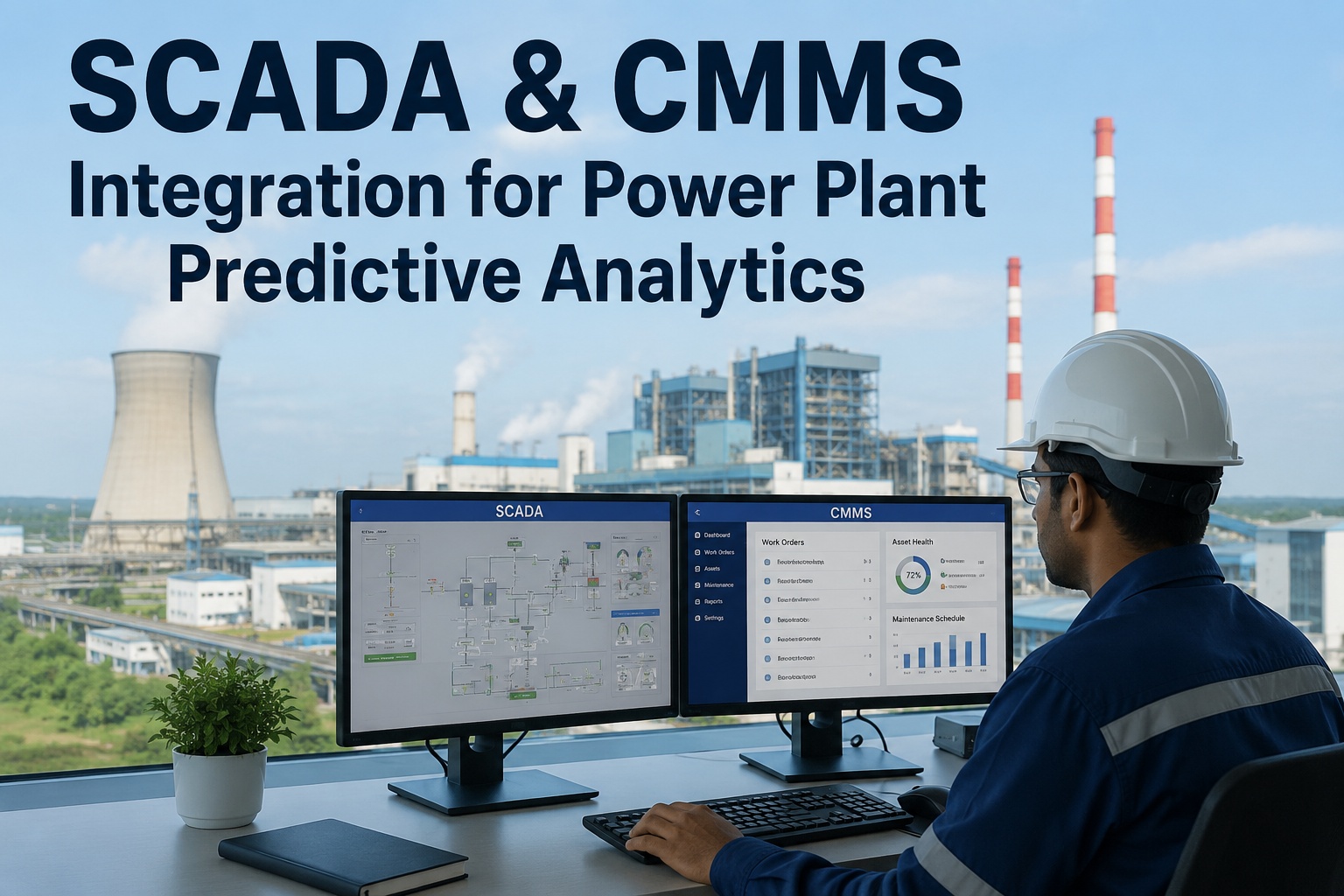
SCADA knows the bearing is hot, the valve is cycling, the transformer is drifting — but a signal that nobody turns into a job is just noise. OXMAINT AI is the AI-powered CMMS that filters the operational flood down to the maintenance-actionable signals, raises a ranked work order against the exact asset, and writes the outcome back as history. One loop from the SCADA tag to the closed work order.
1 · Signal
2 · Filter
3 · Work order
4 · Asset history
176
alarms a boiler trip can throw in 10 minutes — the real one gets buried
>10
alarms in 10 minutes is an “alarm flood” by the ISA-18.2 definition
36%
of unscheduled shutdowns trace to equipment failure, per ARC research
1
closed loop a plant needs — from the SCADA signal to the corrective action
The Problem Isn't Too Little Data. It's Too Much.
SCADA doesn't lack signals — it drowns in them. Operational alarms, setpoint chatter and nuisance trips bury the handful that actually need a wrench. Integration isn't about moving more data; it's about moving the right data — start free and filter SCADA signals to work in OXMAINT AI.
Alarm Flood
An upset throws hundreds of alarms at once. The maintenance-relevant one is a needle in that stack.
Operator Overload
Alarms get acknowledged to clear the screen, not because anyone acted on the underlying condition.
No Memory
SCADA shows the moment; it doesn't hold the asset's history, so a repeat fault looks brand new.
Broken Handoff
The signal and the crew live in different systems, so the condition SCADA saw never becomes a job.
Which SCADA Signals Should Become Work
Not every tag deserves a work order — most are operational and self-correcting. Three signal families are the ones maintenance should act on, and integration means routing exactly these.
1
Threshold Exceedance
A measured value crosses a condition limit — bearing temperature, vibration, pressure, oil level — and stays there. The classic early-warning signal.
e.g. pump bearing over temperature for 10 min
2
Equipment Alarm & Trip
A device reports its own fault or an asset trips — a breaker opens, a drive faults, a protection relay operates. The condition is already a problem.
e.g. ID fan drive fault, generator trip
3
Runtime & Counter
Accumulated operating hours, start counts or cycles reach a service threshold — the signal that drives usage-based preventive maintenance.
e.g. turbine run hours hit PM interval
The Translation Rules
Integration lives in a clear rule set: a SCADA condition, whether it's maintenance-actionable, and the CMMS response. Define these once and the flood sorts itself — schedule a walkthrough of the routing rules in OXMAINT AI.
SCADA condition
Actionable?
CMMS response
Bearing temp over limit, sustainedYesInspection work order, ranked by severity
Vibration trend crossing alertYesPdM work order on the asset
Pump trip on faultYesCorrective work order + asset flag
Run hours reach PM thresholdYesUsage-based PM raised automatically
Momentary setpoint overshootNoLogged, no work order
Operator-acknowledged nuisance alarmNoShelved per alarm policy
Repeat fault on same assetYesWork order + reliability review flag
The Closed Loop
Integration isn't a one-way feed — it's a loop. SCADA detects, the CMMS acts, and the outcome becomes history that gives the next signal context. Each pass makes the plant a little smarter.
1
Detect
SCADA flags a condition on a tag.
2
Filter
Rules decide: actionable or noise?
3
Raise WO
Ranked work order on the exact asset.
4
Act
Crew inspects, repairs, closes.
5
Record
Outcome saved to asset history.
6
Inform
History gives the next signal context.
Across the Generation Fleet
The same loop runs on every major asset in the plant — each with its own signals worth acting on.
Turbine & Generator
Bearing temperature, vibration, lube pressure, run hours — the highest-value signals in the plant.
Boiler & HRSG
Tube metal temperatures, drum level, fan and pump trips — conditions that precede forced outages.
Balance-of-Plant Pumps
Feed, condensate and cooling pumps — bearing, seal and flow signals that flag wear early.
Transformers & Switchgear
Oil and winding temperature, gas, breaker trips — electrical conditions that need a planned response.
How OXMAINT AI Integrates with SCADA
OXMAINT AI doesn't replace your SCADA or historian — it is the AI-powered maintenance management software that consumes their signals and turns the ones that matter into tracked action. Put your first unit on it when you start free and connect SCADA to OXMAINT AI.
Signal Routing Rules
Define which tags and conditions are maintenance-actionable, so only the right signals become work.
Alarm → Work Order
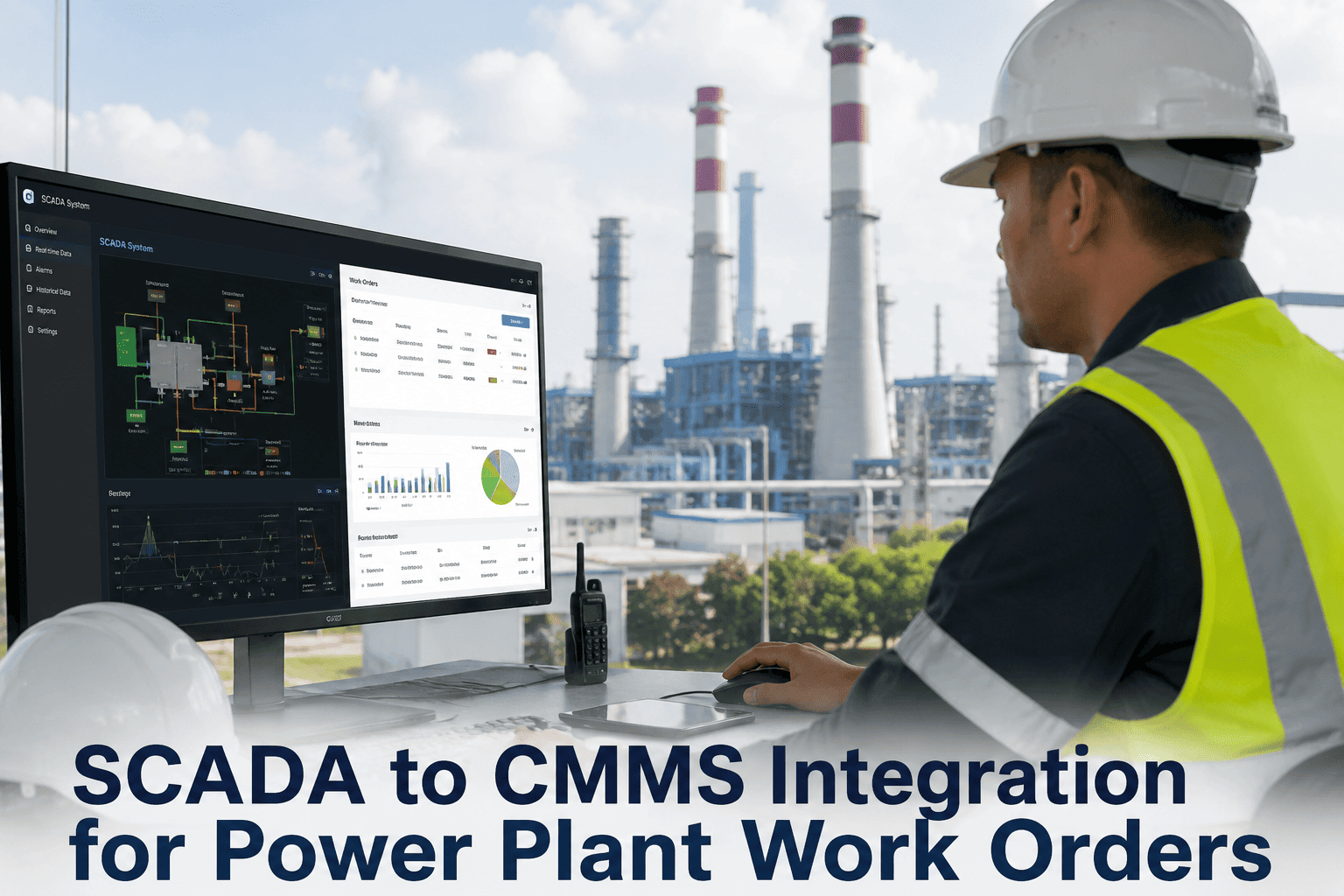
A qualifying threshold, trip or counter raises a ranked work order with the triggering reading attached.
Usage-Based PM
Run hours, starts and cycles from SCADA drive preventive maintenance by real operation, not the calendar.
Asset History Context
Every signal and action kept on the asset, so a repeat fault is seen as a pattern, not a one-off.
Flexible Connectors
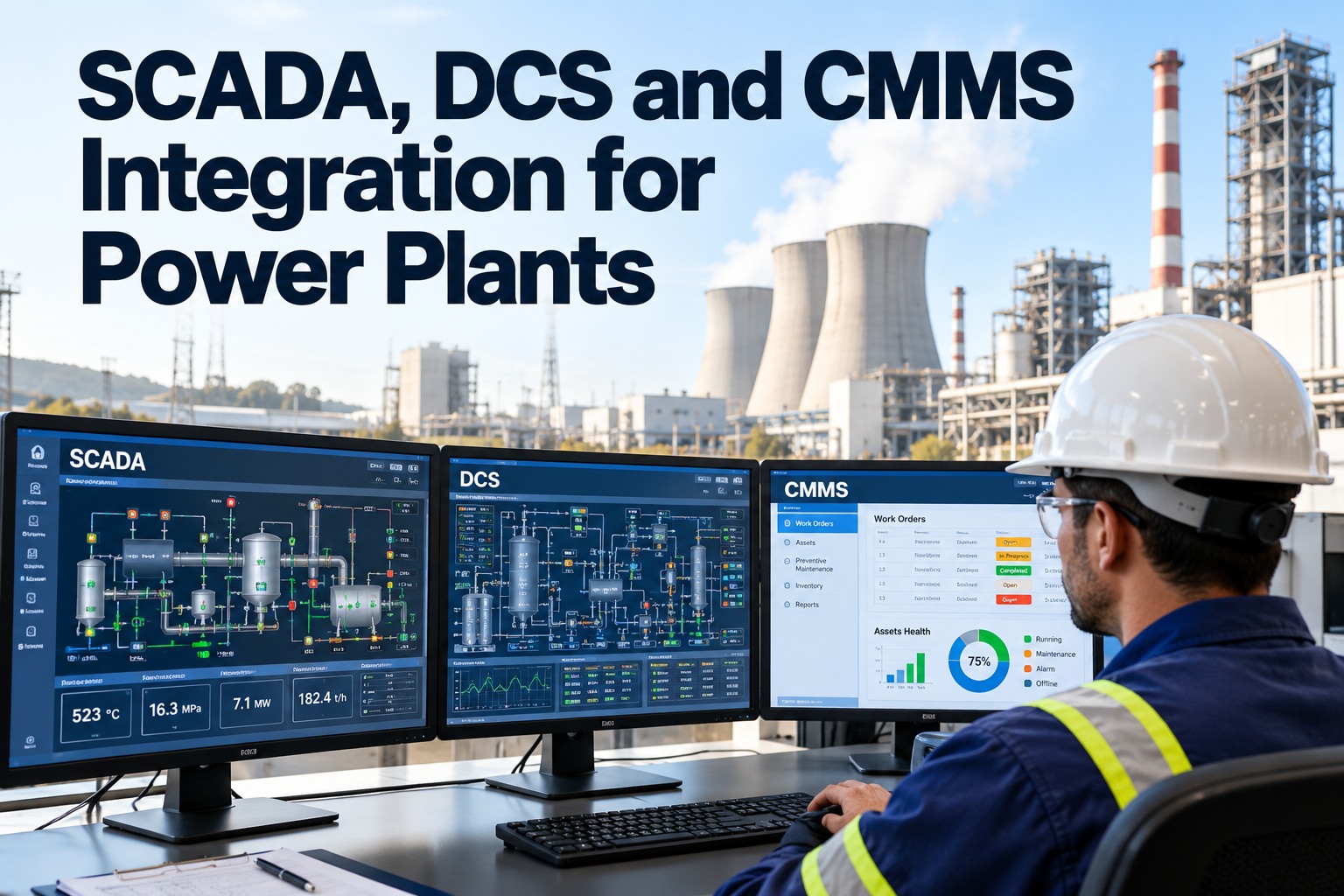
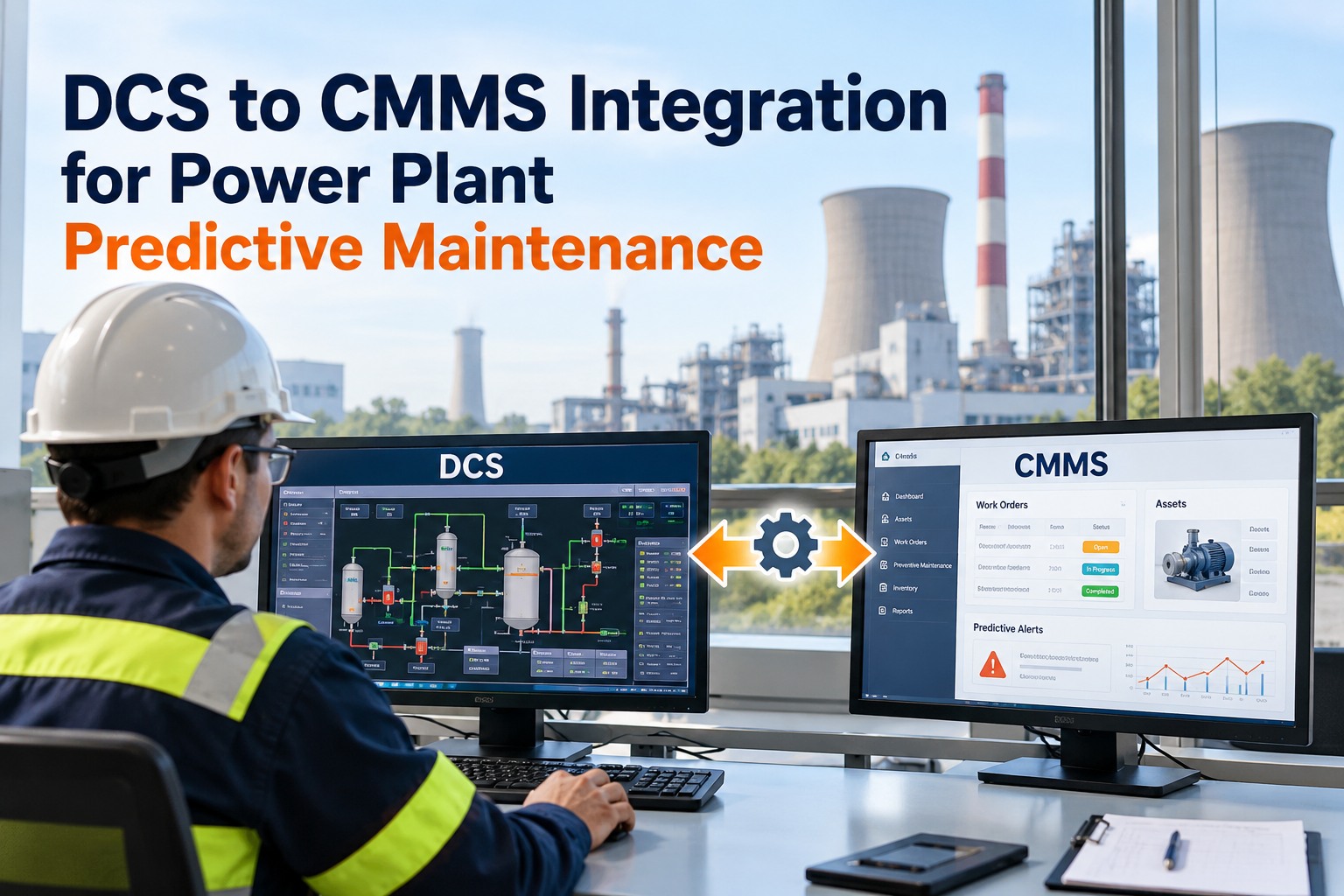
OPC UA, historian or API, so a modern DCS and a legacy SCADA both feed the same maintenance loop.
Reliability Analytics
Signals and failures trended across the fleet so the recurring bad actor gets engineered out.
The Signal Was There. Nobody Turned It Into a Job.
Most preventable failures in a power plant were visible in SCADA first — a reading that drifted, an alarm that was acknowledged and forgotten. OXMAINT AI catches the ones that matter, routes them to a work order, and remembers them, so the next time the pattern is obvious.
EXPERT REVIEW
Written for reliability, controls and maintenance teams in power generation. OXMAINT AI is a maintenance management platform, not a SCADA, DCS or historian — it integrates with them, consuming signals and returning maintenance action and history. Alarm-management figures (the ISA-18.2 flood definition and the boiler-trip example) are published references; which tags and conditions should raise work orders is a plant-specific decision to scope with your controls and operations teams, in line with your alarm-management philosophy.
Frequently Asked Questions
Does OXMAINT AI replace our SCADA or historian?
No — it connects to them. SCADA still runs the plant and the historian still stores the data; OXMAINT AI consumes the maintenance-relevant signals and turns them into ranked work orders with history.
Start free and connect SCADA to OXMAINT AI.
Won't integrating SCADA just flood the CMMS with alarms?
Only if you route everything. The point of integration is the filter: routing rules decide which conditions are maintenance-actionable, so a momentary overshoot is logged while a sustained bearing-temperature exceedance becomes a work order.
Book a demo of alarm routing in OXMAINT AI.
Which SCADA signals are worth acting on?
Three families: sustained threshold exceedances (temperature, vibration, pressure), equipment alarms and trips (faults, breaker operations), and runtime or counter thresholds that drive usage-based PM. Momentary and nuisance alarms stay out.
Start free and set your signal rules in OXMAINT AI.
How does integration help with repeat failures?
SCADA shows the moment but has no memory. When every signal and action is kept on the asset, a fault that recurs is flagged as a pattern and sent for reliability review, instead of being treated as new each time.
Walk the asset-history loop in a demo of OXMAINT AI.
How does the connection actually work?
Through OPC UA, a historian link or an API, depending on the plant. A modern DCS and a legacy SCADA can both feed the same maintenance loop; the connector carries the tags and conditions, and the routing rules do the rest.
Start free and link your systems in OXMAINT AI.
Close the Loop from Signal to Repair.
Connect your plant on OXMAINT AI: SCADA signals filtered to the ones that matter, routed to ranked work orders, driving usage-based PM, and written back as asset history — so the condition SCADA saw becomes the repair your crew made, every time.