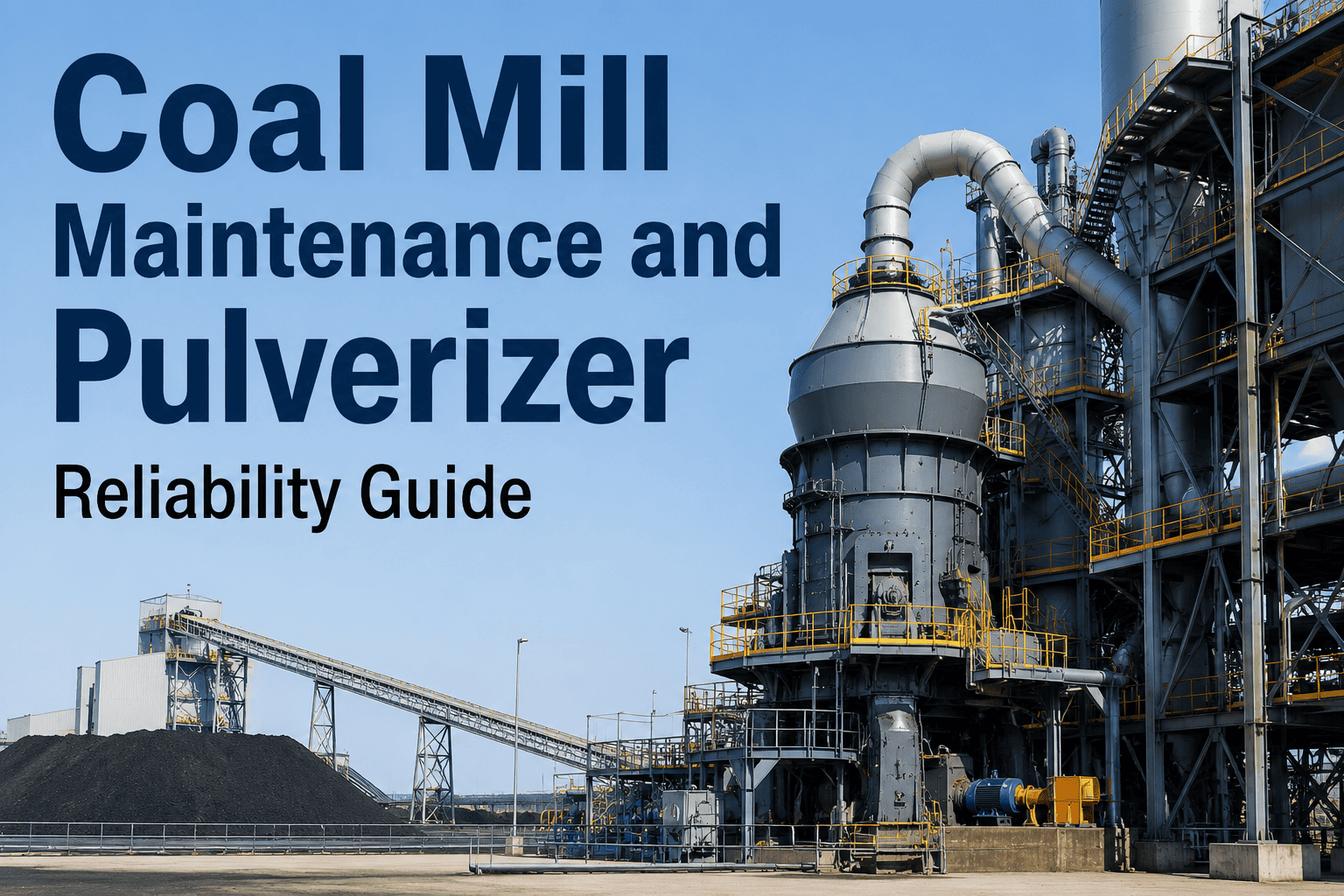
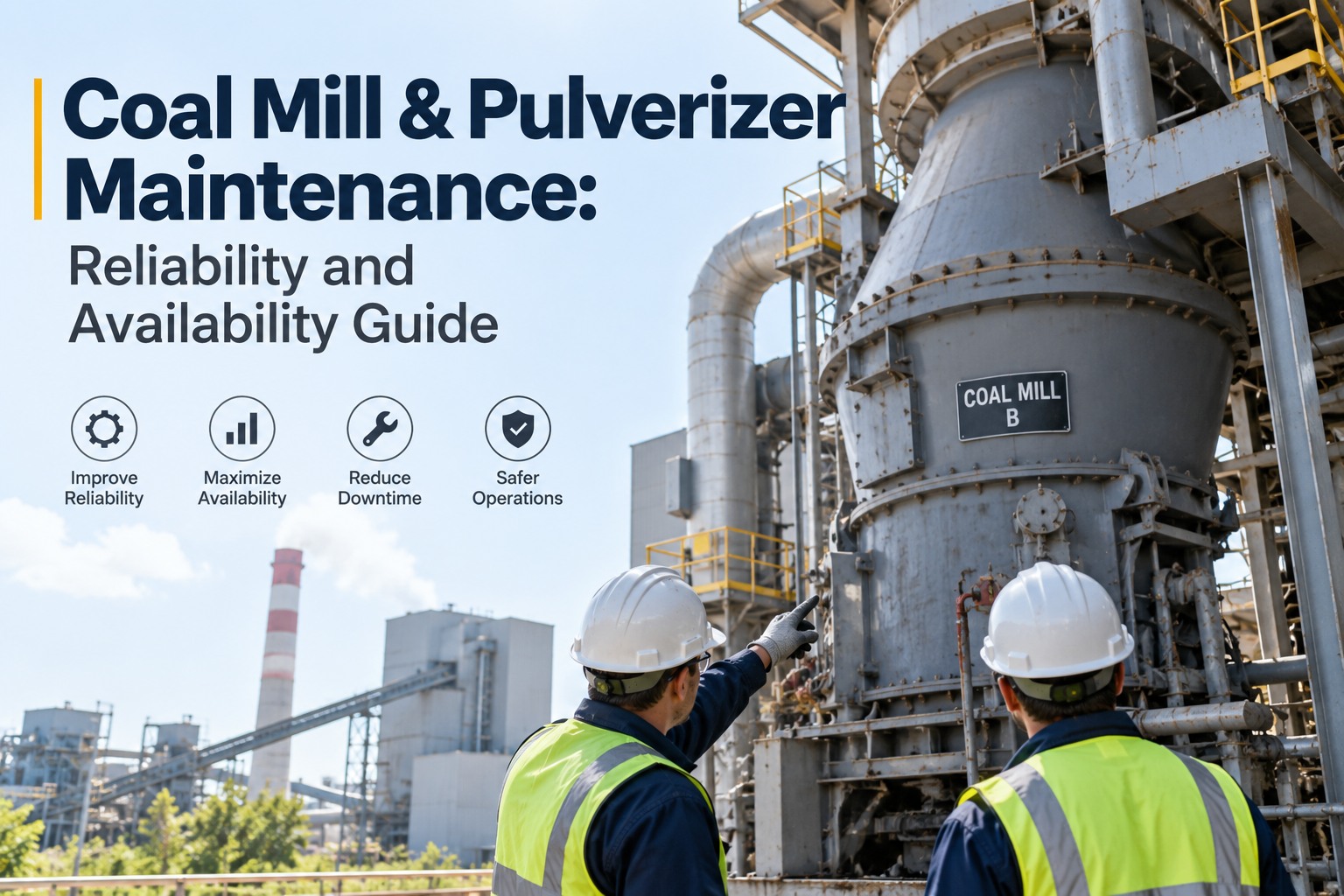
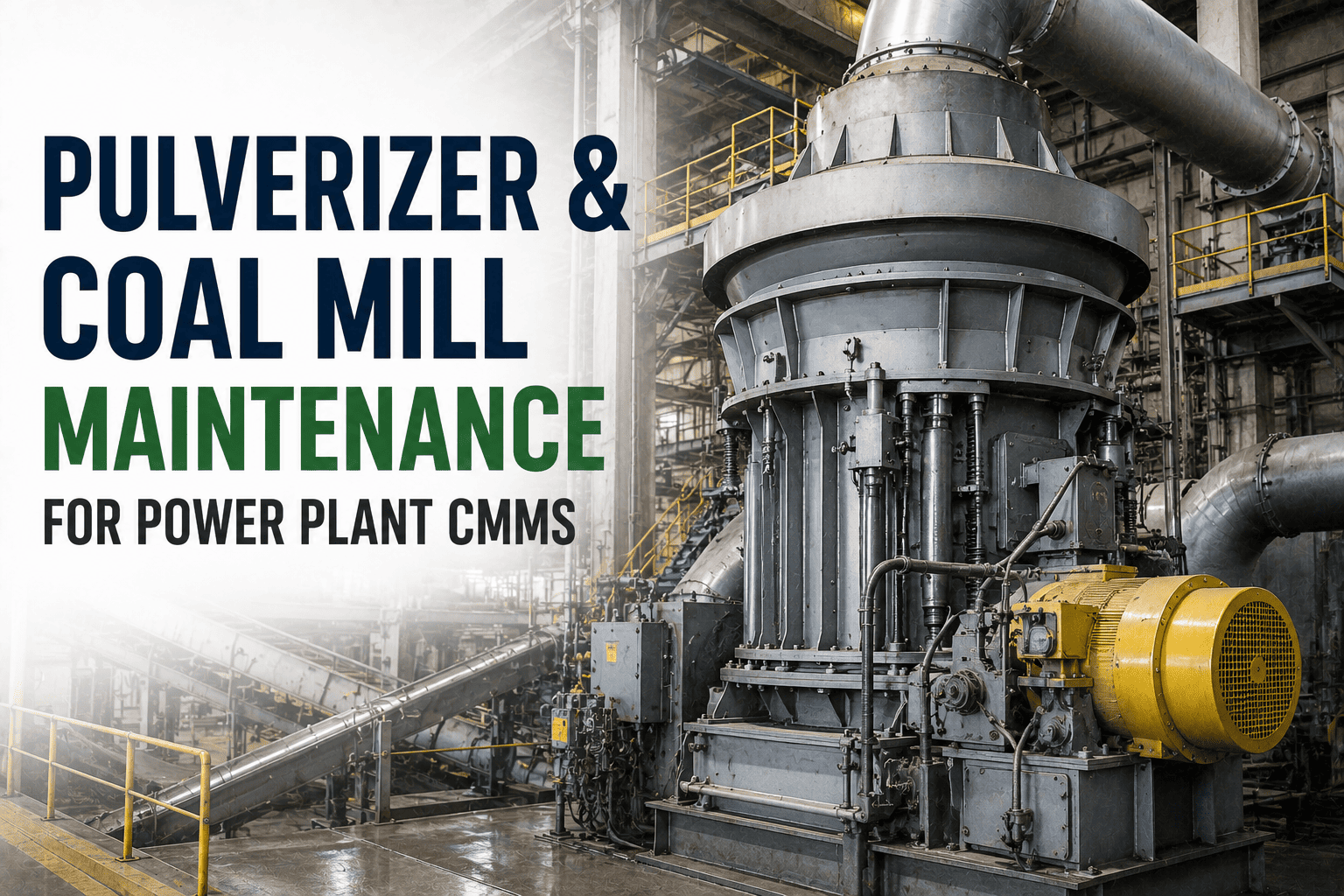
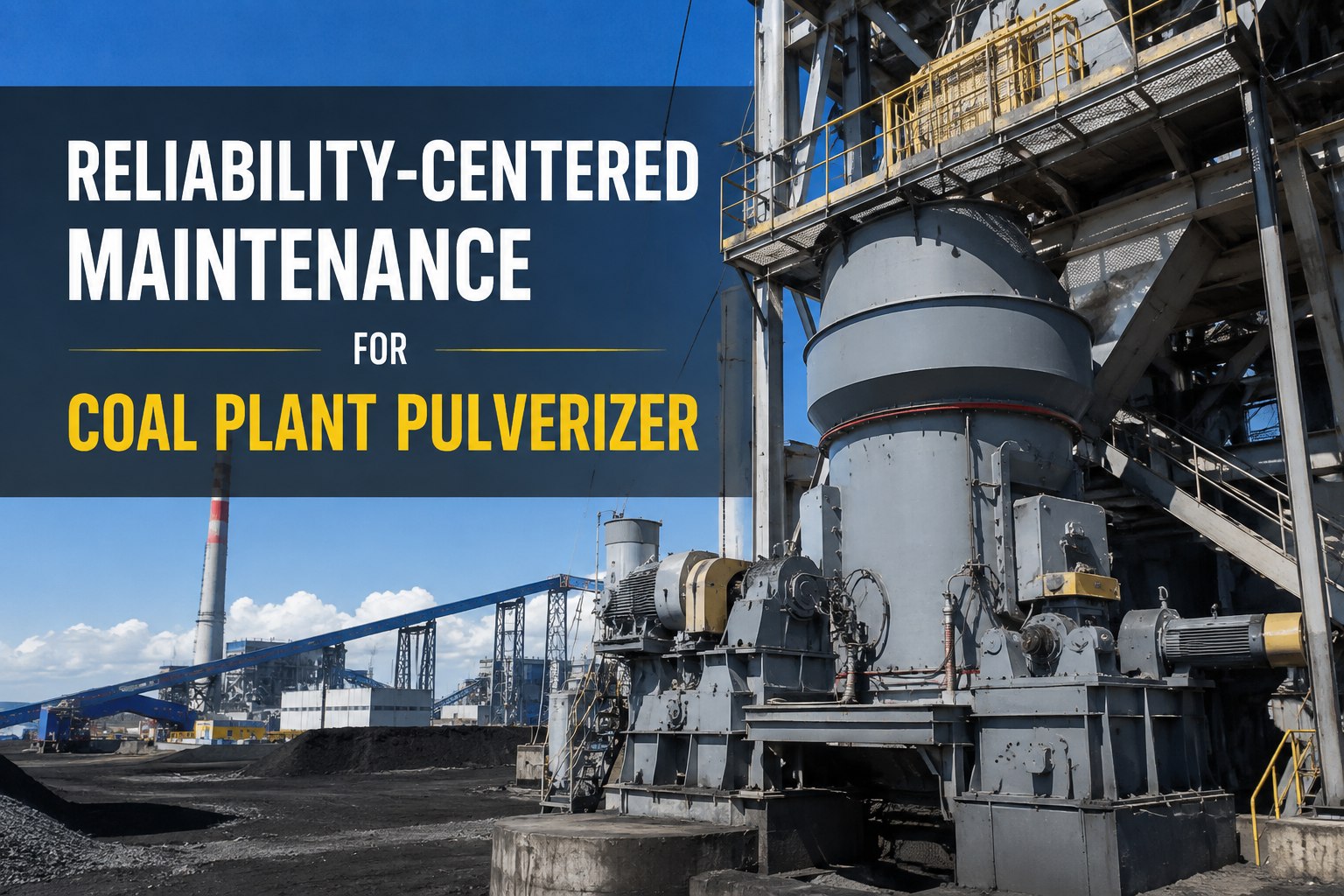
Coal mill reliability is the constraint that most thermal power plant maintenance teams underestimate until the first forced outage proves otherwise. A pulverizer that grinds inconsistently, trips on high differential pressure, or fails a grinding roll mid-shift does not just affect the mill — it reduces combustion quality across the boiler, increases unburned carbon, raises NOx, and forces load reduction until the mill is restored. Plants operating four, six, or eight mills in parallel cannot track grinding roll wear, classifier condition, and separator performance manually across all units without creating the gaps that become outages. OxMaint's preventive maintenance CMMS gives pulverizer teams structured inspection workflows, roll wear tracking, vibration trend logging, and auto-scheduled PM work orders — so every mill is maintained to its grinding design point before performance degradation reaches the control room. Explore OxMaint's preventive maintenance features for coal mills.
Article · Fuel Handling · Preventive Maintenance
Coal Mill Maintenance & Pulverizer Reliability Guide
Grinding Roll Wear Tracking · Classifier Inspection · Vibration Monitoring · Differential Pressure Trending · OxMaint CMMS
Mill Fleet — Unit 3 Boiler
Mill A
88% capacity
PM Current
Mill B
71% capacity
Roll Wear: 76%
Mill C
54% capacity
Overhaul Due — WO Open
Mill D
92% capacity
PM Current
30%
Boiler efficiency drop when pulverizer fineness falls below 70% passing 200 mesh
6,000 hrs
Typical grinding roll service life in a medium-hardgrove-index coal — tracking wear determines replacement timing
85%
Of coal mill trips are attributable to classifier, roll, or lubrication system issues detectable in advance
40 hrs
Minimum planned outage time for a full coal mill overhaul — unplanned outage costs 3–4x more
Coal Mill Anatomy — The Four Subsystems That Drive Reliability
Grinding Zone
Grinding Rolls and Bowl/Table
The grinding rolls pressing against the rotating bowl or table are the highest-wear components in a coal mill. Roll wear increases with coal hardness, feed size, and throughput. As rolls wear, grinding pressure increases to maintain fineness — drawing more current, loading the drive motor, and accelerating table wear. OxMaint tracks roll thickness measurement at each overhaul and trends wear rate across service intervals to predict the next replacement window.
Roll thickness measurement
Table segment wear profile
Spring/accumulator pressure log
Classification Zone
Classifier and Separator
The classifier rejects oversize coal particles back to the grinding zone and determines the pulverized coal fineness that reaches the burners. A worn or misaligned classifier vane allows coarse particles into the furnace — producing unburned carbon, reduced combustion efficiency, and increased bottom ash. OxMaint classifier inspection tasks record vane condition, angle setting, and bearing condition at each planned access.
Classifier vane wear
Separator bearing vibration
Coal fineness sample result
Drive System
Gearbox and Drive Motor
The planetary or bevel-helical gearbox driving the grinding table operates under continuous high-torque loading and requires oil analysis, vibration monitoring, and systematic oil change intervals to reach its rated service life. Drive motor current draw trends directly reflect mill loading and grinding element condition — rising current at the same coal feed rate is a reliable early indicator of roll wear or table scoring. OxMaint tracks gearbox oil samples and motor current baselines per mill.
Gearbox oil metal content
Motor current vs feed rate
Gearbox vibration (RMS)
Lubrication System
Journal Bearings and Lubrication Circuit
Coal mill journal bearings and the lubrication oil circuit are the most time-sensitive maintenance items in the pulverizer. Low lube oil pressure, filter bypass, or high oil temperature will trip the mill within minutes under protection logic. OxMaint generates monthly lube system PM work orders covering filter condition, oil level, cooler performance, and circulation pump check — preventing the lube system trip that stops the mill mid-shift.
Lube oil filter delta-P
Oil temperature at bearing
Circulation pump pressure
Preventive Maintenance Schedule — OxMaint Auto-Generated by Mill ID
| PM Task |
Subsystem |
Interval |
Key Measurement Recorded |
Reliability Impact if Missed |
| Grinding roll thickness measurement |
Grinding Zone |
Per overhaul (every 6,000 hrs or annual) |
Roll thickness (mm) vs new-roll baseline |
Mill output loss; poor coal fineness; burner erosion |
| Classifier vane inspection and angle check |
Classification Zone |
Quarterly |
Vane condition score; angle setting in degrees |
Coarse coal to burners; unburned carbon; high LOI |
| Lube oil filter element change |
Lubrication System |
Monthly or on delta-P trigger |
Filter delta-P before and after; element condition |
Bearing oil starvation → mill trip → emergency outage |
| Gearbox oil analysis (metal content) |
Drive System |
6-monthly |
Fe, Cu, Pb ppm; viscosity; water content |
Undetected gear wear → gearbox failure |
| Separator bearing vibration measurement |
Classification Zone |
Monthly |
RMS velocity (mm/s); bearing temperature |
Bearing failure → classifier seizure → unplanned outage |
| Spring/accumulator pressure setting |
Grinding Zone |
Quarterly |
Hydraulic/spring pressure (bar) vs design setting |
Poor grinding contact → fineness loss; increased wear |
| Reject gate and pyrite hopper clearance |
Mill Body |
Monthly |
Hopper level; gate operation; pyrite discharge |
Blocked reject → mill differential pressure trip |
| Coal fineness sample (isokinetic sampling) |
Output Quality |
Quarterly or after roll change |
% passing 200 mesh; residue on 50 mesh |
Combustion inefficiency invisible without fineness test |
OxMaint Schedules Every PM Task Automatically — By Mill, By Interval, By Priority
No more paper checklists or spreadsheet reminders. OxMaint generates work orders for each mill at the right interval, assigns them to the responsible technician, and tracks completion with measurement fields that build your pulverizer health database over time.
Key Performance Indicators — How OxMaint Measures Pulverizer Reliability
Grinding Roll Wear Rate
Millimetres of roll thickness lost per 1,000 operating hours — calculated from OxMaint measurement records at each overhaul.
Allows maintenance planning to predict the next roll replacement 3–4 months ahead, avoiding emergency roll change during peak generation season.
Mill Differential Pressure Trend
Primary air-to-coal pipe differential pressure logged from DCS at each PM visit — an indirect indicator of grinding element condition and coal bed depth.
Rising differential pressure at the same coal feed rate indicates roll wear or increased coal bed depth — a leading indicator of output capacity loss.
Drive Motor Current Index
Ratio of actual motor current draw to the design current at rated throughput — tracked per mill in OxMaint across PM intervals.
A rising current index at the same coal feed rate confirms grinding element deterioration before fineness testing is required for verification.
PM Compliance Rate
Percentage of scheduled PM work orders completed on time per mill per quarter — tracked in OxMaint's maintenance performance dashboard.
Plants achieving above 90% PM compliance on pulverizers consistently show lower unplanned mill trip rates — the correlation is measurable within two quarters.
Common Pulverizer Failure Modes and the Maintenance Response
| Failure Mode |
Symptom Visible to Operations |
Maintenance Root Cause |
OxMaint Prevention |
| Mill Trip on High Differential Pressure |
DCS alarm; mill drops from service; load reduction required |
Reject gate blocked; coal bed overload; worn rolls reducing throughput |
Monthly reject gate clearance task; roll wear tracking triggers pre-emptive overhaul scheduling |
| Coarse Coal to Burners |
Flame instability; increased unburned carbon in ash; flame scanner trips |
Classifier vane wear or misalignment; worn separator bearing causing vibration misalignment |
Quarterly classifier inspection WO with vane angle and wear condition recorded |
| Lube Oil System Trip |
Mill emergency shutdown; all bearings lose lubrication simultaneously |
Blocked lube filter (delta-P not monitored); pump failure; low oil level |
Monthly lube PM: filter delta-P, oil level, pump pressure, cooler outlet temperature |
| Grinding Roll Spalling |
Sudden increase in mill vibration; output drop; metal in coal pipe |
Worn roll operated beyond service life; spring pressure incorrect; hard foreign material ingestion |
Roll thickness measurement per overhaul; replacement scheduled before spalling threshold |
| Gearbox Failure |
High gearbox temperature alarm; vibration increase; oil leak |
Oil contamination or degradation not detected; gear tooth wear advanced beyond limits |
6-monthly gearbox oil analysis tracking metal content trend — replacement gear oil before threshold |
Frequently Asked Questions
How does OxMaint track grinding roll wear across a fleet of mills with different service histories?
Each mill in OxMaint has its own asset record with a roll wear measurement log linked to each overhaul work order. The technician enters roll thickness measurements (taken with a wear gauge) at the completion of each overhaul, and OxMaint calculates and displays the wear rate trend — mm per 1,000 hours — so the maintenance planner can see which mills are consuming roll life faster than the fleet average and plan replacements accordingly.
Set up your mill fleet in OxMaint with a free trial.
Can OxMaint schedule coal mill PM tasks around planned outage windows rather than calendar intervals?
Yes. OxMaint supports outage-triggered work order generation alongside calendar-based PM scheduling. Tasks that require the mill to be offline — roll inspection, classifier vane replacement, gearbox inspection — are tagged as outage-required and automatically surface when a planned outage is entered in the maintenance calendar, creating a batched work package for the outage team.
See OxMaint's outage planning features in a live demo.
How does OxMaint help teams track coal fineness results against mill maintenance history?
Coal fineness sample results are entered against the mill asset record in OxMaint's work order completion form. OxMaint displays fineness results alongside the roll wear measurement history and gearbox oil condition records, making the link between maintenance condition and output quality visible in one view — rather than requiring a manual correlation across separate spreadsheets and lab reports.
What does OxMaint generate for annual audit and insurance purposes for pulverizer maintenance?
OxMaint generates per-mill maintenance history reports covering all completed PM tasks, measurement records, overhaul sign-offs, and failure events within a specified date range. These reports satisfy grid operator, insurance surveyor, and internal reliability audit requirements and can be exported in PDF format for submission.
Start building your audit-ready mill maintenance records in OxMaint.
OxMaint · Coal Mill Preventive Maintenance
Every Grinding Roll. Every Classifier Vane. Every Lube Filter. Tracked. Scheduled. Documented.
OxMaint gives pulverizer maintenance teams the structured PM workflows, wear tracking, vibration logging, and compliance records they need to keep every coal mill performing at its grinding design point — shift after shift, season after season.