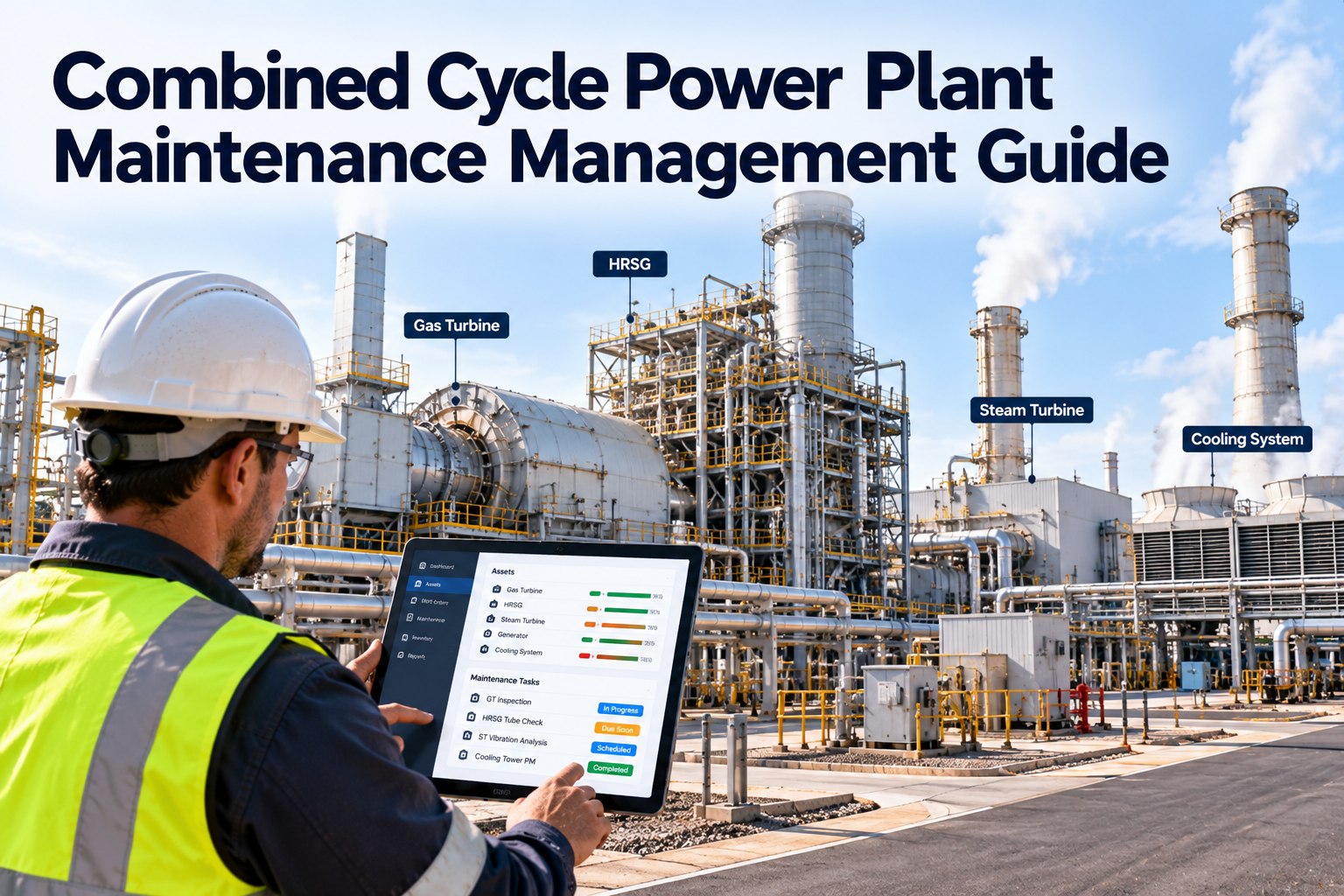
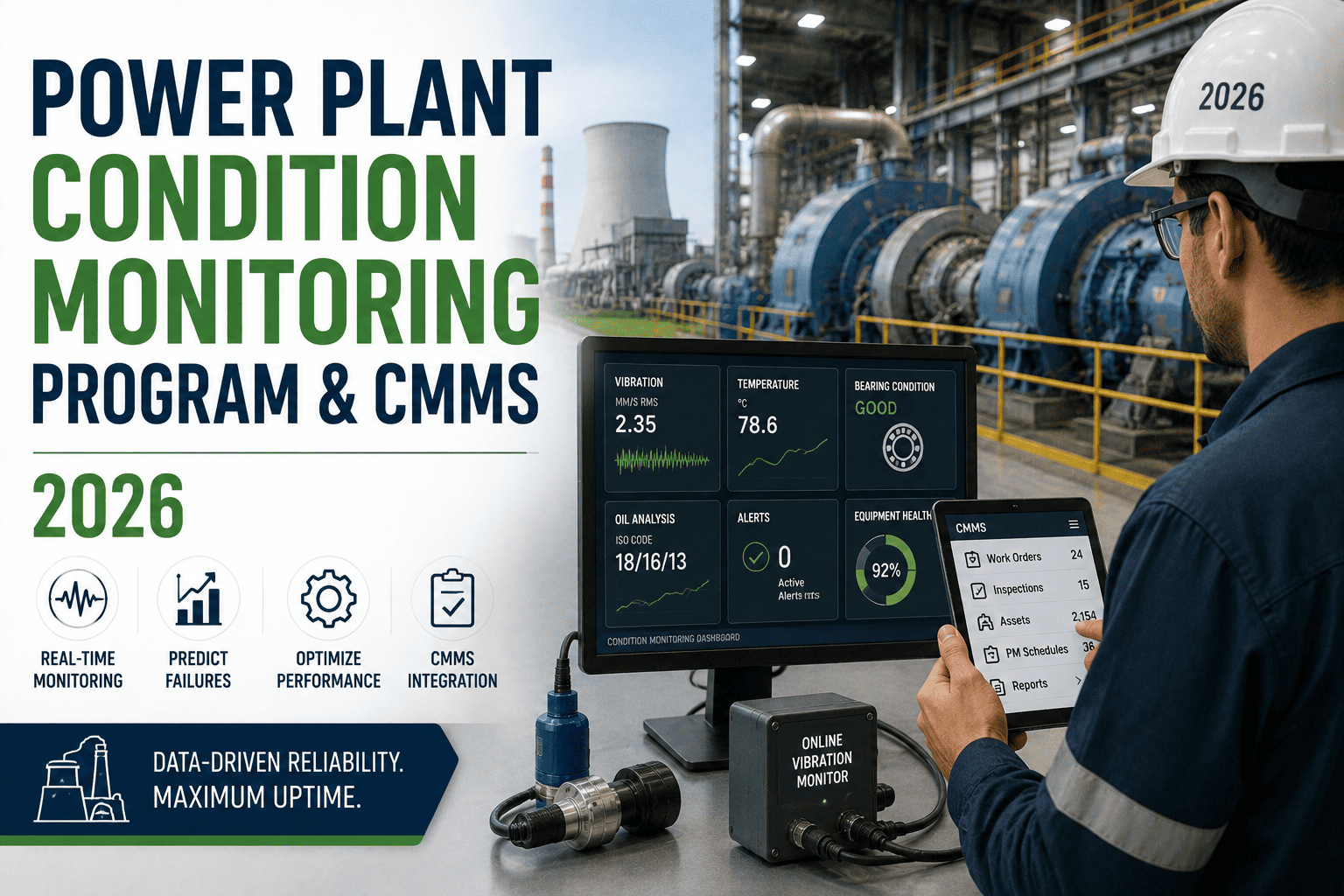
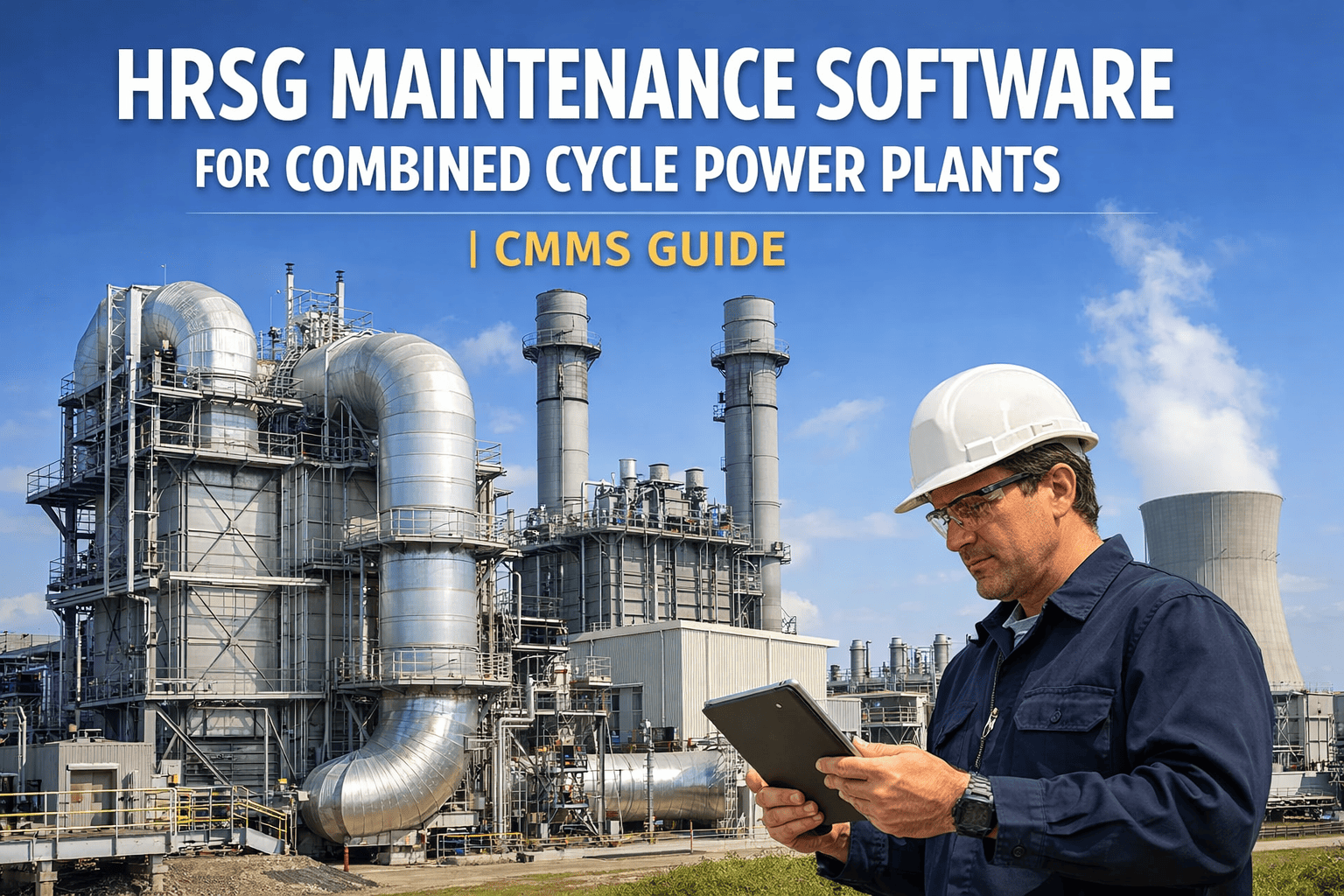
A combined cycle plant is one machine pretending to be four. Defer a combustion inspection on the gas turbine and the exhaust runs hot — which drives the HRSG superheater tubes into creep, which backs up the steam turbine. One skipped interval doesn't stay local; it cascades down the train. Managing that means managing the whole chain on one clock. OXMAINT AI is the AI-powered maintenance management software that runs the GT, HRSG, steam turbine and balance-of-plant as one linked asset train — or book a demo of combined-cycle maintenance in OXMAINT AI.
COMBINED CYCLE POWER PLANT · MAINTENANCE MANAGEMENT GUIDE · 2026
Combined Cycle Power Plant Maintenance Management Guide
Four coupled assets, one output — and a failure anywhere in the train takes the block down. OXMAINT AI is the AI-powered CMMS that models the gas turbine, HRSG, steam turbine and generator as one hierarchy, drives inspections off equivalent operating hours rather than the calendar, and raises ranked work orders before a deferred interval cascades. One maintenance plan for the whole train, from fired hours to the closed work order.
1 · Track EOH
2 · Inspect
3 · Work order
4 · PM / PdM
8,000
EOH to a combustion inspection — the first and most frequent GT interval
~200
EOH a single cold start can add — starts, not just hours, age the turbine
#2
HRSG tube failure ranks among the top drivers of forced outages
1
linked asset train — GT, HRSG, ST and generator maintained together
The Energy-Flow Train
Energy runs through the plant in sequence — the gas turbine's exhaust is the HRSG's fuel, the HRSG's steam is the turbine's drive. Maintenance follows the same chain, because a fault upstream becomes a failure downstream — start free and model your plant train in OXMAINT AI.
GT
Gas Turbine
Combustion, hot gas path, compressor. Runs the EOH clock that paces the whole plant.
→
HRSG
Heat Recovery
Recovers exhaust heat to steam. Tube thinning and creep — often downstream of GT neglect.
→
ST
Steam Turbine
Extracts the steam energy. Watch condenser fouling, backpressure and LP blade stress.
→
GEN
Generator
Converts to power. Windings, cooling, excitation — tested on the major-overhaul cycle.
→
BOP
Balance of Plant
Pumps, cooling, fuel gas, electrical. The supporting cast that stops the block if it fails.
The Clock Is Equivalent Operating Hours, Not the Calendar
A gas turbine doesn't age by date — it ages by duty. Equivalent operating hours (EOH) weight a start far more heavily than a steady hour, so a cycling plant burns through its intervals two to three times faster than a baseload one.
BASELOAD
~10,400
EOH per year
8,000 run hours + 12 starts. Runs long, starts rarely — intervals reached in 2–3 years.
CYCLING
~28,000
EOH per year
4,000 run hours + 120 starts. Fewer hours, far more starts — intervals reached in 12–18 months.
A cold start can count as roughly 200 EOH — the fatigue of 100–200 steady hours in one event. Tracking EOH per unit is the only honest way to time the next inspection — schedule a walkthrough of EOH scheduling in OXMAINT AI.
Gas Turbine Inspection Intervals
The GT sets the plant's maintenance rhythm. Each tier goes deeper, takes longer, and is paced by EOH — with the OEM manual the final authority on thresholds.
Inspection
Interval (EOH)
Scope
Outage
Combustion~8,000Nozzles, liners, transition pieces, crossfire tubes4–7 days
Hot gas path~16,000Stage 1–3 buckets, nozzles, shrouds, borescope12–18 days
Major overhaul~24,000–32,000Full rotor, bearings, compressor stages, rotor UT25–45 days
Life extension100,000+Creep / fatigue life analysis, metallurgical sampling45–90 days
Compressor washonline 200–500 hRecover compressor efficiency and outputonline / short
Why the Train Is Maintained as One
Maintaining each asset in isolation misses the couplings that define a combined cycle plant. Three linkages are why the train shares one plan.
Fault Cascades Downstream
A combustion liner burnthrough raises exhaust temperature, which drives HRSG superheater tubes into creep — the GT defect becomes an HRSG failure.
Synchronized Outages Save Days
HRSG and steam-turbine work done inside a planned GT outage costs a fraction of a standalone window — one outage, not three.
One EOH Drives the Schedule
The GT's equivalent operating hours set when the block comes down, so HRSG and ST inspections are planned around that same clock.
How OXMAINT AI Manages the Combined Cycle Plant
OXMAINT AI runs the whole block as one linked hierarchy — the AI-powered maintenance management software that paces the plant off real duty, not the calendar. Put your first unit on it when you start free and build your combined-cycle plan in OXMAINT AI.
Linked Asset Train
GT, HRSG, steam turbine, generator and BOP as one hierarchy, so a fault's downstream impact is visible.
EOH-Based Scheduling
Inspections triggered by equivalent operating hours — starts weighted against run hours per the OEM model.
Predictive Monitoring
Exhaust temperature, vibration and tube-metal signals flag a developing fault before it cascades.
Synchronized Outage Planning
HRSG and ST scope planned into the GT window, so the block comes down once, not three times.
Signal → Work Order
A reached interval or a condition alarm becomes a ranked work order on the exact asset.
Fleet Reliability View
EOH, inspection due-dates and open work across every block on one screen, with full history.
One Missed Interval Doesn't Stay Local.
The deferred combustion inspection becomes a hot exhaust, becomes an HRSG tube failure, becomes a forced outage on the whole block. OXMAINT AI tracks the EOH, raises the work order on time, and keeps the train on one plan — so the cascade never starts.
EXPERT REVIEW
Written for reliability, operations and maintenance teams at combined cycle plants. OXMAINT AI is a maintenance management platform — it models the asset train, schedules by equivalent operating hours and routes findings to work orders, but it does not replace the OEM maintenance manuals (GE, Siemens, Mitsubishi), which set the model-specific intervals and factors that govern the equipment. Interval and EOH figures here are typical industry ranges; the OEM thresholds are the authority.
Frequently Asked Questions
What are equivalent operating hours (EOH)?
A duty-weighted measure of gas-turbine life. Run hours count at a factor of one, but starts count for much more — a cold start can add around 200 EOH. It's the honest clock for timing inspections, because starts age the turbine as much as hours do.
Start free and track EOH per unit in OXMAINT AI.
Why do cycling plants need more frequent maintenance?
Because starts dominate EOH. A baseload unit might accumulate about 10,400 EOH a year; a cycling unit with far more starts can reach roughly 28,000, so its hot-gas-path inspection falls due two to three times sooner despite fewer run hours.
Book a demo of EOH scheduling in OXMAINT AI.
Why maintain the GT, HRSG and ST together?
Because they're coupled. A gas-turbine fault that raises exhaust temperature pushes HRSG tubes toward creep, and HRSG work done inside a planned GT outage costs a fraction of a standalone one. Maintaining the train as one hierarchy catches the cascade and saves outage days.
Start free and link your train in OXMAINT AI.
What are the main gas-turbine inspections?
Combustion inspection (around 8,000 EOH), hot gas path (around 16,000), and major overhaul (around 24,000–32,000), with a life-extension assessment past 100,000 EOH and routine compressor washing in between. The OEM manual sets the model-specific thresholds.
Walk the interval model in a demo of OXMAINT AI.
Does OXMAINT AI replace the OEM maintenance program?
No — it runs it. The OEM manuals define the intervals and EOH factors; OXMAINT AI tracks the hours and starts, schedules the inspections against those thresholds, and routes the work, so the OEM program is actually executed and documented.
Start free and run your OEM program in OXMAINT AI.
Run the Whole Block on One Clock.
Manage your combined cycle plant on OXMAINT AI: GT, HRSG, steam turbine and generator as one linked train, inspections paced by equivalent operating hours, HRSG and ST scope synchronized into the GT outage, and every interval routed to a work order — so a deferred inspection never becomes a forced outage.